

Balanced eating is supposed to be straightforward and even boring. Everyone says just eat your veggies and keep calories in check, right? Turns out, less than 10 percent of Americans actually meet daily fruit and vegetable recommendations and most popular diets leave major nutritional gaps. The real secret is that a truly balanced diet is more flexible, personalized, and surprisingly easy to master than you might think.
Table of Contents
- Core Principles Of Balanced Diet Fundamentals
- Customizing Your Diet For Fitness And Health Goals
- Tracking Progress And Making Lasting Changes
- Science-Backed Supplements For Balanced Nutrition
Quick Summary
| Takeaway | Explanation |
|---|---|
| Focus on Plant-Based Foods | Prioritize vegetables, fruits, legumes, and whole grains for optimal nutrition. |
| Control Caloric Intake Smartly | Eat nutrient-dense foods to manage energy levels effectively. |
| Customize Your Nutrition Plan | Tailor your diet based on individual health and fitness goals. |
| Utilize Technology for Tracking | Use apps to monitor diet and fitness for better progress. |
| Consult Professionals for Supplements | Seek expert advice on effective, safe supplementation. |
Core Principles of Balanced Diet Fundamentals
Balanced diet fundamentals represent a strategic approach to nutrition that goes beyond simple calorie counting. Understanding these core principles transforms how individuals approach food consumption and overall health management.
Nutritional Balance and Essential Components
A balanced diet requires carefully considering multiple nutritional dimensions. Harvard Health highlights five critical principles that form the foundation of effective nutrition. First, plant-based foods should dominate your dietary landscape. This means prioritizing vegetables, fruits, legumes, whole grains, nuts, and seeds as primary nutritional sources.
Protein intake requires strategic planning. Optimal sources extend beyond traditional meat options and include diverse alternatives like beans, lentils, soy foods, nuts, seeds, and seafood. The goal is not just quantity but quality protein that supports muscle maintenance, metabolic functions, and overall cellular health.
Minimally processed foods represent another crucial principle. These foods retain more natural nutrients and fewer artificial additives. By choosing whole foods over heavily manufactured products, individuals can significantly reduce unnecessary fat, sugar, and sodium intake.
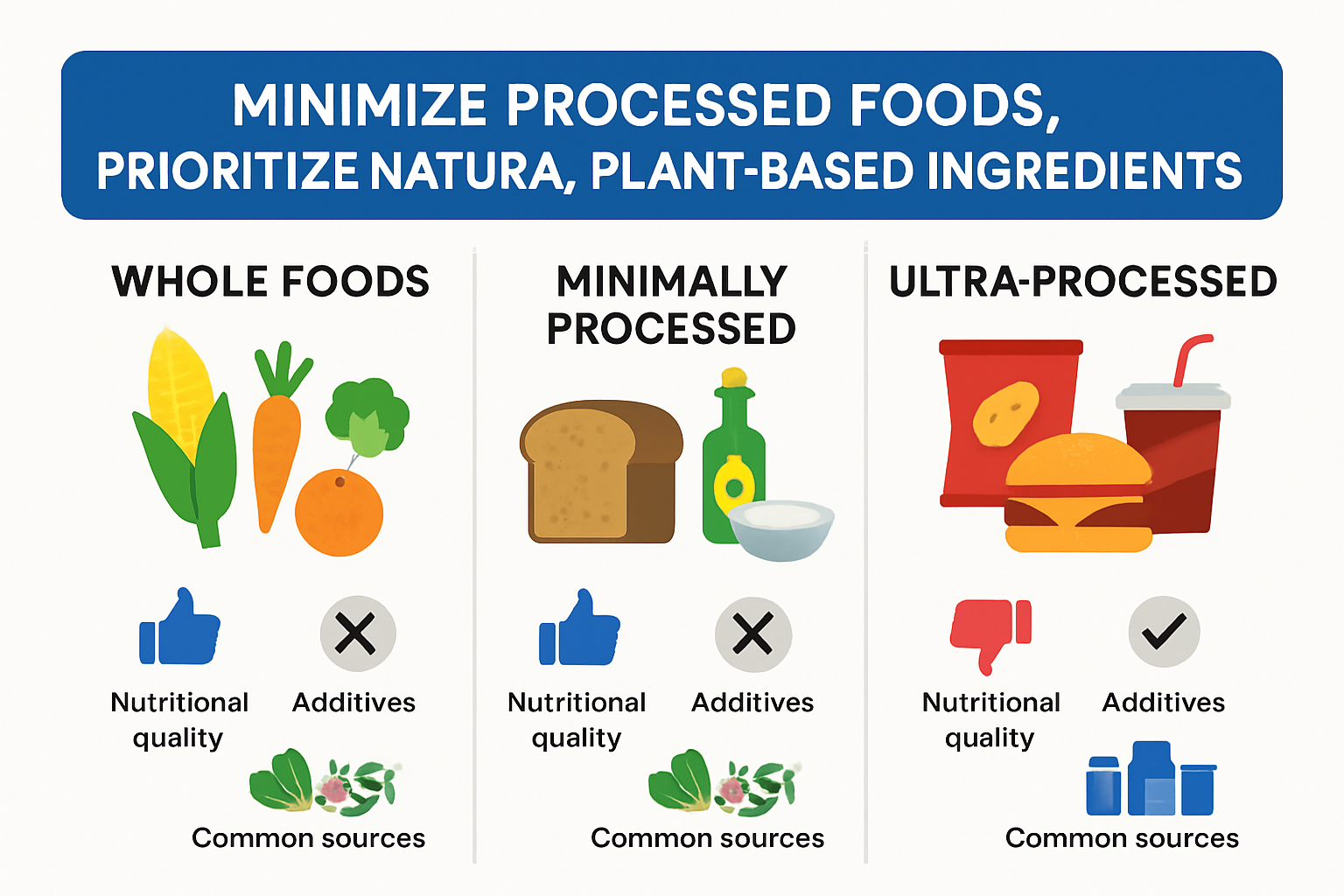
To help you compare the main components and recommendations for a balanced diet, the following table summarizes essential dietary principles highlighted in this section.
| Principle | Key Foods/Sources | Core Benefit |
|---|---|---|
| Plant-Based Diet | Vegetables, fruits, legumes, whole grains, nuts | Provides vitamins, fiber, minerals, & phytonutrients |
| Quality Protein | Beans, lentils, soy, nuts, seeds, seafood, lean meats | Muscle maintenance & metabolic support |
| Minimally Processed Foods | Whole foods, less processed snacks/meals | Reduces added fat, sugar, sodium; improves nutrition |
| Dietary Variety | Multiple food groups, rotating choices | Ensures broad nutrient coverage |
| Moderate Portions | Balanced plate, mindful serving sizes | Prevents over/undernutrition; promotes sustainability |
Caloric Awareness and Energy Management
Understanding caloric balance involves more than simple arithmetic. According to the Principles of Human Nutrition, effective nutrition requires matching energy intake with personal expenditure. This means considering individual factors like age, gender, activity level, and metabolic rate.
Calorie control does not mean restrictive eating but intelligent consumption. The key is consuming nutrient-dense foods that provide maximum nutritional value with moderate caloric input. This approach prevents both undernourishment and excessive weight gain while supporting optimal metabolic function.
Diversity and Moderation in Diet
Variety remains fundamental in balanced nutrition. No single food provides all necessary nutrients, making dietary diversity critical. The UK government’s Eatwell Guide recommends incorporating different food groups regularly. This includes consuming at least five portions of fruits and vegetables daily, selecting wholegrain starchy carbohydrates, and including protein sources like fish, eggs, and legumes.
Moderation acts as the counterbalance to dietary diversity. While exploring different foods, maintaining portion control prevents nutritional excess. This principle encourages enjoying various foods without overindulgence, creating a sustainable and enjoyable approach to eating.
Implementing these core principles requires consistent mindfulness and gradual lifestyle adaptation. By understanding nutritional fundamentals, individuals can develop personalized strategies that support long-term health and wellness goals. The journey toward balanced nutrition is not about perfection but progressive, informed choices that nourish both body and mind.
Customizing Your Diet for Fitness and Health Goals
Personalizing nutrition represents a dynamic approach to health that recognizes individual physiological differences, fitness objectives, and metabolic requirements. The era of one-size-fits-all dietary recommendations has evolved into a more nuanced understanding of personalized nutrition strategies.
Understanding Individual Nutritional Needs
Every individual’s body responds differently to nutritional intake, making customization crucial. Dietary Guidelines for Americans, 2020-2025 emphasize the importance of adapting dietary patterns to personal preferences, cultural traditions, and specific health needs. This approach acknowledges that nutrition is not a universal prescription but a tailored solution.
Metabolic diversity plays a significant role in dietary customization. Factors such as age, gender, activity level, genetic predispositions, and existing health conditions dramatically influence nutritional requirements. For instance, an endurance athlete will have markedly different macronutrient needs compared to someone focused on muscle building or weight management.
Fitness-Specific Nutritional Strategies
Athletes and fitness enthusiasts require targeted nutritional approaches that support performance and recovery. Protein intake becomes critical for muscle repair and growth, with recommendations varying based on training intensity and specific fitness goals. Endurance athletes might focus on complex carbohydrates for sustained energy, while strength training individuals prioritize higher protein consumption.
Macronutrient balance shifts depending on fitness objectives. Muscle building requires a caloric surplus with elevated protein intake, typically ranging from 1.6 to 2.2 grams per kilogram of body weight. Weight loss strategies, conversely, involve creating a moderate caloric deficit while maintaining sufficient protein to preserve muscle mass.
Holistic Health Optimization
Beyond physical performance, dietary customization addresses broader health goals. Individuals managing chronic conditions like diabetes, heart disease, or metabolic disorders require specialized nutritional approaches. This might involve carefully controlling carbohydrate intake, reducing sodium consumption, or incorporating specific anti-inflammatory foods.
Nutritional timing becomes another crucial consideration. Pre-workout nutrition focuses on easily digestible energy sources, while post-workout meals emphasize protein and nutrient-rich foods that support recovery. Intermittent fasting, nutrient cycling, and meal timing strategies can be integrated based on individual metabolic responses and fitness objectives.
Successful dietary customization requires continuous monitoring and adaptation. Regular health assessments, blood work, and tracking performance metrics provide insights into the effectiveness of nutritional strategies. The most effective approach combines scientific understanding with personal intuition, creating a dynamic nutritional plan that evolves with changing health and fitness goals.
Ultimately, customizing your diet is a personalized journey of understanding your body’s unique requirements. It demands patience, experimentation, and a willingness to adjust strategies based on ongoing feedback from your body’s performance and overall well-being.

The table below summarizes distinct nutritional approaches based on different fitness and health goals, highlighting their focus and strategies emphasized in this section.
| Fitness/Health Goal | Key Nutritional Focus | Example Strategies |
|---|---|---|
| Endurance Performance | Complex carbohydrates, hydration | Pre-workout carbs, electrolyte balance |
| Muscle Building | Higher protein, caloric surplus | 1.6–2.2g protein/kg, nutrient timing |
| Weight Loss | Caloric deficit, adequate protein | Lower calories, preserve muscle mass |
| Chronic Condition Support | Macronutrient management, restrictions | Reduce sodium for heart, control carbs for diabetes |
| Holistic Wellness | Variety, anti-inflammatory foods | Diverse whole foods, include healthy fats |
Tracking Progress and Making Lasting Changes
Transforming dietary habits requires more than initial motivation. Successful long-term nutrition management depends on systematic progress tracking, data-driven insights, and adaptive strategies that support sustainable lifestyle changes.
Establishing Meaningful Measurement Metrics
Research from the National Institutes of Health demonstrates that consistent self-monitoring is crucial for creating lasting dietary improvements. Effective tracking goes beyond simple weight measurements, encompassing comprehensive health indicators that provide holistic insights into nutritional progress.
Key metrics for comprehensive tracking include body composition analysis, which measures muscle mass, body fat percentage, and metabolic rate. These indicators offer more nuanced information than traditional weight measurements. Blood work provides another critical tracking dimension, revealing nutritional deficiencies, hormone levels, and metabolic health markers that traditional scales cannot capture.
Nutritional journaling emerges as a powerful tool for understanding dietary patterns. By documenting food intake, meal timing, energy levels, and subjective wellness indicators, individuals create a detailed map of their nutritional journey. This approach transforms nutrition from a reactive process to a proactive, data-informed strategy.
Technology-Enhanced Tracking Strategies
Digital technologies have revolutionized progress monitoring. Smartphone applications and wearable devices enable real-time nutrition and fitness tracking, providing instant feedback and personalized recommendations. These tools can log caloric intake, macronutrient balance, hydration levels, and physical activity with unprecedented precision.
Advanced tracking platforms integrate multiple data sources, creating comprehensive health profiles. By synchronizing nutrition logs, fitness metrics, sleep patterns, and physiological markers, individuals gain unprecedented visibility into their metabolic performance. This holistic approach allows for more targeted and responsive dietary adjustments.
Psychological Dimensions of Sustainable Change
Successful nutritional transformation transcends numerical metrics. Psychological resilience and adaptive mindset play equally important roles in creating lasting dietary changes. Setting realistic, incremental goals prevents overwhelm and supports consistent progress.
Mindful reflection becomes a crucial component of sustainable nutrition. Regular self-assessment allows individuals to understand not just what they eat, but why they make specific dietary choices. This deeper awareness helps identify emotional triggers, stress responses, and habitual eating patterns that might undermine nutritional goals.
Building a support network enhances accountability and motivation. Sharing progress, challenges, and insights with like-minded individuals or professional nutritional coaches creates a collaborative environment that sustains long-term lifestyle modifications.
Ultimately, tracking progress is not about achieving perfection but cultivating continuous improvement. By embracing data-driven insights, technological support, and psychological awareness, individuals can develop nutrition strategies that are flexible, personalized, and aligned with their evolving health objectives. The journey of nutritional transformation is ongoing, requiring patience, curiosity, and a commitment to understanding one’s unique physiological landscape.
Science-Backed Supplements for Balanced Nutrition
Navigating the complex world of dietary supplements requires a scientific approach that distinguishes between evidence-based nutrition and marketing claims. Understanding the role of scientifically validated supplements can significantly enhance overall nutritional strategies and address potential nutrient gaps.
Understanding Supplement Fundamentals
The National Center for Complementary and Integrative Health provides critical guidance for consumers approaching dietary supplements. Supplements are not replacements for whole foods but targeted nutritional interventions designed to complement a balanced diet. They serve specific purposes such as addressing nutritional deficiencies, supporting metabolic functions, and potentially mitigating certain health risks.
Scientific evaluation of supplements involves rigorous research methodologies. Not all supplements are created equal. Credible supplements undergo extensive testing to verify their efficacy, safety, and potential interactions with other medications. This means consumers must look beyond marketing claims and focus on peer-reviewed research and recommendations from healthcare professionals.
Evidence-Based Supplement Selection
The Office of Dietary Supplements emphasizes the importance of understanding supplement quality and scientific evidence. Key considerations include verifying the supplement’s source, checking for third-party testing, and understanding the specific health conditions or nutritional needs being addressed.
Common scientifically supported supplements include:
- Vitamin D: Critical for bone health and immune function, especially for individuals with limited sun exposure
- Omega-3 Fatty Acids: Support cardiovascular and cognitive health
- Probiotics: Enhance gut microbiome and support digestive health
- Multivitamins: Address potential nutritional gaps in diet
- Magnesium: Support muscle and nerve function, energy production
Safety and Personalized Supplementation
Nutrition.gov highlights the critical need for personalized supplement strategies. Individual factors such as age, gender, existing health conditions, and dietary patterns significantly influence supplement effectiveness and safety.
Potential risks accompany supplement consumption. Overconsumption can lead to adverse effects, and certain supplements may interact with medications. Professional consultation becomes crucial, particularly for individuals with pre-existing health conditions or those taking prescription medications.
Effective supplementation requires a holistic approach. Regular health assessments, blood work, and professional guidance help identify specific nutritional needs. Supplements should be viewed as precise interventions, not universal solutions.
The future of supplementation lies in personalized, data-driven approaches. Emerging technologies and advanced diagnostic tools will enable more targeted nutritional interventions. By combining scientific research, individual health data, and professional guidance, individuals can develop nuanced supplement strategies that genuinely support their unique health objectives.
Frequently Asked Questions
What is a balanced diet?
A balanced diet is one that includes a variety of foods in the right proportions to provide the body with essential nutrients. It primarily focuses on plant-based foods, quality proteins, minimally processed options, and appropriate portion sizes.
How can I customize my diet to meet my fitness goals?
You can customize your diet by understanding your individual nutritional needs based on factors like age, gender, activity level, and health objectives. Tailor your macronutrient intake (carbohydrates, proteins, and fats) according to specific goals like muscle building, weight loss, or endurance.
What role do supplements play in a balanced diet?
Supplements can help address specific nutrient gaps in your diet but should not replace whole foods. They are particularly beneficial for individuals with certain dietary restrictions or health conditions, and it’s recommended to consult a healthcare professional for personalized advice.
How can technology assist in tracking my dietary progress?
Technology can assist by utilizing apps and wearable devices that monitor your nutrition and fitness levels. These tools offer insights into your caloric intake, macronutrient balance, and overall health, allowing you to make data-driven adjustments to your eating habits.
Take Control of Your Balanced Diet With Menalam’s Personalized Solutions
Struggling to turn balanced diet fundamentals into real changes for your health? If sticking to daily nutrition goals and identifying the right supplements for your specific needs feels overwhelming, Menalam is here to help. This guide highlighted how nutritional balance, individualized needs, and science-backed supplementation are crucial for sustainable improvement. Yet, making these adjustments can feel complicated without professional guidance or reliable tools.
Why not let technology handle the guesswork? At Menalam, you get your own AI-powered digital nutritionist. Complete a quick health quiz to receive personalized recommendations for vitamins and supplements that fit your goals and lifestyle. Our mobile app supports you every step, tracking supplement intake, monitoring your progress, and helping you stay consistent — all based on the most up-to-date research. Ready to transform the basics from this article into daily benefits? Start your personalized nutrition journey now and see how easy a balanced approach can be with Menalam on your side.
Leave a Reply