

Superfoods fill social feeds and grocery carts, promising all-day energy and better health. Turns out, a single handful of blueberries packs more antioxidants than most people eat in a week. But most people are still missing out because superfoods can be surprisingly easy to add to any meal with the right tips.
Table of Contents
- Understanding Superfoods And Their Benefits
- Simple Ways To Add Superfoods Daily
- Personalized Superfood Plans For Your Goals
- Tracking Progress And Staying Motivated
Quick Summary
| Takeaway | Explanation |
|---|---|
| Incorporate various superfoods daily | A balanced diet featuring different superfoods maximizes health benefits. Include fruits, vegetables, nuts, and grains in your meals. |
| Transform every meal with easy swaps | Simple ingredient changes enhance nutrition. Add berries, leafy greens, or seeds to breakfast and dinner for improved health. |
| Personalize your superfood strategy | Tailor your superfood plan to meet individual health goals. Consider factors like activity level, age, and specific health needs. |
| Track and adjust for best results | Regularly monitor your dietary intake and health changes. Use food journals or apps to refine your superfood approach. |
| Stay motivated with achievable goals | Set realistic, measurable targets and celebrate small wins. This fosters long-term commitment to your nutritional journey. |
Understanding Superfoods and Their Benefits
Superfoods represent a category of nutrition powerhouses that go beyond basic dietary requirements, offering exceptional health benefits through their concentrated nutrient profiles. These extraordinary foods are packed with vitamins, minerals, antioxidants, and bioactive compounds that support optimal human health and wellness.
The Nutritional Powerhouse Concept
Harvard Health defines superfoods as nutrient-dense foods that provide substantial health advantages. Unlike standard foods, superfoods deliver a remarkable concentration of essential nutrients in relatively small serving sizes. They contain unique compounds that can help combat inflammation, reduce chronic disease risks, and support overall bodily functions.
The scientific community recognizes these foods for their extraordinary nutritional density. PubMed research highlights that superfoods contain powerful bioactive compounds including:
- Phytochemicals: Natural plant-based compounds with protective health properties
- Carotenoids: Antioxidants that support immune function and cellular health
- Flavonoids: Compounds that help prevent chronic diseases
- Polyphenols: Micronutrients that combat oxidative stress
Health Benefits and Disease Prevention
Superfoods offer a comprehensive approach to preventative health. FamilyDoctor.org explains that these nutrient-rich foods contribute significantly to preventing and managing various health conditions. Their high concentration of antioxidants and essential nutrients makes them potent allies in maintaining optimal wellness.
The potential health benefits extend across multiple bodily systems. Regular consumption of superfoods can potentially:
- Support cardiovascular health by reducing inflammation
- Enhance immune system functionality
- Regulate metabolic processes
- Improve cognitive function
- Assist in managing weight
- Provide natural protection against chronic diseases like diabetes and certain cancers
Understanding superfoods is more than a dietary trend. It represents a scientific approach to nutrition that emphasizes quality over quantity. By strategically incorporating these nutrient-dense foods into daily meals, individuals can proactively support their long-term health and wellness goals.
The key is variety and balance. No single superfood can provide complete nutritional coverage. Instead, creating a diverse diet that includes multiple superfoods ensures a comprehensive intake of essential nutrients and maximizes potential health benefits.
Here’s a summary table of common superfoods and their key health benefits, to help you quickly identify which foods to incorporate based on your nutritional priorities.
| Superfood | Key Benefits |
|---|---|
| Blueberries | High in antioxidants; supports immune & cognitive health |
| Chia Seeds | Source of omega-3s, fiber, and protein |
| Dark Leafy Greens | Rich in vitamins, minerals, and antioxidants |
| Salmon & Sardines | Omega-3 fatty acids for heart health |
| Goji Berries | Antioxidants for immune support |
| Green Tea | Powerful antioxidants; supports metabolism |
| Pumpkin Seeds | Magnesium, healthy fats, and protein |
| Turmeric | Anti-inflammatory properties |
Simple Ways to Add Superfoods Daily
Incorporating superfoods into daily nutrition doesn’t require complex meal planning or expensive ingredients. Strategic and simple modifications to existing eating habits can significantly enhance nutritional intake and overall wellness.
Breakfast Transformation Strategies
Harvard T.H. Chan School of Public Health recommends transforming breakfast into a nutrient-dense meal by making simple ingredient swaps. Start by adding berries to your morning routine. Blueberries, strawberries, and raspberries are powerful superfoods that can be easily incorporated into yogurt, oatmeal, or breakfast cereals.
Consider these effortless breakfast superfood additions:
- Chia Seeds: Sprinkle on yogurt or blend into smoothies for omega-3 fatty acids
- Flaxseeds: Mix into oatmeal for fiber and plant-based protein
- Goji Berries: Add to granola for antioxidant boost
- Acai Powder: Blend into morning smoothies for additional nutrients
Lunch and Dinner Superfood Integration
Transforming lunch and dinner into nutritional powerhouses involves simple ingredient upgrades. Dark leafy greens like kale, spinach, and Swiss chard can be effortlessly tossed into salads, stir-fries, and grain bowls. National Institutes of Health suggests incorporating a variety of colorful vegetables to maximize nutrient diversity.
Quick superfood integration techniques include:
- Swap regular lettuce with nutrient-dense spinach in salads
- Add quinoa to meals for complete protein
- Include salmon or sardines for omega-3 rich protein
- Sprinkle pumpkin seeds on roasted vegetables
Snack and Beverage Enhancement
Snacks and beverages present additional opportunities for superfood consumption. Green tea, known for its powerful antioxidants, can replace afternoon coffee. Nuts like almonds and walnuts provide healthy fats and protein. Turmeric tea or golden milk offers anti-inflammatory benefits.
Smart snacking strategies include:
- Keep mixed nuts with goji berries as quick snacks
- Prepare matcha green tea instead of regular tea
- Create homemade trail mix with dark chocolate and seeds
- Drink kombucha for probiotic support
The key to successful superfood integration is consistency and creativity. Small, incremental changes can lead to substantial nutritional improvements. By viewing superfoods as delicious additions rather than chores, individuals can naturally enhance their dietary patterns and support long-term health goals.
Personalized Superfood Plans for Your Goals
Nutrition is not a one-size-fits-all approach. Creating a personalized superfood plan requires understanding individual health goals, genetic predispositions, and lifestyle factors. Harvard T.H. Chan School of Public Health emphasizes that tailored dietary strategies can significantly enhance overall wellness and targeted health outcomes.
Identifying Your Nutritional Objectives
Before designing a personalized superfood plan, individuals must first assess their specific health goals. These might include weight management, athletic performance, stress reduction, immune system support, or managing specific health conditions. Journal of Food Science and Technology highlights that personalized nutrition requires a comprehensive understanding of individual metabolic responses and nutritional needs.
Consider these goal-specific superfood recommendations:
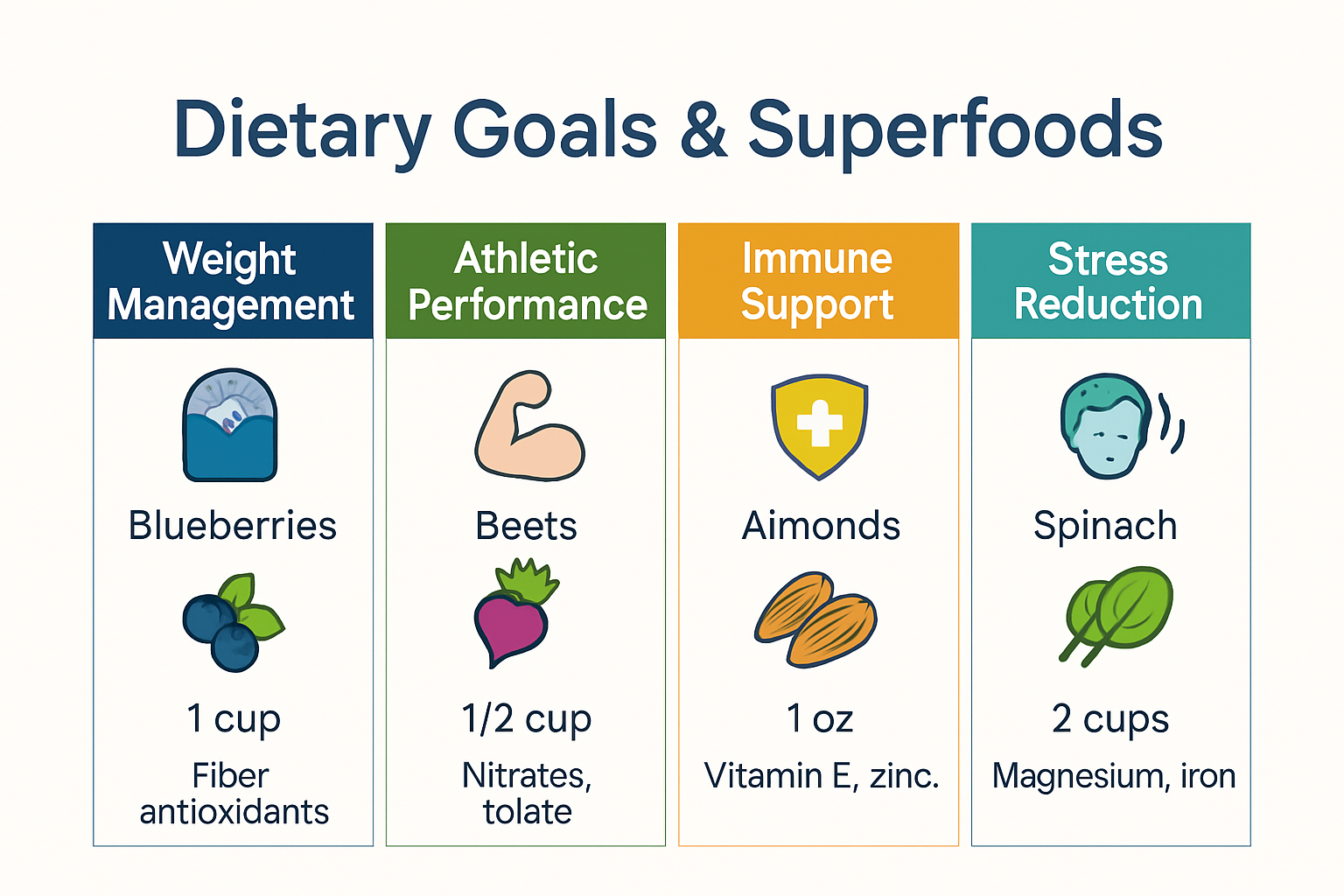
- Weight Management: Focus on high-fiber superfoods like chia seeds, quinoa, and leafy greens
- Athletic Performance: Prioritize protein-rich superfoods such as hemp seeds, spirulina, and lean proteins
- Immune Support: Incorporate antioxidant-rich foods like berries, turmeric, and green tea
- Stress Reduction: Select adaptogenic superfoods including ashwagandha, maca root, and dark chocolate
To make it easier to customize your nutrition, this table matches common health goals with superfood recommendations mentioned in the article.
| Health Goal | Recommended Superfoods |
|---|---|
| Weight Management | Chia seeds, quinoa, leafy greens |
| Athletic Performance | Hemp seeds, spirulina, lean proteins |
| Immune Support | Berries, turmeric, green tea |
| Stress Reduction | Ashwagandha, maca root, dark chocolate |
Developing a Customized Superfood Strategy
Creating an effective superfood plan involves more than randomly selecting nutrient-dense foods. It requires a strategic approach that considers individual factors such as age, gender, activity level, and existing health conditions. Consulting with nutrition professionals can help develop a more precise and effective plan.
Key considerations for personalization include:
- Analyzing current dietary habits
- Understanding genetic predispositions
- Assessing potential nutrient deficiencies
- Evaluating lifestyle and activity levels
- Monitoring individual response to dietary changes
Tracking and Adapting Your Superfood Plan
A personalized superfood strategy is not static. Regular monitoring and adjustment are crucial for optimal results. Track your progress through various metrics like energy levels, physical performance, blood tests, and overall well-being. Be prepared to modify your plan as your body’s needs change over time.
Effective tracking methods include:
- Maintaining a detailed food and symptom journal
- Regular health check-ups
- Periodic blood nutrient level assessments
- Consulting with healthcare professionals
Remember that personalization is a continuous journey. What works perfectly today might need refinement tomorrow. The most successful superfood plans remain flexible, responsive, and aligned with your evolving health goals. By approaching nutrition as a dynamic, personalized experience, you can maximize the potential of superfoods to support your unique wellness objectives.
Tracking Progress and Staying Motivated
Staying committed to a superfood nutrition plan requires strategic tracking and consistent motivation. Successful health transformations are built on systematic monitoring and adaptive strategies that keep individuals engaged and inspired throughout their wellness journey.
Effective Progress Tracking Methods
Society of Behavioral Medicine emphasizes that self-monitoring can dramatically increase the likelihood of achieving dietary goals. By implementing structured tracking techniques, individuals can gain valuable insights into their nutritional progress and make informed adjustments.
Consider these comprehensive tracking approaches:
- Nutritional Journals: Document daily food intake, superfood consumption, and corresponding energy levels
- Body Measurements: Record weight, body composition, and physical changes
- Performance Metrics: Track workout performance, recovery rates, and overall physical capabilities
- Digital Health Apps: Use technology to log nutrition and visualize progress trends
Motivation Maintenance Strategies
National Agricultural Library recommends implementing incremental changes to sustain long-term motivation. Small, achievable modifications create momentum and build confidence in health transformation efforts.
Key motivation techniques include:
- Setting realistic, measurable goals
- Celebrating minor achievements
- Creating accountability partnerships
- Developing a supportive community
- Visualizing long-term health benefits
Technology and Support Systems
MD Anderson Cancer Center highlights the importance of leveraging technological tools and support networks in maintaining health commitments. Modern digital platforms offer unprecedented opportunities for personalized health tracking and motivation.
Recommended support mechanisms:
- Utilize mobile health tracking applications
- Join online nutrition and wellness communities
- Schedule regular check-ins with health professionals
- Participate in group fitness or nutrition challenges
- Engage with nutritional coaching platforms
Successful health transformations are not about perfection but consistent progress. By embracing a holistic approach that combines systematic tracking, incremental goals, and robust support systems, individuals can maintain motivation and achieve sustainable nutritional wellness. Remember that every small step contributes to significant long-term health improvements.

Frequently Asked Questions
What are superfoods, and why are they beneficial?
Superfoods are nutrient-dense foods that provide exceptional health benefits due to their high concentration of vitamins, minerals, antioxidants, and bioactive compounds. They can help reduce inflammation, lower disease risks, and support overall wellness.
How can I easily incorporate superfoods into my daily meals?
You can incorporate superfoods into your daily diet by adding them to meals in simple ways, such as mixing berries into your breakfast, including leafy greens in salads and stir-fries, or snacking on nuts and seeds throughout the day.
Can I create a personalized superfood plan?
Yes, you can create a personalized superfood plan by identifying your specific health goals, such as weight management or immune support, and selecting appropriate superfoods that align with those objectives. Factors like age, activity level, and existing health conditions should also be considered.
How do I track my progress with a superfood diet?
You can track your progress by maintaining a food journal, monitoring body measurements, and using digital health apps. Regular check-ins on your energy levels, performance metrics, and overall well-being will help you adjust your superfood strategy for optimal results.
Elevate Your Superfood Journey with Menalam Personalization
Are you feeling overwhelmed trying to create a superfood plan that truly fits your health goals? The article shows how adding the right superfoods can boost energy and support health, but it also points out that reaching your full potential depends on tracking progress and personalizing your nutrition. Many people struggle with staying consistent or unsure if their choices actually match their body’s needs. That gap often leads to wasted effort and disappointing results.
Transform intention into action with Menalam, your digital nutritionist for 2025. Discover how easy it is to get personalized supplement recommendations based on your health profile and daily routine. Let Menalam help you track your real progress, remind you to stay on course, and adjust your plan as your needs evolve. Ready to convert superfood knowledge into real-health results? Start with Menalam’s quick health quiz at Menalam’s official website and bring science-backed structure to your wellness journey today.
Leave a Reply