

Everyone wants to feel healthier and more balanced, but figuring out what personal wellness actually means can get confusing. Here is the twist. Nearly 50 percent of your potential for well-being is determined by your genetics, according to recent research. Most people think wellness is only about good habits or motivation, yet the real story is that your genetic blueprint and daily choices weave together. What comes next might change how you think about your health journey.
Table of Contents
- Defining Personal Wellness And Its Core Elements
- The Science Behind Personal Wellness Choices
- Tracking Your Health And Wellness Progress
- Personal Wellness Tips For Fitness And Nutrition
Quick Summary
| Takeaway | Explanation |
|---|---|
| Personal Wellness is Holistic | It encompasses physical, emotional, and social wellness, highlighting the importance of a balanced approach to health and well-being. |
| Autonomy Drives Wellness Choices | According to Self-Determination Theory, a person’s sense of control over health decisions significantly enhances motivation for sustainable wellness practices. |
| Tracking Enhances Accountability | Systematic self-monitoring increases the likelihood of achieving wellness goals by providing visual feedback and insights into personal progress. |
| Fitness and Nutrition are Interconnected | Effective wellness strategies recognize the relationship between fitness and nutrition, advocating for personalized approaches that align both components for optimal health. |
| Flexibility is Key to Personalization | Each individual’s wellness journey is unique; therefore, wellness strategies should be tailored to accommodate personal needs, preferences, and responses. |
Defining Personal Wellness and Its Core Elements
Personal wellness transcends simple physical health. It represents a comprehensive approach to living that integrates multiple dimensions of human experience. Understanding what is personal wellness means recognizing it as a dynamic process of making conscious choices toward a more balanced and fulfilling life.
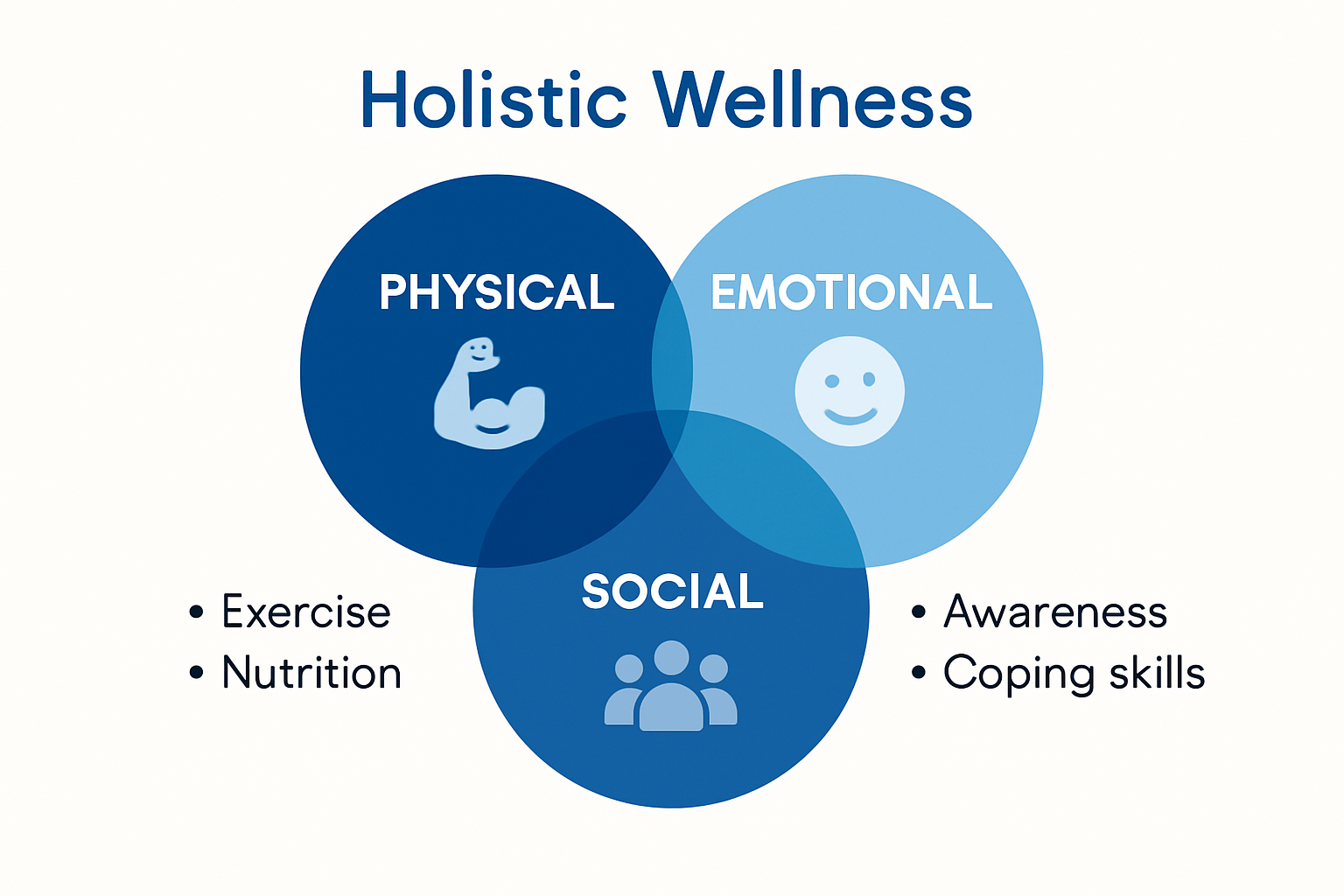
The Holistic Framework of Wellness
Wellness is not a destination but a continuous journey of self-improvement and intentional living. According to the World Health Organization, wellness is “a state of complete physical, mental, and social well-being, and not merely the absence of disease or infirmity.” This definition highlights the multifaceted nature of personal wellness.
The core elements of personal wellness encompass several interconnected dimensions:
- Physical Wellness: Involves maintaining a healthy body through regular exercise, proper nutrition, adequate sleep, and preventive healthcare.
- Emotional Wellness: Focuses on understanding and managing emotions, developing resilience, and maintaining positive mental health.
- Social Wellness: Emphasizes building and maintaining meaningful relationships, communication skills, and community connections.
Here is a table summarizing the core elements of personal wellness and their key focuses:
| Dimension | Key Focus Areas |
|---|---|
| Physical Wellness | Exercise, nutrition, sleep, preventive healthcare |
| Emotional Wellness | Managing emotions, resilience, positive mental health |
| Social Wellness | Relationships, communication, community connection |
Psychological Perspectives on Wellness
Psychologist Martin Seligman’s PERMA model provides a sophisticated framework for understanding personal wellness. According to research published in the Journal of Positive Psychology, the model identifies five critical elements of well-being:
- Positive Emotion: Experiencing joy, gratitude, and contentment
- Engagement: Being fully absorbed in meaningful activities
- Relationships: Cultivating strong and supportive social connections
- Meaning: Connecting to something larger than oneself
- Accomplishment: Setting and achieving purposeful goals
Integrating Wellness into Daily Life
Implementing personal wellness is not about perfection but consistent, intentional choices. Medical research from Harvard Health suggests that individuals who actively engage in wellness practices experience improved overall health, reduced stress, and enhanced quality of life.
Personal wellness requires a proactive approach. It demands self-awareness, commitment to personal growth, and the willingness to make adjustments that support holistic health. By understanding the interconnected nature of physical, emotional, and social well-being, individuals can create personalized strategies that promote optimal health and life satisfaction.
The journey of personal wellness is unique for each individual. What works for one person may not work for another. The key is to remain flexible, curious, and compassionate toward oneself while continuously exploring methods to enhance overall well-being.
The Science Behind Personal Wellness Choices
Personal wellness choices are far more complex than simple decision making. They are deeply rooted in scientific understanding of human behavior, psychological mechanisms, and biological predispositions. Modern research reveals that wellness is a nuanced interplay between genetics, environmental influences, and individual agency.
Psychological Foundations of Wellness Decisions
The Self-Determination Theory provides critical insights into why individuals make specific wellness choices. According to this psychological framework, human motivation emerges from three fundamental psychological needs: autonomy, competence, and relatedness. When these needs are satisfied, individuals experience enhanced motivation and psychological well-being.
Research from Stanford University indicates that people who feel a sense of control over their health decisions are more likely to maintain consistent wellness practices. This autonomy plays a crucial role in transforming health intentions into sustainable behaviors.
Genetic Influences on Personal Wellness
Contrary to traditional beliefs, wellness is not solely a matter of willpower. Genetic research published in Nature Genetics demonstrates that approximately 50% of an individual’s well-being potential is heritable. This genetic blueprint influences:
- Metabolic Responses: How efficiently your body processes nutrients
- Stress Resilience: Genetic predispositions toward emotional regulation
- Physical Adaptation: Capacity for muscle development and recovery
However, genetics is not destiny. The remaining 40% of wellness outcomes are directly influenced by personal choices and behaviors, emphasizing the critical role of intentional lifestyle management.
Below is a table summarizing the influencing factors on personal wellness discussed in this section, including estimated contributions where mentioned:
| Influencing Factor | Examples/Key Aspects | Estimated Contribution |
|---|---|---|
| Genetics | Metabolic responses, stress resilience, adaptation | ~50% |
| Personal Choices | Lifestyle habits, health decisions | ~40% |
| Environmental Factors | Social support, technology engagement | Not specifically stated |
Technology and Personalized Wellness Strategies
Emerging research reveals fascinating connections between technology usage and wellness behaviors. A comprehensive study from MIT discovered that individuals’ personal values significantly impact their engagement with health technologies. People who prioritize values like personal growth and health are more likely to utilize fitness tracking applications and maintain consistent wellness routines.
Interestingly, neurological research from Harvard Medical School suggests that personalized interventions are more effective than generic wellness recommendations. By understanding an individual’s unique psychological profile, genetic predispositions, and technological engagement patterns, health professionals can design more targeted and effective wellness strategies.
The science of personal wellness is a dynamic and evolving field. While genetic factors and psychological mechanisms provide a foundational framework, individual agency remains the most powerful determinant of long-term health outcomes. By integrating scientific insights with personal motivation, individuals can craft wellness strategies that are not just theoretically sound but personally meaningful and sustainable.
Tracking Your Health and Wellness Progress

Tracking health and wellness progress transforms abstract goals into measurable outcomes. Modern technology and scientific approaches have revolutionized how individuals monitor their personal wellness journey, providing unprecedented insights into physical and mental well-being.
The Science of Self-Monitoring
Research from Stanford University demonstrates that systematic self-monitoring dramatically increases the likelihood of achieving wellness objectives. The act of tracking creates accountability and provides clear visual feedback about personal progress.
Key metrics worth tracking include:
- Physical Indicators: Body composition, heart rate, sleep quality
- Nutritional Data: Caloric intake, macro and micronutrient balance
- Performance Metrics: Exercise frequency, intensity, recovery time
Digital Tools and Wellness Tracking
Advanced digital platforms have transformed wellness monitoring. According to MIT Technology Review, innovative tracking technologies now offer real-time biometric analysis, enabling individuals to make immediate, data-driven health decisions.
Research published in the Journal of Medical Internet Research reveals that interactive tracking tools with visual progress representations increase user motivation by 65%. These platforms convert complex health data into understandable, actionable insights.
Psychological Dimensions of Progress Tracking
Behavioral psychology research indicates that consistent tracking triggers intrinsic motivation mechanisms. By witnessing incremental improvements, individuals experience heightened self-efficacy and sustained commitment to wellness goals.
The initial tracking period proves critical. Studies from behavioral science demonstrate that early engagement within the first week significantly enhances goal achievement probabilities. This suggests that establishing tracking habits immediately after setting wellness objectives is paramount.
Effective wellness tracking transcends mere number recording. It represents a holistic approach to understanding personal health dynamics. By combining technological tools, scientific insights, and personal commitment, individuals can transform abstract wellness aspirations into tangible, measurable achievements.
Remember that wellness tracking is a personalized journey. While data provides valuable guidance, individual experiences and subjective well-being remain equally important. The most successful tracking approaches balance quantitative metrics with qualitative self-reflection, creating a comprehensive view of personal health progression.
Personal Wellness Tips for Fitness and Nutrition
Personal wellness revolves around strategic approaches to fitness and nutrition that go beyond generic advice. Understanding how to optimize physical health requires a nuanced, science-backed approach that considers individual differences and holistic well-being.
Comprehensive Fitness Strategies
Centers for Disease Control and Prevention guidelines recommend adults engage in 150 minutes of moderate-intensity aerobic activity weekly. However, effective fitness extends beyond mere time allocation.
A balanced fitness approach should incorporate multiple exercise dimensions:
- Cardiovascular Exercise: Activities like brisk walking, swimming, or cycling
- Strength Training: Resistance exercises targeting major muscle groups
- Flexibility Work: Stretching and mobility-focused practices like yoga
Research from the National Institutes of Health indicates that individuals who diversify their exercise routines experience better long-term adherence and more comprehensive physical development.
Nutritional Foundations for Wellness
Nutrition is not about restrictive dieting but creating sustainable, nourishing eating patterns. Harvard School of Public Health recommends a balanced diet emphasizing whole foods, diverse nutrient sources, and personalized dietary approaches.
Key nutritional principles include:
- Whole Food Prioritization: Focus on minimally processed, nutrient-dense foods
- Balanced Macronutrient Intake: Appropriate proportions of proteins, carbohydrates, and healthy fats
- Hydration: Consistent water intake tailored to individual needs
Integrating Fitness and Nutrition
Journal of Nutrition and Health Sciences research suggests that fitness and nutrition are interconnected systems rather than isolated components. Effective wellness strategies recognize this complex relationship.
Consider these integrative approaches:
- Time nutrition around workout schedules
- Match dietary intake with fitness goals
- Use technology for tracking both nutritional and physical activity metrics
Stanford University’s Wellness Research Center emphasizes that personalization is key. Generic recommendations fail because individual metabolic responses, genetic predispositions, and lifestyle factors vary significantly.
Wellness is a dynamic, ongoing process. By adopting flexible, science-informed strategies that respect individual complexity, you can develop a sustainable approach to fitness and nutrition that supports long-term health and vitality.
Frequently Asked Questions
What is personal wellness?
Personal wellness is a holistic approach to health that encompasses physical, emotional, and social well-being, focusing on making conscious choices for a balanced and fulfilling life.
How does genetics influence personal wellness?
Research shows that genetics can determine approximately 50% of an individual’s wellness potential, affecting factors like stress resilience, metabolic responses, and physical adaptation.
What are the core elements of personal wellness?
The core elements of personal wellness include physical wellness (exercise, nutrition), emotional wellness (managing emotions, resilience), and social wellness (relationships, community connections).
How can I effectively track my wellness progress?
You can effectively track your wellness progress by using digital tools to monitor physical indicators, nutritional data, and performance metrics, which enhance accountability and promote sustained commitment to your health goals.
Turn Personalized Wellness Goals Into Real Results With Menalam
Do you ever feel overwhelmed trying to balance fitness, nutrition, and tracking your health progress? The article highlights how genetics, self-monitoring, and flexible strategies shape your unique wellness journey. It also reveals a key challenge: generic wellness advice often does not work for everyone, especially if you want a plan that fits your individual needs.
Now you can connect the science behind personal wellness with actionable solutions. Menalam gives you a truly personalized experience by offering AI-driven supplement recommendations, built around your health data, lifestyle, and goals. Complete a quick quiz, receive your tailored plan, and use the mobile app to track your supplement intake and measure progress. Ready to make your next health milestone personal and supported by data? Discover how Menalam can help you feel your best by starting your journey on https://menalam.com today.
Recommended
- Why Humanize Content in 2025: Boost Connection and Results
Leave a Reply