

Most people think grabbing a vitamin from the store shelf is a no-brainer and that supplements are always safe. Yet consider this. Unlike prescription drugs, dietary supplements are sold without any government approval first and it’s up to the manufacturer to check safety and accuracy. That flips the script on what we expect with health products and leaves safety in your hands instead of the experts.
To help you better understand how supplements are overseen compared to prescription drugs, here is a comparison of their regulatory frameworks and responsibilities.
| Aspect | Prescription Drugs | Dietary Supplements |
|---|---|---|
| Government Pre-Approval | Required before market release | Not required before marketing |
| Manufacturer Safety Check | Verified by regulatory agency | Verified by manufacturer only |
| Product Labeling Oversight | Strict, pre-approved | Manufacturer responsible |
| Post-Market Surveillance | Extensive, mandated | Limited, focus on adverse events |
| Enforcement Mechanisms | Rigorous, with recalls and penalties | Less stringent, recalls if necessary |
Table of Contents
- What Are Supplement Safety Guidelines?
- Why Supplement Safety Matters In Health And Wellness
- How Supplement Regulations Work: A Deeper Look
- Key Concepts In Supplement Safety To Consider
- Real-World Implications Of Supplement Safety Guidelines
Quick Summary
| Takeaway | Explanation |
|---|---|
| Consult healthcare professionals before using supplements. | It’s essential to seek advice from medical experts to avoid potential risks associated with supplement use. |
| Purchase from reputable manufacturers only. | Choosing trusted brands helps ensure safety, quality, and accurate labeling of nutritional products. |
| Understand interactions with existing medications. | Awareness of how supplements may interact with prescribed medications can prevent adverse health effects. |
| Check for third-party testing and certification. | Validated testing ensures that the supplement meets safety and quality standards, providing added consumer assurance. |
| Monitor health responses after intake. | Keeping track of personal health changes can help identify any adverse effects from new supplements taken. |
What Are Supplement Safety Guidelines?
Supplement safety guidelines represent a critical framework designed to protect consumers from potential health risks associated with dietary supplements. These comprehensive standards aim to ensure that nutritional products meet essential quality, purity, and safety benchmarks before reaching consumers.
Understanding the Regulatory Landscape
The supplement safety guidelines are primarily established by regulatory bodies like the U.S. Food and Drug Administration (FDA). Unlike prescription medications, dietary supplements do not require pre-market approval, which means manufacturers are responsible for verifying their product’s safety and accurate labeling.
Key aspects of supplement safety guidelines include:
- Ensuring product ingredients are safe and correctly labeled
- Preventing contamination during manufacturing processes
- Maintaining accurate representation of health claims
- Implementing quality control measures
- Tracking potential adverse reactions
Critical Consumer Considerations
Consumers must recognize that supplement safety is a shared responsibility between manufacturers and individuals. While regulatory guidelines provide a foundational framework, personal due diligence remains crucial. Potential risks can emerge from unregulated products, interactions with existing medications, or individual health conditions.
Factors consumers should consider include:
- Consulting healthcare professionals before starting new supplements
- Purchasing from reputable manufacturers
- Understanding potential interactions with existing medications
- Checking for third-party testing and certification
- Monitoring personal health responses after supplement intake
Ultimately, supplement safety guidelines serve as a protective mechanism, helping individuals make informed nutritional choices while minimizing potential health risks associated with dietary supplementation.
Why Supplement Safety Matters in Health and Wellness
In the complex landscape of personal health, supplement safety emerges as a critical consideration for individuals seeking to optimize their wellness through nutritional interventions. Understanding the potential risks and implications of unregulated supplement consumption becomes paramount in making informed health decisions.
The Hidden Risks of Unmonitored Supplementation
Supplements, while promising enhanced health outcomes, can pose significant risks when consumed without proper knowledge and guidance. Research from the National Institutes of Health indicates that inappropriate supplement use can lead to unintended health consequences. Potential dangers include interactions with existing medications, unexpected side effects, and potential long-term health complications.
Key risks associated with unregulated supplement consumption include:
- Potential toxicity from excessive nutrient intake
- Adverse interactions with prescription medications
- Masking underlying health conditions
- Unexpected allergic reactions
- Compromised metabolic processes
Holistic Approach to Supplement Safety
A comprehensive approach to supplement safety transcends mere ingredient analysis. It encompasses understanding individual health profiles, recognizing personal physiological variations, and acknowledging the complex interplay between nutritional supplements and overall health systems.
Critical considerations for a holistic supplement safety strategy include:
- Personalized health assessments
- Professional medical consultation
- Comprehensive understanding of individual nutritional needs
- Systematic tracking of supplement effects
- Regular health monitoring
By prioritizing supplement safety, individuals can transform nutritional supplementation from a potential health risk into a strategic wellness tool.
The table below outlines the main risks and holistic strategies related to supplement safety, summarizing key points from their respective sections for easy comparison.
| Topic | Key Risks/Challenges | Holistic Strategies/Approaches |
|---|---|---|
| Excessive Nutrient Intake | Potential toxicity | Personalized health assessment |
| Interactions with Medications | Adverse health effects | Consult health professionals |
| Masking Underlying Conditions | May delay diagnosis/treatment | Systematic tracking of supplement effects |
| Unexpected Allergic Reactions | Allergies, unpredictable effects | Comprehensive understanding of nutrition needs |
| Compromised Metabolic Processes | Disrupted physiological balance | Regular health monitoring |
The journey toward optimal health requires not just supplementation, but informed, mindful, and personalized nutritional interventions that respect the intricate balance of human physiological systems.
How Supplement Regulations Work: A Deeper Look
Supplement regulations represent a complex system designed to protect consumers while allowing nutritional innovation. These intricate frameworks balance consumer safety with industry flexibility, creating a nuanced approach to dietary supplement oversight.
Regulatory Framework and Manufacturer Responsibilities
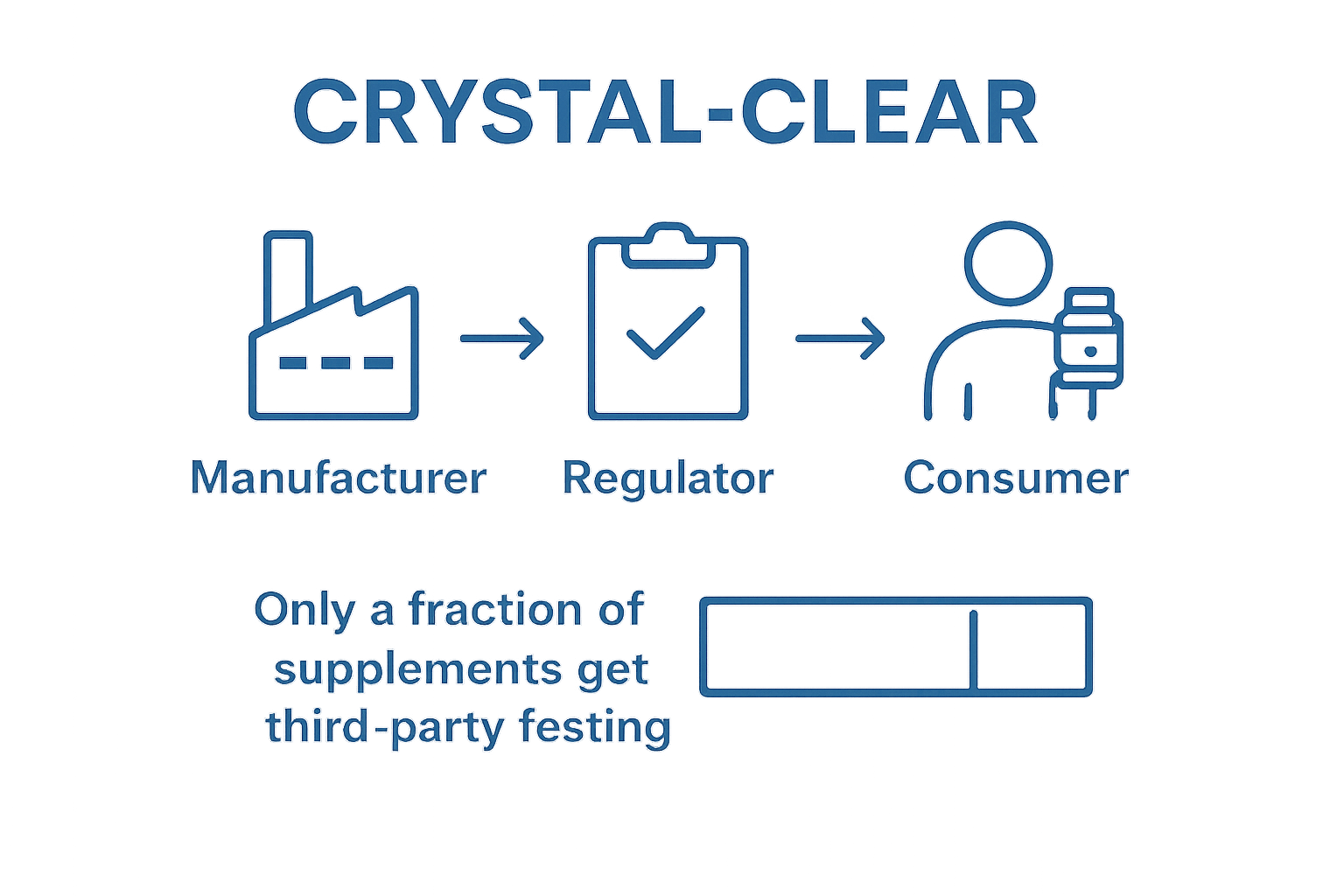
Research from the European Food Safety Authority highlights the multifaceted nature of supplement regulations. Unlike pharmaceutical products, dietary supplements operate under a different legal and regulatory paradigm that places significant responsibility on manufacturers for product safety and accurate representation.
Key aspects of manufacturer obligations include:
- Ensuring ingredient safety and purity
- Providing accurate and transparent labeling
- Implementing rigorous quality control processes
- Maintaining comprehensive documentation
- Reporting adverse events promptly
Compliance and Enforcement Mechanisms
Regulatory bodies employ sophisticated strategies to monitor supplement markets and protect consumer interests. These mechanisms involve proactive surveillance, post-market monitoring, and targeted enforcement actions against non-compliant manufacturers.
Critical enforcement strategies encompass:
- Random product testing
- Review of manufacturing practices
- Investigation of consumer complaints
- Mandatory reporting requirements
- Potential product recalls
The regulatory landscape for supplements continues to evolve, reflecting ongoing scientific understanding and emerging consumer health needs. By establishing clear guidelines and maintaining robust oversight, these regulations aim to strike a delicate balance between promoting nutritional innovation and safeguarding public health.
Key Concepts in Supplement Safety to Consider
Navigating the world of dietary supplements requires a nuanced understanding of critical safety concepts that extend beyond simple ingredient analysis. Individuals seeking to optimize their health through supplementation must develop a comprehensive approach to evaluating nutritional products.
Understanding Ingredient Quality and Sourcing
Research from the National Institutes of Health underscores the importance of rigorous ingredient assessment. The origin, purity, and potential contaminants of supplement ingredients represent fundamental considerations in determining overall product safety and efficacy.
Key factors in ingredient quality evaluation include:
- Verification of raw material sources
- Assessment of potential heavy metal contamination
- Evaluation of extraction and processing methods
- Verification of ingredient potency
- Documentation of third-party testing results
Bioavailability and Individual Metabolic Variations
Supplements do not interact uniformly across all individuals. Bioavailability – the body’s ability to absorb and utilize nutrients – varies significantly based on personal physiological characteristics, genetic factors, and existing health conditions.
Critical considerations for personalized supplement absorption include:
- Individual metabolic differences
- Potential genetic variations in nutrient processing
- Impact of existing health conditions
- Interactions with current medications
- Age and lifestyle factors affecting nutrient absorption
By developing a sophisticated understanding of these key safety concepts, consumers can make more informed decisions about dietary supplementation. The journey toward optimal health requires not just consuming supplements, but understanding their complex interactions with individual biological systems.
Real-World Implications of Supplement Safety Guidelines
Supplement safety guidelines transcend theoretical frameworks, directly impacting individual health outcomes and broader public wellness. These regulations serve as critical protective mechanisms that bridge scientific understanding with practical consumer protection strategies.
Public Health and Consumer Protection
Research from the Centers for Disease Control and Prevention demonstrates the tangible consequences of inadequate supplement safety oversight. The real-world implications of these guidelines extend far beyond administrative procedures, representing a fundamental mechanism for preventing potential health risks and ensuring consumer well-being.
Key public health protection strategies include:
- Tracking adverse supplement-related incidents
- Establishing rapid response protocols
- Implementing mandatory reporting mechanisms
- Conducting comprehensive product investigations
- Developing consumer education initiatives
Long-Term Health Impact Considerations
Supplement safety guidelines function as proactive health management tools, addressing potential risks before they manifest as significant medical complications. These regulations recognize that seemingly innocuous nutritional interventions can produce complex physiological interactions with potentially far-reaching consequences.
Critical long-term health considerations encompass:
- Preventing chronic health complications
- Identifying potential cumulative toxicity risks
- Understanding complex nutrient interactions
- Monitoring emerging scientific research
- Adapting guidelines based on evolving medical knowledge
By establishing robust safety frameworks, these guidelines transform supplement consumption from a potential health risk into a strategic, well-regulated approach to personal wellness. The ongoing evolution of these standards reflects our deepening scientific understanding of nutritional science and individual metabolic complexity.

Ready to Turn Supplement Safety Into Personal Wellness Success?
You have just learned how supplement safety guidelines protect your health and why careful choices matter for optimal results. Too many people face frustration, confusion, or even health setbacks due to products that lack proven quality or that do not match their unique needs. The article highlighted real risks like contamination, misleading health claims, and missed interactions with other medications. You want personalized help that goes beyond one-size-fits-all and adapts as your health changes.
Let Menalam be your digital nutritionist. Our platform uses artificial intelligence to match you with scientifically validated supplement plans designed for your body, goals, and lifestyle. Complete a fast health quiz so you can identify the right supplements for you, track your progress with our powerful mobile app, and safely adjust your health plan as your needs change. Now is the time to act. Visit Menalam today and experience the future of safe, smart supplement use. Your next step to reliable, personalized health is only a click away.
Frequently Asked Questions
What are supplement safety guidelines?
Supplement safety guidelines are established frameworks designed to protect consumers from potential health risks associated with dietary supplements, ensuring product quality, purity, and safety before reaching consumers.
What responsibilities do manufacturers have regarding supplement safety?
Manufacturers are responsible for ensuring ingredient safety, providing accurate labeling, implementing quality control processes, maintaining documentation, and promptly reporting any adverse events related to their supplements.
How can consumers ensure they are using supplements safely?
Consumers can ensure safe supplement use by consulting healthcare professionals, choosing reputable brands, understanding potential interactions with existing medications, monitoring personal health responses, and checking for third-party testing and certification.
What are the potential risks of consuming unregulated supplements?
The potential risks include toxicity from excessive nutrient intake, adverse interactions with medications, masking underlying health issues, unexpected allergic reactions, and complications affecting metabolic processes.
Leave a Reply