

Supplements are everywhere and they promise a quick fix for nutrition. Most people just glance at the label and worry about the calories. But few realize those numbers do not tell the full story. Supplement calories come packed with precise nutrients and concentrated energy and protein-rich supplements can drive targeted muscle growth or speed up recovery faster than food alone. The way these calories work in your body will probably surprise you.
Table of Contents
- What Are Supplement Calories And Their Role In Nutrition?
- Why Supplement Calories Matter For Health And Fitness
- How Supplement Calories Function In Your Body
- Key Concepts Surrounding Supplement Calories
Quick Summary
| Takeaway | Explanation |
|---|---|
| Supplement calories provide concentrated nutrients. | They are designed to deliver targeted nutritional support beyond just energy supply. |
| Caloric composition varies by product. | Different supplements have unique macronutrient profiles tailored to specific health goals. |
| Supplement calories aid metabolic efficiency. | They help regulate energy distribution and enhance nutrient absorption for optimal bodily function. |
| Use supplements to complement a balanced diet. | Nutritional supplements should enhance, not replace, whole food intake to achieve health goals. |
| Strategic nutrient timing benefits performance. | Properly timed supplement intake can significantly support muscle recovery and energy management during athletic activities. |
What Are Supplement Calories and Their Role in Nutrition?
Supplement calories represent the energy content derived from nutritional supplements, which play a nuanced role in supporting overall dietary intake and metabolic functions. Unlike traditional food sources, supplement calories come from concentrated nutrients designed to provide targeted nutritional support.
Understanding Supplement Caloric Composition
Supplement calories primarily originate from three macronutrient sources: proteins, carbohydrates, and fats. Each of these components contributes to the total energy value of a supplement. According to the Centers for Disease Control and Prevention, these macronutrients are fundamental in determining the energy potential of nutritional supplements.
Key characteristics of supplement calories include:
- Precise energy measurement in kilocalories
- Targeted nutrient density
- Concentrated nutritional profile
- Potential for rapid absorption
Nutritional Purpose and Energy Delivery
Nutritional supplements are not merely about calorie provision but about strategic nutrient delivery. They serve multiple purposes beyond basic energy supply:
- Supporting metabolic processes
- Addressing specific nutritional deficiencies
- Enhancing athletic performance
- Facilitating recovery and muscle development
While supplements contain calories, their primary function extends beyond simple energy provision. They offer concentrated nutrients that can fill dietary gaps, support specific health goals, and provide targeted nutritional interventions. The caloric content becomes secondary to the supplement’s core nutritional value and its ability to support optimal physiological functioning.
Below is a comparison table outlining the differences between supplement calories and traditional food calories, as discussed in the article.
| Aspect | Supplement Calories | Traditional Food Calories |
|---|---|---|
| Nutrient Density | High; ingredients are concentrated for targeted support | Varies; depends on whole food source |
| Absorption Rate | Rapid, formulated for fast uptake | Slower, due to natural digestion process |
| Targeted Delivery | Designed to address specific deficiencies or goals | General nutritional support |
| Caloric Composition | Precisely measured, tailored to purpose | Determined by natural food composition |
| Role in Diet | Complements diet and fills gaps | Forms the core of daily nutrition |
| Performance Focus | Can be optimized for athletic or recovery needs | Supports broad energy and health requirements |
Professional nutritionists emphasize that supplement calories should complement, not replace, a balanced whole food diet. The strategic integration of supplements allows individuals to fine-tune their nutritional intake based on unique metabolic needs, activity levels, and health objectives.
Why Supplement Calories Matter for Health and Fitness
Supplement calories are not just numerical values on a nutrition label but critical components that significantly impact health, performance, and physiological functioning. Understanding their role helps individuals make strategic nutritional choices aligned with specific fitness and wellness objectives.
Energy Dynamics and Performance Optimization
The significance of supplement calories extends far beyond simple energy provision. According to Mayo Clinic Health System, caloric intake directly influences athletic performance and metabolic efficiency. Different fitness goals require precise caloric management:
- Muscle building requires protein-rich supplements with targeted caloric intake
- Weight management demands carefully calculated energy consumption
- Athletic performance needs sustained energy release
- Recovery protocols benefit from strategic nutrient timing
Metabolic Efficiency and Nutritional Precision
Supplement calories play a crucial role in metabolic regulation. The body requires specific macronutrient compositions to maintain optimal functioning. Precise caloric intake through supplements allows for:
- Controlled energy distribution
- Enhanced nutrient absorption
- Balanced hormonal responses
- Targeted physiological support
The intricate relationship between supplement calories and metabolic processes means that individuals can fine-tune their nutritional intake. Professional athletes and fitness enthusiasts leverage this understanding to create personalized nutrition strategies that align with their specific physiological requirements.

Nutritional science demonstrates that supplement calories are not merely about quantity but about strategic nutritional intervention. By understanding the nuanced role of these calories, individuals can transform their approach to health, fitness, and overall wellness.
How Supplement Calories Function in Your Body
Supplement calories are complex biochemical units that transform nutritional intake into functional energy, driving multiple physiological processes essential for maintaining optimal health and performance. Understanding their intricate metabolic journey reveals how these calories interact with bodily systems beyond simple energy provision.
Metabolic Conversion and Energy Production
According to Mayo Clinic, metabolism represents the comprehensive biochemical process of converting nutritional intake into usable energy. Supplement calories undergo a sophisticated transformation through several critical stages:
-
Breaking down macronutrients into molecular components
-
Converting nutrients into adenosine triphosphate (ATP)
-
Distributing energy across cellular systems
-
Regulating metabolic efficiency
Nutrient Absorption and Utilization Mechanisms
The human body processes supplement calories through complex absorption mechanisms that prioritize efficient energy extraction. Different macronutrients follow unique metabolic pathways:
- Proteins undergo amino acid breakdown for muscle repair
- Carbohydrates convert to glucose for immediate energy
- Fats metabolize into fatty acids for long-term energy storage
- Micronutrients facilitate enzymatic reactions supporting metabolism
These intricate processes demonstrate that supplement calories are not merely numerical values but dynamic biochemical agents driving physiological functionality. The body’s metabolic machinery continuously adapts, prioritizing energy distribution based on immediate nutritional requirements and long-term health objectives.
To clarify how different macronutrients in supplements are utilized in the body, here is a feature table summarizing their primary metabolic functions.
| Macronutrient | How It Functions in the Body | Example Outcome |
|---|---|---|
| Protein | Broken down to amino acids for muscle repair and growth | Accelerates muscle recovery |
| Carbohydrates | Converted to glucose for immediate energy | Fuels workouts and daily activities |
| Fats | Metabolized into fatty acids for stored energy | Provides sustained energy over time |
| Micronutrients | Facilitate enzymatic and metabolic reactions | Support overall metabolic health |
Understanding how supplement calories function empowers individuals to make informed nutritional choices, recognizing that each calorie represents a potential catalyst for metabolic optimization and comprehensive wellness.
Key Concepts Surrounding Supplement Calories
Supplement calories represent a nuanced nutritional concept that extends beyond traditional dietary understanding. They embody a sophisticated approach to nutritional supplementation, offering precise energy and nutrient delivery mechanisms that support diverse health and fitness objectives.
Caloric Composition and Nutritional Density
According to the National Institutes of Health, supplement calories are not uniform across different products. Their composition varies significantly based on macronutrient content and intended physiological purpose. Key characteristics include:
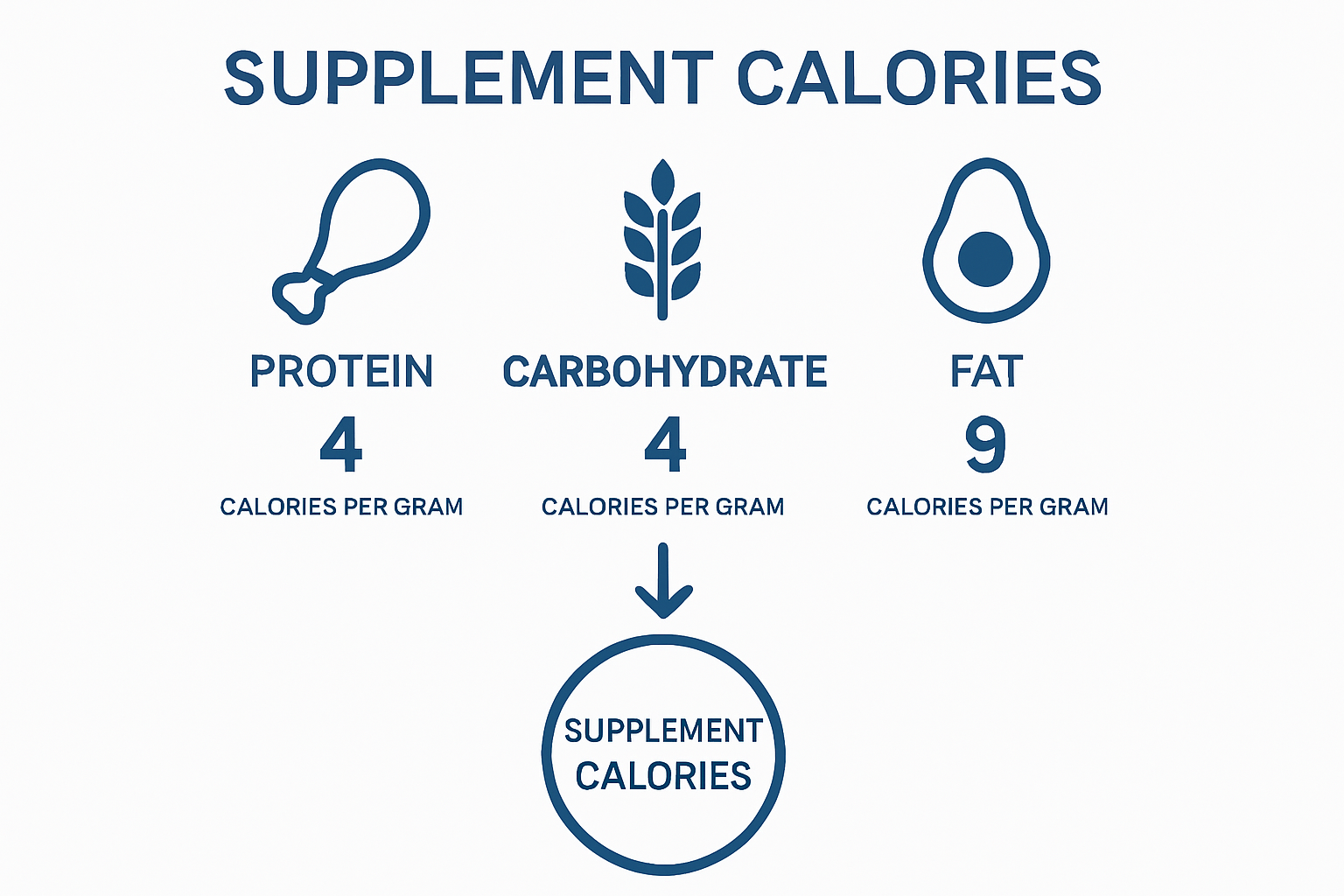
- Variable energy contribution from different nutrient sources
- Concentrated nutritional profiles
- Specialized metabolic targeting
- Precise macronutrient ratios
Metabolic Impact and Energy Utilization
Supplement calories function differently from standard food-derived calories. They represent a targeted approach to nutritional intervention, designed to support specific physiological processes. These specialized calories offer unique advantages:
- Rapid nutrient absorption
- Controlled energy release
- Minimal digestive system strain
- Optimized nutrient bioavailability
The strategic deployment of supplement calories allows individuals to fine-tune their nutritional intake with unprecedented precision. Unlike traditional dietary sources, these calories can be calibrated to support specific metabolic goals such as muscle development, recovery acceleration, or performance enhancement.
Understanding supplement calories requires recognizing them as more than simple energy units. They represent intelligent nutritional tools that enable personalized metabolic optimization, bridging the gap between standard dietary intake and targeted physiological support.
Take Control of Your Supplement Calories with Menalam
Understanding how supplement calories shape your energy and health is only the first step. If you feel overwhelmed by the complexity of matching your unique nutritional needs with the right supplement calories and precise macronutrient intake, you are not alone. Many readers struggle with translating scientific concepts about calorie targeting and metabolic optimization into practical daily decisions. If you want personalized nutrition without second-guessing or generalized advice, it is time for a change.

Experience the power of data-driven, expert-backed solutions on Menalam. Complete a quick health quiz and unlock tailored supplement recommendations that fit your body, lifestyle, and goals. Take the next step toward optimizing your supplement intake and see your progress tracked in real time with the Menalam mobile app. Your journey to smarter, more effective nutrition starts now. Visit Menalam’s digital nutritionist platform and discover how easy it can be to put nutritional science to work for you today.
Frequently Asked Questions
What are supplement calories?
Supplement calories are the energy content derived from nutritional supplements, which provide concentrated nutrients designed to support overall dietary intake and metabolic functions.
How do supplement calories function in the body?
Supplement calories undergo a biochemical process where they are metabolized and converted into usable energy (ATP) for various bodily functions, influencing metabolic efficiency and performance.
Why should I consider supplement calories in my diet?
Supplement calories can help address specific nutritional deficiencies, optimize athletic performance, support recovery, and facilitate muscle development, making them valuable for individuals with unique dietary needs.
How do supplement calories differ from traditional food calories?
Unlike traditional food calories, supplement calories offer targeted nutrient delivery, rapid absorption, and higher nutrient density, which helps meet specific health and fitness goals more efficiently.
Leave a Reply