

Choosing the right multivitamin with food can feel overwhelming when shelves are packed with endless options. Most people think grabbing a daily tablet is enough. Yet research shows that timing, food combinations, and even your health status can dramatically influence how well your body absorbs and uses each nutrient. There is a science to making that supplement actually work for you, and it is less about the pill and more about the strategy.
Table of Contents
- Step 1: Evaluate Your Nutritional Needs
- Step 2: Select The Right Multivitamin
- Step 3: Choose The Best Time To Take It With Food
- Step 4: Pair With Complementary Foods
- Step 5: Monitor And Adjust Your Intake
- Step 6: Assess And Verify Your Health Progress
Quick Summary
| Key Point | Explanation |
|---|---|
| 1. Assess your nutritional needs first | Evaluate your age, gender, and health conditions to identify nutrient gaps before selecting a multivitamin. |
| 2. Choose a quality multivitamin | Look for third-party verification seals to ensure the multivitamin’s purity, potency, and appropriate nutrient profile. |
| 3. Take it with a substantial meal | Consume your multivitamin during a major meal to enhance nutrient absorption and minimize stomach discomfort. |
| 4. Pair with complementary foods | Enhance nutrient absorption by combining your multivitamin with foods that contain healthy fats and ensure compatible nutrient interactions. |
| 5. Monitor health progress regularly | Keep track of health changes and schedule blood tests to adjust your supplementation based on your body’s evolving needs. |
Step 1: Evaluate Your Nutritional Needs
Understanding your unique nutritional landscape is the foundation of effective supplement strategy. Before selecting a multivitamin with food, you need a comprehensive assessment of your current health status, dietary patterns, and potential nutrient deficiencies.
Your nutritional evaluation begins with a holistic self-examination. Consider your age, gender, lifestyle, existing health conditions, and daily diet. Physical symptoms like persistent fatigue, skin changes, hair loss, or recurring infections might signal underlying nutrient gaps. Tracking these indicators provides crucial insights into your body’s specific requirements.
According to Nutrition.gov, professional assessment tools can help pinpoint precise nutritional needs. Consider consulting a registered dietitian who can conduct a thorough dietary analysis. They will review your food intake, medical history, and potential absorption challenges. Some healthcare professionals might recommend blood tests to detect specific vitamin and mineral deficiencies, offering a scientific baseline for your supplementation strategy.
Key factors to evaluate during your nutritional assessment include:
- Dietary restrictions or preferences (vegetarian, vegan, gluten-free)
- Chronic health conditions
- Stress levels and sleep patterns
- Physical activity and fitness goals
- Potential medication interactions
By methodically examining these elements, you create a personalized roadmap for selecting the most appropriate multivitamin with food. Remember, nutrition is not one-size-fits-all. Your unique biochemistry demands a tailored approach that considers your individual physiological needs and health objectives.
Step 2: Select the Right Multivitamin
Selecting the perfect multivitamin with food requires strategic decision-making that goes beyond simply grabbing the first bottle off the shelf. Your goal is to find a supplement that complements your unique nutritional profile and supports your overall health objectives.
Start by examining the quality and credibility of potential multivitamins. According to Consumer Reports, looking for third-party verification seals like USP (United States Pharmacopeia) can help ensure the product meets stringent quality standards. These independent certifications indicate that the supplement contains the ingredients listed on the label and has been tested for purity and potency.
Carefully review the supplement’s nutrient composition, paying close attention to recommended daily values. Not all multivitamins are created equal. Some cater to specific demographics like women, men, seniors, or athletes. Consider your age, gender, lifestyle, and any specific health concerns when making your selection. For instance, women might need higher iron content, while older adults might require more vitamin D and B12.
Key considerations when choosing your multivitamin include:
- Comprehensive nutrient profile matching your specific needs
- Appropriate dosage for your age and gender
- Absence of unnecessary fillers or artificial additives
- Compatibility with any existing medications
- Ease of absorption and bioavailability
Consult with a healthcare professional to validate your choice, especially if you have underlying health conditions or take prescription medications. They can provide personalized guidance on selecting a multivitamin that aligns perfectly with your nutritional requirements and overall wellness strategy.
Step 3: Choose the Best Time to Take It with Food
Timing your multivitamin intake is more strategic than you might realize. Nutrient absorption depends significantly on when and how you consume your supplement with food, transforming a simple daily ritual into an optimized health practice.
According to Cleveland Clinic, consuming your multivitamin during a meal dramatically improves nutrient uptake and minimizes potential stomach discomfort. The presence of food triggers digestive enzymes and increases blood flow to the digestive tract, creating an ideal environment for vitamin absorption. Aim to take your multivitamin with the most substantial meal of the day, typically breakfast or lunch, which provides both dietary fats and proteins that enhance nutrient assimilation.
Different vitamins have unique absorption characteristics. Fat-soluble vitamins like A, D, E, and K require dietary fat for optimal uptake, making a meal with moderate protein and healthy fats the perfect companion. Water-soluble vitamins such as B-complex and vitamin C are more versatile but still benefit from food-based consumption. Consistency is key – select a meal and time you can realistically maintain every day, creating a sustainable supplement routine.

Consider these strategic timing considerations:
- Avoid taking multivitamins on an empty stomach
- Choose a meal with balanced macronutrients
- Be consistent with your daily timing
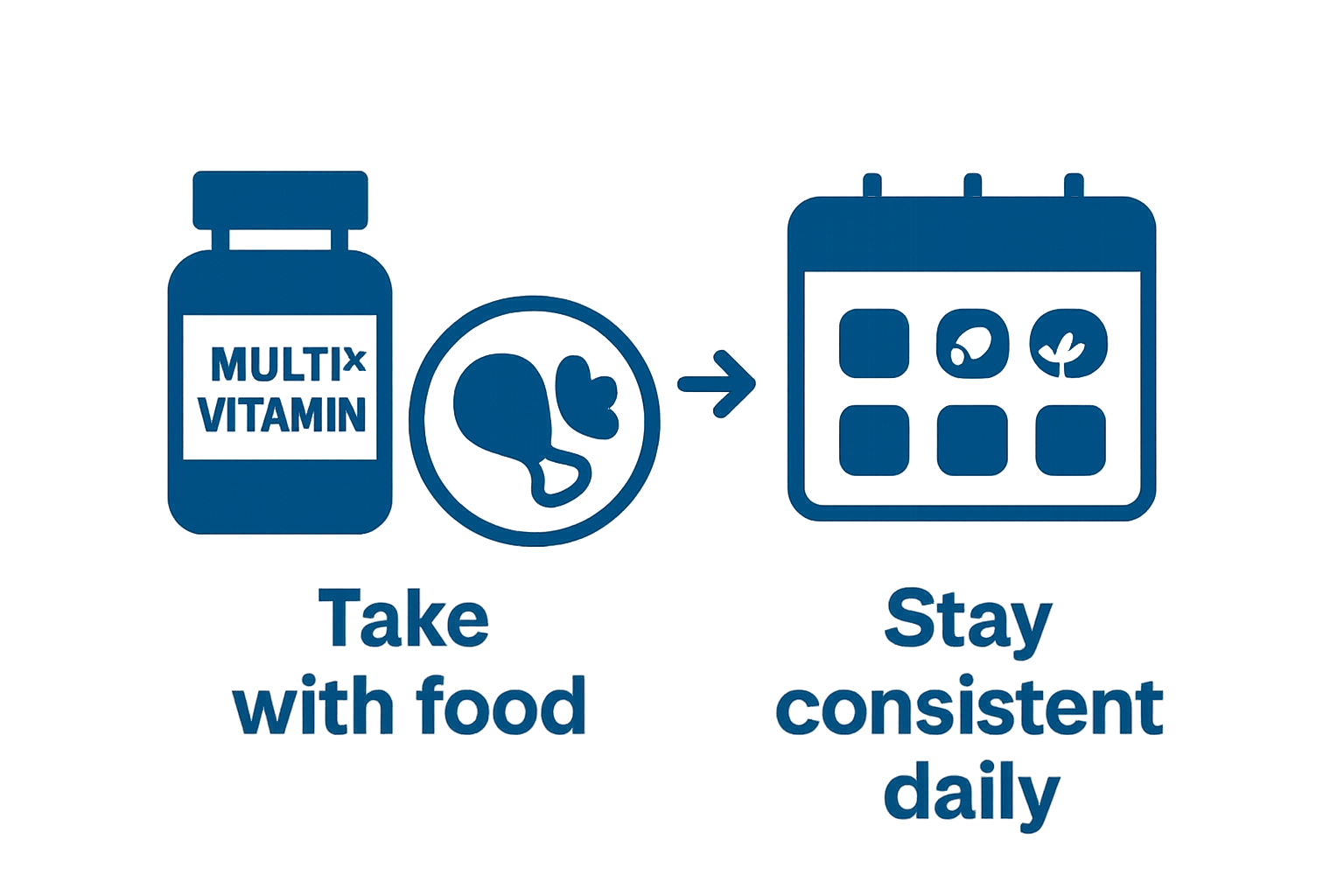
- Listen to your body’s response and adjust if experiencing any digestive discomfort
Pay attention to potential interactions with medications or other supplements. Some nutrients can compete for absorption or interact with prescription drugs, so consulting your healthcare provider ensures a safe and effective supplementation strategy.
Step 4: Pair with Complementary Foods
Transforming your multivitamin intake from a routine task to a strategic nutritional approach requires understanding the powerful synergy between supplements and specific foods. Nutrient absorption is not just about consumption, but about intelligent pairing that maximizes your body’s ability to utilize essential vitamins and minerals.
According to the National Institutes of Health, certain nutrients have complex interaction patterns that can significantly enhance or inhibit absorption. Fat-soluble vitamins like A, D, E, and K require dietary fats to be effectively absorbed, making avocados, nuts, olive oil, and fatty fish ideal companion foods. These healthy fats act as carriers, helping your body efficiently process and store these critical nutrients.
Some vitamins work best when strategically combined. Iron absorption, for instance, dramatically improves when consumed with vitamin C-rich foods like citrus fruits, bell peppers, or strawberries. Calcium absorption requires vitamin D, so consider pairing your multivitamin with foods like salmon, egg yolks, or fortified dairy products. The right food combinations can transform your supplement from a passive supplement to an active nutritional powerhouse.
Strategic food pairing principles include:
- Match fat-soluble vitamins with healthy dietary fats
- Combine iron-rich foods with vitamin C sources
- Include protein to support nutrient metabolism
- Avoid consuming calcium-rich foods simultaneously with iron supplements
Remember that individual nutritional needs vary. Pay attention to how your body responds to different food combinations, and don’t hesitate to consult a nutritionist for personalized guidance. Your goal is creating a harmonious nutritional environment that maximizes the potential of your multivitamin with food strategy.
Here is a summary table to help you identify complementary food pairings with your multivitamin, ensuring optimized nutrient absorption based on specific vitamin and mineral combinations.
| Nutrient in Multivitamin | Best Food Pair for Absorption | Why This Pairing Works | Foods to Avoid Concurrently |
|---|---|---|---|
| Fat-Soluble Vitamins (A,D,E,K) | Healthy fats (avocado, nuts, olive oil, salmon) | Fat is required for absorption | None specific |
| Iron | Vitamin C-rich foods (oranges, bell peppers, strawberries) | Vitamin C enhances iron absorption | Calcium-rich foods |
| Calcium | Foods with vitamin D (egg yolks, fortified dairy, salmon) | Vitamin D aids calcium absorption | Iron supplements |
| B-Complex & Vitamin C | Balanced meal with some protein | Food reduces stomach upset/boosts uptake | None specific |
| Magnesium | Whole grains, legumes | Helps absorption and metabolism | High-dose zinc supplements |
Step 5: Monitor and Adjust Your Intake
Effective supplement management is an ongoing process that requires consistent tracking, reflection, and adaptation. Your body’s nutritional needs are dynamic, changing with age, lifestyle, health status, and environmental factors. Simply taking a multivitamin is not enough; you must actively monitor its impact and be prepared to make informed adjustments.
According to the American Journal of Clinical Nutrition, monitoring multivitamin intake helps prevent potential nutrient imbalances and ensures you’re receiving optimal nutritional support. Start by keeping a detailed health journal documenting any changes in energy levels, physical symptoms, mood, and overall well-being after beginning your supplement regimen. Pay attention to subtle shifts that might indicate your current multivitamin is working effectively or needs refinement.
Schedule periodic check-ins with your healthcare provider to conduct comprehensive blood tests that assess your nutrient levels. These tests provide scientific insights into your body’s absorption and utilization of vitamins and minerals. Blood work can reveal whether your current multivitamin matches your physiological requirements or if adjustments are necessary. Some key markers to track include vitamin D, B12, iron, and essential mineral levels.
Consider these monitoring strategies:
- Track physical and mental health changes
- Conduct regular blood tests
- Review supplement effectiveness every 6-12 months
- Be open to modifying your multivitamin based on health changes
- Consult healthcare professionals for personalized guidance
Remember that supplement needs evolve. A multivitamin that worked perfectly two years ago might not be ideal today. Stay proactive, remain observant, and approach your nutritional strategy with flexibility and informed decision-making.
The following table provides a checklist for monitoring and adjusting your multivitamin intake, so you can systematically track and update your supplement strategy as your needs evolve.
| Monitoring Task | Frequency | What to Track | Next Steps if Needed |
|---|---|---|---|
| Log health changes in journal | Weekly | Energy, mood, symptoms | Adjust routine as needed |
| Blood test for vitamin/mineral levels | 6-12 months | Vitamin D, B12, iron, key minerals | Consult provider, adjust dosage |
| Review supplement effectiveness | Every 6-12 months | Symptom improvement, overall health | Switch products if necessary |
| Update healthcare provider | Every visit | Changes in diet, medications | Get professional advice |
| Modify based on life changes | As needed | New diagnoses, lifestyle or diet | Reevaluate supplement choice |
Step 6: Assess and Verify Your Health Progress
Transforming your multivitamin intake from a passive routine to an active health optimization strategy requires systematic assessment and verification. Your health journey is a continuous narrative of improvement, and tracking your progress becomes the key to understanding how your supplement regimen impacts your overall wellness.
According to Nutrients Journal, effective health progress tracking involves more than just subjective feelings. Establish a comprehensive baseline by documenting your initial health markers before starting your multivitamin regimen. This includes recording current energy levels, sleep quality, physical performance, mental clarity, and any existing health concerns. Create a detailed health journal that serves as your personal wellness tracker, allowing you to objectively measure changes over time.
Quantitative and qualitative metrics provide a holistic view of your nutritional strategy’s effectiveness. Schedule regular medical check-ups to conduct blood tests that measure nutrient levels, inflammatory markers, and overall metabolic health. Compare these results against your initial baseline to identify improvements or areas requiring further attention. Pay close attention to key indicators like vitamin D levels, iron absorption, B12 status, and general immune system function.
Consider these comprehensive assessment strategies:
- Conduct quarterly blood panel screenings
- Track physical and mental energy levels
- Record sleep quality and recovery
- Monitor immune system resilience
- Note any changes in existing health conditions
Remember that health progress is not linear. Some improvements might be subtle, while others could be more pronounced. Maintain patience, stay consistent with your multivitamin intake, and remain open to professional guidance from healthcare providers who can offer personalized insights into your nutritional journey.
Personalize Your Multivitamin Journey with Menalam
You have learned how crucial it is to match your supplement routine to your unique nutritional needs. But finding the right multivitamin with food requires more than guesswork and generic advice. The pain points you face—such as tracking your nutrient intake, monitoring progress, and adjusting based on real results—can be challenging without expert support. This is where Menalam bridges the gap by giving you personalized supplement recommendations and ongoing progress tracking based on the exact steps outlined in the article. With Menalam, you do not need to navigate your health improvement journey alone.
Ready to stop guessing and start seeing measurable progress? Take the next step and visit Menalam’s digital nutritionist platform for your tailored supplement plan. Complete a quick health quiz to get science-backed recommendations designed just for you. Menalam’s smart mobile app will keep you on track and help you monitor your results, reflecting the best practices you read about today. Commit to smarter, more effective supplement habits now by exploring Menalam.
Frequently Asked Questions
What factors should I consider when evaluating my nutritional needs?
To evaluate your nutritional needs, consider factors such as age, gender, lifestyle, existing health conditions, dietary restrictions, stress levels, sleep patterns, physical activity, and potential medication interactions. A thorough assessment can help identify any nutrient deficiencies.
How do I choose the right multivitamin for my needs?
Select a multivitamin by examining the product’s quality, nutrient composition, and whether it meets your specific health needs. Look for third-party verification seals, ensure appropriate dosages for your age and gender, and consult with a healthcare professional for personalized guidance.
When is the best time to take a multivitamin with food?
The best time to take a multivitamin is during a meal, preferably with the most substantial meal of the day. This enhances nutrient absorption and minimizes potential stomach discomfort. Consistency in timing is also crucial for establishing a sustainable routine.
How can I maximize nutrient absorption from my multivitamin?
To maximize absorption, pair your multivitamin with complementary foods. For instance, consume fat-soluble vitamins with healthy fats and iron with vitamin C-rich foods. Additionally, pay attention to any potential interactions with medications or other supplements you may be taking.
Leave a Reply