

Finding the right vitamins for your body feels overwhelming when you stare at endless bottles promising better health. Around 77 percent of American adults now take dietary supplements, yet most people guess which ones they need. What if building an effective vitamin routine is less about guessing and more about personal science—where every supplement has a purpose tailored to your specific goals?
Table of Contents
- Step 1: Identify Your Health Goals And Nutritional Needs
- Step 2: Research Vitamins And Their Interactions
- Step 3: Create A Personalized Vitamin Schedule
- Step 4: Incorporate Vitamins Into Your Daily Routine
- Step 5: Monitor Your Progress And Adjust As Needed
Quick Summary
| Key Point | Explanation |
|---|---|
| 1. Identify Your Health Goals | Conduct a comprehensive self-assessment to define personal health goals and nutritional needs for effective supplement strategies. |
| 2. Research Vitamin Interactions | Understand nutrient interactions to enhance absorption and effectiveness of vitamins, avoiding combinations that may hinder benefits. |
| 3. Create a Personalized Schedule | Develop a daily vitamin intake schedule that aligns with your lifestyle and dietary preferences to maximize nutrient absorption. |
| 4. Incorporate Supplements Consistently | Integrate vitamins into daily habits using anchor points and reminders to ensure regular intake without added stress. |
| 5. Monitor and Adjust Your Strategy | Regularly assess the effectiveness of your supplement regimen and adjust as needed based on health changes and goals. |
Step 1: Identify Your Health Goals and Nutritional Needs
Understanding your personal health landscape is the critical first step in creating a strategic vitamin and supplement approach. This foundational process transforms random supplement consumption into a targeted, science-backed nutrition strategy.
Begin by conducting a comprehensive self-assessment of your current health status, lifestyle, and specific wellness objectives. Your personal health goals will dramatically influence which vitamins and supplements can provide maximum benefit. Are you seeking improved energy levels, enhanced immune function, better athletic performance, or addressing specific nutritional deficiencies?
Key Assessment Areas
- Physical activity level and fitness goals
- Existing health conditions or genetic predispositions
- Dietary patterns and potential nutritional gaps
- Stress levels and sleep quality
- Age and gender specific nutritional requirements
According to research from the National Institutes of Health, personalized nutritional assessments are fundamental in determining precise supplement needs. Professional guidance can significantly refine this process. Consider consulting a registered dietitian or healthcare provider who can conduct comprehensive blood tests to pinpoint exact micronutrient deficiencies.
Your assessment should include an honest evaluation of your current diet. Track your typical daily food intake for one week, noting protein sources, vegetable and fruit consumption, whole grain intake, and potential nutritional shortfalls. This detailed dietary snapshot will reveal where vitamins taken together might strategically fill nutritional gaps.
Below is a checklist table to help you verify each step when identifying your health goals and nutritional needs.
| Checklist Item | Description |
|---|---|
| Personal Health Assessment | Completed a comprehensive review of current health status |
| Wellness Objectives | Identified clear, specific personal health goals |
| Dietary Patterns Documented | Logged typical food intake and highlighted potential gaps |
| Healthcare Consultation | Consulted a professional or completed bloodwork (optional) |
| Initial Supplement List | Generated list of potential vitamins and supplements needed |
Technology can also support your nutritional mapping. Many modern health tracking apps and online platforms offer preliminary nutritional assessments. These digital tools can help you log dietary intake, track potential deficiencies, and generate initial recommendations for vitamin combinations tailored to your specific needs.
Verification Checklist
- Completed detailed personal health assessment
- Identified specific wellness objectives
- Documented current dietary patterns
- Consulted healthcare professional (optional but recommended)
- Generated initial list of potential vitamin and supplement needs
Remember that identifying your health goals is not a one-time event but an ongoing process. Your nutritional needs will evolve with age, lifestyle changes, and shifting health circumstances. Remain flexible and commit to periodic reassessments to ensure your vitamin strategy remains precisely aligned with your wellness journey.
Step 2: Research Vitamins and Their Interactions
Diving into the complex world of vitamin interactions requires more than casual knowledge. This critical step transforms your supplement strategy from random consumption to a scientifically informed approach that maximizes nutritional benefits while avoiding potential conflicts.
Begin by understanding that vitamins are not standalone elements but part of an intricate biochemical network. Some nutrients work synergistically, dramatically enhancing each other’s absorption and effectiveness, while others can potentially interfere with or neutralize one another when taken simultaneously.
According to research from the National Institutes of Health, certain vitamin combinations can significantly improve overall nutritional absorption. For instance, vitamin D dramatically enhances calcium absorption, while vitamin C can improve iron uptake from plant-based sources. Conversely, some minerals and vitamins can competitively block each other’s absorption when consumed together.
Your research should focus on creating intelligent vitamin combinations. Fat-soluble vitamins (A, D, E, K) require dietary fat for optimal absorption, so timing their intake with meals containing healthy fats becomes crucial. Water-soluble vitamins like B-complex and vitamin C have different absorption mechanisms and can often be taken together without significant interactions.
Critical Interaction Considerations
- Calcium can inhibit iron absorption
- Zinc might reduce copper bioavailability
- Vitamin C enhances non-heme iron absorption
- Magnesium can improve vitamin D metabolization
Utilize reputable online resources and scientific databases to conduct your research. Academic websites, government health portals, and peer-reviewed nutrition journals offer comprehensive insights into vitamin interactions. Digital tools like nutrition tracking apps and interactive vitamin interaction checkers can provide visual representations of potential synergies and conflicts.
Consider creating a personal reference document that maps out your specific vitamins, their recommended dosages, and potential interactions. This living document will serve as your personal nutrition guide, helping you make informed decisions about supplement timing and combinations.
This table summarizes key vitamin and mineral interactions to keep in mind when researching effective combinations or potential conflicts.
| Nutrient Pair | Effect on Absorption | Additional Notes |
|---|---|---|
| Vitamin D & Calcium | Vitamin D enhances calcium absorption | Take together for better bone health |
| Vitamin C & Iron | Vitamin C increases iron absorption | Especially useful for non-heme (plant-based) iron |
| Calcium & Iron | Calcium inhibits iron absorption | Space supplements apart to avoid interaction |
| Zinc & Copper | Zinc may lower copper bioavailability | Monitor intake if taking high doses of zinc |
| Magnesium & Vitamin D | Magnesium aids vitamin D metabolism | Supports optimal vitamin D function |
Verification Checklist
- Documented potential vitamin and mineral interactions
- Created a personal reference guide for supplement combinations
- Identified synergistic and conflicting nutrient pairs
- Consulted multiple scientific sources for verification
- Developed a preliminary strategy for optimal vitamin intake
Remember that vitamin research is an ongoing process. Nutritional science continuously evolves, so maintain a curious and adaptable approach to understanding how vitamins taken together can optimize your health strategy.
Step 3: Create a Personalized Vitamin Schedule
Transforming your vitamin research into a structured, actionable plan requires strategic scheduling that maximizes nutrient absorption and minimizes potential interactions. A personalized vitamin schedule is not a one-size-fits-all approach but a dynamic framework tailored to your unique physiological needs and daily routine.
Begin by mapping out your typical daily schedule, identifying optimal windows for vitamin intake. Morning hours are often ideal for water-soluble vitamins like B-complex and vitamin C, which provide energy and metabolic support. Fat-soluble vitamins (A, D, E, K) work best when consumed with meals containing healthy fats to enhance absorption.
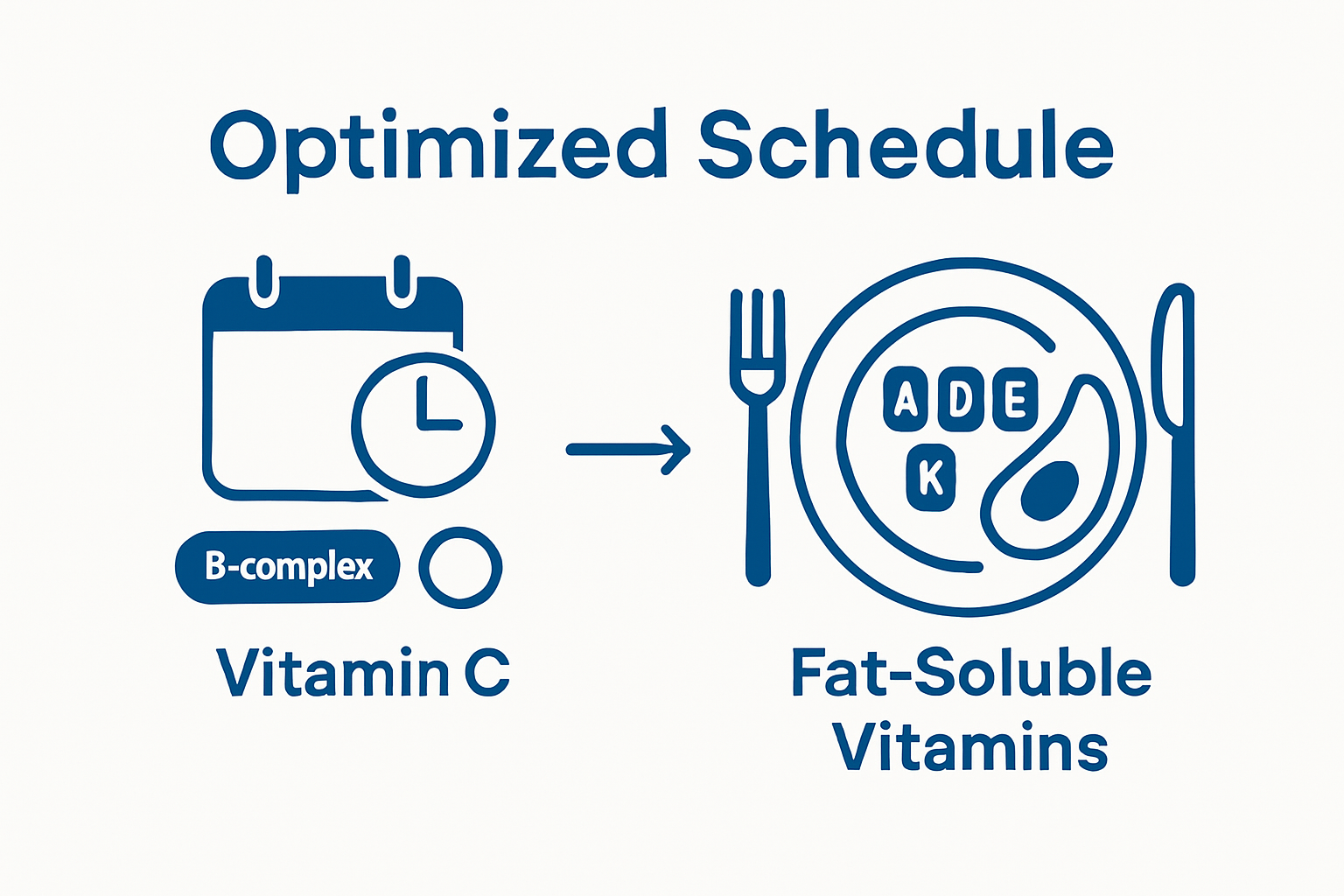
According to personalized nutrition research, individual genetic factors and lifestyle characteristics significantly influence supplement effectiveness. Consider your specific biorhythms, meal times, and energy requirements when designing your vitamin schedule.
Strategic Scheduling Considerations
- Take B-vitamins with breakfast for energy metabolism
- Consume calcium and magnesium supplements in the evening
- Pair iron supplements with vitamin C for enhanced absorption
- Space out calcium and iron supplements to prevent interference
Digital tools can streamline your scheduling process. Smartphone apps with supplement tracking features allow you to log intake, set reminders, and monitor your nutritional consistency. Some advanced platforms even provide personalized recommendations based on your input and health data.
Consider creating a visual supplement chart that outlines daily and weekly intake. This chart should include specific times, dosages, and potential food interactions. Color-coding or using a dedicated notebook can help you maintain consistency and track your progress.

Flexibility remains crucial in your vitamin scheduling. Your nutritional needs will evolve with changes in diet, fitness levels, stress, and overall health. Regular reassessment ensures your vitamin schedule remains aligned with your current wellness objectives.
Verification Checklist
- Developed comprehensive daily vitamin intake schedule
- Identified optimal timing for each supplement
- Created a visual tracking method
- Established a system for monitoring supplement effectiveness
- Planned periodic schedule reviews and adjustments
Remember that a personalized vitamin schedule is a living document. Remain open to refinement, listen to your body’s responses, and be prepared to make informed adjustments as your health journey progresses.
Step 4: Incorporate Vitamins Into Your Daily Routine
Transforming vitamin intake from an occasional afterthought to a consistent daily practice requires strategic planning and intentional habit formation. Your success hinges on seamlessly integrating supplements into your existing lifestyle without creating additional stress or complexity.
Anchor Points for Supplement Consistency
Identify reliable daily anchor points that naturally support vitamin intake. For most individuals, these moments revolve around established meal times or morning and evening routines. Breakfast provides an excellent opportunity for energy-boosting supplements like B-complex vitamins, while evening routines can accommodate minerals that support relaxation and recovery, such as magnesium.
According to research from the National Institutes of Health, consistency is paramount in supplement effectiveness. Developing a reliable routine increases absorption and ensures your body receives nutrients at predictable intervals.
Consider using visual and technological reminders to support your new habit. Smartphone apps with customizable supplement tracking can send notifications, while strategically placed pill organizers in visible locations serve as physical prompts. Some individuals find success by linking vitamin intake with other non-negotiable daily activities like brushing teeth or preparing morning coffee.
Strategic Implementation Techniques
- Place vitamin containers near daily routine items
- Use smartphone reminder apps
- Pair supplement intake with consistent meals
- Create a dedicated supplement area in your kitchen or bathroom
Prepare for potential challenges by creating backup strategies. Travel, changing schedules, or high-stress periods can disrupt supplement routines. Invest in portable pill containers, maintain a travel-sized supplement kit, and develop flexible alternatives that ensure continued nutrient intake even when your standard routine is interrupted.
Experimentation becomes key in finding your optimal incorporation method. Some individuals prefer taking all supplements simultaneously, while others benefit from spreading intake throughout the day. Pay attention to how your body responds and be willing to adjust your approach.
Verification Checklist
- Established consistent daily supplement timing
- Created multiple reminder systems
- Developed flexible backup strategies
- Purchased necessary organizational tools
- Tracked initial week of consistent supplement intake
Remember that habit formation takes time. Be patient with yourself and recognize that building a sustainable vitamin routine is a gradual process. Celebrate small victories and remain adaptable as you refine your approach to optimal nutrition.
Step 5: Monitor Your Progress and Adjust as Needed
Transitioning from supplement implementation to strategic monitoring represents the most critical phase of your personalized nutrition journey. Effective progress tracking transforms your vitamin regimen from a static plan into a dynamic, responsive health strategy. Your body is constantly changing, and so should your approach to nutritional supplementation.
Begin by establishing clear, measurable markers for assessing your vitamin intake’s effectiveness. These indicators extend beyond subjective feelings and include quantifiable metrics like energy levels, sleep quality, physical performance, and specific health markers. Maintain a detailed journal documenting your daily supplement intake, accompanying symptoms, and overall well-being.
According to health monitoring research, periodic professional assessment provides the most comprehensive insights into your nutritional status. Schedule regular check-ups with healthcare professionals who can conduct comprehensive blood tests, analyzing vitamin levels, potential deficiencies, and overall metabolic health.
Key Tracking Parameters
- Energy levels and mental clarity
- Physical performance and recovery
- Immune system responsiveness
- Sleep quality and duration
- Mood stability and stress management
Leverage technology to support your monitoring efforts. Health tracking apps and wearable devices can provide sophisticated data visualization, helping you correlate supplement intake with physiological changes. Many modern platforms offer integrated nutrient tracking features that generate comprehensive reports about your nutritional intake and potential gaps.
Remain flexible and prepared to modify your supplement strategy. What works perfectly today might require adjustment in six months due to changes in diet, stress levels, or overall health. Treat your vitamin regimen as a living document, continuously refined based on empirical evidence and personal experience.
Consider implementing a quarterly review process. During these evaluations, assess your current supplement stack against your evolving health goals. Are you experiencing the desired outcomes? Have your nutritional needs shifted? Be prepared to eliminate redundant supplements, introduce new ones, or adjust dosages based on your findings.
Verification Checklist
- Established comprehensive tracking system
- Created detailed health and supplement journal
- Scheduled professional health assessments
- Developed quarterly review strategy
- Identified clear progress measurement metrics
Remember that personalized nutrition is a continuous learning process. Your body provides constant feedback, and your willingness to listen and adapt determines the ultimate success of your vitamin optimization strategy. Stay curious, patient, and committed to your long-term wellness journey.
Ready to Personalize Your Vitamin Strategy for Real Results?
You have just learned how vital it is to track your health goals, understand nutrient interactions, and create a personalized supplement schedule. But building the perfect combination of vitamins and keeping your routine consistent can be overwhelming without ongoing expert support. Many readers feel frustrated by random supplement plans and inconsistent routines that just do not deliver the progress they want. Imagine taking only what your body truly needs, based on science-backed recommendations and real-time monitoring—so you can finally start to see and feel meaningful benefits.
With Menalam, you turn advice into action. Complete our quick health quiz and get supplement plans tailored to you. Track your intake and progress with our AI-powered app, receive smart reminders, and adjust your regimen as your goals evolve. All your health data, preferences, and even blood test results work together for truly personalized guidance. Start making smarter choices for your health right now at Menalam’s homepage and discover a smarter way to combine vitamins for your best results.
Frequently Asked Questions
What vitamins should be taken together for maximum absorption?
Certain vitamins and minerals work synergistically to enhance absorption. For example, vitamin D helps improve calcium absorption, while vitamin C can enhance the uptake of non-heme iron from plant-based sources.
How do I create a personalized vitamin schedule?
To create a personalized vitamin schedule, map out your daily routine and identify optimal times for taking supplements. Morning is often best for water-soluble vitamins like B-complex and vitamin C, while fat-soluble vitamins should be taken with meals containing healthy fats.
What factors should I consider when researching vitamin interactions?
When researching vitamin interactions, consider how certain nutrients might affect each other’s absorption. For example, calcium may inhibit iron absorption, and it’s important to space out the intake of supplements that could compete with each other.
How can I monitor the effectiveness of my vitamin supplementation?
Monitoring effectiveness can be done by maintaining a health journal, noting changes in energy levels, sleep quality, and overall wellness. Regular checkups with healthcare professionals for blood tests can also provide insights into your vitamin levels and deficiencies.
Leave a Reply