

Natural foods get praised for their purity but what does that really mean in daily life? Most people think healthy eating is all about giving up their favorite snacks but the real surprise is that natural foods can lower your chronic disease risk by up to 30 percent according to recent research. The bigger twist is that these foods do not just protect your body—they actually support your mind, help your metabolism work better, and can even boost your mood in ways processed foods never could.
Table of Contents
- What Are Natural Foods And Their Characteristics?
- Why Natural Foods Matter For Overall Health
- How Natural Foods Affect Your Body’s Functions
- Key Nutrients Found In Natural Foods And Their Benefits
- Real-World Impact Of Choosing Natural Foods On Wellness
Quick Summary
| Takeaway | Explanation |
|---|---|
| Prioritize minimally processed foods | Focus on consuming natural foods with minimal processing to maintain their nutritional integrity. |
| Natural foods boost nutrient absorption | Whole foods enhance the body’s ability to absorb essential vitamins, minerals, and beneficial compounds effectively. |
| Support immune function with whole foods | Consuming natural foods can strengthen immune responses and help reduce inflammation throughout the body. |
| Choose natural foods for disease prevention | A diet rich in natural ingredients correlates with lower risks of chronic diseases and improved metabolic health. |
| Enhance mental health with nutrient-dense foods | Natural foods provide crucial nutrients that support cognitive function and emotional well-being, promoting overall mental health. |
What are Natural Foods and Their Characteristics?
Natural foods represent a category of nutrition that prioritizes minimally processed ingredients and whole food sources. These foods are distinguished by their original nutritional integrity and absence of artificial additives, providing a pure approach to eating that supports optimal health and wellness.
Understanding Natural Food Definitions
Natural foods are scientifically characterized by their minimal processing and lack of synthetic ingredients. According to Harvard T.H. Chan School of Public Health, these foods maintain their core nutritional profile by avoiding significant alterations from their original state. Key attributes include:
- Minimal mechanical or chemical processing
- No artificial colors or flavors
- Absence of synthetic preservatives
- Retention of original nutrient composition
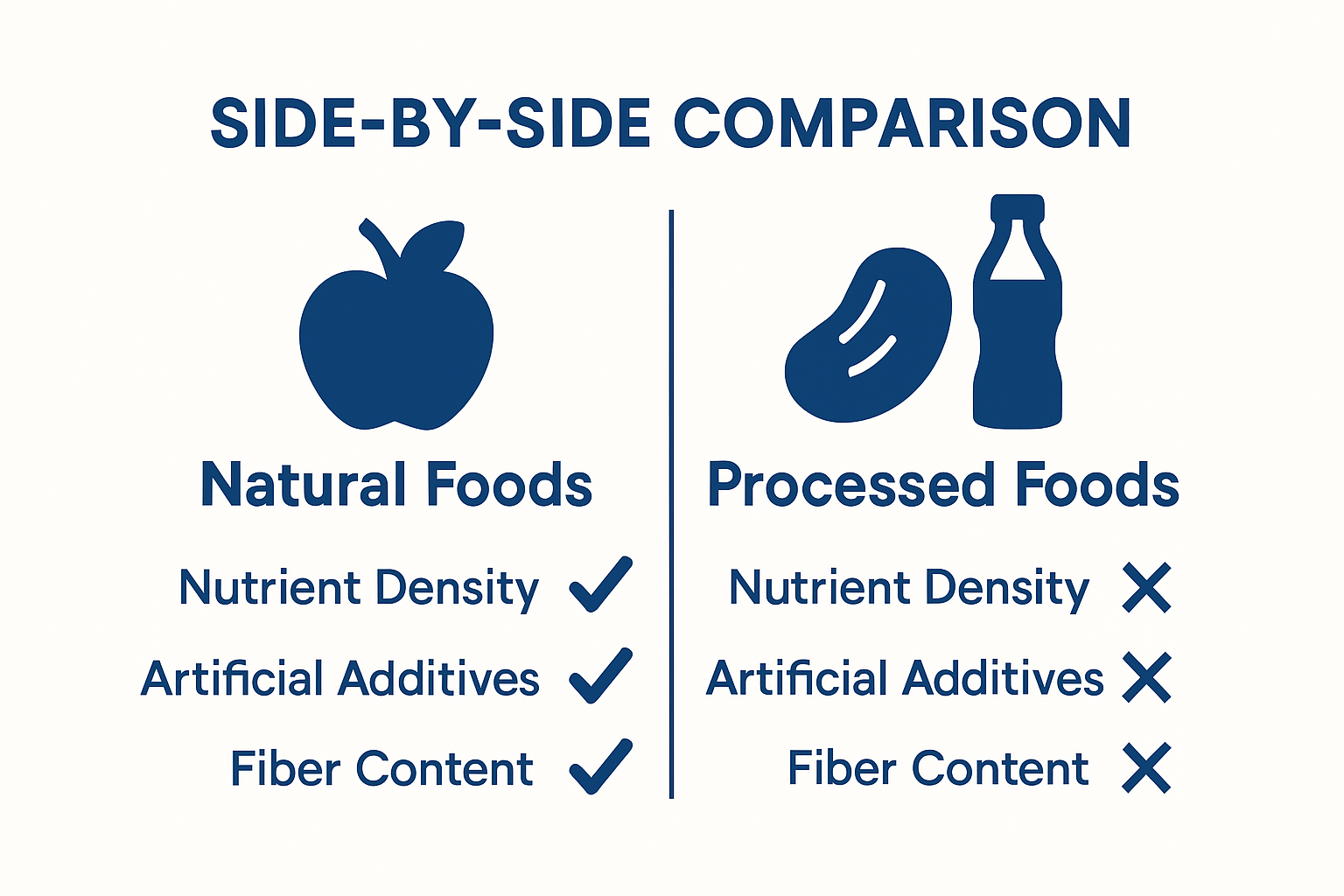
Understanding natural foods requires recognizing the spectrum of food processing. While some processing can be beneficial for food safety and preservation, excessive manipulation can strip foods of essential nutrients and introduce artificial compounds.
Nutritional Benefits of Natural Foods
The benefits of natural foods extend far beyond basic sustenance. By consuming foods in their most unadulterated form, individuals can access a broader range of nutrients, enzymes, and phytochemicals that support comprehensive health. Natural foods typically offer:
- Higher concentrations of vitamins and minerals
- Enhanced bioavailability of nutrients
- Reduced exposure to artificial additives
- Better digestive system support
These nutritional advantages translate into potential long term health improvements, including better immune function, improved metabolic processes, and reduced risk of chronic diseases.
The U.S. Food and Drug Administration provides guidance on understanding what qualifies as a natural food, emphasizing the importance of minimal intervention in food production. By prioritizing natural foods, consumers can make more informed dietary choices that align with holistic wellness principles.
Below is a table summarizing the primary characteristics that define natural foods, helping to clarify what makes them distinct from more processed alternatives.
| Characteristic | Description |
|---|---|
| Minimal Processing | Little to no mechanical or chemical alteration |
| No Artificial Additives | Free from synthetic colors, flavors, or preservatives |
| Retains Nutritional Profile | Maintains original vitamins, minerals, and compounds |
| No Synthetic Ingredients | Produced without artificial or lab-made substances |
| Natural Fiber Content | Preserves fiber naturally present in the original food |
| Intact Enzymes | Enzymatic structures remain undamaged by processing |
| Bioavailable Nutrients | Nutrients are easily absorbed and utilized by the body |
Why Natural Foods Matter for Overall Health
Health and nutrition are intricately connected, with natural foods playing a pivotal role in supporting comprehensive wellness. These whole, minimally processed foods provide essential nutrients that go beyond basic nutritional requirements, offering profound health benefits that impact multiple bodily systems.
Molecular Nutrition and Disease Prevention
Natural foods contain complex nutrient profiles that work synergistically to support human health. According to research published in the Journal of Nutrients, consuming whole foods can significantly reduce chronic disease risks by providing bioactive compounds that regulate metabolic processes. Key protective mechanisms include:
- Reducing systemic inflammation
- Supporting immune system functionality
- Balancing metabolic pathways
- Neutralizing harmful free radicals
These molecular interactions demonstrate how natural foods act as preventive healthcare tools, addressing potential health issues at their cellular foundation.
Comprehensive Wellness Through Nutrient Density
Nutrient density represents the concentration of essential vitamins, minerals, and beneficial compounds per serving of food. Natural foods excel in delivering comprehensive nutritional profiles that support optimal bodily functions. By consuming foods in their most unadulterated form, individuals receive:
- Complete protein structures
- Unaltered micronutrient compositions
- Natural fiber content
- Intact enzymatic structures
This approach ensures that the body receives nutrition in its most bioavailable and recognizable state, promoting more efficient absorption and utilization of essential compounds.
The intricate relationship between natural foods and human health underscores the importance of mindful dietary choices. By prioritizing whole, unprocessed foods, individuals can proactively support their physiological well-being, creating a foundation for long-term health and vitality.
How Natural Foods Affect Your Body’s Functions
The human body operates as a complex interconnected system where nutrition plays a fundamental role in regulating physiological processes. Natural foods serve as powerful modulators of bodily functions, influencing everything from cellular metabolism to hormonal balance and immune response.
Cellular Energy and Metabolic Regulation
Natural foods provide the essential components that drive cellular energy production and metabolic efficiency. Complex nutrients interact with mitochondrial processes, enabling optimal energy conversion and supporting metabolic health. According to research published in Nutrients, plant-based nutrients and natural fibers play a critical role in modulating critical metabolic pathways.
Key metabolic interactions include:
- Supporting mitochondrial energy production
- Regulating insulin sensitivity
- Balancing blood glucose levels
- Optimizing nutrient absorption mechanisms
These intricate interactions demonstrate how natural foods act as precision instruments in maintaining metabolic homeostasis, helping the body efficiently convert nutrients into usable energy.
Immune System and Inflammatory Response
The relationship between natural foods and immune function is profound and multifaceted. Whole foods contain bioactive compounds that directly influence immune cell communication and inflammatory responses. Phytonutrients and antioxidants found in natural foods help:
- Modulate inflammatory signaling pathways
- Enhance immune cell responsiveness
- Reduce oxidative stress
- Support adaptive immune mechanisms
By providing a diverse array of nutrients in their most natural form, these foods enable the immune system to respond more effectively to environmental challenges and potential health threats.
Natural foods represent more than simple nutrition. They are complex biochemical signals that communicate with our body’s intricate systems, promoting holistic wellness through precise molecular interactions. Understanding this deep connection empowers individuals to make informed dietary choices that support comprehensive physiological health.
Key Nutrients Found in Natural Foods and Their Benefits
Natural foods are rich repositories of essential nutrients that play critical roles in maintaining optimal health. These nutrients are fundamental to supporting bodily functions, protecting against diseases, and promoting overall wellness through their complex interactions within human physiological systems.
Macronutrients and Metabolic Support
Macronutrients represent the foundational building blocks of nutrition, providing energy and supporting critical bodily processes. According to research examining dietary components, natural foods offer comprehensive macronutrient profiles that support holistic health. These essential components include:
- Proteins for cellular repair and muscle maintenance
- Complex carbohydrates for sustained energy
- Healthy fats supporting hormonal balance
- Fiber for digestive system regulation
Each macronutrient serves a unique purpose, working synergistically to maintain metabolic efficiency and support overall physiological functioning.
Micronutrients and Cellular Protection
Micronutrients act as powerful biological regulators, influencing numerous cellular processes and supporting immune function. Natural foods provide an extensive range of vitamins and minerals that contribute to robust health protection. Key micronutrients include:
- Vitamin C for immune system support
- Vitamin D for bone health and cellular communication
- Zinc for metabolic regulation
- Antioxidants for cellular damage prevention
These micronutrients work at the molecular level, neutralizing harmful free radicals and supporting complex biochemical interactions that maintain cellular integrity.
This table highlights key nutrients commonly found in natural foods and explains the specific health benefits each provides, supporting informed dietary choices.
| Nutrient | Example Natural Sources | Core Benefit |
|---|---|---|
| Protein | Legumes, lean meats | Cellular repair and muscle maintenance |
| Complex Carbs | Whole grains, vegetables | Sustained energy and stable blood sugar |
| Healthy Fats | Nuts, seeds, avocados | Hormonal balance and cell structure |
| Fiber | Vegetables, fruits, grains | Digestive regulation and gut health |
| Vitamin C | Citrus fruits, berries | Immune system support and antioxidant |
| Vitamin D | Eggs, fatty fish | Bone health and cellular communication |
| Zinc | Seeds, legumes, seafood | Metabolic regulation and immune function |
| Antioxidants | Colorful fruits, greens | Protection against cellular damage |
Natural foods represent more than simple nutrition sources. They are intricate biological systems delivering precisely balanced nutrient profiles that support human health through sophisticated molecular mechanisms. By understanding and prioritizing these nutrient-dense foods, individuals can proactively enhance their physiological resilience and long-term wellness.
Real-World Impact of Choosing Natural Foods on Wellness
Dietary choices extend far beyond individual meals, fundamentally influencing long-term health trajectories and overall quality of life. Natural foods represent a powerful intervention strategy that translates nutritional science into tangible wellness outcomes, offering profound implications for preventive healthcare and personal vitality.
Disease Prevention and Metabolic Health
Choosing natural foods creates a protective nutritional shield against chronic diseases. Research published in the International Journal of Environmental Research and Public Health demonstrates clear correlations between natural food consumption and reduced health risks. Specific preventive mechanisms include:
- Lowering cardiovascular disease risks
- Reducing inflammation markers
- Stabilizing blood glucose levels
- Preventing metabolic syndrome progression
These interventions work by providing comprehensive nutritional support that addresses underlying physiological imbalances, transforming diet from a basic sustenance strategy to a proactive health management approach.
Mental Health and Cognitive Function
Natural foods influence not just physical health but also mental and cognitive performance. Nutrient-dense whole foods provide essential compounds that support neurological function and emotional regulation. Key cognitive benefits encompass:
- Enhanced neural connectivity
- Improved mood stability
- Reduced risk of neurodegenerative conditions
- Better stress response management
By supplying brain-essential nutrients in their most bioavailable form, natural foods contribute to comprehensive neurological wellness, demonstrating the intricate connection between nutrition and mental health.
Natural foods transcend traditional nutritional paradigms. They represent a holistic approach to wellness that recognizes the profound interconnectedness of dietary choices and comprehensive human health. Understanding and implementing these nutritional strategies empowers individuals to take meaningful control of their long-term well-being.

Ready to Personalize Your Natural Nutrition Journey?
The article you just read highlights how crucial natural foods are for holistic health, emphasizing nutrient density and the impact on energy, immunity, and disease prevention. Yet knowing what your body truly needs can feel overwhelming. With so many nutrients in play and every individual being unique, finding a path that is both natural and tailored to your personal goals requires something more than guesswork.

Unlock the power of science-backed recommendations through Menalam’s digital nutritionist. Take a quick health quiz to discover which vitamins and supplements best fit your unique needs, all based on your lifestyle and dietary preferences. Get real-time tracking, smart reminders, and ongoing adjustments to your plan by visiting Menalam today. Let Menalam help you make informed decisions and take the next step towards lasting wellness now.
Frequently Asked Questions
What are natural foods?
Natural foods are minimally processed ingredients that maintain their original nutritional integrity, free from artificial additives, colors, and flavors.
What are the health benefits of consuming natural foods?
Natural foods provide higher concentrations of essential vitamins and minerals, enhanced nutrient bioavailability, and support digestive health, potentially leading to improved immune function and reduced risk of chronic diseases.
How do natural foods affect metabolic processes in the body?
Natural foods support metabolic health by providing essential nutrients that optimize energy production, regulate insulin sensitivity, and balance blood glucose levels, helping maintain metabolic homeostasis.
Why is it important to prioritize nutrient density in our diet?
Nutrient density, found in natural foods, ensures that the body receives essential vitamins, minerals, and compounds in their most bioavailable form, promoting efficient absorption and utilization for overall health.
Leave a Reply