

Most people hear ‘macronutrients’ and think of carbs, proteins, and fats as just calorie sources. Surprisingly, these nutrients do so much more than fuel your body—they each trigger unique chemical reactions that impact almost every system you have. And here’s the part most folks miss. The magic for true health is not found in cutting out one group or loading up on another, but in finding the right balance that fits your own body’s needs.
Table of Contents
- What Are Macronutrients And Their Roles In Nutrition?
- Why Balancing Macronutrients Is Essential For Health
- How Macronutrient Ratios Affect Body Function
- Understanding Individual Needs For Macronutrient Balance
- Practical Applications Of Balancing Macronutrients In Daily Life
Quick Summary
| Takeaway | Explanation |
|---|---|
| Balance macronutrients for optimal health | A proper ratio of carbohydrates, proteins, and fats supports overall well-being and prevents health issues. |
| Adjust macronutrients based on individual needs | Factors like activity level, age, and health goals dictate personalized macronutrient ratios for effectiveness. |
| Incorporate diverse foods in meals | Combining various macronutrient-rich foods ensures comprehensive nutrition and sustainable energy throughout the day. |
| Understand macronutrient roles | Carbohydrates provide quick energy, proteins support growth and repair, while fats are crucial for hormone production and energy storage. |
| Monitor imbalances to avoid health risks | A disproportionate intake of macronutrients can lead to metabolic issues and chronic diseases, affecting long-term health. |
What are Macronutrients and Their Roles in Nutrition?
Macronutrients represent the fundamental building blocks of human nutrition, serving as critical energy sources and essential components for bodily functions. These nutrients are required in large quantities to maintain optimal health, growth, and metabolic processes.
The table below summarizes the features and primary roles of each macronutrient discussed in the article for quick reference.
| Macronutrient | Primary Roles | Key Functions |
|---|---|---|
| Carbohydrates | Main energy source | Provide quick fuel for daily activities and brain function |
| Proteins | Repair and growth | Muscle repair, tissue growth, enzyme and hormone production |
| Fats | Hormone regulation and energy storage | Support hormone production, build cell membranes, long-term energy |
| Understanding macronutrients is key to developing a balanced and effective nutritional strategy. |
The Three Primary Macronutrients
The human body relies on three primary macronutrients: carbohydrates, proteins, and fats. Each plays a unique and indispensable role in supporting physiological functions and overall well-being.
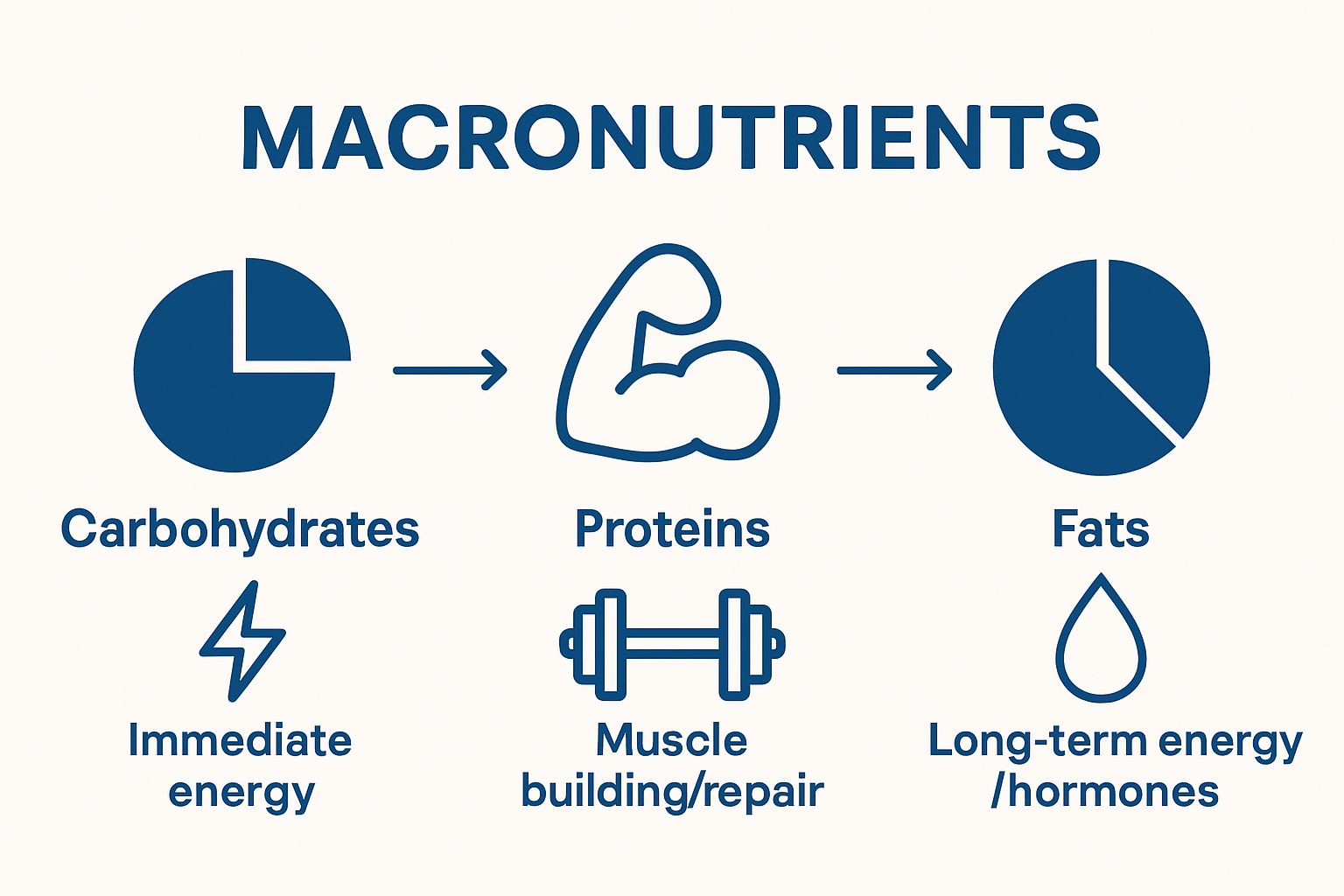
- Carbohydrates: The body’s primary energy source, providing quick fuel for daily activities and brain function
- Proteins: Essential for muscle repair, growth, and cellular maintenance
- Fats: Critical for hormone production, cell membrane structure, and long-term energy storage
Metabolic Functions and Energy Production
Macronutrients are not just about providing calories but also about supporting complex metabolic processes. According to research from the National Center for Biotechnology Information, these nutrients break down differently in the body, contributing to various physiological functions.
Carbohydrates are quickly converted into glucose, offering immediate energy. Proteins undergo more complex metabolic processes, breaking down into amino acids that support tissue repair and enzyme production. Fats provide a concentrated energy source, helping regulate body temperature and protect vital organs.
The human body requires a strategic balance of these macronutrients to function optimally. While individual nutritional needs vary based on factors like age, activity level, and overall health, understanding the fundamental roles of macronutrients empowers individuals to make informed dietary choices that support their wellness goals.
Why Balancing Macronutrients is Essential for Health
Balancing macronutrients is more than a dietary recommendation – it is a fundamental strategy for maintaining optimal health and preventing chronic diseases. The precise proportion of carbohydrates, proteins, and fats in your diet can significantly impact metabolic functioning, energy levels, and overall physiological performance.
The Health Consequences of Imbalanced Nutrition
When macronutrient intake becomes disproportionate, the body experiences substantial metabolic disruptions. An excess of one macronutrient or severe deficiency in another can trigger a cascade of health complications.
The following table compares common health consequences that can result from imbalanced macronutrient intake, as described in the corresponding section of the article.
| Health Consequence | Description |
|---|---|
| Metabolic Syndrome | Increased risk of insulin resistance and cardiovascular issues |
| Hormonal Imbalances | Disruption of critical endocrine and hormonal functions |
| Energy Depletion | Decreased physical performance and impaired cognitive function |
- Metabolic Syndrome: Higher risk of insulin resistance and cardiovascular problems
- Hormonal Imbalances: Potential disruption of critical endocrine functions
- Energy Depletion: Decreased physical performance and cognitive function
Precision in Nutritional Allocation
According to research published in the journal Nutrients, maintaining a strategic macronutrient balance is crucial for preventing non-communicable diseases. The body requires a nuanced approach to nutrient intake that considers individual factors such as age, activity level, metabolism, and overall health status.
Optimal macronutrient balance supports multiple physiological processes. Proteins facilitate muscle maintenance and repair, carbohydrates provide immediate energy, and fats support hormone production and cellular integrity. The key lies not in eliminating any macronutrient but in consuming them in scientifically recommended proportions.
Understanding and implementing a personalized macronutrient strategy can transform nutritional intake from a basic survival mechanism to a proactive approach to health optimization. By recognizing individual metabolic needs and adjusting nutrient ratios accordingly, individuals can unlock enhanced physical performance, mental clarity, and long-term wellness.
How Macronutrient Ratios Affect Body Function
Macronutrient ratios are not merely a dietary concept but a complex biochemical interaction that profoundly influences human physiology. The precise proportion of carbohydrates, proteins, and fats determines how efficiently the body generates energy, repairs tissues, and maintains critical metabolic processes.
Energy Metabolism and Cellular Performance
Each macronutrient plays a unique role in cellular energy production and metabolic regulation. The body interprets these nutrients as distinct signals that trigger specific physiological responses and metabolic pathways.
- Carbohydrates: Trigger rapid insulin response and provide immediate glucose for cellular energy
- Proteins: Activate muscle protein synthesis and support cellular repair mechanisms
- Fats: Modulate hormone production and provide sustained energy storage
Hormonal and Metabolic Signaling
According to research from the International Journal of Molecular Sciences, macronutrient ratios directly influence hormonal cascades that regulate metabolism, inflammation, and cellular adaptation. Different nutrient proportions can dramatically alter metabolic signaling, impacting everything from muscle growth to fat storage.
Proteins, for instance, stimulate muscle protein synthesis through amino acid availability, while carbohydrate intake modulates insulin sensitivity. Fats play a crucial role in hormone production, particularly testosterone and estrogen, which influence muscle development, metabolic rate, and overall physiological function.
By understanding how macronutrient ratios interact with bodily systems, individuals can strategically design nutrition plans that optimize metabolic efficiency, support performance goals, and promote long-term health and wellness.
Understanding Individual Needs for Macronutrient Balance
Macronutrient balance is not a universal prescription but a highly personalized nutritional strategy. Individual metabolic requirements vary dramatically based on multiple physiological and lifestyle factors, making a one-size-fits-all approach ineffective for optimal health and performance.
Factors Influencing Macronutrient Requirements
Numerous personal characteristics significantly impact an individual’s macronutrient needs, creating a complex metabolic fingerprint that demands tailored nutritional planning.
- Body Composition: Muscle mass, body fat percentage, and metabolic rate
- Activity Level: Intensity and frequency of physical exercise
- Health Goals: Weight management, muscle building, athletic performance
- Age and Hormonal Status: Metabolic changes throughout life stages
Personalized Nutritional Strategies
According to MD Anderson Cancer Center, the ideal macronutrient ratio varies significantly among individuals. A professional nutritionist can help design a customized plan that considers unique physiological needs, ensuring that each person receives the precise nutritional support required for their specific health objectives.
Genetic predispositions, existing medical conditions, and individual metabolic responses further complicate macronutrient requirements. An athlete seeking muscle development will require a different protein-to-carbohydrate ratio compared to someone managing weight or addressing specific health concerns.
By recognizing the intricate relationship between individual physiology and nutritional intake, individuals can move beyond generic dietary recommendations and develop a sophisticated, personalized approach to macronutrient balance that supports their unique health and performance goals.

Practical Applications of Balancing Macronutrients in Daily Life
Transforming nutritional understanding into everyday eating habits requires strategic planning and mindful food selection. Balancing macronutrients is not about strict dietary rules but creating sustainable eating patterns that support overall health and individual wellness goals.
Strategic Meal Composition
Effective macronutrient balancing involves thoughtful food combinations that provide comprehensive nutritional support across different meals and snacks.
- Breakfast: Combine complex carbohydrates with lean proteins
- Lunch: Include balanced protein, healthy fats, and fiber-rich vegetables
- Dinner: Prioritize lean proteins with moderate complex carbohydrates
- Snacks: Select nutrient-dense options with multiple macronutrients
Nutritional Awareness and Practical Choices
According to the University of Illinois Sports Nutrition Guidelines, incorporating diverse food sources helps individuals naturally achieve macronutrient balance. Complex carbohydrates from whole grains, lean proteins from various sources, and healthy fats from nuts and plant-based oils create a comprehensive nutritional profile.
Practical implementation involves understanding food composition and making informed selections. For instance, a meal combining grilled chicken (protein), quinoa (complex carbohydrates), and avocado (healthy fats) represents an excellent macronutrient-balanced approach. The key is consistent, intentional food choices that align with individual metabolic needs and health objectives.
By developing nutritional awareness and making deliberate dietary decisions, individuals can transform macronutrient balance from an abstract concept into a practical, achievable lifestyle strategy that supports long-term health and wellness.
Personalize Your Macronutrient Balance With Smart Nutrition
Struggling to find the right macronutrient ratio for your unique body and lifestyle? As explained in the article, simply knowing about carbohydrates, proteins, and fats is not enough. You need a strategy tailored to your own goals, metabolism, and daily habits. Many health-conscious individuals are frustrated by generic advice that does not address specific needs like optimizing energy or balancing nutrient intake for real results.

Take the guesswork out of nutrition. With Menalam, you receive science-backed supplement and nutrition recommendations based on your health goals, activity level, and even your blood test results. One quick health quiz gives you access to ongoing, AI-driven plans that adjust as you progress. Ready to stop relying on one-size-fits-all guidance? Start building your personalized macronutrient strategy with Menalam’s innovative platform today and unlock real transformation in your health and wellness.
Frequently Asked Questions
What are the primary macronutrients and their roles?
Macronutrients include carbohydrates, proteins, and fats. Carbohydrates provide the body’s primary energy source, proteins are essential for muscle repair and growth, and fats support hormone production and long-term energy storage.
Why is balancing macronutrients important for health?
Balancing macronutrients is crucial for optimal health as it influences metabolic functioning, energy levels, and the prevention of chronic diseases. An imbalance can lead to metabolic disruptions and health complications.
How do macronutrient ratios affect energy levels and performance?
Macronutrient ratios influence energy metabolism, with carbohydrates providing quick energy, proteins supporting tissue repair, and fats offering sustained energy. The right balance can enhance physical performance and cognitive function.
What factors influence individual macronutrient needs?
Individual macronutrient needs are influenced by body composition, activity level, health goals, age, and hormonal status. These factors create a unique metabolic fingerprint that requires personalized nutritional strategies.
Leave a Reply