
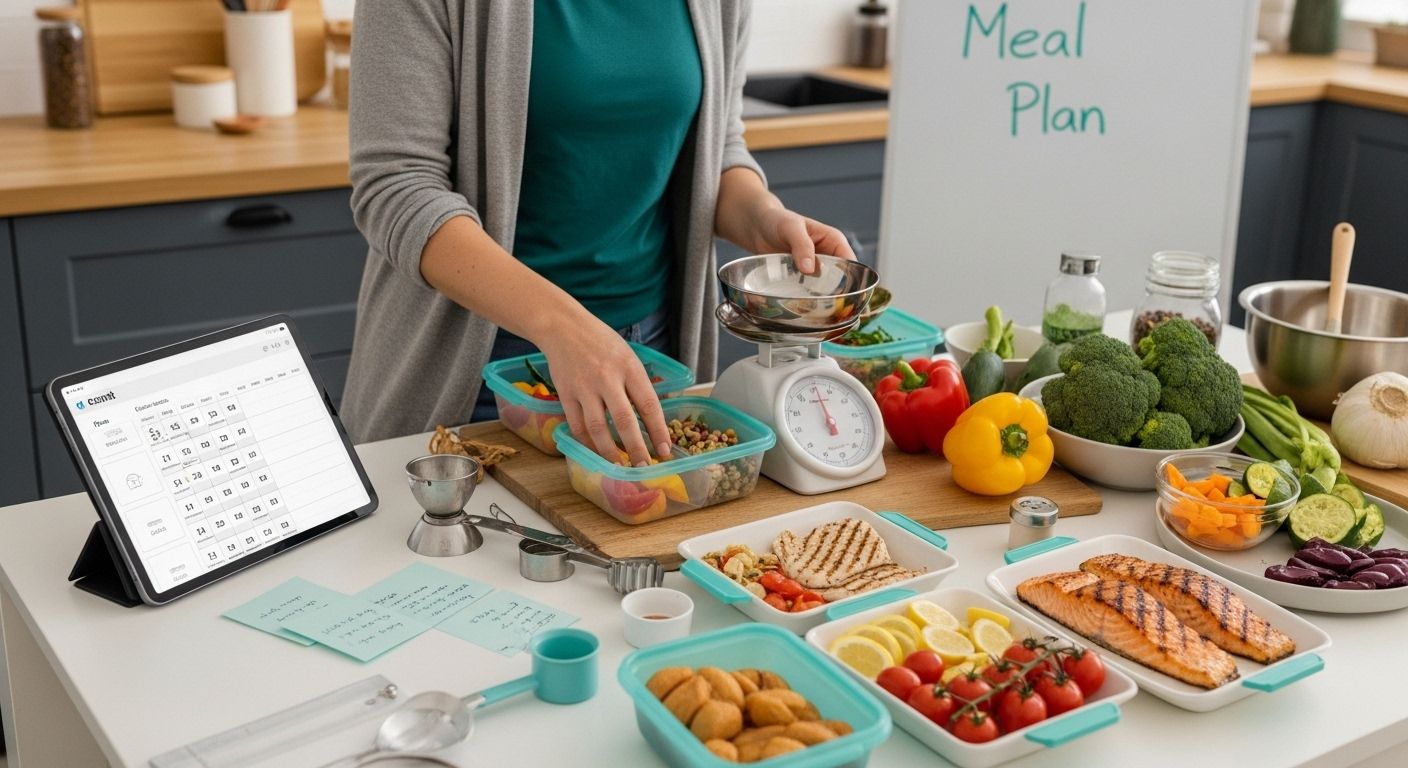
Meal planning sounds like a chore, but mastering it might transform your entire week. Most people never realize that personalized meal planning can improve long-term diet success rates by over 50 percent compared to generic programs. What surprises many is that the smartest meal plans have nothing to do with strict diets, and everything to do with knowing yourself—and making a few small changes that anyone can start today.
Table of Contents
- Step 1: Assess Your Nutritional Needs And Goals
- Step 2: Gather Healthy Recipes And Ingredients
- Step 3: Organize Your Meal Schedule For The Week
- Step 4: Create A Shopping List For Your Meal Plan
- Step 5: Prepare And Cook Your Meals In Batches
- Step 6: Evaluate And Adjust Your Meal Plan Regularly
Quick Summary
| Key Point | Explanation |
|---|---|
| 1. Assess your unique nutritional needs | Conduct a self-evaluation to understand your current diet, health status, and fitness goals for personalized planning. |
| 2. Curate healthy recipes and ingredients | Gather recipes and ingredients that align with your nutritional targets while ensuring culinary variety and enjoyment. |
| 3. Organize a weekly meal schedule | Develop a structured meal plan that accounts for your daily routine, energy needs, and ensures nutritional balance. |
| 4. Create an efficient shopping list | Make a detailed grocery list based on your meal plan, focusing on whole foods to minimize waste and costs. |
| 5. Regularly evaluate and adjust your plan | Periodically review your meal plan’s effectiveness and make necessary adjustments based on your evolving health needs. |
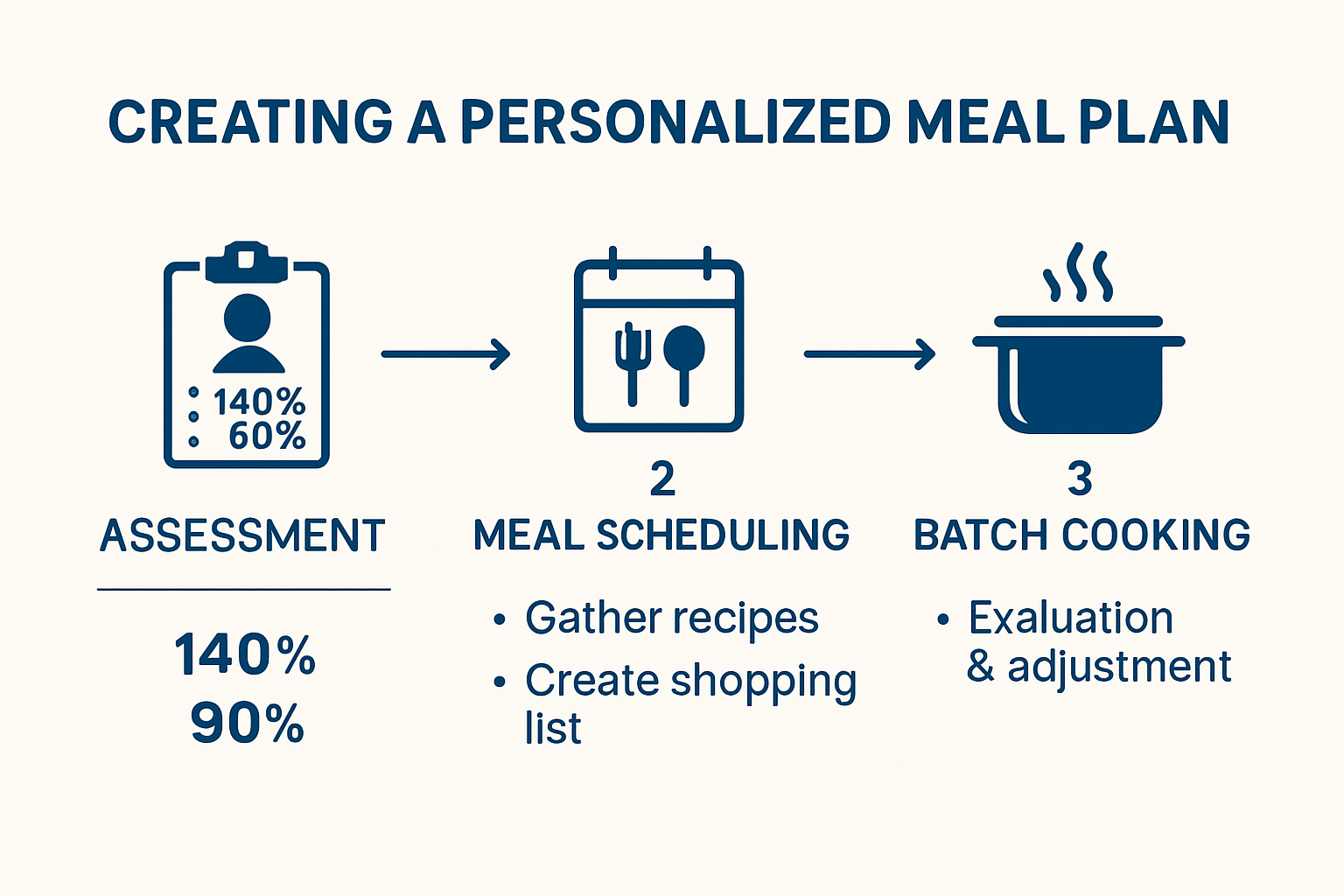
Step 1: Assess Your Nutritional Needs and Goals
Creating an effective meal plan starts with understanding your unique nutritional landscape. This crucial first step involves deep self-reflection and honest assessment of your current health status, fitness objectives, and metabolic requirements. Your goal is to develop a personalized nutrition strategy that aligns precisely with your body’s specific needs.
Understanding Your Body’s Nutritional Profile
Begin by conducting a comprehensive self-evaluation that goes beyond surface-level observations. Examine your current diet, energy levels, physical activity, and any existing health conditions. Consider scheduling a consultation with a registered dietitian or nutritionist who can provide professional insights into your metabolic needs. They can help you analyze critical factors like your basal metabolic rate, potential nutrient deficiencies, and how your current eating habits might be impacting your overall wellness.
Key aspects to evaluate include your daily caloric requirements, macronutrient balance, and specific health goals. Are you looking to lose weight, build muscle, improve athletic performance, manage a chronic condition, or simply enhance your overall nutrition? Each objective demands a nuanced approach to meal planning. For instance, an athlete’s nutritional needs will differ significantly from someone managing diabetes or focusing on weight loss.
Utilize tools like body composition analysis, blood tests, and metabolic assessments to gather precise data about your current health status. Research from the National Institutes of Health suggests that personalized nutrition strategies are far more effective than generic diet plans. These assessments can reveal hidden insights such as potential vitamin deficiencies, metabolic slowdowns, or hormonal imbalances that might be hindering your health progress.
The most successful meal plans are built on a foundation of self-knowledge. By thoroughly understanding your body’s unique requirements, you create a roadmap that transforms generic nutrition advice into a targeted, effective strategy tailored specifically to your individual needs.
Step 2: Gather Healthy Recipes and Ingredients
With your nutritional goals clearly defined, the next critical phase involves curating a collection of recipes and ingredients that will transform your meal plan from concept to reality. This step is about strategic selection, ensuring that every ingredient and recipe supports your specific health objectives while maintaining culinary excitement and nutritional balance.
Start by creating a comprehensive recipe database that aligns with your established nutritional needs. Digital recipe management tools and nutrition tracking apps can be invaluable resources in this process. Look for recipes that not only meet your macronutrient requirements but also provide diverse flavors and cooking techniques to keep your meal plan engaging and sustainable.
Navigate online recipe platforms, nutritionist blogs, and specialized cookbooks that cater to your specific health goals. Whether you’re targeting weight loss, muscle building, or managing a specific health condition, seek out recipes that offer both nutritional precision and culinary creativity. Pay close attention to ingredient lists, ensuring they complement your metabolic needs and dietary restrictions.
Ingredient selection becomes an art form in successful meal planning. Focus on whole, nutrient-dense foods that provide maximum nutritional impact. Prioritize fresh produce, lean proteins, complex carbohydrates, and healthy fats. Consider purchasing ingredients that offer versatility, allowing you to create multiple dishes without waste. Local farmers markets, specialized grocery stores, and online food delivery services can be excellent sources for high-quality, fresh ingredients.
Research from the Journal of Nutrition highlights the importance of ingredient diversity in maintaining long-term nutritional goals. Rotate your protein sources, experiment with different grains, and incorporate a wide range of colorful vegetables to ensure you’re receiving a comprehensive spectrum of vitamins and minerals. This approach prevents dietary monotony and supports comprehensive nutritional intake.
Develop a systematic approach to recipe and ingredient collection. Create digital or physical folders categorized by meal type, nutritional profile, and preparation time. This organizational strategy will streamline your meal planning process, making it easier to mix and match recipes while maintaining consistency with your health objectives.
Here is a summary of essential tools and resources recommended for each step of the meal planning process, along with their primary functions to help streamline your workflow.
| Step | Tool/Resource | Purpose/Function |
|---|---|---|
| Assess Needs | Registered Dietitian/Nutritionist | Professional consultation for health assessment |
| Assess Needs | Body Composition Analysis, Blood Tests | Reveal nutritional status, deficiencies |
| Gather Recipes | Digital Recipe Apps, Nutrition Trackers | Curate and organize healthy recipes |
| Organize Schedule | Meal Scheduling Apps, Calendars | Visualize and adjust the weekly meal plan |
| Shopping | Digital Shopping List Applications | Streamline grocery shopping, minimize waste |
| Batch Cook | Food Processors, Storage Containers | Efficient and safe bulk meal prep |
| Evaluate & Adjust | Digital Tracking/Health Monitoring Apps | Track progress, guide plan adjustments |
Step 3: Organize Your Meal Schedule for the Week
Transforming your carefully selected recipes and ingredients into a structured weekly meal schedule requires strategic planning and thoughtful organization. This crucial step bridges the gap between nutritional intention and practical execution, ensuring that your meal plan becomes a sustainable and achievable lifestyle strategy.
Digital planning tools and meal scheduling apps can be incredibly powerful allies in this process. Select a platform that allows you to visualize your entire week, track nutritional content, and easily adjust meals as needed. Consider using color-coded calendars or specialized nutrition tracking applications that provide macro and micronutrient breakdowns for each planned meal.
Begin by establishing consistent meal preparation rhythms that align with your daily schedule and energy requirements. Some individuals prefer batch cooking on weekends, preparing multiple meals in advance, while others might opt for daily fresh preparation. The key is developing a system that feels manageable and supports your specific lifestyle demands. Strategically plan for potential challenges like busy workdays, social events, or unexpected schedule changes by building flexibility into your meal plan.
When organizing your weekly schedule, think beyond mere calorie counting. Consider the timing and composition of your meals to optimize metabolic function and energy levels. Distribute your macronutrients strategically throughout the day, ensuring that each meal provides balanced nutrition that supports your specific health goals. For example, plan more carbohydrate-rich meals around physical activity periods and lighter, protein-focused meals during sedentary times.
Research from the Harvard T.H. Chan School of Public Health emphasizes the importance of consistent meal timing and balanced nutrition. Your weekly schedule should include variety to prevent dietary monotony while maintaining nutritional consistency. Incorporate a mix of familiar recipes and occasional new dishes to keep your meal plan interesting and sustainable.
Verify the success of your meal schedule by tracking your energy levels, hunger patterns, and progress toward your health objectives. Be prepared to make incremental adjustments as you learn more about how different meal compositions impact your body. The ultimate goal is creating a personalized nutrition strategy that feels natural, supportive, and aligned with your overall wellness journey.
Step 4: Create a Shopping List for Your Meal Plan
Transitioning from meal planning to actual grocery acquisition requires a strategic approach that transforms your carefully crafted weekly menu into a precise, efficient shopping expedition. The shopping list becomes your nutritional blueprint, ensuring you purchase exactly what you need while minimizing waste and staying true to your health objectives.
Digital shopping list applications can revolutionize your grocery shopping experience, offering features like real-time price tracking, nutritional information, and the ability to sync across multiple devices. These tools enable you to categorize items, set budgets, and even compare prices between different stores. Choose an app that allows you to save recurring items and quickly duplicate previous lists, streamlining your shopping process.
Before creating your list, conduct a thorough inventory of your current pantry and refrigerator. This critical step prevents unnecessary purchases and helps you utilize existing ingredients. Organize your list by store layout and food groups, which reduces shopping time and minimizes impulse buying. Prioritize whole, unprocessed ingredients that align with the nutritional goals you established in earlier planning stages. Focus on purchasing ingredients that offer maximum nutritional versatility, allowing you to create multiple meals and adapt your plan if unexpected changes occur.
Consider the nutritional density and shelf life of each item. Select fresh produce that can be used across multiple recipes, choose proteins that can be portioned and frozen, and opt for whole grains and legumes that provide sustained energy. Your shopping list should reflect a balance between immediate nutritional needs and smart, economical purchasing strategies.
Research from the USDA’s MyPlate initiative recommends structuring your shopping list to include representation from all major food groups. This approach ensures comprehensive nutrition and helps prevent dietary gaps. Pay attention to portion sizes and bulk purchasing options that can provide both economic and nutritional advantages.
Verify the success of your shopping list by comparing it against your meal plan, checking that you’ve captured all necessary ingredients while avoiding unnecessary extras. A well-constructed shopping list is more than a mere inventory document it’s a strategic tool that transforms your nutritional goals from concept to concrete action.
Step 5: Prepare and Cook Your Meals in Batches
Batch cooking transforms meal preparation from a daily chore into a strategic, time-efficient process that supports your nutritional goals. This approach involves preparing multiple meals simultaneously, allowing you to maximize your cooking time, reduce daily stress, and maintain consistent nutrition throughout the week.
Invest in high-quality meal preparation equipment that streamlines your cooking process. Multipurpose kitchen tools like large roasting pans, multiple cutting boards, high-capacity food processors, and stackable storage containers become essential allies in your batch cooking strategy. Consider purchasing thermal insulated containers and reliable food storage solutions that maintain meal quality and prevent spoilage.
Begin by establishing a systematic batch cooking workflow that maximizes efficiency. Start with ingredients that require longer cooking times, such as grains, legumes, and proteins. While these items are cooking, simultaneously prepare vegetables, chop ingredients, and organize your workspace. Create a cooking sequence that minimizes cleanup and optimizes kitchen productivity. This might involve using multiple cooking methods simultaneously oven roasting, stovetop simmering, and slow cooker preparations to diversify your meal preparation.
Temperature control and proper food safety become critical during batch cooking. Use a reliable food thermometer to ensure proteins reach safe internal temperatures, and implement a clear labeling system for your prepared meals. Include preparation dates, contents, and recommended consumption timelines. Organize your prepared meals in clear, portion-controlled containers that make reheating and tracking nutritional intake straightforward.
Research from the Academy of Nutrition and Dietetics recommends developing a consistent batch cooking routine that fits your lifestyle. Some individuals prefer dedicating an entire Sunday to meal preparation, while others might break the process into smaller, more manageable sessions throughout the week. The key is finding a method that feels sustainable and supports your personal schedule.
Verify the success of your batch cooking by assessing the variety, nutritional balance, and ease of your meal reheating process. A well-executed batch cooking strategy should provide convenience, support your nutritional goals, and reduce daily decision fatigue around meal choices.
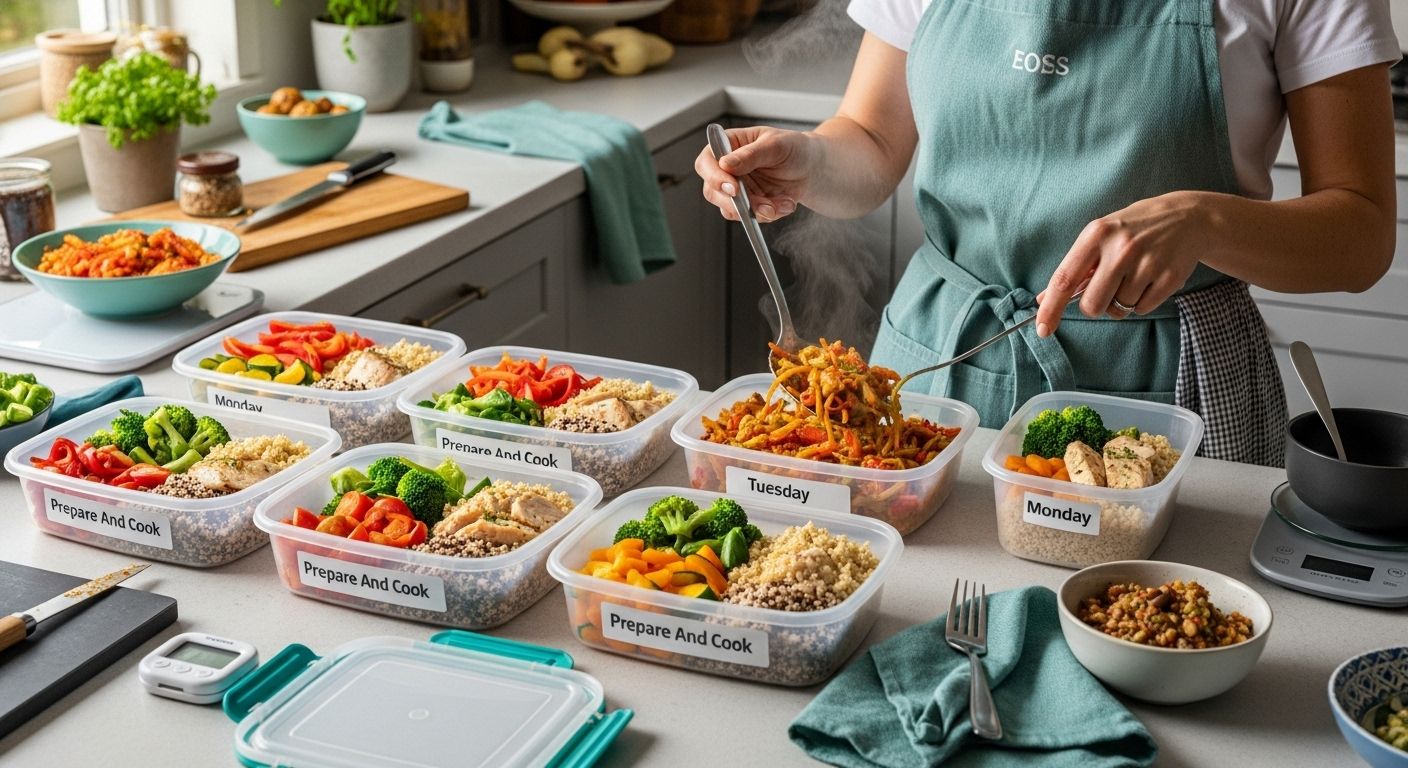
Use this checklist as a quick reference to verify completion of each critical step in your meal planning process and ensure your workflow stays efficient and on track.
| Step | Key Actions to Verify Completion |
|---|---|
| Assess Needs | Evaluated diet & health, set specific goals, consulted expert |
| Gather Recipes | Curated recipes aligning with goals, diversified ingredients |
| Organize Schedule | Plotted meals for the week, adjusted for events & energy |
| Shopping List | Checked existing inventory, listed all required items |
| Batch Cooking | Prepared meals safely, labeled & stored portions |
| Evaluate & Adjust | Reviewed progress, updated plan, documented changes |
Step 6: Evaluate and Adjust Your Meal Plan Regularly
Successful meal planning is not a static process but a dynamic journey of continuous improvement and personal discovery. Regular evaluation becomes the cornerstone of maintaining a nutrition strategy that remains aligned with your evolving health goals, metabolic changes, and lifestyle demands.
Digital tracking tools and health monitoring applications provide invaluable insights into your nutritional progress. Select platforms that allow comprehensive data collection, including weight fluctuations, energy levels, body composition measurements, and subjective wellness indicators. These technological resources transform abstract nutritional goals into measurable, actionable data points that guide your ongoing meal plan refinement.
Establish a consistent evaluation schedule, ideally conducting a thorough review every four to six weeks. During these assessment periods, examine multiple dimensions of your meal plan’s effectiveness. Look beyond simple weight metrics to analyze holistic health indicators such as sleep quality, mental clarity, physical performance, and overall energy sustainability. Pay attention to how different meal compositions impact your daily functioning, noting patterns of satiety, mood stability, and recovery from physical activities.
Approach meal plan adjustments with a scientific yet flexible mindset. Recognize that your nutritional needs are not permanent but continuously evolving. Factors like age, stress levels, physical activity, and underlying health conditions can dramatically influence your metabolic requirements. Be prepared to modify portion sizes, macronutrient ratios, and meal timing based on your body’s changing signals and performance metrics.
Research from the Dietary Guidelines for Americans emphasizes the importance of personalized, adaptive nutrition strategies. Consider consulting with nutrition professionals periodically to validate your self-assessment and receive expert guidance on potential refinements. These consultations can provide objective insights that complement your personal observations.
Verify the success of your evaluation process by documenting your findings, tracking long-term trends, and maintaining a reflective journal of your nutritional journey. A truly effective meal plan is not about perfection but about creating a sustainable, enjoyable approach to nutrition that supports your overall health and wellness objectives.
Unlock True Personalization for Your Meal Planning Success
Struggling to translate your unique nutritional needs and health goals into an effective meal plan? Even with the most thoughtful recipes and systematic batch cooking, it can be difficult to ensure your micronutrient intake truly supports your progress. Gaps in your current approach, like hidden deficiencies or shifting metabolic demands, can hold you back from feeling your best. The journey to better health is not just about planning meals but about understanding your body’s changing needs and tracking your progress over time.
Let Menalam take your nutrition planning to the next level. Experience the power of science-backed, AI-driven supplement recommendations that adapt to your changing goals and health data. Complete a personalized health quiz to discover which vitamins and supplements align with your meal plan for targeted results. Stay on track with smart reminders and monitor your advancement through our integrated mobile app. Start today at Menalam and achieve more with every meal.
Frequently Asked Questions
What are the first steps in creating a meal plan for my health goals?
Begin with assessing your nutritional needs by evaluating your current diet, health status, and fitness objectives. Consult a registered dietitian if necessary to gain insights into your specific metabolic requirements.
How can I gather healthy recipes that align with my meal plan?
Create a recipe database using digital management tools or apps. Look for recipes that align with your nutritional goals and incorporate diverse flavors while focusing on whole, nutrient-dense foods.
What is the best way to organize a weekly meal schedule?
Use digital planning tools or meal scheduling apps to visualize your week. Establish consistent meal preparation rhythms and distribute your macronutrients thoughtfully throughout the day to optimize energy levels and metabolic function.
How often should I evaluate and adjust my meal plan?
Regularly evaluate your meal plan every four to six weeks. Consider factors like energy levels, health markers, and lifestyle changes, adapting your nutritional strategy as needed to stay aligned with your evolving health goals.
Leave a Reply