

Changing your health starts with small choices and honest self-reflection. Most people skip the first step and then wonder why their progress stalls. Here is something most miss—scheduling a comprehensive health checkup sets the foundation, giving you hard numbers and clear direction before you even set a single goal. That one move could shift everything for your wellness journey.
Table of Contents
- Step 1: Assess Your Current Health Status
- Step 2: Define Your Specific Health Goals
- Step 3: Create A Measurable Action Plan
- Step 4: Implement Lifestyle Changes Gradually
- Step 5: Monitor Your Progress Consistently
- Step 6: Adjust Goals As Needed For Success
Quick Summary
This table summarizes the six essential steps for setting and achieving lasting health goals, along with the main action and intended outcome of each stage.
| Step | Main Action | Key Outcome |
|---|---|---|
| 1. Assess Current Health Status | Schedule health checkup and self-evaluation | Establish baseline for goal setting |
| 2. Define Specific Health Goals | Set 2-3 SMART goals relevant to your needs | Clear, motivating objectives |
| 3. Create Measurable Action Plan | Break down goals with milestones and tracking tools | Actionable, trackable steps toward progress |
| 4. Implement Lifestyle Changes Gradually | Start with manageable habit changes | Sustainable long-term behavior change |
| 5. Monitor Progress Consistently | Track data monthly using journals or apps | Data-driven evaluation and motivation |
| 6. Adjust Goals As Needed | Review and update goals as life changes | Continued progress and personal adaptability |
| Key Point | Explanation |
|---|---|
| 1. Schedule a Comprehensive Health Checkup | A thorough medical evaluation provides key insights into your health metrics and establishes a baseline for future goal setting. |
| 2. Define SMART Health Goals | Specific, Measurable, Attainable, Relevant, and Time-bound goals provide a realistic roadmap for health improvements and sustained progress. |
| 3. Create a Detailed Action Plan | Break down goals into actionable steps, utilizing tracking tools to monitor progress and make necessary adjustments. |
| 4. Implement Changes Gradually | Start with manageable modifications to avoid overwhelm, allowing your body to adapt while building sustainable habits. |
| 5. Regularly Monitor and Adjust Goals | Consistent tracking helps evaluate progress and informs necessary adjustments to goals, ensuring they remain relevant and achievable. |
Step 1: Assess Your Current Health Status
Understanding your current health status is the foundational step in creating meaningful and achievable wellness goals. This initial assessment provides a comprehensive snapshot of your physical, mental, and emotional well-being, allowing you to develop targeted strategies for improvement.
Begin by conducting a thorough self-evaluation that goes beyond surface-level observations. Schedule a comprehensive health checkup with your primary care physician to obtain a detailed baseline of your current health metrics. During this examination, request a complete blood panel that will reveal critical insights about your nutritional status, hormone levels, metabolic functioning, and potential underlying health conditions.
According to the National Institutes of Health, a comprehensive health assessment should include several key components. Document your current weight, body mass index (BMI), blood pressure, cholesterol levels, and blood sugar measurements. These numbers provide objective data points that will help you track future progress and identify specific areas requiring attention.
Beyond physical measurements, conduct an honest self-assessment of your lifestyle habits. Examine your sleep patterns, stress levels, dietary choices, and physical activity. Create a detailed journal documenting your typical daily routine, including meal compositions, exercise frequency, work-related stress, and emotional well-being. This holistic approach ensures you capture a multidimensional view of your current health status.
Consider utilizing digital health tracking tools or smartphone applications that can help aggregate and analyze your health data. Many modern apps allow you to input various health metrics, track progress over time, and generate comprehensive reports that can be shared with healthcare professionals.
Key verification indicators that you have successfully completed this assessment include:
- A comprehensive medical report from your healthcare provider
- Detailed personal health journal documenting lifestyle habits
- Digital or physical records of key health metrics
- Clear understanding of your current health baseline
Remember, this initial assessment is not about judgment but about creating an honest, objective starting point for your wellness journey. By thoroughly understanding your current health status, you set the stage for developing targeted, achievable goals that will drive meaningful transformation.
To ensure you have successfully completed your comprehensive health assessment, use this checklist to verify key indicators before moving forward.
| Verification Indicator | Description |
|---|---|
| Comprehensive medical report | Document from healthcare provider with baseline health metrics |
| Personal health journal | Notes on sleep, diet, exercise, stress, and emotional well-being |
| Records of key health metrics | Documented weight, BMI, blood pressure, cholesterol, glucose |
| Use of tracking tools/apps | Digital or paper logs aggregating personal health data |
| Clear understanding of baseline | Awareness of your current health status across multiple domains |
Step 2: Define Your Specific Health Goals
Transforming your comprehensive health assessment into actionable goals requires precision, strategy, and a clear understanding of what you want to achieve. Defining specific health goals is more than wishful thinking – it is about creating a roadmap that transforms your wellness vision into tangible, achievable objectives.
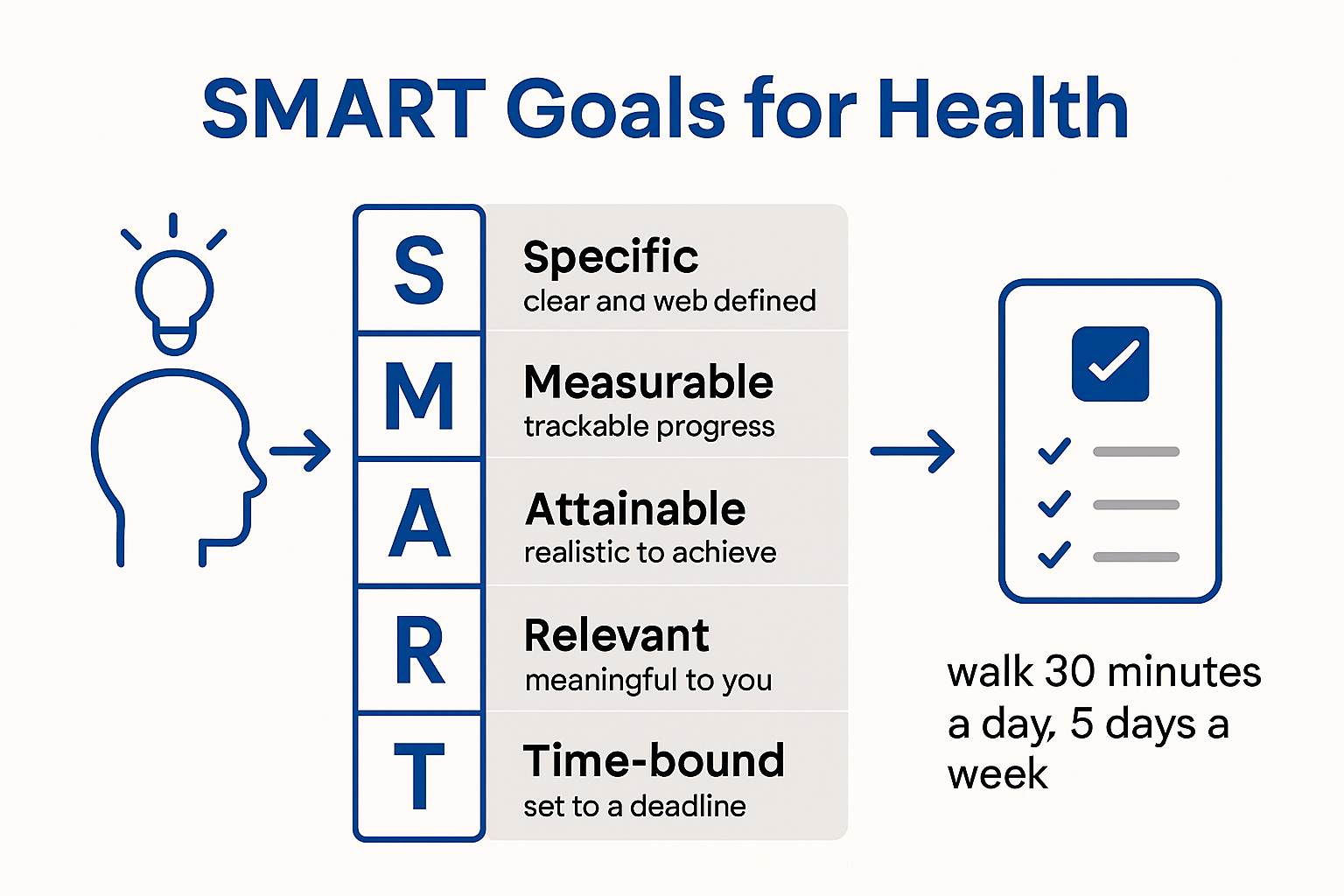
According to Harvard Health, the most effective goals follow the SMART framework: Specific, Measurable, Attainable, Relevant, and Time-bound. Instead of vague statements like “I want to get healthier,” craft precise goals such as “I will reduce my body fat percentage by 5% within six months” or “I will lower my resting heart rate to 70 beats per minute by practicing cardiovascular exercise four times weekly.”
Begin by categorizing your health goals across multiple dimensions. Consider physical fitness, nutrition, mental wellness, sleep quality, stress management, and chronic condition management. Each category requires thoughtful, individualized goal setting that reflects your unique health assessment from the previous step. For instance, if your blood work revealed nutritional deficiencies, your goal might be “I will incorporate three nutrient-dense meals per week and take recommended supplements consistently.”
Ensure your goals are personally meaningful and motivating. Reflect on why each goal matters to you beyond surface-level metrics. Connect your objectives to deeper personal values like increased energy, longevity, improved quality of life, or the ability to engage more fully with family and work. This emotional connection transforms goals from abstract concepts into powerful personal commitments.
Prioritize your goals by evaluating their potential impact and your current readiness for change. Not all goals need to be pursued simultaneously. Select 2-3 primary objectives that will create the most significant positive transformation in your overall health and wellness.
Key verification indicators that you have successfully defined your health goals include:
- A written document outlining 2-3 SMART health goals
- Clear understanding of the motivation behind each goal
- Realistic timeline for goal achievement
- Identified potential obstacles and initial strategies to overcome them
Remember, goal setting is an iterative process. Your objectives will evolve as you progress, and flexibility is key to maintaining motivation and momentum in your wellness journey.
Step 3: Create a Measurable Action Plan
Transforming your health goals from abstract concepts into concrete reality requires a strategic, detailed action plan. An effective action plan serves as your personal roadmap, breaking down complex objectives into manageable, trackable steps that systematically guide you toward sustainable wellness.
According to the National Institutes of Health, successful health behavior change hinges on creating granular, specific action strategies. Begin by dissecting each of your previously defined health goals into weekly and monthly milestones. For instance, if your goal involves weight management, outline precise nutritional adjustments, exercise routines, and tracking mechanisms that will incrementally move you toward your target.
Develop a comprehensive tracking system that allows you to monitor progress with precision. Utilize digital health apps, fitness trackers, or a dedicated journal to record your daily activities, nutritional intake, exercise performance, and physiological measurements. Choose tools that provide visual representations of your progress, such as graphs or charts that showcase your improvements over time. These visual motivators can significantly enhance your commitment and provide tangible evidence of your advancement.
Anticipate potential obstacles and preemptively design contingency strategies. Recognize that setbacks are a natural part of any health transformation journey. Create flexible alternatives for scenarios like unexpected schedule disruptions, health challenges, or motivational dips. For example, if your workout plan becomes impossible due to time constraints, have a 15-minute home exercise routine ready as an alternative.
Integrate accountability mechanisms into your action plan. Consider partnering with a health coach, joining a supportive online community, or enlisting a friend with similar wellness objectives. Regular check-ins and shared progress reports can provide external motivation and help you stay committed to your goals.
Key verification indicators that you have successfully created a measurable action plan include:
- A detailed, written document outlining specific weekly and monthly milestones
- Selected tracking tools and methods for monitoring progress
- Identified potential obstacles with corresponding backup strategies
- Established accountability system or support network
Remember, an action plan is a living document. Remain open to refinement and adjustment as you gain insights into your body’s responses and personal motivational patterns. Flexibility and consistent reassessment are the cornerstones of sustainable health transformation.

Step 4: Implement Lifestyle Changes Gradually
Successful health transformations are not about radical overnight changes, but about strategic, incremental shifts that build sustainable habits. Gradual implementation allows your body and mind to adapt to new wellness practices without triggering overwhelming resistance or burnout.
According to the National Heart, Lung, and Blood Institute, introducing lifestyle changes requires a thoughtful, progressive approach. Start by selecting one or two specific modifications from your action plan that feel most manageable. For instance, if your goal involves improving nutrition, begin by replacing one processed meal per week with a home-cooked, nutrient-dense alternative rather than attempting a complete dietary overhaul.
Create a structured progression framework that allows you to build momentum through small, consistent wins. Each successful micro-change becomes a foundational building block for more complex lifestyle transformations. If your objective involves increasing physical activity, initiate your journey with short, 10-minute walking sessions, gradually extending duration and intensity as your fitness level improves. This approach minimizes physical strain and psychological resistance while creating a positive feedback loop of achievement.
Develop a supportive environment that reinforces your gradual changes. Communicate your wellness journey with family and friends, asking for understanding and minimal disruption during your adaptation period. Strategically modify your living and working spaces to make healthy choices more convenient. This might involve preparing healthy snacks in advance, creating a dedicated home workout area, or establishing consistent sleep routines that support your emerging wellness practices.
Practice self-compassion throughout your implementation process. Recognize that progress is rarely linear, and occasional setbacks are natural components of any meaningful transformation. Instead of viewing deviations as failures, treat them as informative data points that help you refine your approach. Maintain a reflective journal documenting your experiences, emotional responses, and subtle physiological changes to maintain perspective and motivation.
Key verification indicators that you have successfully implemented lifestyle changes include:
- Consistent execution of 1-2 initial lifestyle modifications
- Minimal disruption to daily routines
- Positive emotional engagement with new practices
- Observable incremental improvements in targeted health metrics
Remember, sustainable wellness is a marathon, not a sprint. Your patience and commitment to gradual, mindful changes will ultimately determine your long-term success.
Step 5: Monitor Your Progress Consistently
Consistent progress monitoring transforms your health journey from a passive experience into an active, data-driven transformation. Tracking your advancement provides crucial insights that help you understand what strategies are working, where adjustments are needed, and how your body responds to lifestyle changes.
According to research in the International Journal of Environmental Research and Public Health, systematic self-monitoring significantly improves health behavior adherence. Establish a comprehensive tracking system that captures multiple dimensions of your wellness progress. Utilize digital health applications, wearable fitness trackers, or a detailed personal journal to record quantitative metrics like weight, body measurements, resting heart rate, and sleep duration, alongside qualitative observations about energy levels, mood, and overall well-being.
Schedule regular check-in periods to evaluate your progress comprehensively. Monthly assessments allow sufficient time to observe meaningful trends while preventing obsessive daily scrutiny. During these check-ins, compare your current measurements against your initial baseline and action plan goals. Look beyond simple numerical changes and consider holistic indicators of improvement, such as increased physical endurance, enhanced mental clarity, improved emotional resilience, and overall quality of life.
Develop a systematic approach to documenting and interpreting your progress data. Create visual representations like graphs or charts that demonstrate your advancement across different health parameters. These visual tools not only provide motivational reinforcement but also help you identify patterns, plateaus, and potential areas requiring strategic intervention. Consider color-coding or using digital tools that can automatically generate comprehensive progress reports.
Remain flexible and prepared to recalibrate your approach based on your monitoring insights. Recognize that progress is rarely linear, and occasional fluctuations are normal. When you encounter unexpected results, approach them with curiosity rather than frustration. Use these moments as opportunities to consult healthcare professionals, refine your strategies, and gain deeper understanding of your body’s unique responses.
Key verification indicators that you have successfully monitored your progress include:
- Consistent monthly health and wellness tracking
- Detailed documentation of quantitative and qualitative progress metrics
- Visual progress representations
- Demonstrated ability to interpret and respond to tracking data
Remember, progress monitoring is not about perfection but about continuous learning and adaptation. Your commitment to understanding your health journey will be your greatest asset in achieving lasting wellness.
Step 6: Adjust Goals as Needed for Success
Wellness is a dynamic journey, not a static destination. Successful health transformations require ongoing adaptation and flexibility, recognizing that your body, circumstances, and personal objectives will continuously evolve. Goal adjustment is not a sign of failure but a sophisticated strategy of intelligent progression.
According to research in Preventive Medicine Reports, personalized goal modification significantly enhances long-term health behavior change. Begin by conducting periodic comprehensive reviews of your existing goals, typically every three to four months. During these assessments, evaluate not just the quantitative metrics of your progress, but also the qualitative aspects of your wellness experience.
Develop a nuanced approach to goal modification that considers multiple dimensions of your health transformation. If certain strategies are not yielding expected results, resist the temptation to abandon them entirely. Instead, make incremental refinements. For instance, if your current exercise routine feels unsustainable, explore alternative activities that provide similar health benefits while aligning more closely with your lifestyle and personal preferences.
Cultivate a growth mindset that views goal adjustment as an intelligent optimization process. Recognize that external factors like work stress, family responsibilities, or unexpected health challenges can legitimately necessitate goal recalibration. Create a flexible framework that allows you to scale goals up or down without experiencing feelings of disappointment or personal failure.
Establish a supportive ecosystem for goal evaluation. Consider consulting healthcare professionals, wellness coaches, or trusted peers who can provide objective perspectives on your progress. Their external insights can help you identify blind spots and develop more sophisticated adjustment strategies that you might not perceive independently.
Key verification indicators that you have successfully adjusted your goals include:
- Documented evidence of goal modifications
- Clear rationale for each goal adjustment
- Maintenance of overall wellness trajectory
- Continued motivation and engagement with health objectives
Remember that goal adjustment is an art of balance. You are seeking sustainable progress, not perfection. Your willingness to listen to your body, remain adaptable, and approach your wellness journey with compassion and intelligence will ultimately determine your long-term success.
Turn Your Health Goals Into Personalized Success With Menalam
You already know that true wellness starts with understanding your current health status, setting specific goals, and consistently tracking your progress. But if you are struggling to translate health insights into daily action or feeling overwhelmed by supplement choices and data, there is a smarter, easier way forward. Achieving measurable, lasting wellness does not have to be complicated or guesswork.
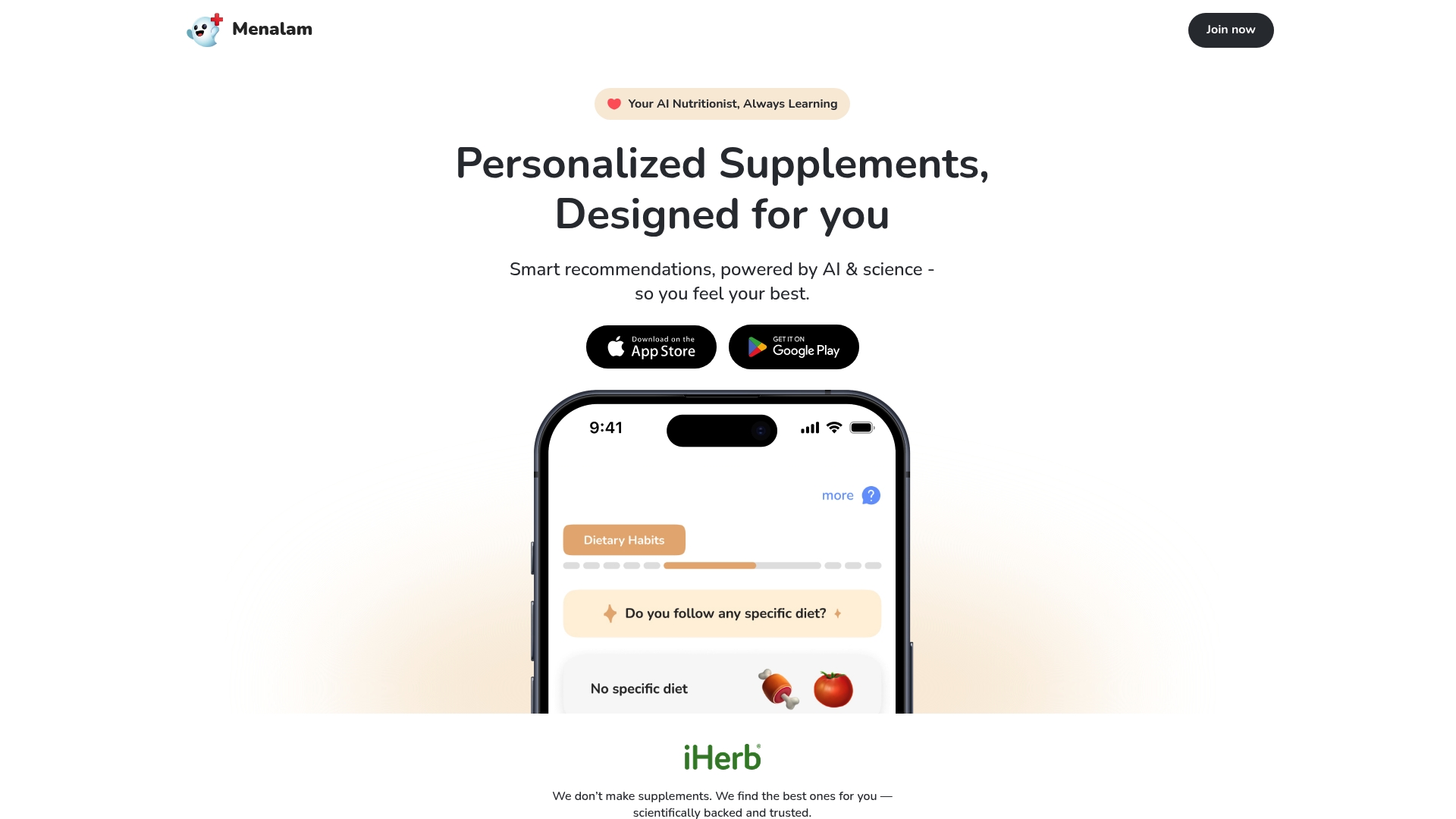
Let Menalam act as your digital nutritionist. By completing a quick health quiz, you unlock access to science-backed, personalized supplement plans and easy-to-use health tracking right from your phone. Menalam integrates your unique data and even blood test results so you can monitor your journey and adjust your plan as your needs change.
Ready to build a sustainable action plan and see real results? Visit Menalam and experience how tailored guidance, smart reminders, and ongoing progress tracking empower you to achieve every milestone in your health journey. Start now and transform your wellness goals into success you can measure.
Frequently Asked Questions
How do I assess my current health status before setting health goals?
Begin by scheduling a comprehensive health checkup with your primary care physician to obtain critical health metrics, including weight, BMI, blood pressure, and cholesterol levels. Additionally, conduct a self-evaluation of your lifestyle habits through a detailed health journal documenting your daily routines and wellness practices.
What framework should I use to define my health goals?
The SMART framework is effective for defining health goals. Ensure your goals are Specific, Measurable, Attainable, Relevant, and Time-bound. For example, instead of a vague goal, state, “I will lower my resting heart rate to 70 beats per minute within six months by exercising four times a week.”
How can I create a measurable action plan for my health goals?
Break down your health goals into weekly and monthly milestones. Develop a tracking system using digital apps or a journal to monitor your progress, including nutritional intake and exercise routines. Anticipate potential obstacles and create backup strategies so you can adapt when unexpected challenges arise.
Why is monitoring my progress important for achieving health goals?
Consistent progress monitoring provides crucial insights that help you understand which strategies work best for you. Tracking quantitative metrics, like weight and energy levels, allows for data-driven adjustments to your wellness approach and helps maintain motivation throughout your transformation journey.
Leave a Reply