

Mental wellness trends are evolving fast and science is leading the charge. Studies show mindfulness practices can actually increase gray matter in your brain, physically changing how you handle stress. Most people believe generic advice like ‘just relax’ or ‘eat better’ really works for everyone. Not even close. The real breakthroughs for 2025 come from personalizing every step and using technology to track exactly what moves the needle for your mind.
Table of Contents
- Personalized Mental Wellness Tips For Every Lifestyle
- Science-Backed Strategies For Improved Wellbeing
- Nutrition, Supplements, And Tracking For Mental Health
- Daily Habits To Support Long-Term Mental Wellness
Quick Summary
| Takeaway | Explanation |
|---|---|
| Personalize Your Mental Wellness Strategy | Tailor your strategies to fit your unique emotional triggers and coping mechanisms. Find what truly works for you. |
| Engage in Science-Backed Techniques | Utilize evidence-based methods like mindfulness and regular exercise to enhance emotional regulation and reduce anxiety. |
| Focus on Nutritional Psychiatry | Consume nutrients that directly impact your mental health, such as Omega-3 fatty acids and B vitamins, to support brain function. |
| Incorporate Daily Habit Structures | Establish consistent daily routines and practices to build emotional strength and adaptive capabilities for long-term mental wellness. |
| Leverage Technology for Monitoring | Use digital tools to track mental health markers and optimize your wellness strategies based on real-time data. |
Personalized Mental Wellness Tips for Every Lifestyle
In a world where stress and mental health challenges continue to evolve, one size definitely does not fit all when it comes to wellness strategies. Personalized mental wellness represents a revolutionary approach that recognizes individual differences in emotional resilience, lifestyle demands, and psychological needs.
Understanding Individual Mental Health Landscapes
Mental wellness is not a universal concept but a deeply personal journey. Research from the National Institutes of Health highlights that emotional wellness requires tailored strategies that consider an individual’s unique physical, psychological, and environmental factors. A personalized approach means moving beyond generic advice and creating targeted interventions that resonate with your specific life circumstances.
The key to effective mental wellness lies in recognizing that each person’s stress triggers, coping mechanisms, and emotional responses are unique. Some individuals might find solace in meditation, while others might require more active stress management techniques like physical exercise or creative expression. A study published in the Journal of Psychiatric Research demonstrates that personalized risk information can significantly influence self-help behaviors, particularly for those experiencing moderate to high stress levels.
Crafting Your Personal Mental Wellness Blueprint
Developing a personalized mental wellness strategy involves several critical steps:
- Self Assessment: Conduct a comprehensive evaluation of your current mental state, identifying specific stressors, emotional patterns, and areas requiring attention.
- Lifestyle Integration: Design wellness practices that seamlessly fit into your daily routine, ensuring sustainability and long-term commitment.
- Adaptability: Create a flexible framework that can be adjusted as your life circumstances and mental health needs change.
The Journal of Anxiety Disorders emphasizes the critical role of personalization in mental health interventions. Therapists and mental health professionals increasingly recognize that custom-tailored approaches significantly enhance engagement and effectiveness in managing psychological challenges.
Technology and Personalized Mental Wellness
Emerging technologies are transforming how we approach mental wellness. Artificial intelligence and data-driven platforms now offer unprecedented opportunities for creating highly personalized mental health strategies. These technologies can analyze individual data points, track emotional patterns, and provide real-time recommendations that adapt to your changing needs.
By embracing a personalized approach, individuals can develop more effective, sustainable mental wellness strategies that genuinely reflect their unique life experiences, challenges, and aspirations. Remember, mental wellness is not about achieving a perfect state but about creating a dynamic, responsive system that supports your continuous emotional growth and resilience.
The future of mental wellness is personalized, proactive, and profoundly individual. Your mental health journey is as unique as your fingerprint – and it deserves a strategy that recognizes and celebrates that uniqueness.
Science-Backed Strategies for Improved Wellbeing
The pursuit of mental wellness is no longer a matter of intuition but a science-driven approach grounded in rigorous research and empirical evidence. Modern psychological and neurological studies have uncovered precise strategies that demonstrably enhance mental health and overall well-being.
Neurological Foundations of Mental Wellness
Research from the American Psychological Association reveals that mental wellness is not just about feeling good momentarily but about creating sustainable neurological resilience. Scientific studies demonstrate that specific interventions can actually reshape brain neural pathways, improving emotional regulation and stress response.
Neuroplasticity research shows that our brains remain adaptable throughout life. This means deliberate mental wellness practices can literally rewire neural connections, enhancing cognitive flexibility and emotional stability. A groundbreaking study in Neuroscience indicates that consistent mindfulness practices can increase gray matter density in brain regions associated with learning, memory, and emotional processing.
Evidence-Based Mental Wellness Techniques
Several scientifically validated strategies stand out in promoting mental wellness:
- Structured Mindfulness: Systematic meditation practices that reduce cortisol levels and enhance emotional regulation.
- Physical Activity: Regular exercise proven to release endorphins and improve neurochemical balance.
- Sleep Optimization: Consistent sleep patterns that support cognitive restoration and emotional processing.
Neuroscience research published in Nature demonstrates that these techniques are not merely suggestive but produce measurable changes in brain chemistry and psychological functioning. The key is consistency and personalized implementation.
Below is a table summarizing key evidence-based mental wellness techniques and their main scientific benefits, to help you quickly compare and choose strategies for your needs.
| Technique | Main Scientific Benefits |
|---|---|
| Structured Mindfulness | Reduces cortisol, enhances emotional regulation, increases gray matter density |
| Physical Activity | Releases endorphins, improves neurochemical balance, enhances cognitive flexibility |
| Sleep Optimization | Supports cognitive restoration, improves emotional processing |
Integrating Scientific Insights into Daily Practice
Translating scientific research into practical mental wellness strategies requires a systematic approach. Modern technology now enables individuals to track and optimize their mental health interventions with unprecedented precision. Wearable devices and mobile applications can monitor physiological markers like heart rate variability, sleep quality, and stress responses.
Importantly, science-backed strategies recognize that mental wellness is multifaceted. It encompasses not just emotional management but also cognitive performance, physiological resilience, and interpersonal effectiveness. By understanding the interconnected nature of mental health, individuals can develop holistic approaches that address multiple dimensions simultaneously.
The emerging field of positive psychology emphasizes proactive mental wellness rather than reactive treatment. This paradigm shift means focusing on building psychological strengths, developing adaptive coping mechanisms, and creating environments that naturally support mental health.
Ultimately, science-backed mental wellness is about empowerment. It provides individuals with evidence-based tools to take control of their psychological well-being, transforming mental health from a passive experience to an active, informed journey of personal growth and resilience.
Nutrition, Supplements, and Tracking for Mental Health
Mental health is not just about psychological strategies but also deeply connected to our nutritional intake and physiological balance. Modern research reveals an intricate relationship between what we consume, how we supplement, and our overall mental wellness.
Nutritional Psychiatry: The Brain-Diet Connection
Research published in the journal Nutrients unveils the emerging field of nutritional psychiatry, demonstrating how specific nutrients directly impact brain function and mental health. Omega-3 fatty acids, B vitamins, and polyphenols are not just dietary components but critical modulators of neurological processes.
The scientific evidence suggests that dietary quality can significantly influence mental health risk factors and progression. Nutrients play a fundamental role in neurotransmitter production, neural plasticity, and inflammatory responses that underpin psychological well-being. For instance, deficiencies in key nutrients like vitamin D, magnesium, and zinc have been linked to increased risks of depression and anxiety.
The following table summarizes important brain-related nutrients mentioned, their key functions for mental wellness, and common food sources. This can help you better understand their role in your diet.
| Nutrient | Mental Health Function | Common Sources |
|---|---|---|
| Omega-3 Fatty Acids | Supports neurotransmitter production, reduces inflammation | Fatty fish, walnuts, flaxseeds |
| B Vitamins | Aid in neurotransmitter synthesis, regulate mood | Whole grains, leafy greens, eggs |
| Polyphenols | Provide neuroprotection, act as antioxidants | Berries, dark chocolate, tea |
| Vitamin D | Modulates mood, supports neural health | Sunlight, fortified foods, eggs |
| Magnesium | Regulates neurotransmitters, reduces anxiety | Nuts, seeds, legumes, spinach |
| Zinc | Supports neural signaling, mood regulation | Meat, shellfish, legumes |
Strategic Supplementation for Mental Wellness
Comprehensive mental health supplementation requires a personalized approach:
- Targeted Nutrient Support: Identifying and addressing specific nutritional deficiencies that may contribute to mental health challenges.
- Holistic Supplementation: Using evidence-based supplements that support neurotransmitter balance and cognitive function.
- Bioindividual Optimization: Recognizing that supplement needs vary based on individual metabolic profiles, genetic factors, and lifestyle demands.
The National Institute of Mental Health highlights the importance of personalized approaches in mental health management, emphasizing that one-size-fits-all strategies are increasingly becoming obsolete.
Digital Tracking and Mental Health Monitoring
Technology has revolutionized how we understand and manage mental wellness. Advanced tracking tools now offer unprecedented insights into our physiological and psychological states. Wearable devices can monitor critical markers like heart rate variability, sleep patterns, and stress responses, providing real-time data that can inform mental health strategies.
Mobile applications and digital platforms enable individuals to create comprehensive mental health profiles. These tools can track mood fluctuations, medication adherence, sleep quality, and physical activity levels. By converting subjective experiences into quantifiable data, individuals gain a more objective understanding of their mental health trajectories.
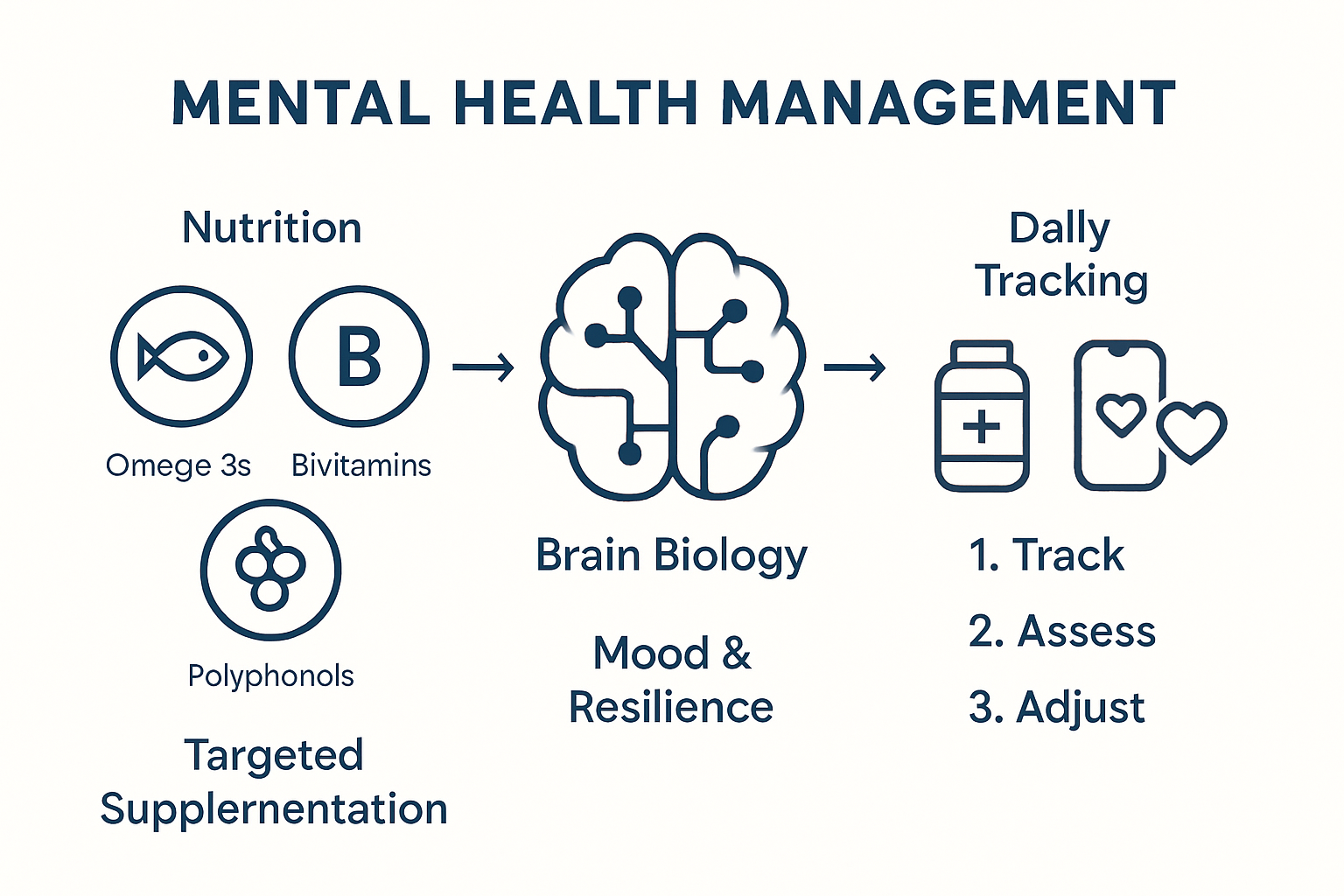
The integration of nutrition, strategic supplementation, and digital tracking represents a holistic approach to mental wellness. It transforms mental health management from a reactive model to a proactive, data-driven strategy. By understanding the intricate connections between diet, supplements, and psychological well-being, individuals can develop more precise, personalized approaches to mental health optimization.
Ultimately, mental wellness is a complex interplay of nutritional, technological, and psychological factors. Embracing this complexity allows for more nuanced, effective strategies that recognize the unique biochemical and environmental influences on individual mental health experiences.
Daily Habits to Support Long-Term Mental Wellness
Mental wellness is not a destination but a continuous journey of intentional daily practices that collectively shape our psychological resilience and emotional stability. Sustainable mental health requires consistent, strategic habits that support our neurological and emotional well-being.
Foundational Daily Practices
Research from Harvard’s T.H. Chan School of Public Health highlights the critical role of lifestyle habits in maintaining long-term mental wellness. These foundational practices go beyond occasional interventions, creating a robust psychological infrastructure that can withstand life’s inevitable challenges.
Consistent daily habits act as psychological scaffolding, helping individuals build emotional strength and adaptive capabilities. The human brain thrives on predictability and structured routines that provide a sense of control and reduce cognitive load. By establishing intentional daily practices, individuals can create neurological pathways that support emotional regulation and stress management.
Comprehensive Wellness Habit Framework
A holistic approach to daily mental wellness encompasses multiple interconnected dimensions:
- Morning Ritual Development: Creating structured morning routines that set positive psychological momentum
- Stress Management Techniques: Integrating regular micro-breaks and mindfulness moments throughout the day
- Evening Reflection Practices: Implementing wind-down strategies that promote psychological closure and emotional processing
Psychological Science research demonstrates that these systematic approaches can significantly reduce anxiety, improve emotional resilience, and enhance overall mental clarity. The key is consistency and personalized adaptation.
Technology-Enhanced Habit Tracking
Modern digital tools offer unprecedented opportunities for habit monitoring and optimization. Smart applications and wearable technologies can provide real-time feedback on sleep patterns, stress levels, physical activity, and emotional states. These technologies transform habit formation from a subjective experience to a data-driven, measurable process.
By leveraging technological insights, individuals can develop more nuanced and responsive mental wellness strategies. Digital tracking allows for immediate adjustments, helping people understand the direct correlation between daily habits and psychological well-being. This approach shifts mental health management from reactive treatment to proactive lifestyle design.

Importantly, successful daily habit implementation requires self-compassion and flexibility. Mental wellness is not about perfection but about consistent, incremental progress. Small, sustainable changes compound over time, creating significant psychological transformations.
The most effective daily habits are those that feel natural and align with individual preferences and lifestyles. Personalization is crucial – what works for one person might not work for another. Experimentation, self-observation, and continuous refinement are essential components of developing a robust mental wellness routine.
Ultimately, daily habits are the building blocks of long-term mental resilience. By approaching mental wellness as a daily practice rather than an occasional intervention, individuals can cultivate a more stable, adaptive, and fulfilling psychological experience. The journey of mental wellness is ongoing, and each day presents an opportunity for growth, healing, and personal transformation.
Frequently Asked Questions
What are personalized mental wellness strategies?
Personalized mental wellness strategies are tailored approaches that consider an individual’s unique emotional triggers, coping mechanisms, and lifestyle demands to enhance mental health effectively.
How can mindfulness practices improve mental wellness?
Mindfulness practices can increase gray matter density in the brain, improving stress handling and emotional regulation, leading to better overall mental wellness.
What role does nutrition play in mental health?
Nutrition plays a critical role in mental health, with specific nutrients like Omega-3 fatty acids and B vitamins directly impacting brain function and supporting emotional well-being.
How can technology be used to enhance mental wellness?
Technology can be utilized through apps and wearable devices that track mental health markers, providing real-time data to help individuals optimize their wellness strategies.
Ready to Personalize Your Mental Wellness for 2025?
Generic wellness tips often fall short because your mind and body are unique. If you are tired of one-size-fits-all advice and want real results, it is time to choose a science-backed solution that truly adapts to you. The article highlighted how personalized strategies, nutritional psychiatry, and tech-based habit tracking can make a difference in your mental health journey. Menalam transforms these tips into action by offering tailored supplement recommendations and real-time health tracking based on your personal data.

Seize the power of personalization and data-driven wellness today. Discover how Menalam’s digital nutritionist and advanced mobile app can help you build your own mental wellness blueprint. Take the quick health quiz to get a supplement plan designed for your needs and track your progress effortlessly. Visit Menalam and turn cutting-edge mental wellness science into lasting daily habits. Your next breakthrough starts now.
Leave a Reply