

Athletes and fitness enthusiasts are buzzing about nutrient timing strategies that promise better workouts and faster recovery. Some studies found that eating protein within two hours after exercise can increase muscle protein synthesis by up to 50 percent compared to skipping post-workout fuel. Yet most people focus on what and how much to eat, not when. Shocking, right? Because the timing of your meals might be the real key to unlocking peak performance and long-term results.
Table of Contents
- Understanding The Science Of Nutrient Timing
- Best Times To Eat For Performance And Recovery
- Personalized Nutrient Timing For Your Goals
- Nutrient Timing And Supplement Guidance
Quick Summary
| Takeaway | Explanation |
|---|---|
| Nutrient timing enhances performance and recovery. | Consuming nutrients at specific times around exercise maximizes physiological benefits and accelerates muscle recovery. |
| Focus on pre and post-exercise nutrition. | Eating carbohydrates before and proteins after workouts supports energy levels and muscle repair effectively. |
| Individualize your nutrient timing strategy. | Tailor nutrition plans to your unique metabolic patterns, fitness goals, and workout intensities for optimal results. |
| Monitor supplement timing for better absorption. | Take supplements at strategic times to maximize their effectiveness and enhance overall health benefits. |
| Consider circadian rhythms in meal timing. | Aligning your eating schedule with natural body rhythms can improve metabolic health and weight management. |
Understanding the Science of Nutrient Timing
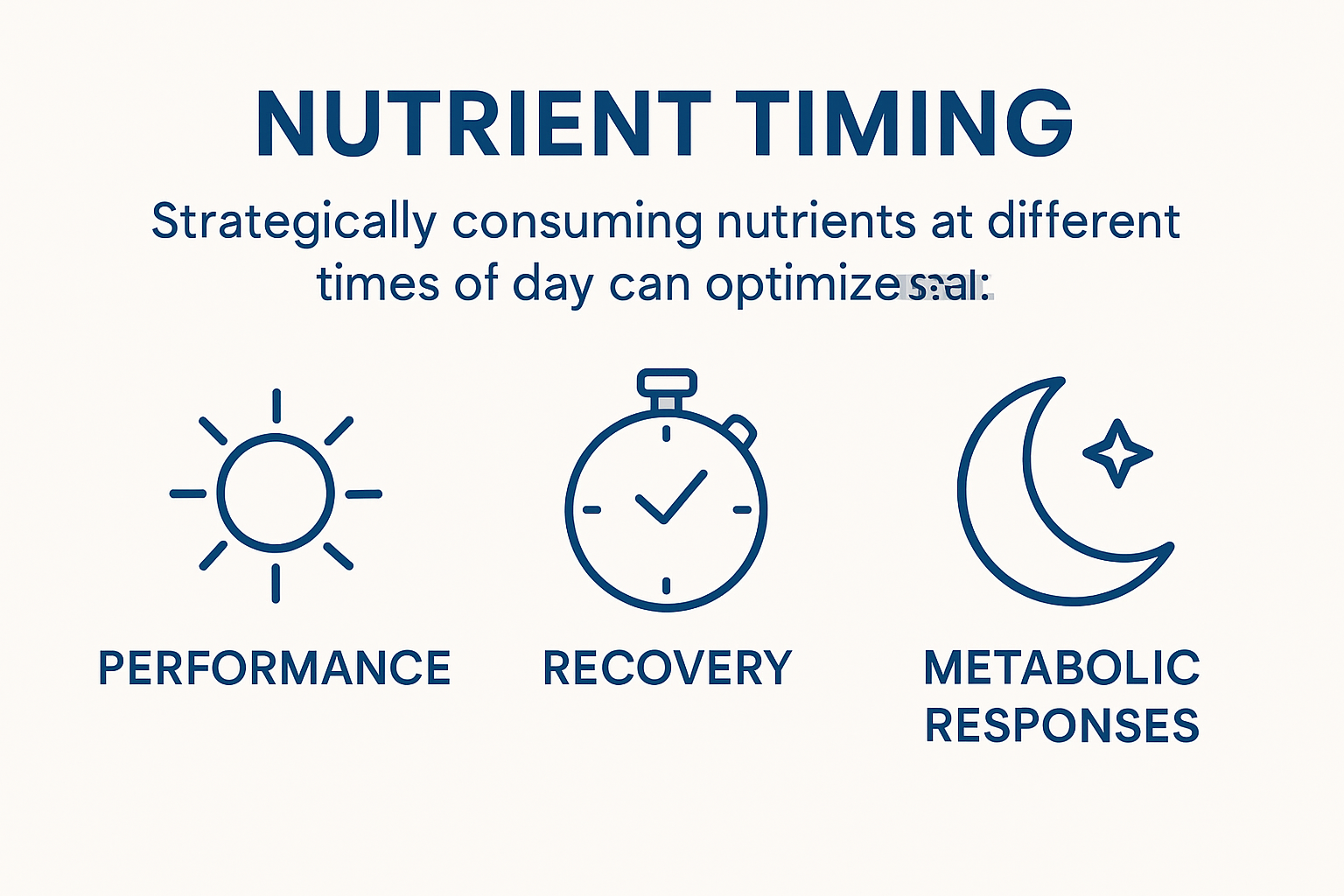
Nutrient timing represents a sophisticated approach to nutrition that goes beyond simple calorie counting. At its core, this scientific strategy focuses on strategically consuming specific nutrients at precise moments to optimize physiological responses, enhance performance, and support overall metabolic health.
The Physiological Mechanisms Behind Nutrient Timing
The human body operates like a complex machine, with metabolic processes continuously responding to nutritional input. According to a comprehensive review by the Journal of the International Society of Sports Nutrition, nutrient timing exploits the body’s natural metabolic windows. These windows represent periods when muscles are particularly receptive to nutrient absorption and utilization.
Research demonstrates that consuming proteins and carbohydrates around exercise periods can significantly influence muscle protein synthesis and glycogen replenishment. Nutrients journal research highlights that the body’s anabolic sensitivity peaks immediately following physical activity, making post-workout nutrition critically important for recovery and muscle growth.
Metabolic Windows and Performance Optimization
Understanding metabolic windows requires recognizing how different nutrients interact with physiological processes. Protein intake, for instance, triggers muscle protein synthesis more effectively when consumed within specific timeframes around exercise. Carbohydrates play a complementary role by replenishing glycogen stores and supporting insulin sensitivity.
Key metabolic timing considerations include:
- Pre-exercise nutrition: Preparing the body with readily available energy sources
- Intra-workout nutrition: Maintaining performance and reducing muscle breakdown
- Post-exercise nutrition: Maximizing recovery and muscle adaptation
While precise timing can offer marginal advantages, total daily nutrient intake remains paramount. The scientific community increasingly emphasizes that overall nutritional quality and consistency matter more than ultra-precise timing strategies.
Individuals seeking to optimize their nutrient timing should consider their unique physiological characteristics, training intensity, and specific fitness goals. Personalization is key to developing an effective nutritional approach that supports individual metabolic needs and performance objectives.
Best Times to Eat for Performance and Recovery
Optimizing nutrition timing is a critical strategy for athletes and fitness enthusiasts seeking to maximize performance and accelerate recovery. The strategic consumption of nutrients around workout periods can significantly impact physiological responses, muscle adaptation, and overall athletic performance.
Pre-Exercise Nutrition Strategies
Preparing your body with the right nutrients before exercise is crucial for sustained energy and performance. Research from the National Institutes of Health indicates that consuming a balanced meal rich in carbohydrates 2-3 hours before exercise helps maximize training potential. Carbohydrates serve as the primary fuel source, providing readily available energy that supports intense physical activity.
Ideal pre-exercise nutrition typically includes:
- Complex carbohydrates: Whole grains, sweet potatoes, oatmeal
- Moderate protein: Lean proteins that are easily digestible
- Moderate fat: Small amounts to support sustained energy
Timing is essential. Consuming a meal too close to exercise can lead to digestive discomfort, while eating too far in advance might result in energy depletion.
Post-Exercise Recovery Nutrition
The period immediately following exercise represents a critical window for nutrient absorption and muscle recovery. Scientific evidence suggests consuming 20-40 grams of protein within two hours after training can significantly enhance muscle protein synthesis and recovery. This window is often referred to as the “anabolic window,” where muscles are most receptive to nutrient uptake.
Key components of effective post-workout nutrition include:
- Protein: Essential for muscle repair and growth
- Carbohydrates: Replenish glycogen stores depleted during exercise
- Electrolytes: Replace minerals lost through sweat

Individualized Nutrient Timing Approach
While general guidelines provide a solid foundation, individual nutritional needs vary based on factors like workout intensity, body composition, and personal metabolic responses. Professional athletes and fitness enthusiasts should consider working with nutritionists to develop personalized nutrient timing strategies.
Factors influencing individual nutrient timing include:
- Type and duration of exercise
- Personal metabolic rate
- Body composition goals
- Overall health and fitness level
Understanding your body’s unique responses and experimenting with different nutrient timing approaches can help you discover the most effective strategy for your specific fitness objectives. Consistency, careful observation, and willingness to adjust are key to developing an optimized nutrition plan.
Here is a table comparing the key differences between Pre-Exercise and Post-Exercise Nutrition strategies outlined above:
| Timing | Key Nutrients | Purpose | Example Foods/Intake |
|---|---|---|---|
| Pre-Exercise | Complex carbs, moderate protein, moderate fat | Provide energy for performance | Oatmeal + fruit, whole grain toast + eggs |
| Post-Exercise | Protein, carbohydrates, electrolytes | Speed recovery, rebuild muscles | Protein shake + banana, chicken + rice |
Personalized Nutrient Timing for Your Goals
Personalized nutrient timing represents a cutting-edge approach to nutrition that recognizes each individual’s unique metabolic profile, fitness objectives, and physiological responses. Unlike one-size-fits-all dietary recommendations, this strategy tailors nutrient intake to specific personal goals and biological rhythms.
Understanding Individual Metabolic Patterns
Research from the Journal of Nutritional Science and Vitaminology reveals the critical importance of aligning meal timing with individual circadian rhythms. Our bodies are not uniform machines but complex systems with distinct metabolic responses that change throughout the day. Chrononutrition explores how meal timing influences metabolic health, suggesting that the when of eating can be just as important as the what.
The National Heart, Lung, and Blood Institute emphasizes that late-night eating can disrupt natural circadian patterns, potentially increasing risks of obesity, diabetes, and cardiovascular diseases. This underscores the need for personalized nutrient timing strategies that consider individual lifestyle, work schedules, and biological clocks.
Goal-Specific Nutrient Timing Strategies
Different fitness and health objectives require tailored nutritional approaches. Whether you’re aiming for muscle gain, weight loss, athletic performance, or overall wellness, nutrient timing can be a powerful tool.
Nutrition strategies for specific goals:
- Muscle Building: Concentrate protein intake around workout periods, with higher carbohydrate consumption to support muscle protein synthesis
- Weight Loss: Distribute meals to maintain steady energy levels and control hunger
- Endurance Training: Focus on consistent nutrient intake to maintain energy and support recovery
- Metabolic Health: Align meal timing with natural circadian rhythms
The following table summarizes nutrient timing approaches for different health and fitness goals discussed in this section:
| Goal | Nutrient Timing Strategy | Main Focus |
|---|---|---|
| Muscle Building | Protein and carbs around workouts | Muscle growth & repair |
| Weight Loss | Distributed meal timing for energy/hunger control | Fat loss, steady energy |
| Endurance Training | Consistent intake, even during prolonged exercise | Sustained energy, faster recovery |
| Metabolic Health | Align meals with circadian rhythms, avoid late-night overeating | Improved metabolism & health risks |
Personalization Through Advanced Tracking
A systematic review in Nutrients highlights the potential of personalized nutrition in improving dietary adherence and health outcomes. Modern technology enables unprecedented insights into individual metabolic responses. Wearable devices, continuous glucose monitors, and advanced health tracking apps allow individuals to understand their unique nutritional needs with remarkable precision.
Key factors for personalization include:
- Metabolic rate
- Hormone levels
- Sleep patterns
- Exercise intensity and frequency
- Stress levels
- Genetic predispositions
Effective personalized nutrient timing is not about rigid rules but adaptive strategies. It requires continuous monitoring, willingness to experiment, and an understanding that your nutritional needs will evolve over time. Regular consultation with nutrition professionals can help refine your approach, ensuring your nutrient timing strategy remains aligned with your changing health and fitness goals.
Nutrient Timing and Supplement Guidance
Navigating the complex world of nutritional supplements requires a strategic approach that goes beyond simple consumption. Effective supplement guidance integrates scientific understanding, individual health goals, and precise nutrient timing to maximize potential benefits and optimize physiological responses.
Understanding Supplement Absorption Windows
Research published in Nutrients highlights the critical importance of timing supplement intake to enhance absorption and effectiveness. Different supplements interact uniquely with the body’s metabolic processes, making strategic timing a crucial factor in their potential impact.
Key considerations for supplement absorption include:
- Bioavailability: How efficiently the body can absorb and utilize specific nutrients
- Metabolic interactions: How different supplements may enhance or inhibit each other’s absorption
- Individual physiological differences: Unique metabolic responses that affect supplement effectiveness
Targeted Supplement Timing Strategies
Optimal supplement intake depends on multiple factors, including the specific nutrient, individual health goals, and daily activity patterns. For instance, protein supplements are most effective when consumed within specific windows around physical activity, while vitamin and mineral supplements may have different optimal intake times.
Strategic supplement timing recommendations:
- Protein supplements: Consume within 30-60 minutes post-exercise to support muscle recovery
- Creatine: Most effective when taken immediately before or after workout sessions
- Multivitamins: Typically best absorbed with meals to improve nutrient uptake
- Vitamin D: Often recommended in the morning to align with natural circadian rhythms
This table summarizes recommended timing and rationale for common supplements discussed above:
| Supplement | Recommended Timing | Rationale |
|---|---|---|
| Protein | 30-60 min post-exercise | Best supports muscle recovery and growth |
| Creatine | Immediately before/after workouts | Enhances uptake & workout effectiveness |
| Multivitamin | With meals | Maximizes absorption, lowers GI discomfort |
| Vitamin D | In the morning | Aligns with natural body/circadian rhythms |
Personalized Supplement Integration
Developing an effective supplement strategy requires a holistic approach that considers individual health profiles, nutritional needs, and specific performance goals. Factors such as age, activity level, existing health conditions, and dietary patterns play crucial roles in determining the most appropriate supplement regimen.
Key steps for personalized supplement guidance include:
- Comprehensive health assessment
- Blood work to identify specific nutritional deficiencies
- Consultation with healthcare professionals
- Regular monitoring and adjustment of supplement intake
It is essential to approach supplements as complementary to a balanced diet, not as complete replacements for whole food nutrition. While targeted supplementation can support specific health and performance goals, they work best when integrated into a comprehensive nutrition strategy.
Individuals should exercise caution and avoid self-prescribing supplements without professional guidance. Potential interactions, individual health conditions, and varying nutritional needs make personalized professional advice crucial for safe and effective supplement use.
Frequently Asked Questions
What is nutrient timing?
Nutrient timing is a strategy that focuses on consuming specific nutrients at optimal times around exercise to enhance performance, accelerate recovery, and support overall metabolic health.
Why is post-exercise nutrition important?
Post-exercise nutrition is crucial because it helps maximize muscle protein synthesis and recovery by replenishing glycogen stores and providing essential nutrients when muscles are most receptive to absorption.
How can I personalize my nutrient timing strategy?
To personalize your nutrient timing, consider factors such as workout intensity, body composition goals, and individual metabolic responses. Working with a nutritionist can help tailor a plan that meets your specific needs.
What supplements should I take for optimal nutrient timing?
For optimal nutrient timing, consider taking protein supplements shortly after workouts for muscle recovery and creatine either before or after exercise. Always consult healthcare professionals for personalized guidance.
Ready to Personalize Your Nutrient Timing for Real Results?
You have just discovered how nutrient timing can transform your workouts and recovery. But putting these scientific strategies into daily life is a challenge. You might wonder which supplements fit your unique metabolism, how to track your nutrient windows, or how to get the right reminders and adjustments at every stage of your fitness journey. Without guidance, it’s easy to miss out on your body’s optimal performance points and waste time guessing what works.
Take action now and let technology bridge the gap between insights and results. Menalam uses artificial intelligence to deliver customized supplement and nutrition plans designed around your health profile, fitness routine, and even your test results. Start with a quick health quiz and watch as our platform adjusts your plan based on your evolving goals. If you are ready to stop guessing and start performing at your best, get your personalized recommendations today and take the first step toward science-backed achievement.
Leave a Reply