


Everyone makes daily health choices, but not many realize that Fitbit users in one study walked an extra 1,300 steps per day just by using smart tracking features. Hold on, you might think good habits are all about willpower. Actually, science shows the real secret is a mix of biology, psychology, technology and even your unique gut microbes. Ready to uncover the unexpected factors that could change your health strategy for 2025?
Table of Contents
- Understanding Key Factors Shaping Lifestyle Choices
- Personalized Nutrition: Customizing Your Health Plan
- Smart Tracking To Support Lasting Wellness Goals
- Science-Backed Supplement Guidance For Every Athlete
Quick Summary
| Takeaway | Explanation |
|---|---|
| Understanding Influences on Lifestyle Choices | Recognizing the interplay of biological, socioeconomic, and psychological factors is crucial for shaping health behaviors and making effective lifestyle changes. |
| The Importance of Personalized Nutrition | Utilizing cutting-edge technology and research can lead to tailored nutritional strategies that resonate with individual biological profiles and lifestyle factors. |
| Utilizing Smart Tracking for Wellness Goals | Implementing smart tracking technologies empowers individuals to monitor their health behaviors in real-time, fostering adherence to wellness objectives and enabling actionable insights. |
| Evidence-Based Supplement Strategies for Athletes | Athletes should focus on science-backed supplements tailored to their unique physiological needs instead of generic recommendations to enhance performance effectively. |
| Holistic Approach to Nutrition and Supplementation | Emphasizing a ‘food-first’ philosophy is essential, where supplements serve to complement a balanced nutrition strategy rather than replace it. |
Understanding Key Factors Shaping Lifestyle Choices
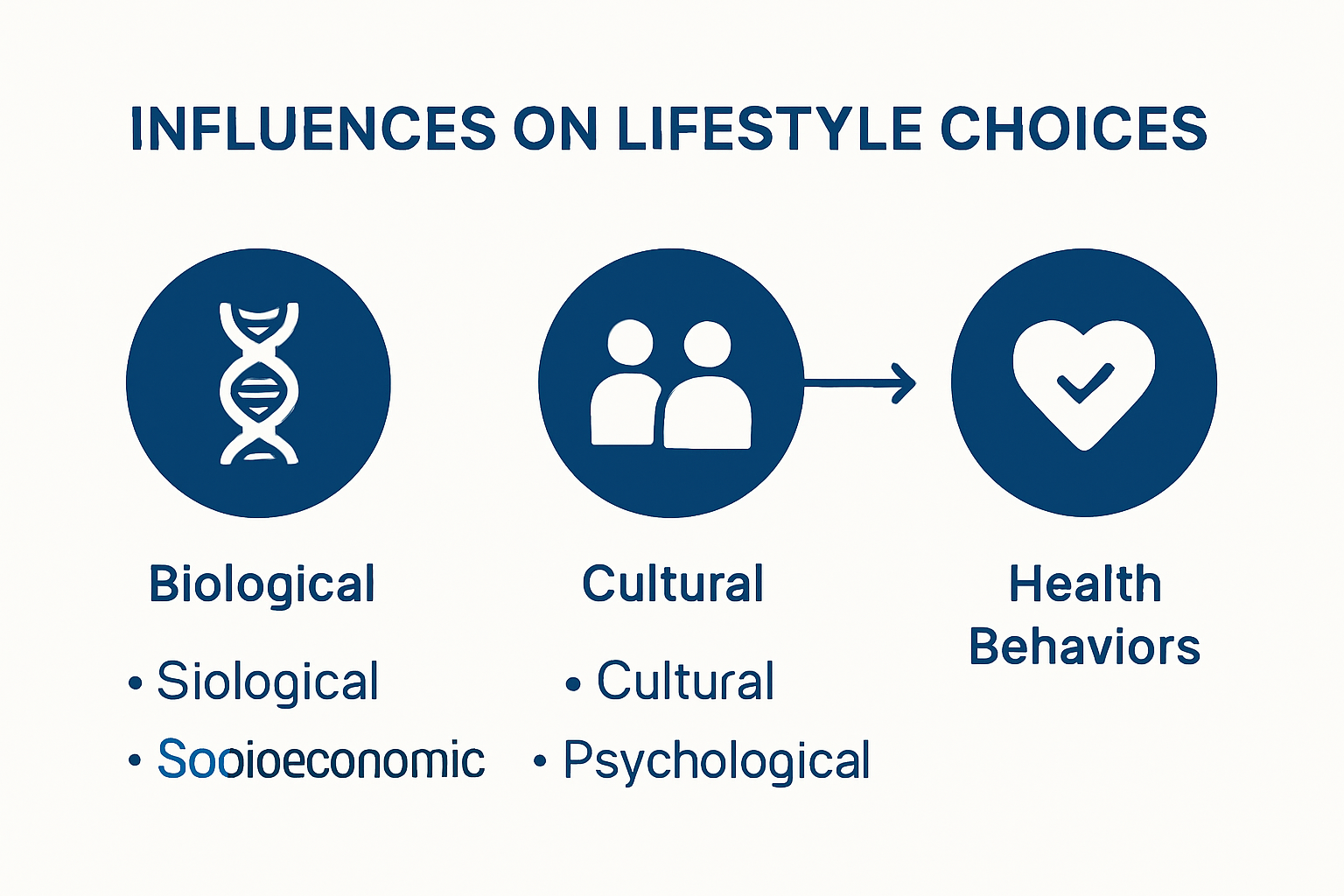
Lifestyle choices emerge from a complex interplay of biological, psychological, and environmental influences that fundamentally shape human behavior. Understanding these intricate mechanisms provides critical insights into how individuals make decisions about their health, nutrition, and overall well-being.
Biological Drivers of Personal Choices
Biological factors play a profound role in determining lifestyle decisions, particularly around nutrition and physical activity. Research from the European Food Information Council reveals that hunger, appetite, and taste represent primary biological determinants influencing food selections. The central nervous system intricately regulates the balance between hunger signals, appetite stimulation, and food intake.
Macronutrients like carbohydrates, proteins, and fats generate distinct satiety signals that communicate directly with our brain’s metabolic control centers. These biological mechanisms trigger complex hormonal responses that impact everything from meal satisfaction to long-term dietary preferences. Individuals experiencing consistent hunger or metabolic imbalances may find themselves making dramatically different lifestyle choices compared to those with stable physiological systems.
Socioeconomic and Cultural Influences
Beyond biological drivers, socioeconomic and cultural contexts profoundly shape lifestyle decisions. Psychological research indicates that income levels and educational attainment significantly correlate with health behavior patterns. Higher income populations typically demonstrate improved access to nutritious food, fitness facilities, and comprehensive healthcare services.
Cultural norms further amplify these influences. Social attitudes about acceptable body weight, traditional dietary practices, and community health perceptions create powerful frameworks that guide individual choices. These deeply embedded social constructs can either facilitate or hinder adoption of health-promoting behaviors, making them critical considerations for understanding lifestyle transformation.
Psychological Mechanisms of Choice
Psychological factors represent the intricate mental processes underlying lifestyle decisions. Individual beliefs, past experiences, emotional states, and cognitive biases dramatically influence health-related choices. Motivation, self-efficacy, and personal perception of potential outcomes play pivotal roles in determining whether an individual will commit to sustainable lifestyle modifications.
Personal narratives and emotional associations with health behaviors create powerful psychological frameworks. Someone who associates exercise with positive memories might find physical activity more intrinsically rewarding, while another individual with negative past experiences might struggle to maintain consistent fitness routines. These psychological nuances demonstrate that lifestyle choices are never purely rational but deeply rooted in individual emotional landscapes.
Comprehending these multifaceted factors provides a holistic approach to understanding and potentially influencing lifestyle choices. By recognizing the intricate interplay between biological impulses, socioeconomic contexts, and psychological mechanisms, individuals and health professionals can develop more targeted, personalized strategies for sustainable behavioral transformation.
Below is a summary table illustrating key factors influencing lifestyle choices and their specific examples, for easy comparison and reference.
| Factor | Description | Example(s) |
|---|---|---|
| Biological Drivers | Physiological signals and metabolic responses | Hunger, appetite, taste, hormonal responses, satiety |
| Socioeconomic Influences | Social and financial context affecting behavior | Access to nutritious foods, income level, healthcare access |
| Cultural Influences | Norms, traditions, and community perceptions | Traditional diets, attitudes on body weight |
| Psychological Mechanisms | Mental/emotional processes guiding choices | Motivation, self-efficacy, emotional associations |
Personalized Nutrition: Customizing Your Health Plan
Personalized nutrition represents a revolutionary approach to health management, moving beyond one-size-fits-all dietary recommendations toward tailored strategies that recognize individual biological uniqueness. This emerging field combines advanced scientific insights with cutting-edge technology to create precisely targeted nutritional interventions.
Scientific Foundations of Personalized Nutrition
The National Institutes of Health’s Nutrition for Precision Health program is pioneering research that aims to develop sophisticated algorithms predicting individual responses to specific diets. By analyzing complex interactions among genetic profiles, proteins, microbiome composition, and metabolic processes, researchers can now generate highly individualized nutritional recommendations.
The PREDICT 1 trial demonstrated remarkable variations in metabolic responses among individuals consuming identical meals. Factors like microbiome composition, sleep patterns, physical activity levels, and meal timing significantly influence how our bodies process nutrients. These findings underscore the critical importance of personalized approaches that go beyond traditional dietary guidelines.
Technology-Driven Nutritional Assessment
Advanced diagnostic technologies now enable unprecedented insights into individual nutritional requirements. Genetic testing, comprehensive blood panels, and microbiome analysis provide detailed snapshots of an individual’s metabolic landscape. These technologies allow health professionals to identify potential nutritional deficiencies, metabolic sensitivities, and personalized dietary optimization strategies.
Wearable devices and continuous glucose monitoring systems further enhance our understanding of how specific foods interact with individual metabolic processes. By tracking real-time physiological responses, individuals can make data-driven decisions about their nutritional intake, moving beyond generalized recommendations toward precisely calibrated dietary strategies.
Regulatory and Ethical Considerations
Recent research highlighted the critical need for robust regulatory frameworks in personalized nutrition. As the field rapidly evolves, ensuring product safety, scientific validity, and consumer protection becomes paramount. Ethical considerations surrounding data privacy, genetic information management, and potential algorithmic biases must be carefully addressed to maintain the integrity of personalized nutrition approaches.
The future of nutritional science lies in creating comprehensive, individualized health plans that consider genetic predispositions, lifestyle factors, and personal health goals. By integrating advanced technologies, scientific research, and personalized insights, individuals can develop nutrition strategies that are as unique as their own biological fingerprint.
Personalized nutrition represents more than a trend—it is a fundamental shift in how we conceptualize health, nutrition, and individual wellness. As scientific understanding deepens and technologies advance, the potential for truly customized health optimization continues to expand, promising more precise, effective, and meaningful approaches to nutritional well-being.
Smart Tracking to Support Lasting Wellness Goals
Smart tracking technologies have revolutionized personal health management by transforming abstract wellness goals into tangible, measurable outcomes. These innovative tools bridge the gap between intention and action, providing individuals with real-time insights and actionable data to support sustainable lifestyle improvements.
The Science of Self-Monitoring
A comprehensive randomized controlled trial revealed that systematic self-monitoring of diet, physical activity, and weight significantly enhances long-term health outcomes. When individuals consistently track their progress and receive tailored feedback, they demonstrate markedly improved adherence to wellness goals over extended periods.
The psychological mechanism behind effective tracking relies on creating immediate visibility into personal health behaviors. By transforming abstract goals into concrete metrics, individuals can recognize patterns, identify potential obstacles, and develop more strategic approaches to their health journey. This data-driven approach transforms wellness from a vague aspiration into a measurable, achievable process.
Technological Innovations in Health Tracking
Research on mobile health applications demonstrates how personalized feedback and interactive tracking tools can dramatically motivate healthy behaviors. The MyTrack+ mHealth app, for instance, showed remarkable success in increasing physical activity and promoting mindful eating through intelligent, user-centric design.
Interesting findings from a study on wearable technology highlighted the motivational power of social features. Fitbit users experienced a 3.5% increase in daily physical activity, with sedentary individuals benefiting most dramatically by walking an additional 1,300 steps daily. These social comparison elements transform individual tracking into a collaborative, motivating experience.

Holistic Wellness Through Intelligent Tracking
Effective health tracking goes beyond simple numerical measurements. Modern smart tracking systems integrate multiple wellness dimensions—physical activity, nutrition, sleep quality, stress levels, and mental well-being—providing a comprehensive view of an individual’s health landscape.
By leveraging artificial intelligence and machine learning, these advanced tracking technologies can now predict potential health risks, suggest personalized interventions, and create adaptive wellness strategies. The integration of continuous monitoring with predictive analytics represents a paradigm shift in personal health management.
The future of wellness lies not just in tracking data, but in transforming that data into meaningful, actionable insights. Smart tracking technologies empower individuals to become active participants in their health journey, offering unprecedented transparency, motivation, and potential for sustainable lifestyle transformation. As these technologies continue to evolve, they promise increasingly sophisticated, personalized approaches to achieving and maintaining optimal well-being.
The following table summarizes research-backed impacts of various smart tracking technologies and their features on health behaviors mentioned in the article.
| Technology/Method | Key Feature(s) | Research Findings/Impact |
|---|---|---|
| Wearable Devices (e.g., Fitbit) | Real-time activity tracking, social comparison | 1,300 extra steps/day (+3.5% activity), especially among sedentary users |
| Mobile Health Apps (MyTrack+) | Personalized feedback, mindful eating prompts | Increased physical activity and mindful eating behaviors |
| Continuous Glucose Monitoring | Real-time physiological monitoring | Enables data-driven, individualized nutrition choices |
| AI and Predictive Analytics | Risk prediction, adaptive interventions | Proactive, personalized wellness strategies |
Science-Backed Supplement Guidance for Every Athlete
Athletic performance optimization requires a nuanced understanding of scientifically validated supplement strategies. While the supplement market offers numerous promises, distinguishing between evidence-based interventions and marketing hype remains critical for athletes seeking genuine performance enhancement.
Performance-Enhancing Supplement Foundations
The International Olympic Committee provides definitive guidance on supplements with robust scientific backing. Key performance-enhancing compounds like caffeine, creatine, sodium bicarbonate, and nitrate demonstrate substantial empirical support for their physiological benefits.
Caffeine, for instance, has been extensively studied for its ability to improve mental alertness, reduce perceived exertion, and enhance muscular endurance. Creatine monohydrate stands out as one of the most researched supplements, showing significant potential for increasing muscle strength, power output, and recovery rates across various athletic disciplines.
Individualized Supplement Strategies
The National Institutes of Health research emphasizes that supplement effectiveness varies dramatically based on individual physiological characteristics. Compounds like beta-alanine and beta-hydroxy-beta-methylbutyrate (HMB) demonstrate promising performance benefits, but their impact depends on factors such as training intensity, metabolic profile, and overall fitness level.
Successful supplement implementation requires a personalized approach that considers an athlete’s specific metabolic needs, training objectives, and potential genetic variations. This nuanced strategy moves beyond generic recommendations, focusing instead on targeted nutritional interventions that align with individual physiological responses.
Holistic Nutritional Perspective
Recommendations from the Academy of Nutrition and Dietetics underscore a critical principle: supplements should complement, not replace, a comprehensive nutritional strategy. The “food-first” approach prioritizes obtaining essential nutrients through whole food sources, viewing supplements as strategic additions rather than primary nutritional sources.
This holistic perspective recognizes that optimal athletic performance emerges from a sophisticated integration of nutrition, training, recovery, and targeted supplementation. High-quality whole foods provide a complex matrix of nutrients that work synergistically, offering benefits that isolated supplements cannot fully replicate.
An intelligent approach to athletic supplementation requires continuous learning, periodic reassessment, and a commitment to evidence-based practices. Athletes must remain skeptical of miraculous claims, prioritize scientifically validated interventions, and understand that supplements represent just one component of a comprehensive performance optimization strategy.
Ultimately, the most effective supplement regimen is one that is carefully tailored to individual needs, rigorously tested, and integrated seamlessly with a holistic approach to nutrition, training, and recovery. By maintaining a critical, scientifically informed perspective, athletes can unlock their true performance potential while protecting their long-term health and well-being.
Frequently Asked Questions
What are the key factors influencing lifestyle choices?
Understanding lifestyle choices involves recognizing biological, socioeconomic, cultural, and psychological factors. These elements interplay to shape personal health behaviors and decisions.
How can personalized nutrition improve my health?
Personalized nutrition tailors dietary recommendations to your specific biological needs, utilizing advanced technologies and research to optimize your nutrient intake based on genetic and physiological factors.
What role does smart tracking play in achieving wellness goals?
Smart tracking helps individuals monitor their health behaviors in real-time, providing actionable insights that encourage adherence to wellness goals and promote long-term healthy habits.
What are evidence-backed supplements for athletes?
Evidence-backed supplements, such as caffeine and creatine, are scientifically validated to enhance athletic performance. It’s essential to choose supplements based on your individual physiological needs and training objectives.
Take Control of Your Health in 2025 with Science-Backed Personalization
You just learned how lasting wellness depends on understanding your biology, smart tracking, and personalized nutrition. But most people struggle to turn these insights into real progress. Maybe you are frustrated by generic plans that ignore your unique lifestyle. Or you are tired of guessing which supplements actually fit your needs. True change starts when you connect your health data to daily decisions and get true personalization.
Ready to put cutting-edge science into practice? Discover how Menalam can bridge the gap between information and action. Take our quick health quiz to unlock tailored supplement recommendations designed for your goals. With the Menalam app, you can track your progress, receive reminders, and adjust your plan as your needs evolve. Make 2025 the year you act on proven strategies. Start today and experience a new level of personal wellness.
Leave a Reply