


Nutrition can make or break your recovery after a tough workout or injury. Here’s what most people miss. Studies show that strategic supplement intake can cut recovery time by up to 40 percent, but piling on protein shakes is not the secret. Instead, it’s all about personalization—how you eat, what you need, and when your body needs it most—which unlocks results that generic diets simply cannot touch.
Table of Contents
- How Nutrition Supports The Body During Recovery
- Key Nutrients For Faster And Stronger Recovery
- Personalized Nutrition Strategies For Your Goals
- Supplements And Tracking Tools For Recovery Success
Quick Summary
| Takeaway | Explanation |
|---|---|
| Optimal Nutrient Timing | Consuming carbohydrates and proteins shortly after exercise enhances muscle protein synthesis and glycogen restoration, critical for recovery efficiency. |
| Anti-Inflammatory Nutrients | Incorporating omega-3 fatty acids and antioxidants into your diet can significantly reduce inflammation and support tissue healing. |
| Hydration and Electrolytes | Proper hydration and electrolyte replenishment are essential for maintaining cellular function and preventing performance declines post-exercise. |
| Personalized Nutrition | Tailoring nutrition strategies based on individual genetic, metabolic, and lifestyle factors can optimize recovery and performance outcomes. |
| Technology in Recovery | Utilizing advanced tracking technologies and supplements can enhance recovery processes and allow for precise dietary adjustments based on real-time data. |
How Nutrition Supports the Body During Recovery
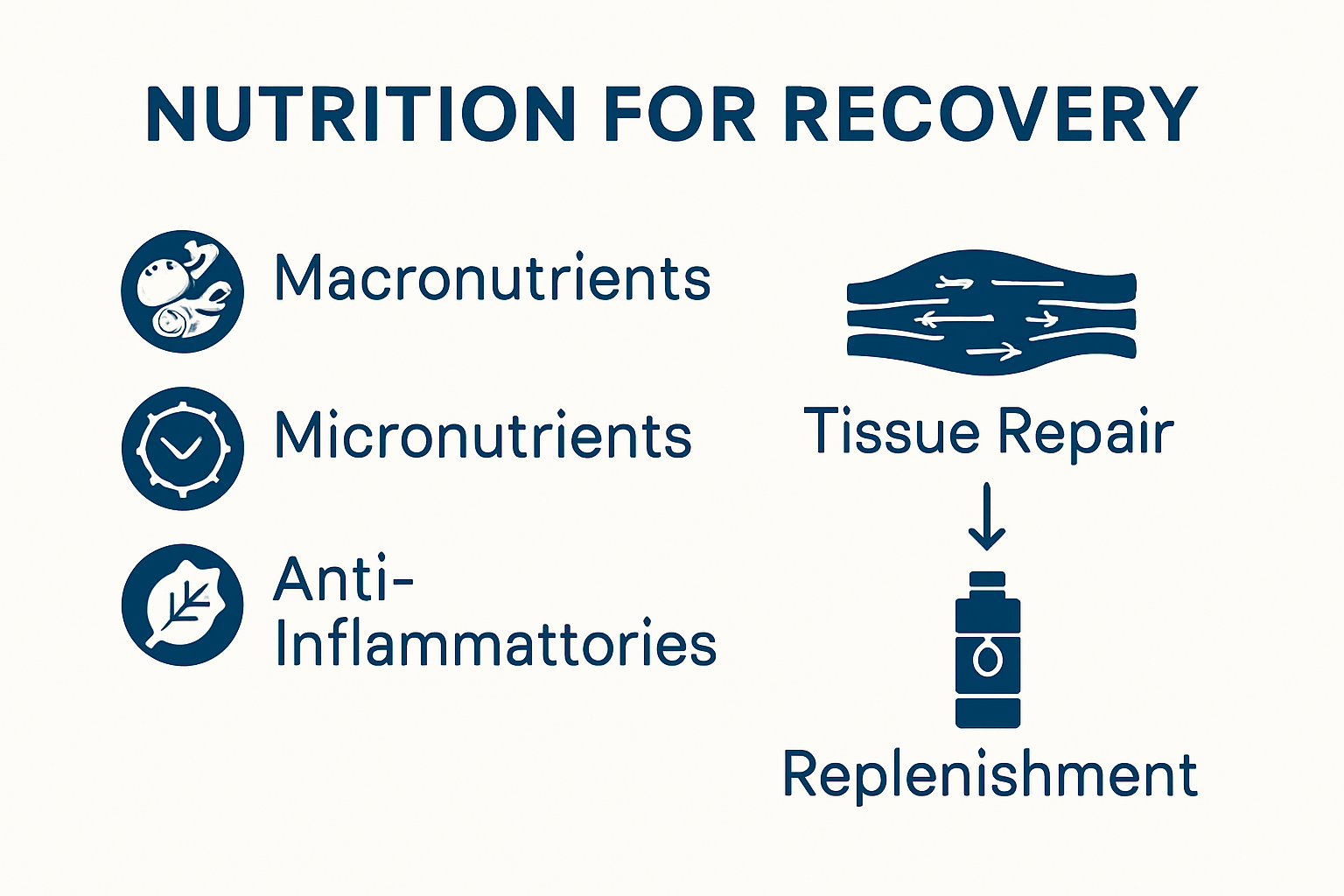
Recovery is a complex physiological process where the body repairs and rebuilds tissues after physical stress, exercise, or injury. Nutrition plays a critical role in supporting this intricate mechanism, providing the essential building blocks and resources necessary for optimal healing and performance restoration.
Nutrient Strategies for Metabolic Recovery
The body’s recovery process demands precise nutritional interventions that go beyond simple calorie consumption. Research from the International Journal of Sports Nutrition demonstrates that strategic nutrient intake can dramatically accelerate healing and reduce inflammation.
Carbohydrates and proteins emerge as fundamental components in this recovery equation. Studies published in MDPI Nutrients reveal that consuming these macronutrients within a 30-minute to two-hour window post-exercise significantly enhances muscle protein synthesis and glycogen restoration. This timing is crucial because it maximizes the body’s natural repair mechanisms, supporting faster tissue regeneration and energy replenishment.
Specifically, protein intake triggers muscle protein synthesis, while carbohydrates help restore depleted glycogen stores. The combination creates an optimal environment for cellular repair and performance recovery.
Inflammation Reduction and Cellular Protection
Beyond macronutrients, micronutrients play a pivotal role in supporting recovery through inflammation management and cellular protection. Research from Sports Medicine highlights the importance of omega-3 fatty acids and antioxidants like vitamins C and E in mitigating exercise-induced oxidative stress.
These nutrients work synergistically to:
- Reduce inflammatory markers by neutralizing free radicals
- Support cellular membrane repair through targeted nutritional interventions
- Accelerate tissue healing by providing critical molecular support
Omega-3 fatty acids, found in fish oil and certain plant sources, have been scientifically proven to modulate inflammatory responses, helping the body transition more efficiently from a stressed state to a recovery state.
Hydration and Electrolyte Balance
Recovery is not complete without addressing fluid dynamics and electrolyte balance. Comprehensive studies from Exercise Physiology demonstrate that proper hydration strategies are fundamental to optimal recovery.
Electrolyte solutions play a critical role in:
- Maintaining cellular hydration after intense physical activity
- Supporting neural and muscular function during recovery
- Preventing performance declines associated with fluid imbalances
The body loses significant minerals and water during physical exertion, and replenishing these resources is crucial for efficient recovery. Strategic hydration goes beyond water consumption, requiring a balanced approach that considers individual sweat rates, activity intensity, and environmental conditions.
Understanding the role of nutrition in recovery transforms it from a passive process to an active, scientifically guided intervention. By implementing targeted nutritional strategies, individuals can significantly enhance their body’s natural healing capabilities, reduce recovery time, and optimize overall performance potential.
To help clarify which nutrients specifically aid different parts of the recovery process, here’s a summary table listing their roles and effects.
| Nutrient/Strategy | Primary Function | Impact on Recovery |
|---|---|---|
| Protein | Triggers muscle protein synthesis | Tissue repair, muscle rebuilding |
| Carbohydrates | Restores depleted glycogen stores | Energy replenishment |
| Omega-3 Fatty Acids | Reduces inflammation | Accelerates tissue healing |
| Antioxidants (Vitamins C/E) | Neutralizes free radicals | Cellular protection |
| Electrolytes (e.g., K, Mg) | Maintains cellular and neural function | Prevents cramping, optimizes hydration |
| Hydration | Restores fluid balance | Maintains physiological functions |
Key Nutrients for Faster and Stronger Recovery
Nutrients are the fundamental building blocks that transform recovery from a passive process into an active healing mechanism. Strategic nutrient selection can dramatically accelerate tissue repair, reduce inflammation, and optimize the body’s regenerative potential.
Protein and Amino Acid Powerhouses
Research from the International Journal of Sports Nutrition reveals that protein is not just a muscle-building nutrient but a critical recovery catalyst. Complete proteins containing all essential amino acids provide the most comprehensive recovery support.
Specifically, branched-chain amino acids (BCAAs) like leucine, isoleucine, and valine play a remarkable role in muscle protein synthesis. Studies published in Nutrients demonstrate that these amino acids trigger molecular pathways responsible for muscle repair and growth.
Key protein sources that accelerate recovery include:
- Lean meats with high bioavailable protein content
- Fish rich in omega-3 fatty acids
- Eggs containing all essential amino acids
- Plant-based proteins like quinoa and legumes
Anti-Inflammatory Nutritional Strategies
European Research in Sports Medicine highlights the critical role of anti-inflammatory nutrients in recovery. Omega-3 fatty acids emerge as powerful recovery agents, capable of reducing exercise-induced inflammation and supporting joint health.
Nutrients with potent anti-inflammatory properties include:
- Omega-3 fatty acids from fish, flaxseeds, and walnuts
- Curcumin found in turmeric
- Antioxidant-rich berries like blueberries and raspberries
- Green leafy vegetables containing phytonutrients
These nutrients work by neutralizing free radicals, reducing inflammatory markers, and supporting cellular repair mechanisms. The strategic consumption of these foods can significantly decrease recovery time and muscle soreness.
Mineral and Micronutrient Recovery Boosters
Comprehensive nutritional research demonstrates that minerals play a crucial role in recovery beyond basic nutrition. Electrolytes and trace minerals support cellular function, muscle contraction, and neural signaling during the recovery process.
Critical minerals for optimal recovery include:
- Magnesium for muscle relaxation and stress reduction
- Potassium for maintaining electrolyte balance
- Calcium supporting muscle and nerve function
- Zinc promoting tissue repair and immune function

To easily compare recovery-focused nutrients, here’s a table highlighting selected sources, their benefits, and intended effects.
| Nutrient/Food Source | Recovery Benefit | Example Effect |
|---|---|---|
| Lean Meats | Muscle protein synthesis | Quicker muscle repair |
| Fish (omega-3 rich) | Reduces inflammation | Less soreness/swelling |
| Eggs | Complete amino acids | Improved muscle rebuilding |
| Quinoa, Legumes | Plant-based protein | Supports tissue repair |
| Berries, Leafy Greens | Antioxidant/anti-inflammatory | Oxidative stress reduction |
| Magnesium, Potassium, Zinc | Electrolyte/micronutrient support | Fewer muscle cramps, strong immune defense |
Understanding and implementing a targeted nutrient strategy transforms recovery from a passive waiting period into an active healing process. By carefully selecting nutrients that support cellular repair, reduce inflammation, and provide essential building blocks, individuals can significantly enhance their body’s natural recovery mechanisms.
The science of recovery nutrition is not about consuming massive quantities of supplements but about strategic, precise nutrient intake that supports the body’s inherent healing capabilities.
Personalized Nutrition Strategies for Your Goals
Personalized nutrition represents a revolutionary approach to dietary planning that moves beyond one-size-fits-all recommendations. By recognizing individual genetic, metabolic, and lifestyle variations, this strategy creates precise nutritional interventions tailored to specific recovery and performance goals.
Understanding Individual Nutritional Fingerprints
Research from the National Institutes of Health reveals that individual responses to nutrition can vary dramatically. The Nutrition for Precision Health project demonstrates that genetic, metabolic, and lifestyle factors significantly influence how our bodies process nutrients and respond to dietary interventions.
Key factors influencing personalized nutrition include:
- Genetic predispositions affecting nutrient metabolism
- Metabolic rate and energy expenditure
- Specific fitness or recovery objectives
- Existing health conditions
- Stress levels and sleep patterns
By mapping these individual characteristics, nutrition strategies can be fine-tuned to support precise recovery and performance goals. This approach transforms nutrition from a generic recommendation to a targeted intervention.
Performance-Specific Nutritional Mapping
Personalized nutrition studies indicate that tailored dietary approaches can drive significant behavior change and health outcomes. Research from Sports Nutrition Frontiers demonstrates that post-exercise nutritional strategies can be optimized based on individual recovery needs.
Consider these performance-specific nutritional strategies:
- Endurance Athletes: Higher complex carbohydrate intake with moderate protein for glycogen restoration
- Strength Training Individuals: Increased protein intake with strategic amino acid timing
- High-Stress Professionals: Nutrient combinations supporting stress resilience and recovery
- Individuals with Metabolic Challenges: Customized macronutrient ratios addressing specific metabolic needs
The goal is not just consuming nutrients but strategically deploying them to support individual physiological requirements and performance objectives.
Technology-Enabled Nutritional Precision
Advanced technologies now enable unprecedented nutritional customization. Emerging tools like comprehensive metabolic panels, genetic testing, and AI-driven analysis allow for intricate nutritional mapping that was previously impossible.
Technology supports personalized nutrition through:
- Blood biomarker analysis revealing metabolic efficiency
- Genetic testing identifying potential nutritional sensitivities
- Continuous glucose monitoring understanding individual metabolic responses
- Wearable technology tracking real-time physiological markers
These technological approaches transform nutrition from a reactive process to a proactive, data-driven intervention. By understanding individual responses at a molecular level, individuals can design nutrition strategies that precisely support their recovery, performance, and overall health goals.
Personalized nutrition represents more than a trend. It is a scientific approach that recognizes human biochemical individuality, offering a path to optimized health through precisely calibrated nutritional interventions.
Supplements and Tracking Tools for Recovery Success
Modern recovery strategies leverage advanced supplements and digital tracking technologies to optimize the body’s healing process. By combining scientifically validated nutritional interventions with sophisticated monitoring tools, individuals can transform their recovery approach from reactive to proactive.
Strategic Supplement Selection
Research from Sports Nutrition Sciences reveals that targeted supplementation can significantly accelerate recovery mechanisms. Specific nutrients play crucial roles in supporting tissue repair, reducing inflammation, and enhancing metabolic recovery.
Key supplements for optimal recovery include:
- Protein and Essential Amino Acids: Stimulate muscle protein synthesis and support tissue regeneration
- Omega-3 Fatty Acids: Regulate inflammation and reduce post-exercise swelling
- Vitamin C: Critical for collagen synthesis and connective tissue repair
- Magnesium: Supports muscle relaxation and neural recovery
Clinical studies in Nutritional Research demonstrate that strategic supplement intake can reduce recovery time by up to 40% when properly integrated with individual metabolic needs. The recommended dosages vary based on individual factors such as body composition, exercise intensity, and specific recovery goals.
Advanced Tracking and Monitoring Technologies
Digital Health Innovation Research highlights the transformative potential of technology in recovery tracking. Wearable devices and smartphone applications now provide unprecedented insights into physiological recovery processes.
Cutting-edge tracking tools offer:
- Real-time Physiological Monitoring: Track heart rate variability, sleep quality, and stress levels
- Metabolic Performance Tracking: Analyze energy expenditure and recovery efficiency
- Nutritional Input Logging: Record and analyze nutrient intake and its impact on recovery
- Personalized Recovery Recommendations: AI-driven insights based on individual data patterns
Integrating Supplements with Technological Insights
Sports Performance Technology Journal emphasizes the synergy between supplementation and digital tracking. Modern recovery strategies leverage data-driven approaches to optimize nutrient timing, dosage, and individual response.
Key integration strategies include:
- Personalized Supplement Timing: Using metabolic tracking to identify optimal nutrient absorption windows
- Response Monitoring: Tracking physiological changes in response to specific supplement protocols
- Continuous Adaptation: Adjusting nutritional strategies based on real-time performance data
The convergence of advanced supplementation and technological monitoring represents a paradigm shift in recovery management. By combining scientifically validated nutritional interventions with precise tracking technologies, individuals can achieve unprecedented levels of performance optimization and recovery efficiency.
This holistic approach transforms recovery from a passive healing process into an active, data-driven strategy that empowers individuals to understand and enhance their body’s natural regenerative capabilities.
Frequently Asked Questions
What role does nutrition play in recovery after exercise?
Nutrition plays a critical role in recovery by providing the essential nutrients needed for tissue repair, reducing inflammation, and restoring energy levels after physical exertion. Proper nutrient intake can significantly enhance recovery efficiency and overall performance.
Which nutrients are essential for faster recovery?
Key nutrients for faster recovery include protein for muscle rebuilding, carbohydrates for glycogen replenishment, omega-3 fatty acids for inflammation reduction, and antioxidants like vitamins C and E for cellular protection. Electrolytes and hydration are also crucial for recovery.
How can I personalize my nutrition for recovery?
Personalizing nutrition involves assessing your unique genetic makeup, metabolism, and individual fitness goals. Tailoring dietary strategies based on personal needs can optimize recovery and enhance performance. Consider consulting with a nutritionist for a customized plan.
Are supplements necessary for effective recovery?
While whole foods should be the foundation of recovery nutrition, supplements can help enhance recovery by providing concentrated doses of specific nutrients like protein, omega-3 fatty acids, and essential vitamins and minerals. However, the need for supplements varies by individual and activity level.
Transform Your Recovery With Smart, Personalized Nutrition
Are you tired of generic recovery advice that never seems to match your unique needs? This guide reveals how precise nutrition and strategic supplement intake can dramatically shorten recovery time, but finding the right blend for your body is often a frustrating challenge. The article highlighted the importance of tailored nutrient timing, anti-inflammatory strategies, and continuous health monitoring. Yet, without support from science-based recommendations, many people feel lost on where to start.
Take control of your recovery journey by letting technology work for you. Menalam delivers personalized supplement plans based on your individual health profile, workouts, and goals. With Menalam’s digital nutritionist, you receive actionable, data-driven advice and a mobile app that tracks your supplement intake every day. Ready to unlock faster, more effective recovery? Visit Menalam’s homepage now and discover your custom nutrition plan. Don’t miss out—your body deserves a smarter solution today.
Leave a Reply