

Taking vitamins daily might sound boring, but new science is turning that idea upside down. Women who used multivitamins for over three years saw a stunning 44 percent drop in cardiovascular disease mortality rates. Daily supplementation is not just a routine—it’s fast becoming a strategic investment in your body’s health span. Surprised that something as small as a daily pill could have such sweeping, long-term effects? Wait until you see how personalized vitamin routines and cutting-edge research are changing everything you think you know about nutritional health.
Table of Contents
- How Daily Vitamins Support Your Body
- Personalized Vitamin Routines For Better Results
- Science Behind Daily Supplementation Benefits
- Daily Vitamins For Active And Healthy Lifestyles
Quick Summary
| Takeaway | Explanation |
|---|---|
| Daily Vitamin Intake Supports Energy and Cognitive Function | B-complex vitamins are essential for transforming food into energy and can potentially slow cognitive aging by providing critical support for brain metabolism and neurological function. |
| Tailored Vitamin Routines Enhance Nutritional Support | Personalized vitamin plans leverage advanced techniques and technologies, such as genetic testing, to create customized profiles that cater to individual nutritional needs, leading to better health outcomes. |
| Vitamins Play a Critical Role in Immune Defense | Vitamins A, C, D, and E boost immune system resilience, with Vitamin D helping activate T cells that fight infections, highlighting the importance of consistent vitamin intake for robust immune function. |
| Long-Term Use of Multivitamins Can Reduce Health Risks | Regular multivitamin use over three years has been shown to significantly lower cardiovascular disease mortality rates in women, emphasizing the potential long-term protective effects of daily vitamins. |
| Holistic Approach Necessary for Active Lifestyles | Successful supplementation for active individuals requires considering factors like timing of intake, specific activity demands, and metabolic variations to maximize health benefits and support physical performance. |
How Daily Vitamins Support Your Body
Your body operates like a complex machinery that requires precise nutritional inputs to function optimally. Daily vitamins serve as essential micronutrient support systems, bridging potential nutritional gaps and enhancing overall physiological performance.
Cellular Energy and Metabolic Function
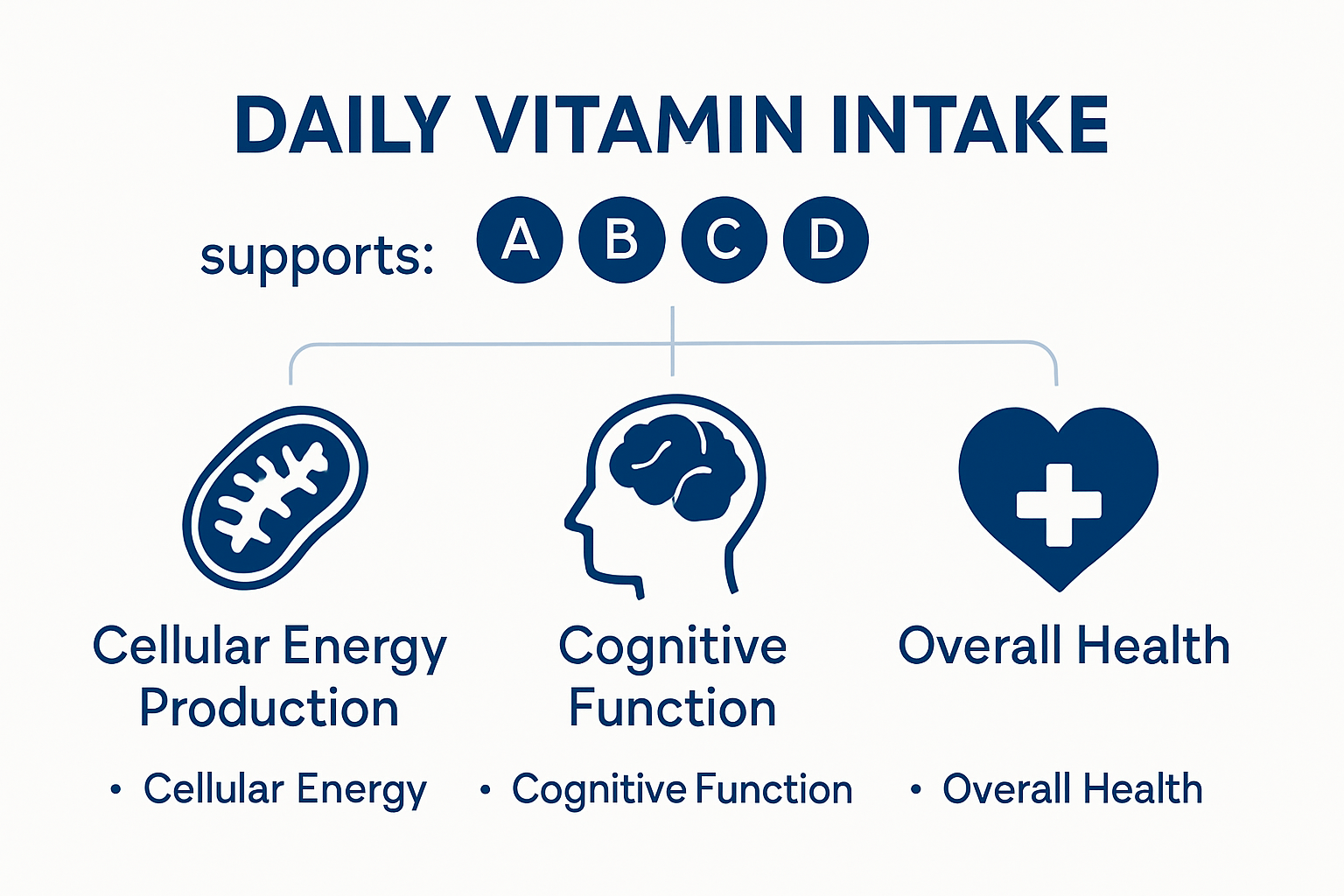
Vitamins play a critical role in transforming the food you consume into usable energy. B-complex vitamins such as B1, B2, B3, B5, B6, B7, B9, and B12 act as metabolic catalysts, helping convert carbohydrates, proteins, and fats into cellular fuel. Research from the National Institutes of Health demonstrates that these micronutrients are essential for maintaining efficient metabolic processes.
Moreover, a groundbreaking 2024 meta-analysis revealed that consistent multivitamin intake could potentially slow cognitive aging by two years. This finding underscores the profound impact vitamins have on brain metabolism and neurological function.
Immune System Resilience
Your immune system represents a sophisticated defense network that requires consistent nutritional support. Vitamins A, C, D, and E function as critical immunomodulators, enhancing your body’s ability to recognize and combat potential health threats. JAMA Network Open research confirms that targeted vitamin supplementation can significantly strengthen immune responses.
Vitamin D, in particular, acts as a powerful immune system regulator. It helps activate T cells, the primary defenders against pathogens, and supports the production of antimicrobial proteins. Individuals with consistent vitamin D intake demonstrate more robust immune function and reduced susceptibility to infections.
Long-Term Health Protection
Beyond immediate physiological support, daily vitamins contribute to long-term health preservation. A comprehensive NIH review found that women using multivitamin/mineral supplements for over three years experienced a remarkable 44% reduction in cardiovascular disease mortality rates.
Key vitamins like antioxidants work at the cellular level to neutralize free radicals, potentially mitigating oxidative stress and reducing the risk of chronic diseases. This preventative approach transforms vitamins from mere supplements into strategic health investments.
By integrating daily vitamins into your nutritional routine, you provide your body with a comprehensive support system. These micronutrients work synergistically to optimize cellular function, bolster immune defenses, and lay the groundwork for sustained health and vitality.
Personalized Vitamin Routines for Better Results
The era of generic vitamin supplementation is rapidly evolving. Modern health approaches now recognize that individual nutritional needs are as unique as fingerprints, demanding a more sophisticated and targeted strategy for vitamin intake.

The Science of Individual Nutritional Mapping
Personalized vitamin routines represent a revolutionary approach to nutritional supplementation. Unlike traditional one-size-fits-all methods, these tailored plans leverage advanced technologies to create precise nutritional profiles. Grand View Research highlights that technological advances like genetic testing and AI-driven health assessments now enable unprecedented levels of nutritional customization.
The global market for personalized vitamins reflects this transformative trend. Projections indicate a remarkable compound annual growth rate of 13.15%, with the market expected to reach $9.89 billion by 2030. This explosive growth signals a fundamental shift in how individuals approach nutritional supplementation, moving from generic recommendations to highly individualized strategies.
Assessment and Customization Techniques
Creating a personalized vitamin routine involves multiple sophisticated assessment techniques. Interactive health quizzes, comprehensive blood tests, genetic screenings, and lifestyle evaluations form the foundation of these tailored approaches. These methodologies allow for a nuanced understanding of an individual’s specific nutritional requirements, accounting for factors such as age, gender, genetic predispositions, activity levels, and existing health conditions.
Subscription-based models have emerged as a cutting-edge solution, providing ongoing nutritional guidance. These services offer regular reassessments, ensuring that vitamin recommendations adapt to changing health status and emerging nutritional needs. By continuously monitoring and adjusting supplement protocols, individuals can maintain optimal nutritional balance.
Technology-Driven Nutritional Precision
Artificial intelligence and machine learning play pivotal roles in developing personalized vitamin routines. These technologies analyze complex datasets, identifying subtle nutritional patterns and potential deficiencies that traditional approaches might overlook. Advanced algorithms can predict potential health risks and recommend preemptive nutritional interventions.
The integration of wearable technology and health tracking apps further enhances personalization. Real-time health data can be used to fine-tune vitamin recommendations, creating a dynamic and responsive nutritional strategy. This approach transforms vitamin supplementation from a static practice to an adaptive, intelligent health management system.
By embracing personalized vitamin routines, individuals can move beyond generic supplementation. These tailored approaches offer a more precise, scientifically grounded method of supporting overall health, ensuring that every vitamin taken is strategically aligned with unique physiological needs.
Science Behind Daily Supplementation Benefits
Scientific research continues to explore the intricate relationship between daily vitamin supplementation and human health. Understanding the evidence-based mechanisms helps individuals make informed decisions about their nutritional strategies.
Cognitive Function and Neurological Protection
Emergent research provides compelling insights into the neurological benefits of daily supplementation. A groundbreaking meta-analysis from Mass General Brigham revealed that consistent multivitamin intake could potentially slow cognitive aging by two years. This significant finding suggests that targeted micronutrient supplementation may play a crucial role in maintaining mental acuity and protecting against age-related cognitive decline.
The neurological mechanisms involve complex interactions between vitamins and brain cell metabolism. B-complex vitamins, for instance, support neurotransmitter production and help maintain the myelin sheaths that protect neural pathways. By providing essential nutrients, daily supplements can potentially support long-term brain health and cognitive resilience.
Targeted Health Interventions
Not all supplementation benefits are universal. JAMA Network Open research demonstrates the importance of targeted supplementation. For example, specific combinations of beta carotene, vitamins C and E, and zinc have shown promise in slowing the progression of age-related macular degeneration, highlighting the potential for precision nutrition.
However, the National Institutes of Health cautions that large-scale studies have not consistently shown broad benefits for major health outcomes. Most randomized controlled trials indicate that daily multivitamins do not significantly reduce risks of cardiovascular events, cancer, or overall mortality. This nuanced perspective underscores the importance of individualized approach to supplementation.
Biological Mechanisms of Nutrient Absorption
Understanding how the body processes vitamins reveals the complexity of supplementation. Micronutrients interact with cellular processes through various biochemical pathways. Some vitamins function as cofactors for enzymatic reactions, while others act as antioxidants, protecting cells from oxidative stress.
Genetic variations can significantly impact nutrient absorption and utilization. Some individuals may have genetic markers that affect how efficiently they metabolize specific vitamins, making personalized supplementation strategies increasingly important. This biological complexity explains why a one-size-fits-all approach to vitamin intake is less effective than tailored nutritional support.
The scientific exploration of daily supplementation continues to evolve. While not a miracle solution, strategic vitamin intake can provide targeted support for specific health objectives. Individuals should approach supplementation as part of a comprehensive health strategy, consulting healthcare professionals to develop personalized nutritional plans that address their unique physiological needs.
Daily Vitamins for Active and Healthy Lifestyles
Modern active lifestyles demand comprehensive nutritional support that goes beyond basic dietary intake. Daily vitamins serve as critical supplements for individuals committed to maintaining peak physical and mental performance.
Nutritional Support for Physical Performance
Athletes and fitness enthusiasts require more than standard nutritional recommendations. Harvard Health suggests that individuals with high activity levels may benefit from targeted vitamin supplementation to meet increased metabolic demands.
A groundbreaking Harvard research study revealed that vitamin D3 supplementation could significantly reduce telomere shortening. This finding suggests that strategic vitamin intake might not just support immediate performance but potentially slow biological aging processes associated with intense physical activity.
Metabolic Recovery and Cellular Health
Daily vitamins play a crucial role in metabolic recovery and cellular maintenance for active individuals. B-complex vitamins support energy metabolism, while antioxidant vitamins like C and E help mitigate oxidative stress generated during intense physical training.
The National Institutes of Health research indicates that long-term vitamin supplementation—particularly for women—can offer substantial health benefits. Women using multivitamin supplements for over three years experienced a remarkable 44% reduction in cardiovascular disease mortality rates, highlighting the potential long-term protective effects of consistent nutritional support.
Holistic Approach to Active Wellness
Effective vitamin supplementation for active lifestyles requires a holistic perspective. Rather than viewing vitamins as isolated nutrients, consider them integral components of a comprehensive wellness strategy. Factors like timing of intake, individual metabolic variations, and specific activity demands all influence the effectiveness of supplementation.
Nutritional needs vary dramatically between different types of physical activities. Endurance athletes might require different vitamin profiles compared to strength training practitioners. This variability underscores the importance of personalized nutritional approaches that adapt to individual lifestyle and fitness goals.
By integrating scientifically backed daily vitamin supplementation, active individuals can optimize their physiological performance, support cellular health, and potentially mitigate long-term aging processes. The key lies in understanding that vitamins are not magic solutions but strategic tools for enhancing overall wellness and supporting demanding lifestyles.
Frequently Asked Questions
What are the benefits of taking vitamins daily?
Taking vitamins daily supports energy production, enhances immune function, and may reduce the risk of chronic diseases. Studies suggest that consistent vitamin intake can lead to better overall health outcomes, including improved cognitive function and long-term health protection.
How do personalized vitamin routines work?
Personalized vitamin routines use advanced assessments like blood tests and genetic screenings to determine your unique nutritional needs. This tailored approach ensures that you receive the right vitamins in the right amounts based on your health status and lifestyle.
Can taking vitamins help improve cognitive function?
Yes, daily multivitamin intake has been linked to improved cognitive function, with research showing it may slow cognitive aging by providing essential nutrients that support brain health and metabolism.
Is it safe to take multivitamins every day?
For most people, taking multivitamins daily is safe and can be beneficial. However, it’s important to consult with a healthcare professional to tailor your vitamin intake to your specific needs and avoid potential overdoses of certain nutrients.
Transform Your Daily Vitamin Routine With Personalized Science
If the idea of a one-size-fits-all supplement leaves you worried about missed health benefits or wasted efforts, you are not alone. The article revealed how nutritional needs are unique, and that outdated routines can lead to overlooked gaps or missed opportunities for improved energy, immune strength, and long-term wellness. Tired of guessing what your body actually needs each day? Imagine the confidence of having a daily regimen designed just for you based on the latest science.
Ready to upgrade your routine from generic to genuinely effective? Start your journey toward a healthier you by discovering how Menalam’s personalized supplement recommendations use advanced AI and real health data to craft your ideal vitamin plan. Take our quick health quiz to pinpoint your precise needs and get a tailored supplement path plus smart reminders to keep you on track. Make your next step count and see the science of daily vitamins work for you. Visit Menalam now and experience personal nutrition like never before.
Leave a Reply