


Figuring out the best time to take your B complex might sound simple, but timing plays a much bigger role than most people think. Sure, these vitamins are famous for energy support, but what actually matters is when you take them and with what foods. Morning B complex intake can help kickstart your metabolism and support energy levels throughout the day, according to Harvard research. Still, plenty of people are surprised to learn that taking some B vitamins at night could throw off your sleep. The real secret is that absorption depends as much on your digestive system, age, and even stress levels as it does on your daily routine. Here’s how the best timing for B complex might not be what you expect.
Table of Contents
- Ideal Timing For Different B Vitamins
- Morning Vs. Night: Which Is Better?
- Factors Affecting B Complex Absorption
- Expert Dosage Tips For B Complex
Quick Summary
| Takeaway | Explanation |
|---|---|
| Take B Complex in the Morning | Taking B complex vitamins in the morning enhances energy metabolism and aligns with the body’s natural circadian rhythm, optimizing absorption when paired with breakfast. |
| Consider Timing for Specific B Vitamins | Certain B vitamins, like B6 and B12, are best taken earlier in the day to avoid potential sleep disruptions and support consistent energy levels. |
| Address Absorption Factors | B complex absorption can be influenced by age, digestive health, and lifestyle, making it essential to consider these factors for effective vitamin intake. |
| Personalized Supplementation Is Key | Individual health conditions, dietary habits, and lifestyle should guide B complex supplementation strategies; consulting a healthcare professional can help tailor approaches to specific needs. |
| Monitor Your Response | Regularly evaluate your body’s responses and any potential side effects from supplements to ensure safe and effective B complex intake. |
Ideal timing for different B vitamins
Timing your B complex vitamin intake can significantly impact its absorption and effectiveness. Understanding when and how to take these essential nutrients can help maximize their potential health benefits and minimize potential side effects.
Morning Energy Activation
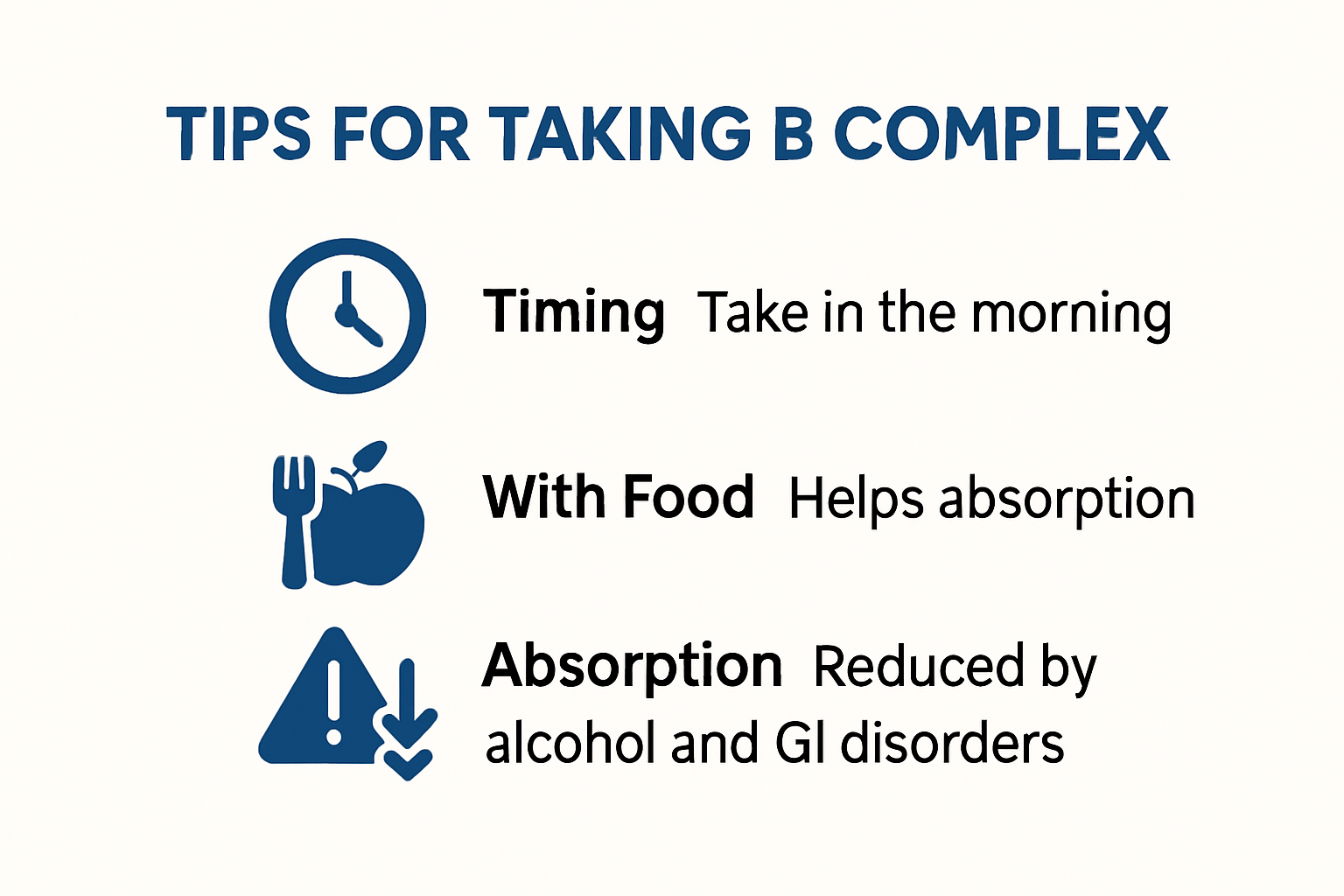
Most nutrition experts recommend taking B complex vitamins in the morning. The primary reason stems from these vitamins’ crucial role in energy metabolism. B vitamins help convert food into cellular energy, making them ideal morning supplements. According to Harvard Health Publishing, consuming B vitamins earlier in the day can help jumpstart metabolic processes and support sustained energy levels.
The morning absorption strategy works best when B complex vitamins are taken with food. Consuming these supplements alongside breakfast helps improve nutrient absorption and reduces potential stomach discomfort. Individuals who experience mild digestive sensitivity should particularly follow this recommendation.
Considerations for Specific B Vitamins
While B complex vitamins work synergistically, certain B vitamins have unique timing considerations. Vitamin B6, for instance, plays a critical role in neurotransmitter production. Mayo Clinic research suggests taking B6 earlier in the day to avoid potential sleep disruptions, as it can influence serotonin and dopamine levels.
Vitamin B12 also benefits from strategic timing. Since this vitamin supports neurological function and red blood cell formation, morning or early afternoon consumption can help maintain consistent energy levels. People with dietary restrictions or absorption challenges might require different strategies, such as sublingual supplements or coordinating intake with specific meals.
Optimal Absorption Strategies
Professional nutritionists emphasize that B complex vitamins are water-soluble, meaning the body does not store excess amounts. This characteristic makes consistent daily intake more important than precise timing. National Institutes of Health recommends focusing on regular consumption and pairing supplements with balanced nutrition.
For individuals taking multiple supplements, timing becomes even more critical. Avoid taking B complex vitamins simultaneously with calcium supplements, as calcium can potentially interfere with B vitamin absorption. Instead, space these supplements at least two hours apart to ensure maximum nutritional benefit.
Key recommendations for B complex vitamin intake include:
- Take with breakfast for optimal energy support
- Consume alongside food to enhance absorption
- Consider individual vitamin characteristics and potential interactions
- Maintain consistent daily supplementation
While these guidelines provide general guidance, individual metabolic differences mean some variation is normal. Consulting with a healthcare professional can help develop a personalized supplement strategy tailored to specific health needs and lifestyle factors.
Morning vs. night: which is better?
Determining the optimal time to take B complex vitamins involves understanding how these nutrients interact with your body’s natural rhythms and metabolic processes. The debate between morning and night supplementation is nuanced, with several critical factors influencing the most effective timing.
Energy Metabolism And Daytime Supplementation
Morning consumption of B complex vitamins offers significant advantages for energy metabolism. These water-soluble vitamins play a crucial role in converting food into cellular energy, making them particularly beneficial when taken early in the day. National Institutes of Health research indicates that B vitamins support metabolic processes that are most active during daytime hours.
The body’s natural circadian rhythm aligns with morning vitamin intake. B vitamins, especially B12 and B6, help stimulate neurotransmitter production and support cognitive function. This makes morning supplementation ideal for individuals seeking enhanced mental clarity and sustained energy throughout the day. Professional nutritionists recommend pairing B complex vitamins with breakfast to optimize absorption and minimize potential digestive discomfort.
Nighttime Supplementation Considerations
Contrary to popular morning supplementation strategies, some research suggests potential benefits to nighttime B vitamin intake. A compelling Sleep Research Study found that a combination of magnesium, melatonin, and B complex vitamins significantly improved sleep quality over a three-month period. This research challenges the conventional wisdom of exclusively morning supplementation.
However, caution is advised with nighttime intake. Certain B vitamins, particularly B6, can potentially interfere with sleep patterns by influencing neurotransmitter production. Mayo Clinic recommends avoiding B6 supplementation close to bedtime due to its potential to disrupt natural sleep cycles.
Personalized Supplementation Strategies
Ultimately, the ideal timing for B complex vitamins depends on individual metabolic factors, lifestyle, and specific health goals. Some key considerations for determining the best supplementation approach include:
- Personal energy levels and daily activity patterns
- Existing sleep quality and potential disruptions
- Specific health conditions or nutritional deficiencies
- Concurrent medication interactions
Consulting with a healthcare professional can help develop a tailored approach. Blood tests can reveal individual vitamin levels and metabolic characteristics, providing more precise guidance for supplementation timing.
For most individuals, morning consumption remains the recommended approach. The energy-boosting properties of B vitamins align naturally with daytime metabolic processes. However, those with specific sleep-related challenges might benefit from alternative timing or specialized supplement formulations.
The most crucial factor is consistent, balanced intake. Regardless of whether you choose morning or night supplementation, maintaining a regular routine and combining vitamins with a balanced diet ensures optimal nutritional support. Listen to your body, monitor your response, and be prepared to adjust your supplementation strategy as needed.
Factors affecting b complex absorption
B complex vitamin absorption is a complex process influenced by multiple physiological and environmental factors. Understanding these variables can help individuals optimize their nutrient intake and address potential absorption challenges.

Digestive System and Nutritional Interactions
The human digestive system plays a critical role in B vitamin absorption. Oregon State University Micronutrient Research Center highlights that stomach acid levels significantly impact nutrient uptake, particularly for vitamin B12. Individuals with reduced stomach acid production may experience decreased absorption rates, making supplementation crucial.
Dietary interactions can also substantially influence B complex vitamin absorption. Certain foods and substances can either enhance or inhibit nutrient uptake. For instance, alcohol consumption can interfere with B vitamin metabolism, while consuming these vitamins with food generally improves absorption. National Institutes of Health recommends pairing B complex supplements with meals to optimize nutrient assimilation.
Age-Related And Individual Physiological Factors
Age and individual health conditions significantly impact B vitamin absorption. Linus Pauling Institute research indicates that older adults are particularly vulnerable to absorption challenges. Decreased stomach acid production and age-related changes in the digestive system can compromise nutrient uptake.
Specific medical conditions can further complicate B vitamin absorption. Individuals with gastrointestinal disorders such as Crohn’s disease, celiac disease, or those who have undergone gastric bypass surgery may experience reduced nutrient absorption. Genetic variations can also influence how efficiently the body processes and utilizes B vitamins.
Lifestyle And Environmental Considerations
Lifestyle factors play a substantial role in B complex vitamin absorption and utilization. Chronic stress, poor dietary habits, and certain medications can interfere with nutrient metabolism. Micronutrient Research suggests that cellular uptake mechanisms for B vitamins have high turnover rates, ranging from 8% to 100% per day, emphasizing the importance of consistent intake.
Additional factors that can impact B complex absorption include:
- Medication interactions
- Chronic stress levels
- Dietary restrictions
- Alcohol consumption
- Smoking
To optimize B complex vitamin absorption, consider these strategies:
- Consume supplements with food
- Choose high-quality, bioavailable supplement forms
- Address underlying health conditions
- Maintain a balanced, nutrient-rich diet
- Consult healthcare professionals for personalized guidance
While these factors can complicate B vitamin absorption, proactive management and informed supplementation can help individuals maximize nutritional benefits. Regular blood tests and consultations with healthcare providers can provide insights into individual absorption capabilities and potential deficiencies.
Expert dosage tips for b complex
Navigating the world of B complex vitamin supplementation requires careful consideration of dosage, individual health needs, and professional recommendations. Understanding expert-backed guidelines can help individuals optimize their nutritional intake safely and effectively.
Recommended Daily Intake Guidelines
Healthline Nutrition Research provides comprehensive insights into age and sex-specific B vitamin requirements. Adult men typically need 1.2 mg of thiamine (B1), 1.3 mg of riboflavin (B2), and 2.4 mcg of cobalamin (B12) daily. Women have slightly different nutritional needs, with variations based on factors like pregnancy and overall health status.
Nutritional experts emphasize that individual dosage requirements can vary significantly. Factors such as age, metabolic health, dietary restrictions, and existing medical conditions play crucial roles in determining optimal B complex supplementation. National Institutes of Health recommends consulting healthcare professionals to develop personalized supplementation strategies.
Safe Supplementation Strategies
Professional nutritionists recommend several key strategies for safe B complex supplementation. Prevention Magazine suggests taking supplements in the morning with breakfast to support optimal absorption and energy levels. This timing helps maximize nutrient uptake and minimizes potential digestive discomfort.
While B vitamins are water-soluble and generally considered safe, excessive intake can lead to potential side effects. Medical News Today cautions against consuming extremely high doses, noting that the body eliminates excess water-soluble vitamins through urine. However, consistently high doses of certain B vitamins can cause neurological complications or mask underlying health conditions.
Specialized Supplementation Considerations
Certain population groups require more nuanced approaches to B complex supplementation. Vegetarians, vegans, older adults, and individuals with specific medical conditions may need higher doses or specialized supplement formulations. For example, individuals with malabsorption issues or genetic variations affecting vitamin metabolism might require alternative supplementation strategies.
Key recommendations for B complex supplementation include:
- Choose high-quality, reputable supplement brands
- Start with recommended daily allowance doses
- Monitor body’s response and potential side effects
- Prioritize obtaining nutrients from whole food sources
- Consult healthcare professionals for personalized guidance
Potential signs of improper B complex supplementation include:
- Unexplained skin reactions
- Digestive discomfort
- Unusual neurological symptoms
- Persistent fatigue
While general guidelines provide valuable insights, individual nutritional needs are complex and multifaceted. Blood tests can offer precise measurements of current vitamin levels, helping healthcare providers develop targeted supplementation strategies. Regular medical consultations and periodic nutritional assessments ensure that B complex intake remains safe, effective, and aligned with individual health goals.
Remember that supplements should complement, not replace, a balanced and nutritious diet. Whole foods remain the most natural and efficient way to obtain essential B vitamins, with supplementation serving as a strategic support mechanism for optimal health and wellness.
Frequently Asked Questions
When is the best time to take B complex vitamins?
Taking B complex vitamins in the morning is generally recommended, as it enhances energy metabolism and aligns with your body’s natural circadian rhythm.
Can I take B complex vitamins at night?
While morning intake is preferred, some research suggests that certain B vitamins, like B6, can potentially disrupt sleep if taken too close to bedtime. Consult with a healthcare professional for personalized advice.
How should I take B complex vitamins for optimal absorption?
For optimal absorption, take B complex vitamins with food, particularly at breakfast. This helps improve nutrient absorption and minimizes potential digestive discomfort.
What factors can affect B complex vitamin absorption?
Factors such as age, digestive health, lifestyle, medication interactions, and dietary habits can significantly influence the absorption of B complex vitamins.
Unlock Your Personal Nutrition Today with Menalam!
Navigating the best timing for your B complex vitamins can feel like a daunting task, especially with factors like age, digestive health, and lifestyle at play. You deserve a solution that goes beyond generic recommendations, addressing your unique nutritional needs while ensuring optimal absorption. At Menalam, we understand this challenge intimately and are here to help you conquer it!

Imagine waking up each morning, fueled by tailored supplement recommendations that align perfectly with your health profile. With our AI-driven platform, you’ll receive personalized plans that consider your specific lifestyle and dietary preferences. Plus, our mobile app tracks your supplement intake, providing smart reminders to keep you consistent on your journey.
✅ Why wait? Optimize your B complex intake today! Visit Menalam to take our quick health quiz and discover your customized nutrition plan. Transform your daily routine and experience the energy and clarity you’ve been longing for—because you deserve nothing less than the best in personalized nutrition!
Leave a Reply