

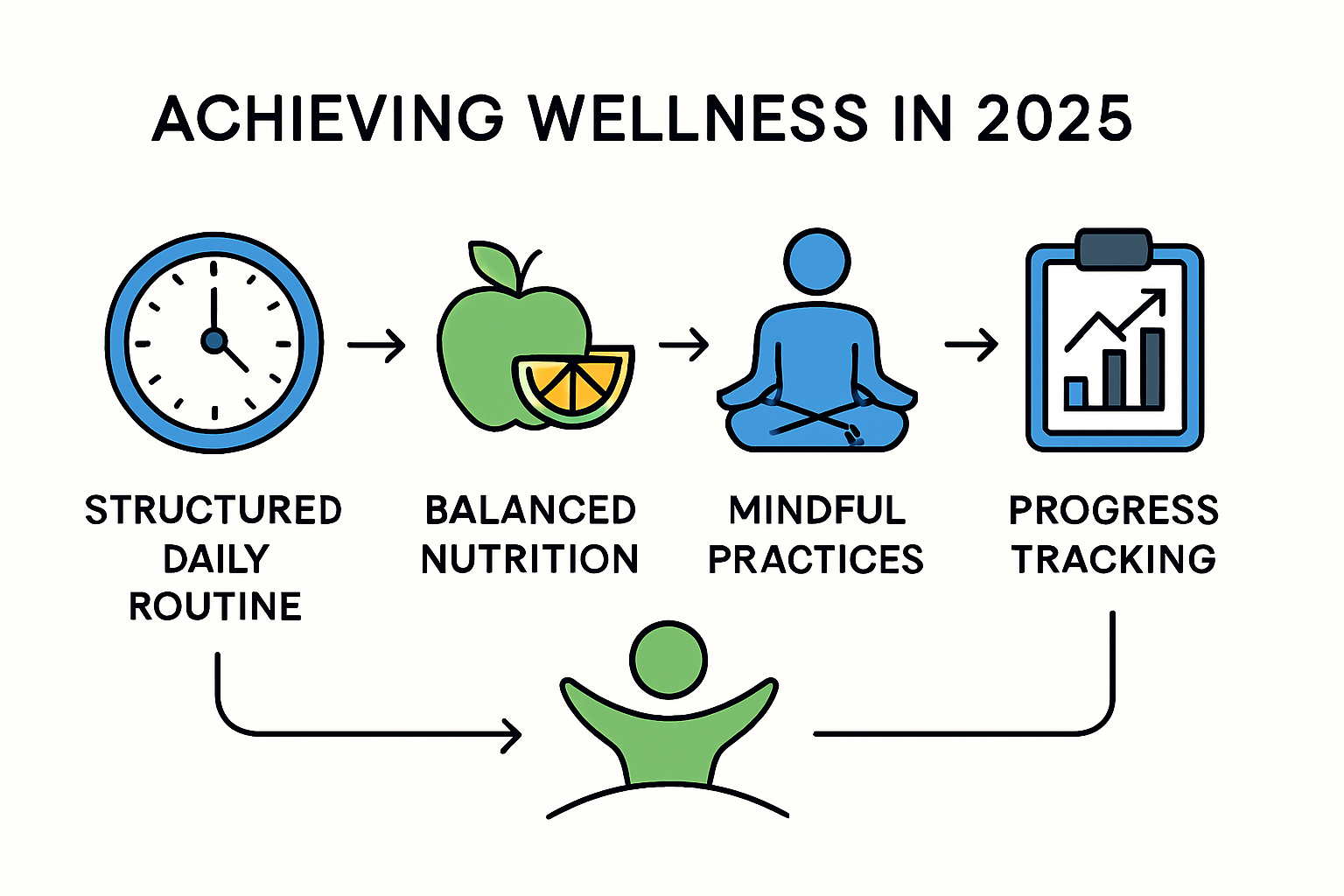
Achieving wellness in 2025 is not just a trend; it’s a necessary pursuit in our fast-paced, modern world. Studies show that individuals who maintain a structured wellness routine are 40 percent more likely to experience increased energy and focus throughout their days. But here’s the kicker: most people think wellness is all about intense workouts and strict diets. The surprise? It turns out that simple, everyday habits have a profound effect. Small, consistent changes to your routine can transform your wellbeing without overwhelming your lifestyle.
Table of Contents
- Designing A Daily Wellness Routine
- Balanced Nutrition And Active Living
- Mindfulness For Mental Clarity
- Tracking Your Wellness Progress
Quick Summary
| Takeaway | Explanation |
|---|---|
| Design a Structured Daily Routine | A consistent daily wellness routine integrates healthy practices into your life, enhancing overall wellbeing through intentional morning rituals, active living, and restorative sleep. |
| Balanced Nutrition and Timing Matter | Focus on a well-rounded diet with plenty of vegetables and fruits while being mindful of meal timing, which can significantly impact health outcomes. |
| Integrate Mindfulness into Daily Life | Simple mindfulness practices like mindful breathing and sensory awareness can enhance mental clarity and emotional regulation without requiring extensive time commitments. |
| Track Your Wellness Progress | Utilize tracking tools to monitor physical and mental health metrics, allowing for informed adjustments to your wellness strategies and creating accountability for your goals. |
Designing a Daily Wellness Routine
Creating a structured daily wellness routine is one of the most powerful ways to achieve wellness consistently. Rather than pursuing health through sporadic efforts, a well-designed routine integrates healthy practices into your everyday life, making wellness a natural part of your existence rather than a constant struggle.
Start With Morning Rituals
How you begin your day sets the tone for everything that follows. A thoughtful morning routine creates momentum that carries you through the day with greater energy and focus.
According to Boston University Student Wellbeing, starting your day by practicing gratitude, hydrating immediately upon waking, and including a brief meditation session can structure a holistic wellness routine that nourishes both body and mind. These simple morning practices take just minutes but deliver substantial benefits.
Try this sequence:
- Wake up at a consistent time (consistency matters for hormonal balance)
- Drink a full glass of water before anything else
- Spend 3-5 minutes in quiet reflection or gratitude
- Move your body gently to wake up your systems
These morning rituals don’t require excessive time, but they do require intention. By dedicating the first moments of your day to wellness, you’re making a clear statement about your priorities.
Incorporate Intentional Movement
Physical activity doesn’t need to mean grueling workouts. The key is finding movement you enjoy and making it a non-negotiable part of your routine.
Research shows that incorporating at least 30 minutes daily of preferred physical activities like yoga, hiking, or dance supports both mental and physical health and helps establish a sustainable wellness habit, according to the BPH Network. The emphasis should be on consistency rather than intensity.
Consider breaking exercise into smaller chunks throughout the day:
- Morning stretch (5-10 minutes)
- Midday walk (10-15 minutes)
- Evening strength or flexibility work (10-15 minutes)
This approach makes physical activity more accessible and increases the likelihood you’ll stick with it. By choosing movement you genuinely enjoy, you transform exercise from a chore into a gift you give yourself.
Prioritize Restorative Sleep
No wellness routine is complete without addressing sleep quality. Sleep isn’t just rest—it’s when your body performs critical maintenance and healing functions.
Prioritizing restorative sleep with a consistent bedtime routine is fundamental to a daily wellness routine and overall health. Experts recommend ensuring 7–9 hours of quality sleep and limiting screen time before bed, as noted by BPH Network research.
A sleep-promoting evening routine might include:
- Setting devices aside 60 minutes before bed
- Engaging in calming activities like reading or gentle stretching
- Creating a cool, dark, quiet sleeping environment
- Going to bed at approximately the same time each night
These practices signal to your body that it’s time to produce melatonin and prepare for deep, restorative sleep.
When designing your daily wellness routine, remember that consistency trumps perfection. A modest routine you can maintain will achieve far more than an ambitious plan that quickly falls apart. Start with just one or two new habits, establish them firmly, then gradually build upon that foundation.
The most effective wellness routine is one tailored to your unique needs, preferences, and schedule. Experiment with different approaches, pay attention to how your body and mind respond, and adjust accordingly. The goal isn’t to follow someone else’s ideal routine but to discover what truly helps you achieve wellness in your daily life.
Balanced Nutrition and Active Living
The foundation of wellness rests significantly on two pillars: how we fuel our bodies and how we keep them in motion. Balanced nutrition and active living work synergistically to support optimal health, enhance energy levels, and prevent disease. Let’s explore practical approaches to integrating both into your daily life.
The Science of Nutritional Balance
Nutrition isn’t just about eating—it’s about nourishing your body with the right foods at the right times. Recent scientific findings offer clear guidance on what constitutes truly balanced nutrition.
According to the 2025 scientific report from the Dietary Guidelines Advisory Committee, strong associations exist between healthy dietary patterns and lower risks of cardiovascular disease and type 2 diabetes across all populations. The committee specifically recommends increasing vegetables, fruits, legumes, and nuts while reducing red and processed meats, refined grains, and sugary foods.
What does this look like in practice? Start by visualizing your plate: half filled with colorful vegetables and fruits, one quarter with lean proteins (plant or animal-based), and one quarter with whole grains or starchy vegetables. This simple visual guide helps maintain proper proportions without requiring complex calorie counting.
Interestingly, when you eat matters almost as much as what you eat. The same Dietary Guidelines research highlights that “eating later in the day is associated with less favorable outcomes and a higher risk of obesity in adults,” emphasizing the importance of meal timing in your nutrition strategy. Consider establishing an eating window of 8-10 hours, allowing your digestive system adequate rest between dinner and breakfast.
Personalized nutrition approaches are showing impressive results in improving individual health outcomes. Rather than following generic advice, many people achieve wellness by identifying their body’s unique needs through food sensitivity testing, metabolic assessments, or simply observing how different foods affect their energy and digestion. This tailored approach addresses specific concerns like cellular aging, joint health, cognitive function, and gut health, according to Kerry Health and Nutrition Institute.

Movement as Medicine
Active living complements nutritional wellness by keeping your body strong, flexible, and metabolically efficient. The key is finding sustainable ways to incorporate movement throughout your day rather than seeing exercise as an isolated event.
Think beyond traditional workouts. Taking the stairs, parking farther from entrances, or doing quick stretches during work breaks all contribute to your overall activity level. These “movement snacks” add up, boosting circulation, enhancing mood, and improving metabolic health.
Variety in physical activity benefits both body and mind. Consider this weekly approach:
- 2-3 days of strength training to maintain muscle mass and bone density
- 2-3 days of cardio activities for heart and lung health
- 1-2 days of flexibility work like yoga or stretching
- Daily walking as a baseline activity
The most effective approach to active living is finding movement you genuinely enjoy. Dancing, hiking, recreational sports, gardening—these all count as beneficial physical activity. When movement brings joy, you’re much more likely to make it a consistent part of your life.
Practical Integration Strategies
Knowing what to eat and how to move is one thing—actually implementing these practices consistently is another. Here are strategies to make balanced nutrition and active living sustainable parts of your wellness journey:
-
Prep ingredients rather than full meals. Washing and chopping vegetables or cooking a batch of protein gives you flexibility while saving time.
-
Use the “habit stacking” technique: attach new wellness behaviors to existing habits. For example, do a quick set of squats while waiting for your morning coffee to brew.
-
Make healthy foods more accessible than less nutritious options. Keep fruit visible on counters while storing treats in less convenient locations.
-
Schedule movement like any other important appointment. Block time on your calendar and protect it from other demands.
Remember that achieving wellness through nutrition and active living isn’t about perfection—it’s about consistent choices that align with your health goals. Small, sustainable changes ultimately create the most significant impact on your overall wellbeing. Start with one or two adjustments that feel most manageable, then gradually build upon your success.
Mindfulness for Mental Clarity
In our constantly connected world, mental clarity has become increasingly rare and increasingly valuable. The practice of mindfulness—paying deliberate attention to the present moment without judgment—offers a powerful antidote to the mental fog that so often accompanies modern life. This ancient practice has gained substantial scientific validation in recent years as researchers uncover its profound effects on brain function and mental wellbeing.
The Science Behind Mindfulness
Mindfulness isn’t just a feel-good practice—it creates measurable changes in your brain. A groundbreaking 2025 study using intracranial EEG recordings found that meditation induces significant changes in the amygdala and hippocampus, key brain regions associated with emotional regulation and memory. According to researchers at Mount Sinai, these findings suggest meditation’s potential to noninvasively support mental clarity and emotional wellbeing.
When you practice mindfulness regularly, you’re essentially rewiring your neural pathways. This neuroplasticity helps you respond rather than react to life’s challenges. The brain becomes more efficient at filtering unnecessary stimuli, allowing you to focus on what truly matters and make decisions with greater clarity.
Longitudinal research has also found that mindfulness practices are associated with greater psychological well-being and reduced negative emotions. This is particularly true when individuals develop increased “nonattachment”—an attitude of letting experiences and thoughts occur without overidentifying with them, according to research published in the PMC National Library of Medicine. This ability to observe thoughts without becoming entangled in them is central to achieving mental clarity.
Simple Mindfulness Practices for Daily Life
Mindfulness doesn’t require hours of meditation or retreats to remote monasteries. You can integrate simple practices into your everyday routine that gradually build your capacity for present-moment awareness. Here are some accessible approaches to begin with:
Mindful Breathing: Take three minutes several times throughout your day to focus solely on your breath. Notice the sensation of air entering and leaving your body. When your mind wanders (which it naturally will), gently guide your attention back to your breath without self-criticism. This simple practice strengthens your ability to direct your attention intentionally.
Sensory Awareness: Choose an everyday activity—eating, walking, or showering—and engage with it using all your senses. For instance, when eating, notice the colors, textures, smells, flavors, and even sounds of your food. This practice pulls you out of automatic pilot and into the richness of the present moment.
Body Scan: Set aside 5-10 minutes to systematically bring awareness to each part of your body, from your toes to the top of your head. Notice sensations without trying to change them. This practice builds interoceptive awareness—the ability to sense your body’s internal state—which is strongly linked to emotional regulation and mental clarity.
Thought Labeling: When you notice your mind ruminating or worrying, simply label the process: “planning,” “worrying,” “remembering,” or “judging.” This creates distance between you and your thoughts, reducing their grip on your attention. It’s not about stopping thoughts but recognizing them as mental events rather than facts.
Overcoming Common Obstacles
Many people try mindfulness briefly but abandon it before experiencing its benefits. Understanding common obstacles can help you establish a sustainable practice that genuinely enhances mental clarity.
The first misconception to address is the belief that mindfulness means emptying your mind of thoughts. That’s not how the human brain works. Mindfulness is about changing your relationship with thoughts, not eliminating them. Success isn’t measured by how few thoughts you have but by how quickly you notice when you’re distracted and how gently you return to awareness.
Another obstacle is expecting immediate results. While some benefits of mindfulness can be felt immediately, the profound changes to mental clarity develop gradually through consistent practice. Think of mindfulness as mental fitness—just as you wouldn’t expect one workout to transform your physical health, a single meditation session won’t revolutionize your mental clarity.
Finding time for practice is perhaps the most common barrier. Rather than viewing mindfulness as another task on your to-do list, look for opportunities to integrate awareness into existing activities. You can practice mindful awareness while waiting in line, commuting, or even during conversations. These “mindful moments” accumulate, gradually enhancing your capacity for sustained attention and mental clarity.
By incorporating even small doses of mindfulness into your daily routine, you’re taking significant steps toward achieving greater wellness. The practice trains your brain to cut through mental clutter, focus on what truly matters, and respond to life’s challenges with wisdom rather than reactivity. In a world that constantly pulls your attention in multiple directions, the ability to maintain mental clarity is nothing short of a superpower.
Tracking Your Wellness Progress
Achieving wellness isn’t a destination—it’s an ongoing journey that benefits tremendously from thoughtful monitoring and adjustment. Without tracking your progress, it’s difficult to know if your efforts are moving you toward your wellness goals or if you need to change course. In today’s data-rich environment, tracking has evolved from simple journaling to sophisticated digital tools that provide unprecedented insights into your health patterns.
The Power of Measurement
You’ve likely heard the business adage, “What gets measured gets managed.” This principle applies equally well to personal wellness. When you track aspects of your health consistently, you gain awareness of patterns you might otherwise miss. These insights allow you to make informed adjustments to your wellness practices rather than relying on general guidelines that might not suit your unique needs.
Tracking creates accountability—not in a punitive sense, but as a way to honestly assess what’s working and what isn’t. It transforms vague intentions (“I want to be healthier”) into specific, measurable actions (“I walked 8,000 steps today”). This specificity helps build momentum as you witness your progress over time.
The adoption of tracking tools has become mainstream. According to Leger360, in 2025, 38% of individuals use a smartwatch or bracelet, and 33% use fitness tracking apps to monitor their wellness progress. This widespread adoption reflects both the accessibility and perceived value of digital health monitoring.
What to Track and How
Wellness encompasses multiple dimensions, and your tracking approach should reflect this holistic view. While the specific metrics worth monitoring will vary based on your personal goals, consider these key categories:
Physical metrics form the foundation of most tracking systems. These include:
- Daily movement (steps, active minutes)
- Sleep quality and duration
- Heart rate patterns (resting, active, and recovery)
- Nutritional intake
Many of these physical metrics can be tracked automatically through wearable devices. The technology has advanced significantly, with continuous health monitoring through wearable devices and IoT technology providing real-time insights into areas such as heart rate, sleep quality, and even glucose levels. According to StartHawk, these technological advances enable both individuals and healthcare providers to make proactive and personalized decisions regarding wellness.
Mental and emotional metrics are equally important but often require more intentional tracking:
- Energy levels throughout the day
- Stress levels and triggers
- Mood patterns
- Mindfulness practice consistency
For these subjective experiences, consider using a scale system (such as rating your energy from 1-10) and tracking them at consistent times each day. Many apps now offer quick check-ins for these metrics, making the process more convenient.
Social and environmental factors also influence wellness significantly:
- Time spent in nature
- Quality social interactions
- Work-life balance
- Exposure to stressors
A simple way to track these elements is through brief journal entries or habit trackers that record whether you engaged in supportive behaviors each day.
Making Tracking Sustainable and Meaningful
The challenge with tracking isn’t starting—it’s maintaining the practice long enough to derive meaningful insights. Here are strategies to make tracking a sustainable part of your wellness journey:
-
Start simple. Begin with just 2-3 metrics that align most closely with your current wellness priorities. Adding too many tracking elements at once often leads to abandonment of the entire system.
-
Use technology wisely. Choose tools that fit naturally into your life. According to PDHI, organizations are using data analytics from wearable devices, health assessments, and participation data to create highly personalized wellness programs. Look for apps and devices that offer useful insights rather than just collecting data.
-
Schedule regular reviews. Set aside time weekly or monthly to review your tracking data and identify patterns. Without this reflective practice, tracking becomes data collection without meaningful application.
-
Adjust your metrics as needed. As your wellness journey evolves, the metrics that matter most will likely change. Be willing to modify your tracking system accordingly.
-
Balance awareness with obsession. While tracking provides valuable insights, it’s important to maintain a healthy relationship with the data. If tracking begins to create anxiety rather than empowerment, it may be time to step back and reassess your approach.
Remember that tracking is a tool in service of your wellness, not an end in itself. The goal isn’t perfect adherence to predetermined targets but rather gaining insights that help you make better decisions about your health. Use the data you collect to celebrate progress, identify areas for growth, and tailor your wellness practices to your unique patterns and needs.
By thoughtfully tracking relevant aspects of your health, you transform wellness from an abstract concept into a concrete practice with measurable progress. This evidence-based approach allows you to invest your energy in strategies that demonstrably improve your wellbeing while adjusting or abandoning those that don’t serve you—making your path to wellness more efficient and effective.
Frequently Asked Questions
What are effective strategies to achieve wellness in 2025?
Achieving wellness in 2025 involves designing a structured daily routine, focusing on balanced nutrition, incorporating intentional movement, practicing mindfulness, and tracking your progress. Small, consistent changes are key to long-term improvement.
How can I create a daily wellness routine?
Start by establishing morning rituals such as hydrating, practicing gratitude, and gentle movement. Incorporate physical activity you enjoy, prioritize restorative sleep, and ensure that your wellness routine fits into your existing lifestyle without overwhelming it.
What role does nutrition play in my overall wellness?
Nutrition is crucial for wellness as it fuels your body. Focus on a balanced diet rich in vegetables, fruits, lean proteins, and whole grains, while paying attention to meal timing. Personalized nutrition can greatly enhance individual health outcomes.
How can mindfulness improve my mental clarity?
Mindfulness practices, like mindful breathing and sensory awareness, help improve mental clarity by training the brain to focus on the present moment. Regular mindfulness can lead to better emotional regulation and is supported by scientific evidence linking it to improved brain function.
Revolutionize Your Wellness Journey with Menalam
Achieving wellness in 2025 can often feel daunting. As highlighted in the article, finding balance through structured routines, mindful eating, and intentional living is crucial. Yet, many still struggle with integrating personalized nutrition into their daily lives. The pain points are clear: navigating confusing supplement options, ensuring optimal nutrient intake, and finding effective ways to track wellness progress can be overwhelming for even the most health-conscious individuals.
Enter Menalam, your innovative digital nutritionist! Imagine having tailored supplement recommendations that align with your unique health profile, lifestyle, and dietary preferences—all from the comfort of your home. With Menalam, you can:
- Answer a quick health quiz to pinpoint exactly what your body needs.
- Use our mobile app to effortlessly track your supplement intake and health progress.
- Receive smart reminders to keep you consistent and accountable.
Ready to take the guesswork out of your wellness strategy? Experience how Menalam simplifies your journey toward a healthier lifestyle, so you can focus on feeling your best every day. Join us today at Menalam and unlock the personalized nutrition solutions you deserve! Don’t wait—your path to wellness starts now!
Leave a Reply