
The world of nutritional supplements is packed with hype and health promises that can be hard to navigate. With approximately 75% of the U.S. population taking dietary supplements, you’d think everyone knows what to choose. But here’s the kicker: many popular supplements might not even have solid scientific backing. In fact, much of what you hear is often more marketing than medicine. By unraveling the common myths about supplements and focusing on what truly matters for your health, you can make smarter choices that truly benefit you.
Table of Contents
- Clearing Up Supplement Myths
- Exploring Supplement Safety Facts
- Decoding Label And Marketing Claims
- Choosing Quality Supplements Wisely
Quick Summary
| Takeaway | Explanation |
|---|---|
| Many supplements lack substantial scientific evidence for their marketed benefits | Consumers should be cautious of claims that products are “scientifically proven” and seek multiple peer-reviewed studies rather than relying solely on marketing assertions. |
| Taking more than the recommended amount rarely provides additional benefits and may cause harm | More is not always better; understanding proper dosages is critical, as excessive intake of some nutrients can lead to adverse effects. |
| “Natural” doesn’t automatically mean safe or effective | The term “natural” is not regulated and does not guarantee the safety of supplements, making it essential to approach such claims with skepticism. |
| Consultation with healthcare providers before beginning supplementation is crucial | Always discuss potential supplement use with healthcare professionals, especially when taking medications or managing health conditions, to avoid harmful interactions. |
| Look for third-party certifications to ensure quality | Seek supplements that have been independently verified by organizations like USP, NSF, or ConsumerLab to confirm ingredient integrity and safety. |
Clearing Up Supplement Myths
The world of nutritional supplements is filled with promises of better health, enhanced performance, and quick fixes for various ailments. However, distinguishing fact from fiction can be challenging in an industry where marketing often outpaces scientific evidence. Let’s examine some of the most common misconceptions about supplements and provide clarity based on current research.
The “Scientific Proof” Fallacy
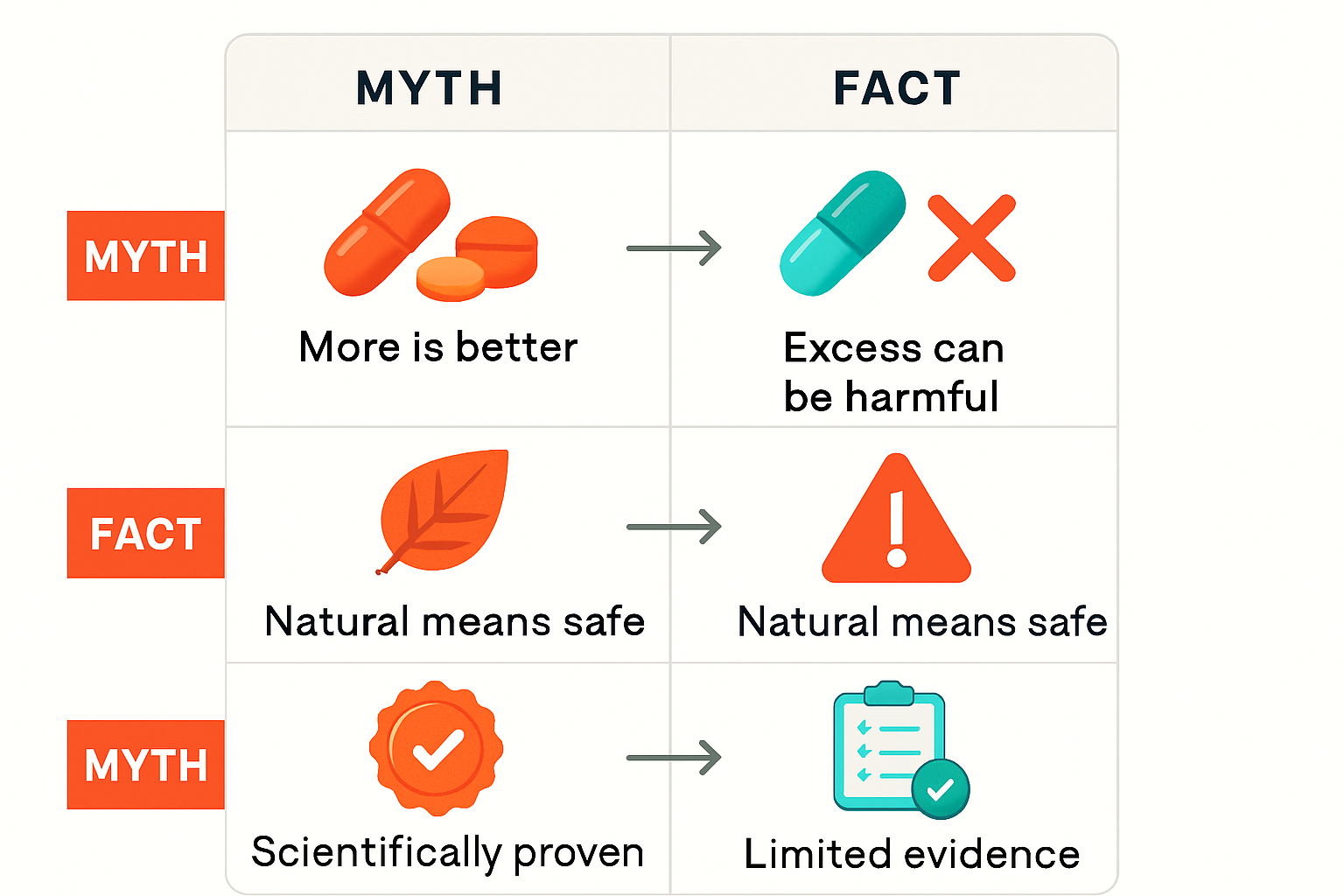
One of the most persistent myths in the supplement industry is the claim that products are “scientifically proven” to cure illnesses or dramatically improve health outcomes. Many consumers take these claims at face value, assuming rigorous research backs them.
The reality is quite different. According to medical education specialists, many supplement companies overstate benefits while downplaying potential risks. They often rely on limited studies that haven’t been replicated or weren’t conducted with proper scientific rigor. When evaluating supplement claims, look for multiple, peer-reviewed studies published in reputable journals rather than single studies highlighted in marketing materials.
Remember that phrases like “clinically tested” or “lab-verified” don’t necessarily mean a product has been proven effective through comprehensive research. These terms can be used even when a product has undergone minimal testing with inconclusive results.
The “More Is Better” Misconception
Many people believe that if a small amount of a vitamin or mineral is good for you, a larger amount must be even better. This is one of the most dangerous common misconceptions about supplements.
Take vitamin C, for example. Despite popular belief, consuming large quantities of vitamin C doesn’t prevent colds or provide additional health benefits. The body only requires a certain amount, and any excess is simply excreted. This illustrates a fundamental principle in nutrition: more isn’t necessarily better.
In some cases, high doses can actually be harmful. For instance, excessive vitamin A can cause liver damage, while too much vitamin D can lead to kidney problems. The recommended dietary allowances (RDAs) exist for a reason – they represent the optimal amount needed for health, not the minimum.
The “Natural Equals Safe” Myth
Another widespread misconception is that “natural” supplements are automatically safe. The term “natural” has no regulatory definition in the supplement industry and doesn’t guarantee safety or effectiveness.
Many potentially dangerous substances occur naturally. For example, certain herbs can interact with medication or cause adverse reactions despite being completely natural. High doses of biotin, a popular “natural” supplement for hair and nail health, can interfere with lab test results, potentially leading to misdiagnosis of serious conditions.
Supplements don’t undergo the same rigorous FDA approval process as pharmaceuticals. The manufacturer, not a regulatory body, is responsible for ensuring safety before marketing. This less stringent oversight means consumers must be particularly vigilant.
Ultimately, supplements should only be taken when medically necessary – usually to address a specific deficiency or health concern identified by a healthcare provider. Random supplementation based on marketing claims or trends can waste money at best and pose health risks at worst.
The next time you consider adding a supplement to your routine, remember these key facts:
- Many supplements lack substantial scientific evidence for their marketed benefits
- Taking more than the recommended amount rarely provides additional benefits and may cause harm
- “Natural” doesn’t automatically mean safe or effective
- Consultation with healthcare providers before beginning supplementation is crucial
By approaching supplements with healthy skepticism and relying on evidence-based information rather than marketing claims, you can make more informed decisions about what you put in your body. The goal should always be targeted nutrition based on individual needs, not following the latest supplement trend.
Exploring Supplement Safety Facts
With millions of Americans routinely taking dietary supplements, understanding the safety landscape becomes crucial for informed decision-making. Despite their widespread use, many questions remain about supplement safety, efficacy, and regulation. This section examines key safety considerations to help you navigate the complex world of dietary supplements.
Current Knowledge Gaps and Research Initiatives
Despite their popularity, significant knowledge gaps exist regarding dietary supplements. According to the National Institutes of Health Office of Dietary Supplements, questions persist about cellular mechanisms, metabolism, efficacy, and safety effects of supplements on health. This is particularly concerning given that approximately half of all adults and one-third of children and adolescents in the United States regularly use dietary supplements.
To address these critical gaps, the Office of Dietary Supplements is spearheading scientific exploration across the National Institutes of Health for the 2025-2029 period. Their strategic plan aims to translate scientific advances for researchers, health professionals, and the public, ultimately providing more reliable information about supplement safety and effectiveness.
This research initiative highlights an important reality: much remains unknown about many supplements currently on the market. When evaluating supplement options, remember that absence of proven harm doesn’t necessarily equate to proven safety.
Understanding Regulatory Standards
Unlike medications, dietary supplements aren’t required to undergo rigorous pre-market approval processes focusing on safety and effectiveness. This regulatory approach creates a situation where products can reach consumers before their safety profiles are fully understood.
The FDA’s regulatory oversight of supplements operates primarily through post-market surveillance. This means the agency typically takes action only after problems are reported. While manufacturers are required to ensure their products are safe before marketing them, the standards for what constitutes adequate safety testing aren’t clearly defined by regulation.
This regulatory framework puts significant responsibility on consumers to research products and brands carefully. When considering research standards, it’s worth noting that institutions like Baylor University require supplements used in their research to have a “good safety record,” meaning they’re generally safe for the target population and the FDA hasn’t issued warning letters to the manufacturer in the past five years. Applying similar criteria to your personal supplement choices can be a prudent approach.
Practical Safety Guidelines for Consumers
Given the current regulatory landscape and knowledge gaps, how can you maximize safety when using supplements? Here are several evidence-based approaches:
First, be suspicious of supplements making extraordinary claims. Products promising to “cure” conditions, provide “miracle” results, or deliver benefits that sound too good to be true likely deserve heightened scrutiny. Remember that substantial scientific evidence for such claims would typically lead to the product being classified and regulated as a drug rather than a supplement.
Second, research the manufacturer carefully. Look for companies that voluntarily participate in third-party testing through organizations like USP (United States Pharmacopeia), NSF International, or ConsumerLab. These programs verify that products contain what their labels claim and don’t contain harmful contaminants. Companies willing to subject their products to this additional scrutiny often demonstrate greater commitment to quality and safety.
Third, consider potential interactions with medications and health conditions. Supplements can interact with prescription medications, sometimes with serious consequences. For example, St. John’s wort can reduce the effectiveness of birth control pills and anticoagulant medications, while ginkgo biloba may increase bleeding risk in people taking blood thinners. Always consult your healthcare provider before beginning any supplement if you take medications or have underlying health conditions.
Finally, start with lower doses when trying new supplements. Just as with medications, individual responses to supplements can vary significantly. Beginning with the lowest effective dose and monitoring for any adverse effects represents a prudent approach to minimizing risk.
By applying these safety principles and staying informed about emerging research, you can make more confident decisions about which supplements may merit a place in your health regimen. Remember that the supplement industry continues to evolve, making ongoing education about safety particularly important for anyone looking to supplement wisely.
Decoding Label and Marketing Claims
Navigating the world of supplement labels and marketing claims requires a careful eye and understanding of regulatory terminology. The language used on supplement packaging is carefully crafted to appear impressive while staying within legal boundaries. Let’s break down what these claims actually mean and how to interpret them effectively.
Understanding Structure/Function Claims
When examining supplement labels, you’ll frequently encounter statements like “supports immune health,” “maintains heart function,” or “promotes joint flexibility.” These are known as structure/function claims – assertions about how a product might affect the body’s structure or function without directly claiming to treat or prevent disease.
According to the Consumer Healthcare Products Association, structure/function claims are the most common permissible claims for dietary supplements. However, there’s an important regulatory nuance here: manufacturers must collect and maintain “competent and reliable scientific evidence” to substantiate these claims, but this evidence isn’t reviewed by the FDA before products go to market.
Additionally, manufacturers must notify the FDA within 30 days of marketing a product with such claims. Look for a crucial disclaimer that must legally accompany all structure/function claims: “This statement has not been evaluated by the Food and Drug Administration. This product is not intended to diagnose, treat, cure, or prevent any disease.”
This disclaimer serves as a reminder that despite claims suggesting health benefits, the product hasn’t undergone the rigorous FDA approval process required for medications. The presence of this disclaimer doesn’t automatically mean a product doesn’t work, but it indicates the claims haven’t been verified through the same scientific process used for pharmaceuticals.
Deciphering Nutrient Content Claims
Another category of claims frequently found on supplement labels relates to nutrient content. Terms like “high in,” “excellent source of,” “good source of,” or “contains” all fall under this category. These claims are subject to specific regulatory definitions.
Interestingly, the FDA has recently updated the definition for the “healthy” nutrient content claim, which will take effect February 25, 2025. According to NC State University Food Business Resource, this updated definition shifts focus to a food or beverage’s contribution to key food groups like vegetables, fruits, dairy, grains, protein foods, and oils, with restrictions if certain nutrient levels are exceeded.
While this update primarily affects food products rather than supplements, it reflects the evolving understanding of nutrition science and the importance of considering overall dietary patterns rather than isolated nutrients. This perspective is worth applying when evaluating supplement claims as well – no single supplement can compensate for poor overall nutrition.
When examining nutrient content claims on supplements, pay particular attention to percentages of Daily Values (DV). These percentages indicate how much of your daily recommended intake of a particular nutrient is provided by one serving. However, be aware that “more” doesn’t always mean “better” – especially for fat-soluble vitamins (A, D, E, and K) which can accumulate in the body and potentially reach harmful levels.
Evaluating Scientific Evidence Behind Claims
Perhaps the most challenging aspect of decoding supplement claims is assessing the quality of scientific evidence supporting them. Many supplements cite “clinically proven” or “scientifically tested” benefits, but the quality of this evidence varies tremendously.
The National Institutes of Health Office of Dietary Supplements notes that correlating dietary supplement intake with health outcomes depends on proper identification and measurement of biomarkers of nutrient exposure, status, and function. This requires rigorous, reproducible, and transparent research methodologies – standards that aren’t always met in supplement studies.
When evaluating claims, consider these factors:
- Study design: Randomized controlled trials (RCTs) provide stronger evidence than observational studies or laboratory experiments
- Sample size: Larger studies generally provide more reliable results than smaller ones
- Study duration: Longer studies better capture long-term effects and safety profiles
- Publication status: Studies published in peer-reviewed journals have undergone scientific scrutiny
- Funding source: Studies funded by the product manufacturer may have potential conflicts of interest
Look beyond the supplement label itself to investigate these factors. The manufacturer’s website might provide references to supporting studies, which you can then evaluate independently or discuss with healthcare providers.
Remember that the burden of proof should rest with the manufacturer making the claim, not with consumers to disprove it. Approaching supplement claims with healthy skepticism doesn’t mean rejecting all supplements – rather, it means demanding adequate evidence before investing in products that affect your health.
By developing the ability to decode label claims and evaluate marketing statements critically, you can make more informed choices about which supplements truly merit a place in your health regimen.
Choosing Quality Supplements Wisely
With approximately 75% of the U.S. population taking dietary supplements and spending more than $20 billion annually according to the National Institute of Standards and Technology, knowing how to select high-quality products becomes essential. While previous sections addressed label claims and safety concerns, this section focuses specifically on practical strategies for identifying supplements that meet rigorous quality standards.
Third-Party Certification Programs
One of the most reliable ways to identify quality supplements is to look for third-party certification seals. These independent organizations test supplements to verify they contain what they claim and don’t contain harmful contaminants. Several reputable certification programs exist:
USP (United States Pharmacopeia) verification is one of the most respected certifications. When you see the USP Verified mark, it means the supplement has been tested for ingredient identity, potency, purity, and proper manufacturing processes. USP is an independent, scientific nonprofit organization that has set quality standards for medicines, supplements, and food ingredients for over 200 years.
NSF International certification indicates that supplements have been tested for contaminants and prohibited substances. Their Certified for Sport® program is particularly valuable for athletes concerned about inadvertently consuming banned substances in supplements.
ConsumerLab.com conducts independent testing of health and nutrition products. While they don’t place seals directly on products, their website provides detailed reports on specific supplements they’ve evaluated.
These certification programs provide an extra layer of quality assurance beyond the manufacturer’s own testing. While certified products may cost slightly more, the verification of quality often justifies the additional expense.
Manufacturing Standards and Practices
Beyond third-party certifications, the manufacturing practices of supplement companies significantly impact product quality. The FDA requires supplement manufacturers to follow Current Good Manufacturing Practices (CGMPs), which include standards for facility cleanliness, proper testing procedures, and quality control measures.
However, compliance with these standards varies widely. To identify companies committed to exceptional manufacturing quality, look for those that exceed minimum requirements. Some indicators of superior manufacturing practices include:
- Detailed information about sourcing of raw materials
- Transparency about manufacturing facilities and processes
- In-house testing laboratories with qualified staff
- Willingness to share certificates of analysis for specific batches
- ISO certifications for manufacturing facilities
Companies truly committed to quality aren’t afraid to share detailed information about their manufacturing processes. If a company’s website lacks specific information about how their supplements are made or tested, consider this a potential red flag.
Interestingly, government agencies recognize the importance of improving supplement quality assessment. The National Institute of Standards and Technology and NIH Office of Dietary Supplements have launched the Dietary Supplement Laboratory Quality Assurance Program (DSQAP) to improve measurement accuracy and help consumers identify quality supplements. According to NIST, the DSQAP Consortium will be launched in 2025 to formalize collaborative quality assessment efforts. These initiatives reflect growing recognition of the need for standardized quality metrics in the supplement industry.
Practical Guidance for Consumers
Armed with knowledge about certifications and manufacturing standards, how can you apply this information to make wise supplement choices? Here are practical steps to guide your selection process:
Research before purchasing. Look beyond marketing materials to investigate the company’s reputation, manufacturing practices, and any quality issues reported by consumers or regulatory agencies. The NIH Office of Dietary Supplements is developing new research opportunities addressing supplement ingredients, composition, quality, and integrity as part of their 2025-2029 Strategic Plan, which may provide additional resources for consumer research in the future.
Be wary of extreme price points. While higher price doesn’t guarantee quality, extremely low-priced supplements may indicate corners being cut in ingredient sourcing or quality testing. Quality raw materials and rigorous testing add to production costs.
Consider the dosage form carefully. Some nutrients are better absorbed in specific forms. For example, some minerals are better absorbed as chelates (bound to amino acids), while fat-soluble vitamins may be better absorbed when taken with a meal containing healthy fats.
Favor transparency. Companies that provide detailed information about ingredient sourcing, manufacturing processes, and test results demonstrate a commitment to transparency that often correlates with higher quality products.
Start with established companies. While innovation in the supplement industry is valuable, companies with longer track records have established reputations to protect and have generally refined their quality control processes over time.
By applying these practical strategies and staying informed about quality standards, you can navigate the vast supplement marketplace more confidently. Remember that quality matters particularly for supplements since they’re intended to support your health. The investment in higher-quality products typically provides greater assurance that you’re getting exactly what you pay for—nothing more and nothing less.
Frequently Asked Questions
What are common misconceptions about dietary supplements?
Many misconceptions include the belief that all supplements are scientifically proven to be effective, that taking more than the recommended dose is better, and that ‘natural’ supplements are always safe. It’s important to research and consult with healthcare professionals regarding supplements.
Are dietary supplements safe?
While many supplements are safe for healthy individuals, they can interact with medications or health conditions. It’s crucial to consult a healthcare provider before starting any new supplement to avoid potential risks.
How can I evaluate supplement claims?
Look for multiple peer-reviewed studies supporting the claims, consider the study design and sample size, and pay attention to disclaimers on the label. Claims like “clinically proven” may not mean the product has been thoroughly tested.
What should I look for when choosing quality supplements?
Choose supplements that have third-party certifications like USP, NSF, or ConsumerLab. Additionally, research the manufacturer’s practices, transparency about sourcing, and testing protocols to ensure quality.
Unlock Your Personalized Supplement Journey with Menalam
Navigating the complex world of dietary supplements can be overwhelming, especially with misconceptions such as the belief that all natural options are automatically safe or scientifically proven effective. If you’re one of the 75% of Americans struggling to sift through myths and find what truly benefits your health, you’re not alone. Understanding the science behind nutrients is crucial, but so is having a tailored approach that aligns with your unique health profile.
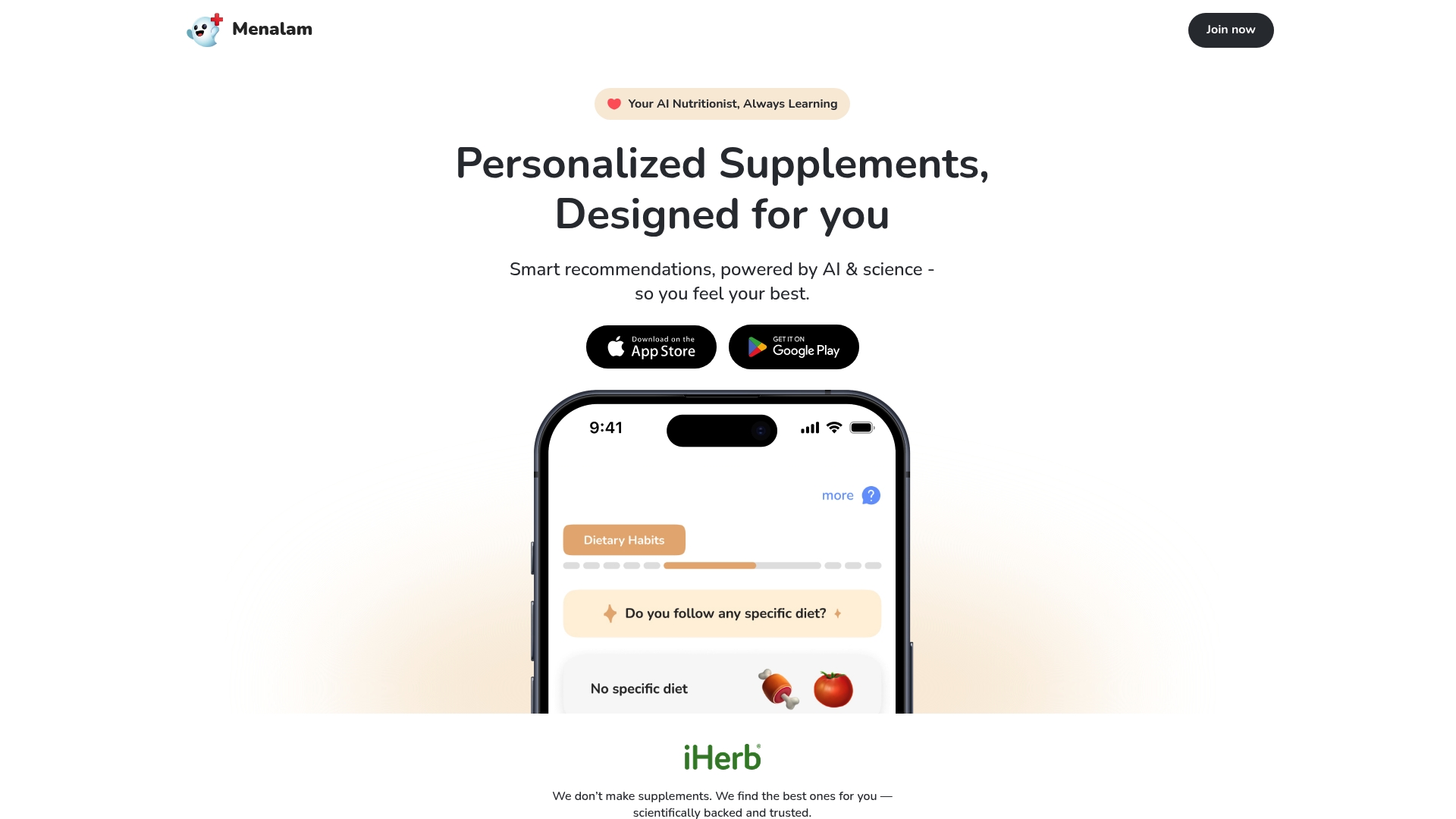
Imagine having a smart digital nutritionist right at your fingertips—Menalam empowers you to do just that! By completing a quick health quiz, you’ll receive personalized supplement recommendations based on your individual needs, lifestyle, and dietary preferences. Each recommendation is grounded in scientifically validated evidence, and our platform continues to adapt as you track your progress. Stop relying on generic advice and start making informed decisions.
Ready to take the guesswork out of your supplement routine? Visit https://menalam.com now and discover a smarter way to enhance your health journey—because your wellness should be as unique as you are. Don’t wait for clarity; your personalized nutrition solution is just a click away!
Leave a Reply