

You might think eating a healthy diet is enough to keep your body fueled and strong. But even with a balanced plate, your system might be missing out. Research shows that different segments of your intestine specialize in absorbing specific nutrients, and simple things like combining vitamin C with iron can supercharge how much you actually take in. What really matters is not just what you eat, but how your body breaks it down and absorbs every bit—that is where things get interesting.
Table of Contents
- What Are Nutrient Absorption Factors?
- Why Nutrient Absorption Matters For Your Health
- How Nutrient Absorption Works In The Body
- Key Factors Influencing Nutrient Absorption
- Real-World Implications Of Nutrient Absorption
Quick Summary
| Takeaway | Explanation |
|---|---|
| Nutrient absorption occurs primarily in the small intestine | Enterocytes in the small intestine are key to moving nutrients into the bloodstream efficiently. |
| Gut health significantly influences nutrient absorption | A healthy gut microbiome and proper digestive function enhance the bioavailability of nutrients essential for well-being. |
| Nutrient interactions can affect absorption levels | Some nutrients enhance each other’s absorption, while others may inhibit it, such as calcium inhibiting iron absorption. |
| Age and health conditions impact nutrient uptake | Individual metabolic rates, age, and existing health issues can alter how efficiently nutrients are absorbed and utilized. |
| Optimize nutrient intake for better health outcomes | Strategic dietary choices based on nutrient interactions and individual needs can improve overall health and energy levels. |
What Are Nutrient Absorption Factors?
Nutrient absorption is a complex physiological process that determines how effectively your body extracts and utilizes essential vitamins, minerals, and other nutritional compounds from the food you consume. Understanding nutrient absorption factors helps individuals optimize their dietary strategies and overall health.
The Biological Mechanism of Nutrient Absorption
At its core, nutrient absorption occurs primarily in the small intestine, where specialized cells called enterocytes play a critical role. These cells are equipped with intricate transport mechanisms that facilitate the movement of nutrients from the digestive tract into the bloodstream. According to research from the National Institutes of Health, several key factors influence this complex process:
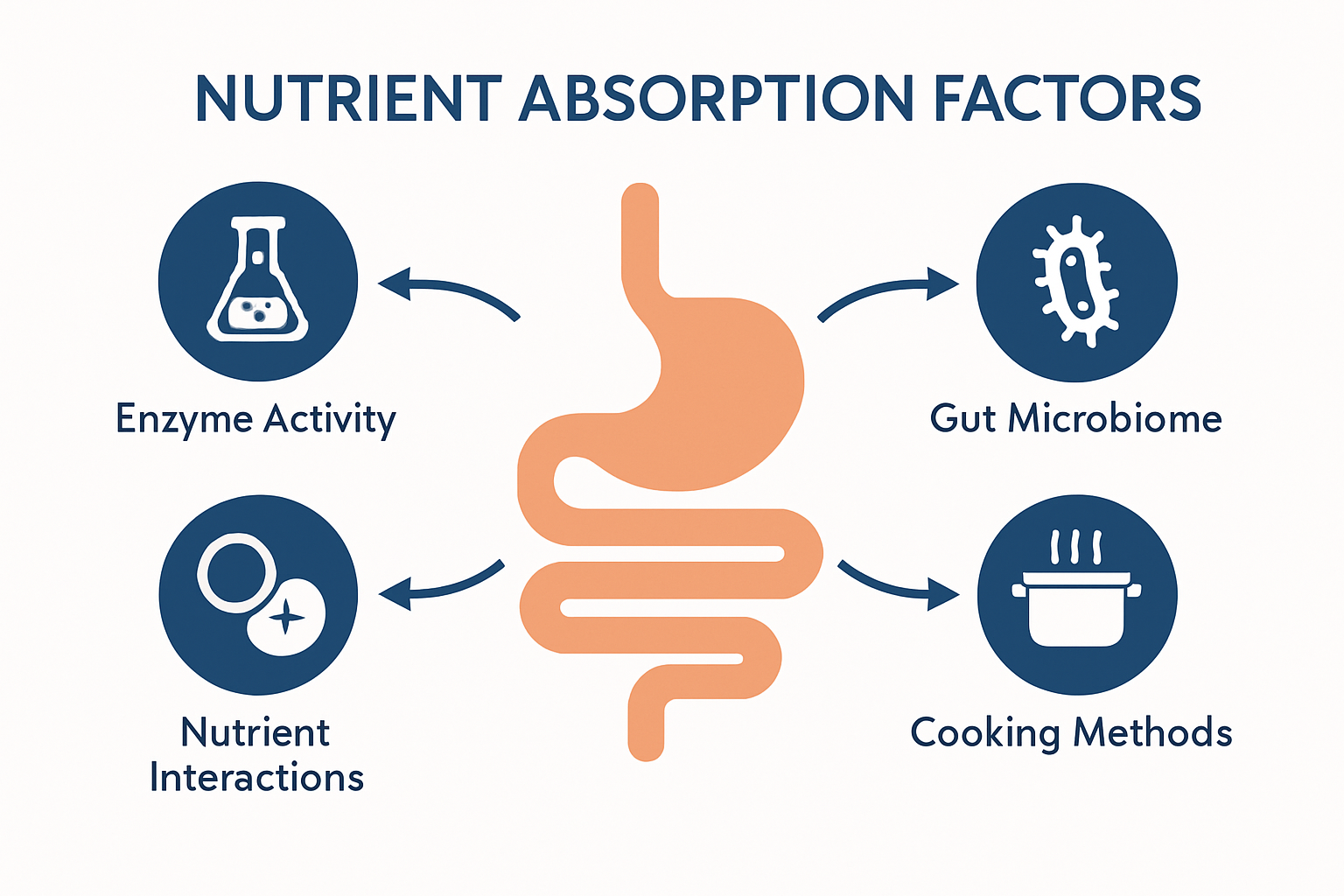
- Enzyme Activity: Specific digestive enzymes break down complex nutrients into smaller, absorbable molecules
- Transport Proteins: Specialized protein channels enable precise nutrient movement across cell membranes
- Gut Microbiome Composition: Bacterial populations significantly impact nutrient processing and absorption
Factors Affecting Nutrient Bioavailability
Multiple elements can enhance or impede nutrient absorption. Physiological conditions like gut health, individual metabolism, and dietary composition dramatically influence how effectively nutrients are processed. Interactions between different nutrients can create synergistic or competitive absorption dynamics. For instance, calcium can inhibit iron absorption, while vitamin C enhances non-heme iron uptake.
Critical absorption factors include:
- Age and overall metabolic health
- Presence of underlying medical conditions
- Specific dietary components and their molecular interactions
- Individual genetic variations in metabolic pathways
Understanding these nutrient absorption factors empowers individuals to make informed dietary choices, potentially improving overall nutritional status and supporting long-term health objectives.
Why Nutrient Absorption Matters for Your Health
Beyond simply consuming food, the way your body processes and absorbs nutrients plays a fundamental role in maintaining optimal health and preventing potential physiological complications. Nutrient absorption is not just a passive biological process but an active mechanism that directly influences overall wellness, energy levels, immune function, and long-term health outcomes.
The Critical Role of Efficient Nutrient Processing
Every cell in your body relies on a consistent supply of essential nutrients to function effectively. According to research from the National Institutes of Health, proper nutrient absorption is crucial for several key physiological processes:
- Cellular Energy Production: Nutrients are transformed into cellular fuel
- Immune System Support: Micronutrients enable robust immune responses
- Metabolic Regulation: Nutrients help maintain hormonal and metabolic balance
Health Consequences of Poor Nutrient Absorption
Inadequate nutrient absorption can trigger a cascade of health challenges. Chronic malabsorption can lead to significant nutritional deficiencies that manifest through various symptoms. These may include persistent fatigue, weakened immune response, impaired cognitive function, and increased susceptibility to chronic diseases.
Key potential health risks associated with poor nutrient absorption include:
- Compromised bone density
- Reduced muscle strength
- Neurological complications
- Increased inflammatory responses
- Potential hormonal imbalances
Understanding and optimizing nutrient absorption is not just about preventing deficiencies but about proactively supporting your body’s complex biological systems. By recognizing the intricate relationship between nutrient intake and bodily functions, individuals can make informed dietary choices that promote long-term health and vitality.
How Nutrient Absorption Works in the Body
Nutrient absorption is a sophisticated and intricate process that transforms the food we consume into essential biological building blocks. This complex mechanism involves multiple stages of breakdown, transport, and cellular integration that enable our body to extract and utilize vital nutritional components.
The Digestive System as a Nutrient Processing Factory
According to research from the National Institutes of Health, the digestive system operates like a highly specialized processing plant, with different sections of the gastrointestinal tract performing unique functions. The journey of nutrient absorption begins in the mouth and continues through several critical stages:
- Mechanical Breakdown: Physical grinding and chewing of food
- Chemical Decomposition: Enzymatic transformation of complex molecules
- Absorption: Cellular transfer of nutrients into the bloodstream
Specialized Absorption Zones in the Intestinal Tract
Different segments of the small intestine specialize in absorbing specific nutrients. The duodenum focuses on minerals and fat-soluble vitamins, while the jejunum predominantly absorbs amino acids, lipids, and carbohydrates. The ileum completes the process by capturing remaining essential compounds like vitamin B12 and bile salts.
The intestinal wall contains millions of microscopic finger-like projections called villi, which dramatically increase the surface area for nutrient absorption. These specialized structures enable efficient extraction of nutrients, transforming food into fuel that powers every cellular function in the human body.
To help clarify which nutrients are absorbed where in the digestive tract, the following table summarizes key absorption zones of the small intestine and the main nutrients absorbed in each segment.
| Intestinal Segment | Major Nutrients Absorbed |
|---|---|
| Duodenum | Minerals, fat-soluble vitamins |
| Jejunum | Amino acids, carbohydrates, lipids |
| Ileum | Vitamin B12, bile salts, remaining nutrients |
This classification illustrates how nutrient absorption depends on the anatomical specialization of each segment.
Key absorption mechanisms include:
- Active transport of nutrients across cell membranes
- Passive diffusion for smaller molecular compounds
- Facilitated transport using specific protein channels
Understanding this intricate process reveals how our body transforms raw nutritional inputs into the precise biochemical components necessary for sustaining life and maintaining optimal health.
Key Factors Influencing Nutrient Absorption
Nutrient absorption is not a uniform process but a dynamic interaction influenced by numerous physiological and dietary variables. Understanding these complex factors helps individuals optimize their nutritional strategies and improve overall metabolic efficiency.
Physiological Determinants of Nutrient Uptake
According to research from the National Institutes of Health, multiple intrinsic factors significantly impact nutrient absorption. Individual metabolic variations play a crucial role in determining how effectively nutrients are processed and utilized by the body:
- Digestive Enzyme Production: Variations in enzyme quantity and quality
- Gut Microbiome Composition: Bacterial populations influencing nutrient metabolism
- Gastrointestinal Health: Integrity of intestinal lining and inflammatory status
Dietary and Environmental Interaction Mechanisms
The nutrients you consume do not exist in isolation but interact in complex ways that can either enhance or inhibit absorption. Nutrient-nutrient interactions create synergistic or competitive dynamics that dramatically influence bioavailability. For instance, vitamin C can significantly improve iron absorption, while calcium might impede iron uptake.
Critical external factors affecting nutrient absorption include:
- Dietary fiber content
- Presence of antinutrients like phytates
- Cooking and food preparation methods
- Timing and combination of nutrient intake
- Individual hydration levels
Recognizing these multifaceted absorption factors empowers individuals to make strategic dietary choices that maximize nutritional benefits and support optimal metabolic functioning.
The following table organizes major factors that influence nutrient absorption and summarizes how each factor impacts the process.
| Factor | Effect on Nutrient Absorption |
|---|---|
| Enzyme activity | Breaks down nutrients for easier absorption |
| Gut microbiome composition | Affects processing and bioavailability of nutrients |
| Age and metabolic health | Alters absorption efficiency and nutrient requirements |
| Dietary components | Nutrient interactions can enhance or inhibit absorption |
| Gastrointestinal health | Intestinal lining integrity affects nutrient uptake |
| Genetic variations | Individual metabolic pathways impact processing |
This table helps clarify how multiple physiological and external variables combine to influence nutrient bioavailability.
Real-World Implications of Nutrient Absorption
Nutrient absorption transcends theoretical understanding, directly impacting individual health, performance, and long-term wellness. The intricate process of extracting and utilizing nutrients influences everything from daily energy levels to chronic disease prevention, making it a critical component of personal health management.
Health and Performance Outcomes
According to research from the National Institute of Diabetes and Digestive and Kidney Diseases, nutrient absorption significantly affects multiple aspects of human physiological functioning. Different population groups experience varying absorption efficiency, which can manifest through distinct health outcomes:
- Athletic Performance: Optimal nutrient absorption enables superior muscle recovery
- Cognitive Function: Proper micronutrient uptake supports brain health
- Immune Resilience: Efficient nutrient processing strengthens immune responses
Lifestyle and Nutritional Strategy Implications
Individuals can proactively manage their nutrient absorption by understanding personal metabolic variations. Personalized nutrition strategies become crucial in addressing unique absorption challenges. Factors like age, genetic predisposition, and existing health conditions dramatically influence how effectively nutrients are processed and utilized.
Key practical considerations for optimizing nutrient absorption include:

- Regular health screenings
- Comprehensive dietary assessments
- Strategic supplement interventions
- Monitoring gut microbiome health
- Adapting nutrition based on individual metabolic responses
Recognizing nutrient absorption as a dynamic, personalized process empowers individuals to make informed dietary choices that support long-term health and wellness objectives.
Unlock Better Nutrient Absorption With Personalized Guidance
Struggling to turn healthy meals into real health benefits? Even when you know what to eat, complex nutrient absorption factors can stand between you and your wellness goals. It can be frustrating to wonder if your body is really absorbing those critical vitamins and minerals discussed in the article above. If you want science-backed help to improve absorption efficiency—especially considering your unique gut health, metabolism, and daily habits—Menalam is the solution you’ve been searching for.
Stop guessing and start seeing results with expert support tailored to your personal biology. Menalam combines AI-powered personalized supplement recommendations and a smart health tracking app that helps you monitor your progress and adapt your plan in real time. Ready to bridge the gap between knowledge and better health outcomes? Take the first step right now at Menalam and discover how easy it is to make every nutrient count.
Frequently Asked Questions
What are the main factors that affect nutrient absorption in the body?
The main factors influencing nutrient absorption include enzyme activity, transport proteins, gut microbiome composition, age, metabolic health, dietary components, and individual genetic variations.
How does digestive health impact nutrient absorption?
Digestive health is crucial for effective nutrient absorption. The integrity of the intestinal lining, the presence of gastrointestinal conditions, and the balance of gut bacteria all play significant roles in how well nutrients are processed and utilized by the body.
Can food combinations affect nutrient absorption?
Yes, certain food combinations can either enhance or inhibit nutrient absorption. For example, vitamin C can improve the absorption of non-heme iron, while calcium may hinder iron absorption. Understanding these interactions helps optimize dietary choices.
Why is nutrient absorption important for long-term health?
Nutrient absorption is essential for overall wellness. Efficient nutrient processing supports cellular energy production, immune system function, metabolic regulation, and can help prevent nutritional deficiencies, enhancing overall quality of life.
Leave a Reply