

Building muscle takes more than heavy lifting. Experts now say that eating 1.6 to 2.2 grams of protein per kilogram of body weight every day can supercharge your gains. Most people expect long gym sessions to be the secret, but the real difference comes from how you fuel your body at each meal. Once you unlock the power of nutrition, muscle growth starts from the inside out.
Table of Contents
- Nutrition Fundamentals For Muscle Growth
- Personalizing Your Muscle-Building Diet
- Tracking Progress And Optimizing Results
- Science-Backed Supplements For Muscle Gains
Quick Summary
| Takeaway | Explanation |
|---|---|
| Prioritize protein intake daily | Consume 1.6 to 2.2 grams of protein per kilogram of body weight to support muscle growth effectively. |
| Maintain a caloric surplus | Aim for a moderate surplus of 250-500 calories daily to promote muscle hypertrophy while tracking intake carefully. |
| Customize your macronutrient ratio | Tailor your dietary proportions based on individual needs, monitoring for optimal muscle gain and energy levels. |
| Utilize strategic nutritional timing | Consume protein-rich meals around workout times, especially post-exercise, for maximum recovery and muscle gains. |
| Track progress and adapt nutrition | Regularly assess body composition and adjust dietary strategies to overcome plateaus and improve muscle growth. |
Nutrition Fundamentals for Muscle Growth
Building muscle requires more than just lifting weights. Nutrition plays a critical role in muscle development, serving as the fundamental building block for strength and growth. Understanding the key nutritional principles can transform your fitness journey and help you achieve optimal muscle gains.
Protein: The Muscle Building Cornerstone
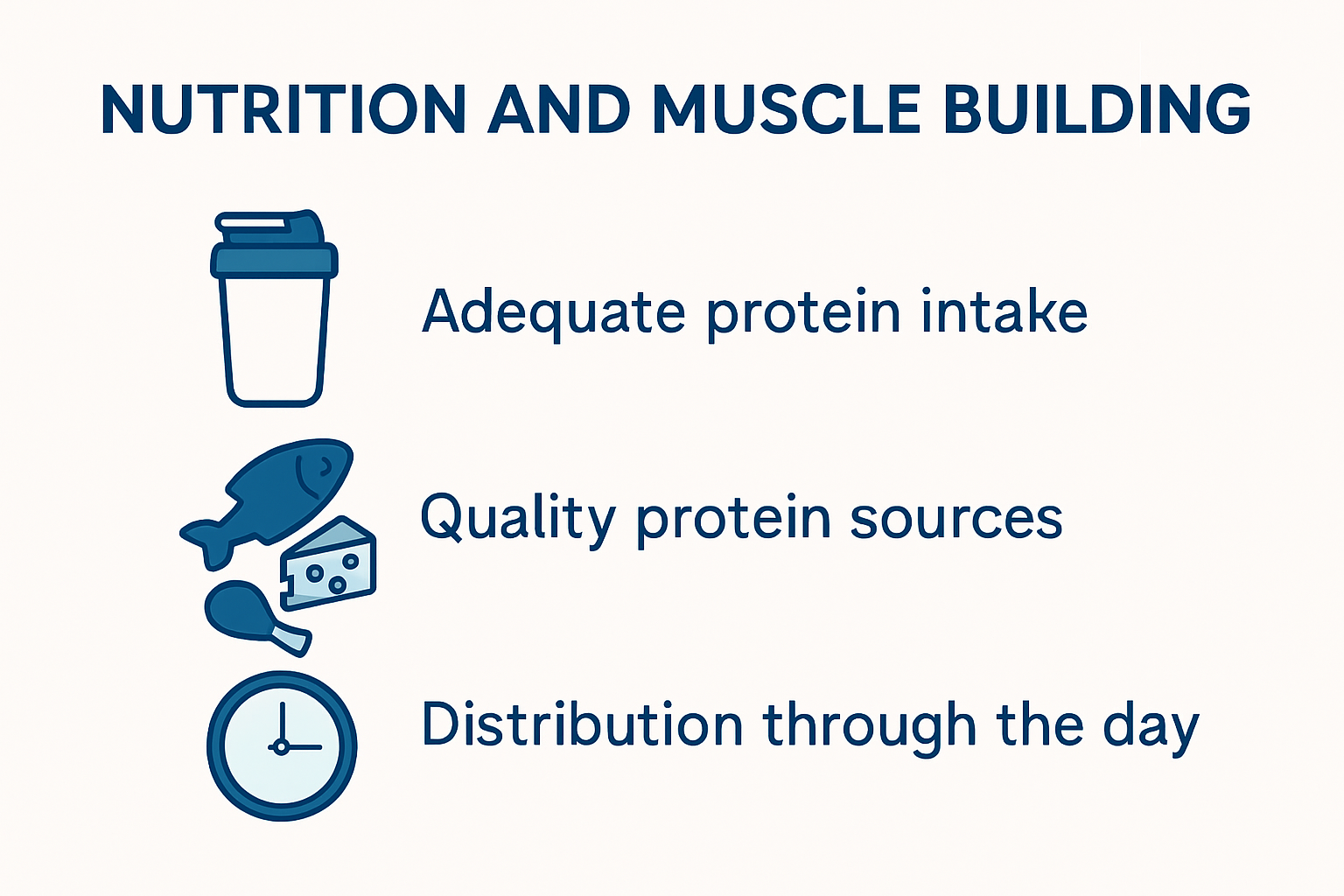
Protein is the most crucial nutrient for muscle growth. According to research from the National Institutes of Health, muscle protein synthesis depends on strategic protein intake. The recommended daily protein consumption ranges between 1.6 and 2.2 grams per kilogram of body weight. This isn’t just about total quantity but also about protein distribution throughout the day.
Effective protein intake means spreading your protein consumption across meals. This approach ensures consistent amino acid availability for muscle repair and growth. High-quality protein sources like lean meats, fish, eggs, and plant-based proteins such as legumes and quinoa provide the essential amino acids needed for muscle development.
Caloric Intake and Energy Balance
Muscle growth requires a strategic approach to caloric intake. The International Society of Sports Nutrition emphasizes that proper energy intake is fundamental to muscle hypertrophy. You need to consume slightly more calories than you burn to support muscle growth.
This doesn’t mean unrestricted eating. A moderate caloric surplus of 250-500 calories above your maintenance level provides the optimal environment for muscle development. Track your total caloric intake and focus on nutrient-dense foods that support muscle growth. Complex carbohydrates, healthy fats, and lean proteins should form the core of your nutrition strategy.
Micronutrients and Muscle Recovery
While macronutrients like protein and carbohydrates often steal the spotlight, micronutrients are equally important for muscle growth. Vitamins and minerals play crucial roles in muscle recovery, protein synthesis, and overall performance. Nutrients like vitamin D, magnesium, zinc, and B-complex vitamins support muscle function and recovery.
Consider incorporating a variety of colorful vegetables, fruits, nuts, and seeds to ensure a comprehensive micronutrient profile. These foods provide antioxidants that help reduce muscle inflammation and support faster recovery between workouts. Hydration also plays a critical role in muscle function, so maintaining proper water intake is essential for optimal muscle performance and growth.
Successful muscle building is a holistic process that combines targeted nutrition, consistent training, and strategic recovery. By understanding and implementing these nutritional fundamentals, you can create an effective framework for muscle growth that goes beyond simple weight lifting.

Personalizing Your Muscle-Building Diet
Nutrition is not a one-size-fits-all approach, especially when it comes to muscle building. Research from the National Institutes of Health highlights that individual genetic variations, metabolic differences, and gut microbiota significantly impact muscle protein synthesis and growth potential. Understanding how to customize your diet can dramatically improve your muscle-building results.
Assessing Your Individual Nutritional Needs
Personalizing your muscle-building diet starts with a comprehensive assessment of your unique physiological characteristics. Body composition, metabolic rate, genetic predispositions, and activity level all play crucial roles in determining your optimal nutritional strategy. Metabolic profiling becomes essential in creating a targeted approach.
Consider factors like your body type (ectomorph, mesomorph, endomorph), current muscle mass, daily energy expenditure, and specific fitness goals. These elements help determine your precise macronutrient requirements. Some individuals might require higher protein intake, while others need more complex carbohydrates or specific micronutrient support.
Macronutrient Ratio Customization
Developing a personalized macronutrient ratio is critical for muscle growth. While general guidelines exist, your specific ratio depends on multiple individual factors. For some, a 40-30-30 split of protein, carbohydrates, and fats works perfectly. For others, a more protein-heavy approach might be more effective.
Tracking your body’s response is key. Monitor your muscle growth, energy levels, recovery speed, and overall performance. Adjust your macronutrient ratios based on observable results. Pay attention to how different food combinations impact your muscle development and recovery. Some individuals might find they respond better to plant-based proteins, while others thrive on animal protein sources.
Nutritional Timing and Supplementation
Beyond macronutrient composition, nutritional timing plays a significant role in muscle growth. Your body’s response to nutrient intake varies throughout the day. Strategic meal planning around workout times can enhance muscle protein synthesis and recovery.
Consider implementing nutrient timing strategies such as consuming a protein-rich meal within 30 minutes post-workout, using branched-chain amino acids during training, and ensuring consistent protein intake throughout the day. Supplementation can also be personalized based on individual deficiencies or specific fitness goals.
Remember that personalization is an ongoing process. Your nutritional needs will change as your body adapts, your fitness level improves, and your goals evolve. Regular assessments, blood work, and performance tracking will help you continuously refine your muscle-building nutrition strategy. Approach your diet as a dynamic, responsive system that requires consistent monitoring and adjustment.
Ultimately, the most effective muscle-building diet is one that is uniquely tailored to your body, metabolism, and fitness objectives. Embrace the journey of discovering what works best for you, and be prepared to make informed, data-driven adjustments along the way.
Tracking Progress and Optimizing Results
Successful muscle building is a data-driven journey that requires systematic monitoring and strategic adjustments. Research from the National Institutes of Health emphasizes the critical importance of tracking nutritional intake and body composition changes to maximize muscle growth potential.
Comprehensive Body Composition Assessment
Tracking muscle growth goes far beyond simple weight measurements. Body composition analysis provides a detailed understanding of your physiological changes. This involves measuring muscle mass, body fat percentage, and lean muscle tissue development. Advanced techniques like DEXA scans, bioelectrical impedance analysis, and skinfold measurements offer precise insights into your muscle-building progress.
Consistent measurements help you understand how your nutrition and training strategies impact your body. Take measurements every 4-6 weeks to capture meaningful changes. Look beyond the scale and focus on muscle mass gain, body fat reduction, and overall body composition transformation. These metrics provide a more comprehensive view of your muscle-building journey compared to weight alone.
Here’s a table summarizing common body composition tracking methods, their frequency, and benefits for monitoring muscle-growth progress:
| Tracking Method | Recommended Frequency | What It Measures | Key Benefit |
|---|---|---|---|
| DEXA Scan | Every 8-12 weeks | Muscle mass, fat mass, bone density | Highly accurate, detailed body composition |
| Bioelectrical Impedance Analysis | Every 4-6 weeks | Muscle mass, body fat percentage | Quick, accessible, tracks changes over time |
| Skinfold Measurements | Every 4-6 weeks | Subcutaneous fat, estimate muscle mass | Cost-effective, useful for trend monitoring |
| Body Weight Scale | Weekly | Total body weight | Easiest to track, but doesn’t show composition |
Performance Metrics and Nutritional Tracking
Research published in the National Library of Medicine highlights the importance of tracking multiple performance indicators to optimize muscle growth. This includes monitoring strength progression, workout recovery time, energy levels, and specific performance metrics like weight lifted, repetition count, and muscle endurance.
Nutritional tracking becomes equally important. Use digital tools or journals to log your daily food intake, macronutrient ratios, and caloric consumption. Compare these logs with your body composition and performance changes. Look for correlations between dietary adjustments and muscle growth. Some individuals might discover that slight modifications in protein intake or meal timing can significantly impact their muscle development.
Adaptive Nutrition and Recovery Strategies
Optimizing muscle growth requires a dynamic approach. Your body continuously adapts, meaning your nutrition and training strategies must evolve. Implement a systematic review process where you assess your progress every 8-12 weeks. This allows you to make informed adjustments to your diet, training intensity, and recovery protocols.
Consider factors like plateaus in muscle growth, changes in energy levels, and recovery speed. If progress stalls, it might indicate a need to adjust macronutrient ratios, introduce new training stimuli, or address potential nutritional deficiencies. Pay attention to signs of overtraining, such as prolonged muscle soreness, decreased performance, or persistent fatigue.
Remember that muscle building is a complex interplay of nutrition, training, recovery, and individual physiology. Your tracking approach should be holistic, considering not just physical measurements but also subjective factors like motivation, energy, and overall well-being. Embrace a patient, scientific approach to your muscle-building journey, understanding that consistent, incremental progress is the key to long-term success.
Ultimately, the most effective muscle-building strategy is one that is continuously monitored, analyzed, and refined based on your unique response and goals. Stay curious, data-driven, and adaptable in your approach.
Science-Backed Supplements for Muscle Gains
Navigating the complex world of muscle-building supplements requires a strategic, evidence-based approach. Research from the International Society of Sports Nutrition provides clear guidance on scientifically validated supplements that can support muscle growth and performance.
Protein and Essential Amino Acids
Protein supplements remain the cornerstone of muscle-building nutrition. The National Institutes of Health emphasizes that consuming high-quality protein within two hours after exercise optimizes muscle protein synthesis and recovery. Whey protein stands out as a particularly effective supplement, delivering rapid absorption and a complete amino acid profile.
Essential amino acids (EAAs) play a crucial role in muscle repair and growth. Unlike general protein supplements, EAAs provide a targeted approach to muscle protein synthesis. Look for supplements that offer a balanced profile of all nine essential amino acids. Leucine, in particular, acts as a key trigger for muscle protein synthesis, making it a critical component in muscle-building supplementation.
Here is a comparison table summarizing the main types of muscle-building supplements discussed, along with their key benefits and target timing:
| Supplement | Main Benefit | Best Timing/Use |
|---|---|---|
| Whey Protein | Rapid absorption, supports muscle recovery | Within 2 hours post-exercise |
| Essential Amino Acids (EAAs) | Muscle repair and synthesis | Throughout the day/post-exercise |
| Creatine Monohydrate | Enhances training intensity, muscle size | Daily, typically post-workout |
| HMB (Hydroxy-methylbutyrate) | Reduces muscle breakdown, aids recovery | Beneficial for beginners/recovery |
| Branched-Chain Amino Acids (BCAAs) | Reduces muscle soreness, aids recovery | During and after training |
Performance-Enhancing Supplements
Research highlighted in Time magazine reveals that certain supplements can significantly impact muscle growth and workout performance. Creatine monohydrate emerges as a standout supplement, proven to enhance training intensity and muscle development. It works by increasing phosphocreatine stores in muscles, allowing for more extended and more powerful workout sessions.
Hydroxy-methylbutyrate (HMB) represents another scientifically validated supplement. Particularly beneficial for untrained individuals and those in recovery, HMB helps reduce muscle protein breakdown and supports muscle growth. Branched-chain amino acids (BCAAs) offer additional support, potentially reducing muscle soreness and supporting recovery between intense training sessions.
Supplement Safety and Strategic Implementation
Choosing supplements requires a nuanced approach. Not all supplements are created equal, and individual responses can vary significantly. Prioritize supplements from reputable manufacturers that undergo third-party testing. Consider consulting with a nutritionist or sports dietitian to develop a personalized supplement strategy that aligns with your specific muscle-building goals.
It is crucial to understand that supplements are complementary to, not replacements for, a balanced diet and consistent resistance training. The most effective muscle-building strategy integrates high-quality nutrition, targeted supplementation, and progressive resistance training. Monitor your body’s response to different supplements, tracking changes in muscle mass, strength, and overall performance.
Remember that supplement effectiveness is highly individual. What works exceptionally well for one person might produce minimal results for another. Approach supplementation as a dynamic process, willing to adjust your strategy based on your body’s unique response and evolving fitness goals. Stay informed, be patient, and focus on a holistic approach to muscle development.
Frequently Asked Questions
What is the recommended protein intake for muscle growth?
To support muscle growth effectively, it is recommended to consume between 1.6 to 2.2 grams of protein per kilogram of body weight daily.
How can I create a caloric surplus for muscle gain?
To create a caloric surplus, aim to consume 250-500 calories more than your maintenance level each day. Focus on nutrient-dense foods to support muscle growth.
What role do micronutrients play in muscle recovery?
Micronutrients such as vitamins and minerals are essential for muscle recovery, protein synthesis, and overall performance. Nutrients like vitamin D, magnesium, and zinc contribute significantly to muscle function.
How important is nutritional timing for muscle building?
Nutritional timing is crucial for muscle building. Consuming protein-rich meals around workout times, particularly post-exercise, enhances recovery and muscle protein synthesis.
Elevate Your Muscle-Building Nutrition—Personalize Every Step
You have learned that building muscle is not just about lifting weights. Hitting your protein targets and balancing your macros are only the beginning. Still, figuring out your ideal nutrition and supplement plan can feel complicated. Maybe you have wondered how to match your unique body, goals, and recovery rate with the right vitamins and science-backed supplements. The frustration of generic advice and hit-or-miss results is real.

Take control of your muscle growth journey with Menalam’s personalized supplement recommendations. Get solutions matched to your diet, fitness goals, and personal health data. Track your progress and fine-tune your strategies all in one place with expert guidance. Start now on https://menalam.com and transform your nutrition into a clear advantage for muscle building. Don’t leave your results to chance—discover what works for your body today.
Leave a Reply