


Nutrition is getting harder to figure out every year, even for people who genuinely care about their health. Brace yourself. Sixty percent of Americans now say they avoid healthy choices because nutritious food is just too expensive. Still, rising costs and all the noise online are only the start—the real twist is that stress and misinformation are shaping what we eat far more than anyone expects.
Table of Contents
- Common Nutrition Challenges Facing Health-Conscious People
- Personalized Nutrition: Addressing Unique Needs And Barriers
- Science-Backed Solutions To Overcome Nutrition Obstacles
- How To Track Progress And Stay Motivated In Nutrition
Quick Summary
| Takeaway | Explanation |
|---|---|
| Economic Barriers to Healthy Eating | The cost of nutritious foods significantly impacts dietary choices, with cheaper processed options often being more accessible. Consumers can strategize grocery shopping by opting for frozen vegetables, bulk purchasing, and seasonal produce to maintain nutrition while managing expenses. |
| Combat Nutritional Misinformation | Health-conscious individuals should be aware of the overwhelming amount of conflicting dietary information, primarily from social media. Building critical information literacy is essential for discerning credible nutritional advice from marketing claims. |
| Psychological and Emotional Influences | Eating patterns are often influenced by stress and emotional fluctuations, leading to unhealthy choices. Developing self-awareness and possibly seeking professional guidance can help interrupt negative eating habits. |
| Personalized Nutrition Solutions | Advances in personalized nutrition leverage genetic, metabolic, and lifestyle data to tailor dietary recommendations. Staying informed about the latest research and utilizing technology for individualized dietary planning is beneficial. |
| Motivational Tracking Strategies | Effective nutritional tracking can be enhanced through technology and psychological understanding. Gamification in apps can motivate users to maintain their dietary goals by making tracking engaging and rewarding. |
Common Nutrition Challenges Facing Health-Conscious People
Navigating the complex world of nutrition presents multiple hurdles for individuals committed to maintaining optimal health. Modern health-conscious people face unprecedented challenges that extend far beyond simple dietary choices.
The Economic Barriers of Healthy Eating
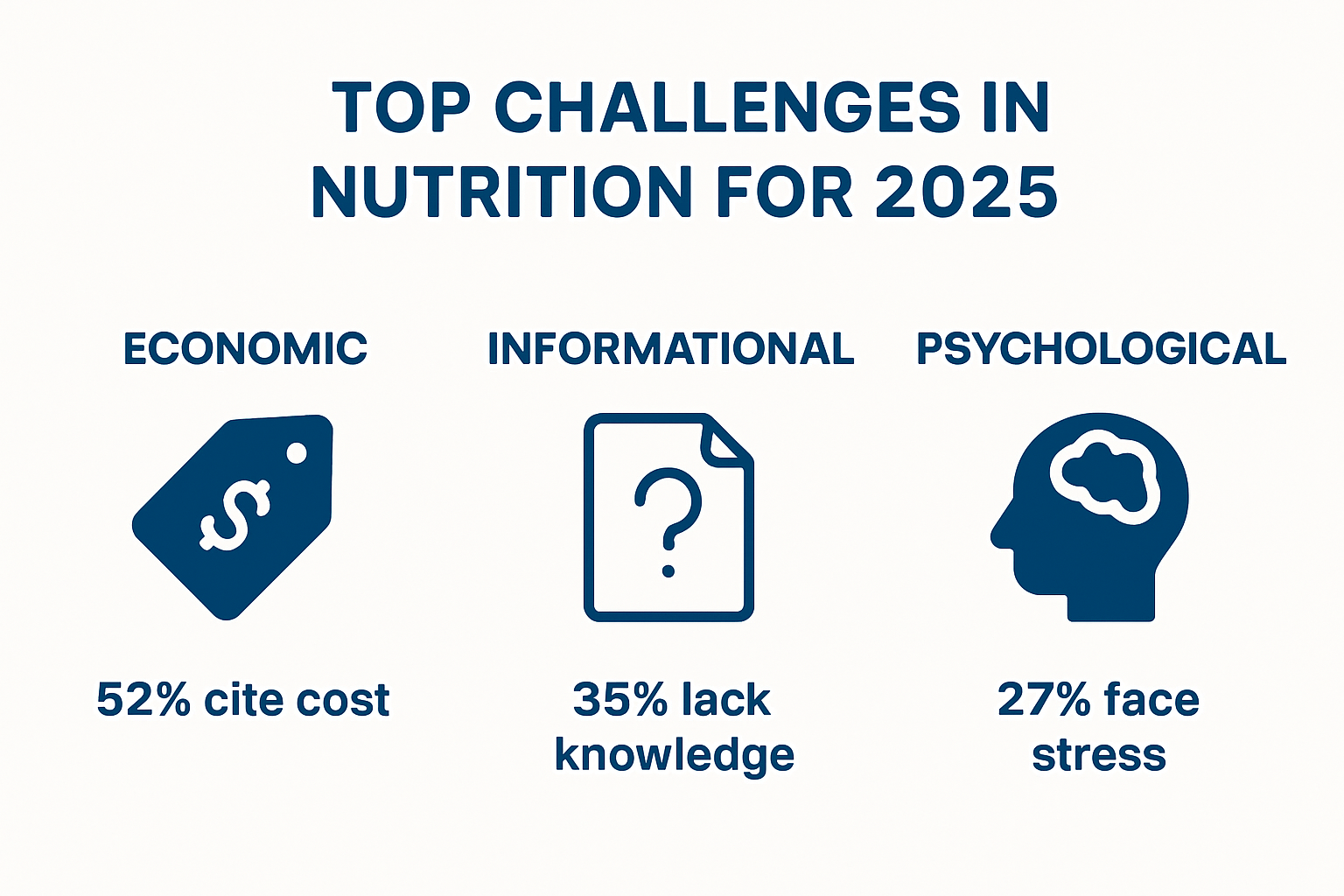
Financial constraints significantly impact nutritional decisions. A recent survey found that 60% of Americans identified the cost of healthy food as the most substantial barrier to maintaining a nutritious diet. Organic produce, lean proteins, and nutritional supplements often come with premium price tags that strain household budgets.
The economic challenge goes beyond mere affordability. Processed foods remain cheaper and more accessible, creating a systemic barrier for those seeking healthier nutrition. Individuals must strategically plan their grocery shopping, seeking out cost-effective alternatives like frozen vegetables, bulk purchasing, and seasonal produce to maintain nutritional quality without overwhelming expenses.
Information Overload and Nutritional Misinformation
The spread of nutrition disinformation through social media and online forums creates significant confusion about dietary practices. With countless diet trends, conflicting expert opinions, and viral nutrition claims, health-conscious individuals struggle to discern credible nutritional advice from marketing hype.
This information bombardment leads to analysis paralysis. People become overwhelmed by competing nutritional philosophies ranging from ketogenic diets to plant-based eating, making consistent dietary choices challenging. The consequence is often nutritional uncertainty and potential health risks from implementing poorly researched dietary recommendations.
Psychological Eating Patterns and Stress
Stress-induced eating affects nearly 40% of U.S. adults, who report consuming unhealthy foods in response to psychological pressures. The connection between emotional states and nutritional choices reveals a complex psychological dimension to dietary challenges.
Individuals committed to health find themselves battling ingrained eating patterns triggered by stress, anxiety, and emotional fluctuations. Comfort eating becomes a default mechanism, undermining carefully planned nutritional strategies. Recognizing and interrupting these patterns requires significant self-awareness and potentially professional nutritional guidance.

Addressing these nutrition challenges demands a multifaceted approach. Health-conscious individuals must develop financial strategies, critical information literacy, and psychological resilience to successfully navigate the complex nutrition landscape of 2025.
Personalized Nutrition: Addressing Unique Needs and Barriers
Personalized nutrition represents a revolutionary approach to understanding and addressing individual dietary requirements. As health science advances, the one-size-fits-all model of nutrition is rapidly becoming obsolete, giving way to more targeted and precise nutritional strategies.
The Science of Individual Dietary Response
The Nutrition for Precision Health project, backed by a $170 million NIH grant, is developing cutting-edge algorithms to predict individual responses to diets and exercise. This groundbreaking research aims to address dietary causes of preventable chronic diseases that currently affect over half of American adults. The project highlights a critical shift towards understanding how genetic, metabolic, and lifestyle factors uniquely influence nutritional needs.
Individual metabolic responses can vary dramatically. What works as an optimal diet for one person may be ineffective or even harmful for another. Factors such as genetic makeup, microbiome composition, age, activity level, and existing health conditions play crucial roles in determining nutritional requirements. This complexity demands a more nuanced approach to dietary planning.
Technological Challenges in Personalized Nutrition
The integration of artificial intelligence in personalized nutrition presents significant technological and ethical challenges. Key concerns include algorithmic bias due to non-diverse training datasets, data privacy issues, and the critical need for clinical validation and regulatory oversight.
AI-driven nutrition platforms must navigate complex ethical terrain. The potential for algorithmic bias means that recommendation systems could inadvertently provide less accurate guidance for certain demographic groups. This challenge requires ongoing refinement of AI models, ensuring they incorporate diverse data sources and account for individual variability.
Ethical Considerations of Genetic Nutrition Profiling
The use of genetic data in personalized nutrition raises significant ethical concerns about data protection and individual privacy. Developing robust regulatory frameworks becomes crucial to govern the use of sensitive genetic information while protecting individual rights.
Consent and transparency emerge as critical components of genetic nutrition profiling. Individuals must fully understand how their genetic data will be used, stored, and potentially shared. The potential for genetic discrimination or misuse of personal health information creates a complex ethical landscape that requires careful navigation.
Personalized nutrition represents a promising frontier in health science. By combining advanced technologies, genetic insights, and individualized approaches, we can develop more effective strategies for optimal health. However, this journey requires ongoing research, ethical consideration, and a commitment to understanding the unique nutritional needs of each individual.
Science-Backed Solutions to Overcome Nutrition Obstacles
Addressing global nutrition challenges requires innovative, scientifically validated approaches that tackle complex dietary barriers. Emerging research and strategic interventions are providing promising pathways to improve nutritional outcomes across diverse populations.
Global Nutrition Targeting and Strategic Interventions
The World Health Organization’s Global Nutrition Targets for 2025 represent a comprehensive approach to addressing critical nutritional challenges. These ambitious targets aim to achieve significant reductions in malnutrition, including a 40% decrease in child stunting, a 50% reduction in anemia among women of reproductive age, and a 30% reduction in low birth weight.
These targets highlight the importance of targeted, science-driven nutritional strategies. By focusing on specific, measurable goals, health organizations can develop more effective interventions that address the root causes of nutritional deficiencies. The approach emphasizes prevention and systematic improvement rather than reactive healthcare measures.
To help you quickly compare different science-backed nutrition interventions discussed in this section, the following table summarizes their approaches and populations benefited.
| Solution | Approach | Key Population Targeted |
|---|---|---|
| WHO Global Nutrition Targets (2025) | Set measurable reduction goals for malnutrition | Children, Women, General Population |
| Micronutrient Fortification Initiative | Add vitamins/minerals to staple foods (flour, rice) | Populations with micronutrient gaps |
| Transformative Food System Approaches | Reform production/distribution for better access | Undernourished & food-insecure groups |
Micronutrient Fortification and Nutritional Enhancement
The Food Fortification Initiative provides a critical strategy for combating micronutrient deficiencies through the strategic fortification of staple foods. By enhancing industrially milled flours and cereals with essential nutrients, this approach offers a scalable solution to address widespread nutritional gaps.
Micronutrient fortification represents a cost-effective and scientifically proven method to improve population-wide nutrition. Wheat flour, maize flour, and rice can be enriched with vital vitamins and minerals, helping to prevent deficiencies that can lead to significant health complications. This approach is particularly effective in regions with limited access to diverse food sources.
Transformative Food System Approaches
The CGIAR Better Diets and Nutrition Science Program focuses on transforming food systems to make sustainable healthy diets more accessible and affordable. This innovative approach addresses multiple nutritional challenges simultaneously, targeting undernutrition, overnutrition, and diet-related non-communicable diseases.
By reimagining food systems, researchers aim to create holistic solutions that go beyond traditional nutritional interventions. This approach considers the entire food production and distribution ecosystem, seeking to make nutritious foods more desirable, accessible, and sustainable. The strategy recognizes that addressing nutrition requires a comprehensive understanding of economic, environmental, and social factors.
Science-backed nutrition solutions represent a powerful approach to overcoming global dietary challenges. By combining targeted interventions, technological innovations, and systemic approaches, we can develop more effective strategies to improve nutritional outcomes and promote overall health and well-being.
How to Track Progress and Stay Motivated in Nutrition
Maintaining consistent nutritional progress requires strategic approaches that combine technological tools, psychological insights, and personalized motivation techniques. Understanding how to effectively track and sustain dietary improvements can transform health journeys from sporadic attempts to lasting lifestyle changes.
The Psychology of Nutritional Tracking
Research published in Public Health Nutrition emphasizes that while intrinsic motivation initiates weight loss, sustaining behavior change demands enhanced self-regulation skills. Self-regulation involves managing distractions, creating realistic expectations, and developing resilience when facing nutritional challenges.
Psychological strategies play a crucial role in maintaining nutritional momentum. Individuals must learn to view dietary tracking as a supportive tool rather than a restrictive mechanism. This mindset shift helps transform tracking from a potential source of stress to an empowering method of understanding personal health patterns.
Technological Solutions for Effective Nutrition Monitoring
A University of Washington study identified key challenges in food journaling, highlighting the complexities of accurately tracking dietary intake. Common obstacles include time-consuming meal logging, database inaccuracies, and limited social engagement features in tracking applications.
Modern nutrition tracking technologies are addressing these challenges by integrating advanced features. Machine learning algorithms can now automatically recognize food items through image recognition, significantly reducing manual logging time. Intelligent platforms provide real-time nutritional insights, making dietary monitoring more intuitive and less burdensome.
To clarify barriers and potential features for effective nutrition monitoring, the table below summarizes key pain points and recent technological solutions discussed in this section.
| Tracking Challenge | Common Barrier | Modern Solution/Advancement |
|---|---|---|
| Meal Logging | Time-consuming manual entry | Image recognition/automatic logging |
| Database Inaccuracies | Mismatched or missing nutrition data | Machine learning-driven food analysis |
| Social Engagement | Limited interaction & motivation | App gamification, social competition |
Gamification and Motivational Strategies
A study in BMC Public Health demonstrated that gamified elements in dietary tracking apps can effectively motivate individuals by leveraging reward-based learning tailored to individual differences. These approaches transform nutritional tracking from a mundane task into an engaging, interactive experience.
Gamification strategies might include earning points for consistent tracking, unlocking achievement badges for meeting nutritional goals, or creating competitive challenges with friends. These techniques tap into fundamental human motivational triggers, making health monitoring more enjoyable and sustainable.
Successful nutrition tracking goes beyond mere data collection. It requires a holistic approach that combines technological innovation, psychological understanding, and personalized motivational techniques. By embracing these multifaceted strategies, individuals can transform their relationship with nutrition, turning health tracking into a rewarding and empowering journey of personal growth.
Frequently Asked Questions
What are the top challenges in nutrition for 2025?
The main challenges include economic barriers to healthy eating, information overload and nutritional misinformation, as well as psychological eating patterns influenced by stress.
How does the cost of food affect healthy eating choices?
Many individuals report that the high cost of nutritious foods makes it difficult to maintain a healthy diet, leading them to resort to cheaper, processed options that are often less healthy.
What is personalized nutrition and why is it important?
Personalized nutrition tailors dietary recommendations based on individual genetic, metabolic, and lifestyle factors, helping individuals meet their unique nutritional needs effectively.
How can I stay motivated to track my nutrition?
Staying motivated can be enhanced by using technology such as gamified tracking apps, which make the process engaging and rewarding while improving self-regulation skills.
Turn 2025’s Nutrition Challenges into Your Opportunity for Better Health
If rising food costs, confusing online advice, or the stress of sticking to healthy habits are stopping you from reaching your nutrition goals, you are not alone. This article highlights how overwhelming it can be to navigate just what your body truly needs. With information overload and shifting nutritional science, making the right choices can feel impossible. But you do not have to tackle this journey by guesswork or alone.
Let Menalam guide you with confidence into the future of nutrition. Start with our quick health quiz to unlock your personalized supplement recommendations, all based on the latest scientific research. Our smart mobile app helps you track your supplement intake, understand your progress, and adjust to what works best for you. This is the fastest way to turn insight into action for your body’s needs. Take the first step today and experience the difference at Menalam before your motivation slips away. Your path to a clearer, data-driven health routine is waiting.
Leave a Reply