


Most people assume reading a supplement label is as easy as checking a nutrition facts box on cereal. Here’s the surprise. Even with strict regulations, over 1,060 supplements in the US have been flagged for dangerous hidden ingredients. That means decoding these labels is not just smart, it could actually protect your health in 2025.
Table of Contents
- Understanding Supplement Label Basics
- Decoding Ingredients And Dosages
- Spotting Quality Assurance And Certifications
- Avoiding Common Pitfalls And Hidden Risks
Quick Summary
| Takeaway | Explanation |
|---|---|
| Understand Supplement Facts | Familiarize yourself with the key components of supplement labels, including serving size, servings per container, and daily value percentages to make informed purchasing decisions. |
| Identify Active Ingredients | Look for scientifically validated forms of nutrients like bioavailable vitamins and minerals in the ingredient list to ensure effective supplementation. |
| Check for Quality Assurance | Seek products with third-party certifications such as NSF International or USP to verify quality and safety, reducing contamination risks. |
| Be Aware of Red Flags | Watch for misleading claims and lack of ingredient transparency, which can indicate low-quality or ineffective supplements. |
| Consult Healthcare Professionals | Always consult with healthcare professionals before starting any new supplement regimen to address potential health risks and interactions. |
Understanding Supplement Label Basics
Reading supplement labels is a critical skill for anyone serious about their nutritional health. These labels are more than just decorative packaging – they are your roadmap to understanding exactly what you’re putting into your body. The U.S. Food and Drug Administration (FDA) mandates specific requirements for supplement labeling, designed to help consumers make informed decisions about their dietary choices.
Key Components of a Supplement Label
Every supplement label contains essential information that reveals crucial details about the product’s composition and recommended usage. The Supplement Facts panel serves as the centerpiece of this information, providing a comprehensive breakdown of what’s inside each supplement.
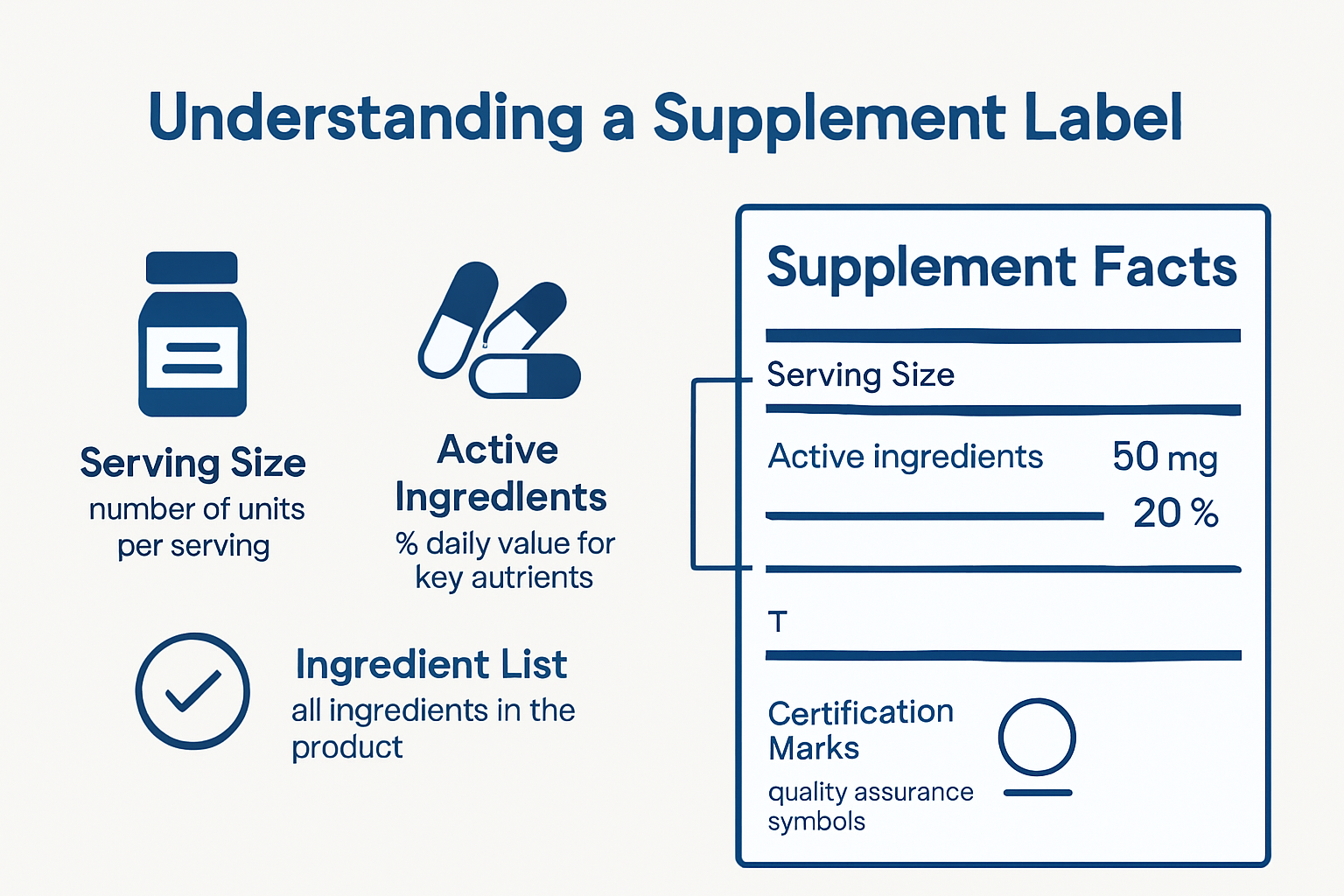
The panel typically includes several critical elements. First, you’ll find the serving size – this tells you how much of the supplement constitutes a single serving. Next to this, you’ll see the number of servings per container, which helps you calculate how long a single bottle will last. Beneath this, each dietary ingredient is listed with its specific amount and percentage of daily value.
According to the National Institutes of Health, manufacturers must clearly indicate the source and form of each ingredient. For instance, a vitamin D supplement might specify whether it uses vitamin D2 (ergocalciferol) or vitamin D3 (cholecalciferol), which can impact absorption and effectiveness.
Decoding Ingredient Lists
Beyond the Supplement Facts panel, the ingredient list provides additional insights. Ingredients are listed in descending order by weight, which means the first ingredients make up the largest proportion of the supplement. This can help you identify potential fillers or unnecessary additives.
The FDA’s Good Manufacturing Practices (GMPs) require manufacturers to ensure product quality by verifying the identity, purity, strength, and composition of their supplements. This means the ingredient list should be transparent and accurate.
Look for specific details like:
- Standardized extracts: Indicates a consistent concentration of active compounds
- Bioavailable forms: Suggests the supplement is designed for optimal absorption
- Potential allergens: Critical information for those with dietary restrictions
What to Watch Out For
Not all supplement labels are created equal. Some marketing claims can be misleading. The Dietary Supplement Label Database (DSLD) from the NIH offers an extensive resource for consumers to cross-reference and verify supplement information.
Be cautious of labels that make extraordinary claims like ‘miracle cure’ or ‘guaranteed results’. Legitimate supplements provide factual information about potential benefits without overpromising. Always consult with a healthcare professional before starting any new supplement regimen, especially if you have pre-existing health conditions or are taking medications.
Understanding supplement labels is about being an informed consumer. By learning to read these labels carefully, you take control of your nutritional health, making choices that align with your wellness goals.
Decoding Ingredients and Dosages
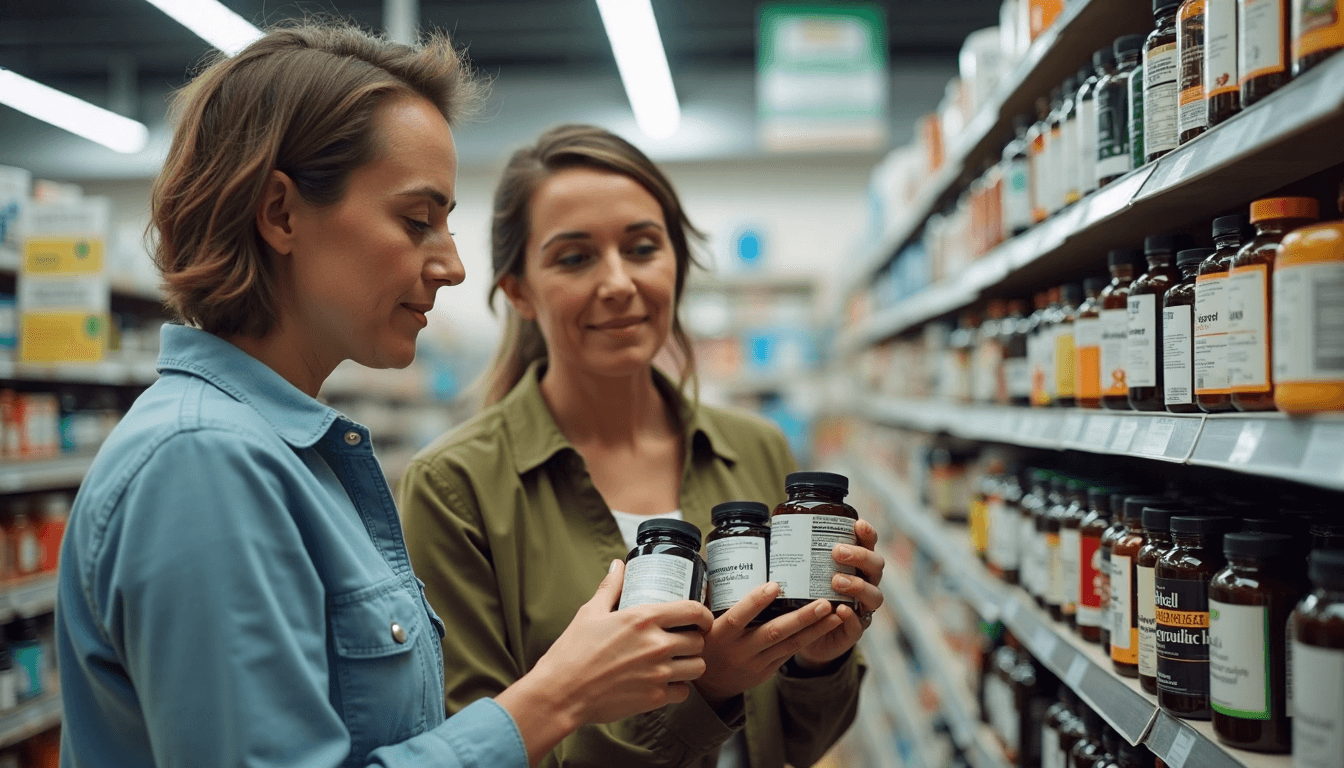
Navigating supplement ingredients and dosages requires a strategic approach to ensure you’re making informed nutritional choices. The complexity of supplement labels can be overwhelming, but understanding the key details empowers you to select products that genuinely support your health goals.
Understanding Active Ingredients
Active ingredients are the core components responsible for a supplement’s primary health benefits. According to research published in the Journal of the International Society of Sports Nutrition, consumers are increasingly scrutinizing these ingredients, with nearly 70% paying close attention to their specific composition and potential effectiveness.
When examining active ingredients, focus on several critical aspects. First, look for scientifically validated forms of nutrients. For example, some vitamin D supplements use cholecalciferol (D3) instead of ergocalciferol (D2) because D3 is more effectively absorbed by the body. Similarly, certain mineral supplements might list more bioavailable forms like chelated magnesium or calcium glycinate.
The U.S. Food and Drug Administration (FDA) recommends consumers verify the specific source and form of each ingredient. This approach helps distinguish high-quality supplements from those with potentially less effective formulations.
Interpreting Dosage Recommendations
Dosage recommendations are not one-size-fits-all. Individual needs vary based on age, gender, health status, and specific nutritional requirements. A study in the Journal of the American Dietetic Association highlighted that many supplement users struggle to interpret dosage information correctly.
Key considerations for understanding dosages include:
- Recommended Daily Allowance (RDA): The minimum amount of a nutrient required to maintain basic health
- Tolerable Upper Intake Level (UL): The maximum daily intake unlikely to cause adverse health effects
- Percentage of Daily Value (%DV): Indicates how much a nutrient contributes to a typical daily diet
Pay special attention to whether a dosage exceeds 100% of the Daily Value. While some supplements intentionally provide higher concentrations, excessive intake can potentially lead to adverse effects or interactions with medications.
Red Flags and Cautionary Signals
Not all supplement labels provide transparent or scientifically backed information. Research from nutritional experts suggests several red flags to watch for when evaluating supplement ingredients and dosages:
- Proprietary blends that do not disclose exact ingredient quantities
- Unrealistic claims about miraculous health transformations
- Lack of clear information about ingredient sources
- Missing third-party testing or certification details
Additionally, be wary of supplements that use marketing terms like ‘natural’ or ‘organic’ without substantive scientific evidence. These terms can be misleading and do not guarantee product efficacy or safety.
Remember that supplements should complement, not replace, a balanced diet. Always consult healthcare professionals before starting any new supplement regimen, particularly if you have pre-existing health conditions or are taking other medications. Your individual health profile is unique, and personalized guidance ensures you make the most informed nutritional decisions.
Here is a table summarizing key red flags and cautionary signals to watch for on supplement labels:
| Red Flag | Description/Why it Matters |
|---|---|
| Proprietary blends | Exact ingredient amounts not disclosed |
| Unrealistic health claims | Promises of ‘miraculous’ transformations, overpromising |
| Lack of ingredient details | No source or form provided for ingredients |
| No third-party certification | Missing independent quality/safety testing |
| Misleading marketing terms | Use of ‘natural’ or ‘organic’ without evidence |
Spotting Quality Assurance and Certifications
Quality assurance is the cornerstone of reliable dietary supplements. Not all supplements are created equal, and understanding how to identify high-quality products can protect your health and ensure you’re investing in effective nutritional support.
Third-Party Certifications
Third-party certifications represent an independent verification of a supplement’s quality and safety. According to the National Institutes of Health, several reputable organizations provide critical quality testing for dietary supplements.
Key certification bodies include:
- NSF International: Verifies product contents match label claims
- United States Pharmacopeia (USP): Checks for purity and manufacturing standards
- ConsumerLab: Tests supplements for quality and potential contaminants
These certifications go beyond manufacturer claims. Research published in the Journal of Dietary Supplements indicates that third-party certifications can reduce the risk of contamination by up to 60% compared to uncertified supplements.
Manufacturing Standards
The U.S. Food and Drug Administration (FDA) mandates Current Good Manufacturing Practices (CGMPs) for supplement producers. These regulations ensure that supplements are produced in a quality-controlled environment with consistent standards.
Key manufacturing quality indicators include:
- Transparent ingredient sourcing
- Consistent production processes
- Regular quality control testing
- Detailed record-keeping
The Dietary Supplement Label Database provides consumers with an additional resource to verify product information and manufacturing credentials.
Warning Signs of Low-Quality Supplements
Identifying potential red flags can help you avoid unreliable supplements. Consumer health experts recommend watching for these warning signs:
- Extraordinary health claims
- Lack of clear ingredient information
- Absence of third-party certifications
- Significantly lower prices compared to market standards
- Vague or non-specific manufacturing information
Remember that price is not always an indicator of quality. Some expensive supplements might not meet rigorous standards, while some affordable options could be thoroughly tested and verified.
Before starting any supplement regimen, consult with healthcare professionals who can provide personalized guidance based on your individual health needs. Your safety and well-being should always be the primary consideration when selecting dietary supplements.
The following table provides a comparison of third-party supplement certification organizations and the quality checks they perform:
| Certification Body | What They Check | Example Seal/Label |
|---|---|---|
| NSF International | Label claim verification, contaminants | NSF Certified |
| USP (United States Pharmacopeia) | Purity, manufacturing standards, ingredient quality | USP Verified |
| ConsumerLab | Product quality, presence of contaminants | CL Approved |
Avoiding Common Pitfalls and Hidden Risks
Navigating the complex world of dietary supplements requires vigilance and critical thinking. Many consumers unknowingly expose themselves to potential health risks by overlooking crucial details on supplement labels and making uninformed choices.
Understanding Potential Contamination Risks
Research from the FDA reveals a startling reality: over 1,060 dietary supplements have been identified with unapproved ingredients, including prescription drugs and banned substances. This highlights the critical need for consumers to be proactive about supplement safety.
Contamination can occur through multiple channels:
- Manufacturing errors: Unintentional cross-contamination during production
- Intentional adulteration: Illegal addition of undeclared pharmaceutical ingredients
- Poor sourcing: Unreliable ingredient procurement
A systematic review published in the International Journal of Pharmaceutical Sciences found that many consumers struggle to accurately interpret supplement label information, which increases their vulnerability to potential health risks.
Interaction and Health Risks
Supplements can interact unexpectedly with medications, creating potential health complications. Clinical research from the National Institutes of Health emphasizes the importance of consulting healthcare professionals before starting any new supplement regimen.
Potential interaction risks include:
- Reduced medication effectiveness
- Increased risk of side effects
- Unexpected biochemical reactions
- Potential amplification of existing health conditions
The Dietary Supplement Label Database provides an additional resource for consumers to cross-reference supplement information and potential interactions.
Red Flags and Consumer Protection
Recognizing warning signs is crucial for protecting your health. Consumer health experts recommend being cautious of supplements that:
- Make miraculous health claims
- Lack transparent ingredient lists
- Have no third-party certifications
- Offer prices significantly lower than market standards
- Provide vague manufacturing information
Additionally, be wary of supplements marketed as ‘quick fixes’ or ‘guaranteed solutions’. Legitimate nutritional support requires a holistic approach that includes balanced diet, regular exercise, and professional medical guidance.
Before incorporating any new supplement into your routine, conduct thorough research, consult healthcare professionals, and prioritize products from reputable manufacturers with transparent quality assurance processes. Your health is too important to compromise on supplement selection.
Frequently Asked Questions
How can I interpret the Supplement Facts panel on a supplement label?
To interpret the Supplement Facts panel, start by checking the serving size, servings per container, and the daily value percentages for each ingredient. This information helps you understand how much of each nutrient you’re consuming and how it fits into your daily dietary needs.
What should I look for in the ingredient list of a supplement?
In the ingredient list, focus on active ingredients, their forms, and concentrations. Look for scientifically validated forms of nutrients, such as bioavailable vitamins and minerals, and check for standardized extracts to ensure effectiveness and absorption. Additionally, be alert for potential allergens.
How can I verify the quality of a dietary supplement?
To verify the quality of a dietary supplement, look for third-party certifications from organizations like NSF International or USP. These certifications indicate that the supplement has been tested for quality, purity, and proper labeling, ensuring it meets high safety standards.
What are common red flags to watch out for on supplement labels?
Common red flags include proprietary blends that don’t disclose ingredient quantities, unrealistic health claims such as ‘miracle cures’, and missing third-party certification details. Always approach supplements marketed with vague statements or extraordinary promises with caution.
Turn Label Confusion Into Confidence With Personalized Supplement Guidance
Struggling to interpret supplement facts and ingredient lists? You’re not alone. Many readers just like you feel overwhelmed by misleading claims, hidden additives, and unclear dosage instructions found on supplement labels. The article made it clear that understanding terms like bioavailable forms, proprietary blends, and third-party certifications is crucial to making safe and effective choices — but doing this on your own can be stressful and time-consuming.
Imagine if you could skip the guessing and instantly know which supplements are right for your needs. With Menalam, you turn your knowledge into action. Our AI-driven platform analyzes your unique health profile, gives you science-backed supplement recommendations, and even tracks your intake for maximum results. Take the next step and try Menalam now to transform complicated label reading into a simple, personalized plan for better health. Visit Menalam’s homepage to get started today. Your smarter supplement journey begins here.
Leave a Reply