

Dietary supplements are everywhere these days and nearly 60 percent of American adults report taking some form of supplement each month. Most people assume that popping a daily vitamin is straightforward and harmless. Yet the truth is, dietary supplements come with unique characteristics and hidden complexities that set them miles apart from both regular foods and medicines.
Table of Contents
- Defining Dietary Supplements: Key Characteristics
- The Importance Of Dietary Supplements In Nutrition
- How Dietary Supplements Work In The Body
- Types Of Dietary Supplements And Their Uses
- Evaluating The Safety And Efficacy Of Supplements
Quick Summary
| Takeaway | Explanation |
|---|---|
| Dietary supplements enhance nutritional intake. | They provide concentrated nutrients that can fill dietary gaps when regular food lacks essential nutrients. |
| Consult with healthcare professionals before use. | This ensures safe and effective supplementation, particularly for those with pre-existing conditions or taking medications. |
| Quality assessment is crucial for supplements. | Look for third-party testing and reputable manufacturers to ensure ingredient purity and effectiveness. |
| Personalize supplementation to individual needs. | Tailor nutrient intake based on health goals, dietary restrictions, and specific lifestyle factors for optimal benefits. |
| Supplements should not replace a balanced diet. | Use dietary supplements to complement a healthy lifestyle, not as a substitute for nutritious foods. |
Defining Dietary Supplements: Key Characteristics
Dietary supplements represent a specialized category of nutritional products designed to augment an individual’s regular diet with concentrated nutrients and bioactive compounds. These products provide targeted nutritional support beyond what traditional food consumption typically offers.
Understanding the Fundamental Nature of Dietary Supplements
At their core, dietary supplements are concentrated sources of essential nutrients and other health-supporting compounds. According to the National Institutes of Health, they are specifically formulated to supplement dietary intake and contain one or more dietary ingredients such as vitamins, minerals, herbs, amino acids, and other botanical extracts.
The key characteristics that distinguish dietary supplements include:
- Concentrated Nutritional Composition: Designed to provide specific nutrients in higher concentrations than typically found in regular food
- Supplemental Purpose: Intended to fill nutritional gaps rather than replace balanced dietary intake
- Non-Pharmaceutical Classification: Regulated as food products, not medicinal treatments
Regulatory Framework and Product Diversity
Research from the National Center for Complementary and Integrative Health highlights that dietary supplements encompass a broad spectrum of products. This diversity includes vitamins, minerals, herbal products, amino acids, enzymes, and other nutritional compounds packaged in various formats such as tablets, capsules, powders, and liquid solutions.
Understanding the regulatory landscape is crucial. In the United States, the Dietary Supplement Health and Education Act (DSHEA) of 1994 established clear guidelines defining these products. Unlike pharmaceutical drugs, dietary supplements are not required to undergo the same rigorous pre-market approval processes, which means consumers must exercise informed decision-making when selecting and consuming these products.
Purpose and Potential Benefits
Dietary supplements are not intended to treat or cure diseases but rather to support overall health and wellness. They can help address specific nutritional deficiencies, support metabolic functions, enhance physical performance, and contribute to general well-being. However, they should always be considered a complement to a balanced diet and healthy lifestyle, not a replacement for nutritious food consumption.
While these products offer potential health advantages, it is essential to consult healthcare professionals before starting any new supplement regimen, particularly for individuals with pre-existing health conditions or those taking medications.
The Importance of Dietary Supplements in Nutrition
Nutrition is a complex landscape where individual dietary needs can vary significantly based on multiple factors. Dietary supplements play a critical role in bridging nutritional gaps and supporting overall health by providing concentrated nutrients that might be challenging to obtain through diet alone.
Addressing Nutritional Deficiencies
Research from the National Institutes of Health indicates that dietary supplements can be crucial in helping individuals meet their recommended nutrient intakes, particularly when regular diets may fall short. This is especially relevant for population groups with specific nutritional challenges.
Below is a table summarizing the key population groups who may benefit from dietary supplements and the specific nutrients they often require.
| Population Group | Common Supplement Needs | Reason |
|---|---|---|
| Pregnant women | Folic acid, iron | Supports fetal development and prevents deficiencies |
| Elderly individuals | Vitamin D, calcium, B12 | Addresses reduced absorption and bone health |
| Individuals with restricted diets | Vitamin B12, iron, calcium | Compensates for nutrients lacking in specific diets |
| People with chronic health issues | Varies (as advised by physician) | Supports compromised nutrient metabolism |
| Vegetarians and vegans | Vitamin B12, iron, omega-3 | Addresses nutrients primarily found in animal products |
Key populations that might benefit from targeted supplementation include:
- Pregnant women requiring additional folic acid and iron
- Elderly individuals with reduced nutrient absorption
- Individuals with restricted diets or food allergies
- People with chronic health conditions affecting nutrient metabolism
- Vegetarians and vegans potentially needing vitamin B12 and iron supplements
Supporting Specific Health Objectives
Dietary supplements are not just about preventing deficiencies but also about supporting specific health goals. They can provide targeted nutritional support for various physiological functions, including immune system enhancement, metabolic regulation, and performance optimization.
Some targeted supplement applications include:
- Immune System Support: Vitamins C, D, and zinc
- Bone Health: Calcium and vitamin D
- Cardiovascular Wellness: Omega-3 fatty acids
- Cognitive Function: B-complex vitamins and omega-3s
Personalized Nutritional Strategies
Modern nutrition science recognizes that a one-size-fits-all approach is inadequate. Individual genetic variations, lifestyle factors, and health conditions necessitate personalized nutritional strategies. Dietary supplements offer a flexible method to customize nutritional intake according to unique physiological requirements.
However, it is crucial to approach supplementation thoughtfully. Consulting healthcare professionals, understanding individual nutritional needs, and selecting high-quality supplements are essential steps in developing an effective nutritional strategy. Supplements should complement, not replace, a balanced and varied diet rich in whole foods.
While dietary supplements can provide significant health benefits, they are most effective when integrated into a holistic approach to wellness that includes balanced nutrition, regular physical activity, and overall healthy lifestyle choices.
How Dietary Supplements Work in the Body
Understanding how dietary supplements interact with human physiology involves complex biochemical processes that go far beyond simple nutrient intake. These specialized products are designed to interact with our body’s metabolic pathways, supporting various physiological functions and addressing potential nutritional gaps.
Absorption and Metabolic Pathways
According to research published in the National Institutes of Health, the effectiveness of dietary supplements depends on multiple interconnected factors including an individual’s age, overall health status, and existing metabolic conditions. Supplements enter the body through different absorption mechanisms, primarily through the digestive system.
Key absorption mechanisms include:
- Passive Diffusion: Nutrients move across cell membranes without energy expenditure
- Active Transport: Specific cellular mechanisms facilitate nutrient movement
- Facilitated Diffusion: Carrier proteins help nutrients cross cell membranes
Cellular Interaction and Utilization
Once absorbed, dietary supplements interact with cellular structures and biochemical processes.
Vitamins and minerals serve as essential cofactors in enzymatic reactions, supporting metabolic functions like energy production, hormone synthesis, and cellular repair. For instance, B-complex vitamins play crucial roles in converting food into energy, while minerals like magnesium participate in hundreds of biochemical reactions.
Supplements can influence bodily functions through several mechanisms:
- Providing raw materials for cellular processes
- Supporting enzymatic reactions
- Modulating gene expression
- Enhancing metabolic efficiency
Bioavailability and Individual Variations
Bioavailability represents the proportion of a nutrient that is actually absorbed and utilized by the body. This critical factor varies significantly based on individual physiological characteristics, supplement formulation, and concurrent nutritional intake.
Factors influencing supplement bioavailability include:
- Chemical Form: Some nutrient forms are more easily absorbed than others
- Concurrent Nutrient Interactions: Certain nutrients enhance or inhibit absorption
- Individual Metabolic Differences: Genetic variations affect nutrient processing
While dietary supplements can provide targeted nutritional support, they are not universal solutions. Individual responses vary, and what works effectively for one person might not produce identical results for another. Consulting healthcare professionals and understanding personal health contexts remain crucial in developing an effective supplementation strategy.
Types of Dietary Supplements and Their Uses
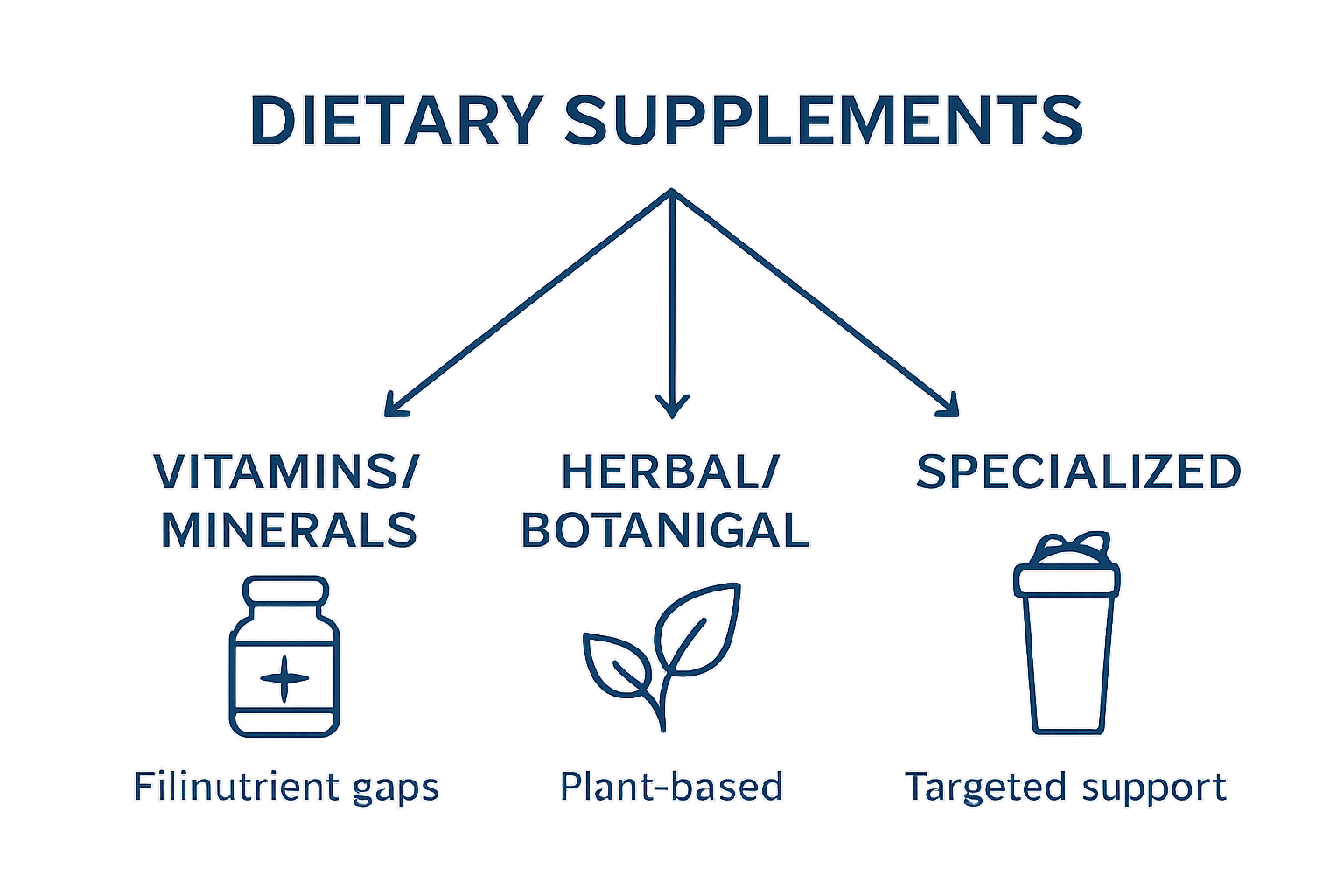
The world of dietary supplements is vast and diverse, offering targeted nutritional support for various health objectives. Understanding the different types and their specific purposes helps individuals make informed decisions about their nutritional supplementation strategies.
This table compares the major categories of dietary supplements, their sources, and their primary health functions to help readers make informed choices.
| Supplement Category | Primary Sources | Main Health Functions | Common Examples |
|---|---|---|---|
| Vitamins and Minerals | Synthetic, food-based extracts | Fill micronutrient gaps, support metabolism | Vitamin D, iron, magnesium |
| Herbal/Botanical | Plant extracts, dried herbs | Target specific health needs, traditional uses | Turmeric, echinacea, ginseng |
| Specialized Nutritional | Animal/plant-based, lab-produced | Support targeted functions and performance | Probiotics, omega-3, protein |
Vitamins and Minerals
According to the Office of Dietary Supplements, vitamins and minerals represent foundational dietary supplements designed to support essential physiological functions. These micronutrients play critical roles in metabolism, immune function, and overall cellular health.
Key vitamin and mineral supplements include:
- Fat-Soluble Vitamins: A, D, E, and K
- Water-Soluble Vitamins: B-complex and Vitamin C
- Essential Minerals: Calcium, Magnesium, Zinc, Iron
Herbal and Botanical Supplements
Herbal and botanical supplements derive from plant-based sources and offer unique health-supporting properties. These supplements have been used in traditional medicine for centuries and are now backed by contemporary scientific research. They address specific health concerns and provide targeted nutritional support.
Popular herbal supplements encompass:
- Echinacea for immune system support
- Turmeric for anti-inflammatory effects
- Ginger for digestive health
- Ginseng for energy and cognitive function
- St. John’s Wort for mood regulation
Specialized Nutritional Supplements
Beyond traditional vitamins and herbs, specialized supplements target specific physiological needs and health goals. These products address unique nutritional requirements and support particular bodily functions.
Specialized supplement categories include:
- Protein Supplements: Whey, plant-based proteins for muscle recovery
- Omega-3 Fatty Acids: Supporting cardiovascular and brain health
- Probiotics: Enhancing gut microbiome and digestive wellness
- Amino Acid Supplements: Supporting muscle growth and recovery
- Joint Health Supplements: Glucosamine and chondroitin for mobility
While dietary supplements offer significant potential benefits, individual responses vary. Consulting healthcare professionals, understanding personal health needs, and selecting high-quality supplements remain crucial in developing an effective nutritional strategy. Supplements should complement, not replace, a balanced diet and healthy lifestyle.

Evaluating the Safety and Efficacy of Supplements
Navigating the complex landscape of dietary supplements requires a critical and informed approach. Understanding how to assess supplement safety and effectiveness is crucial for making responsible nutritional choices that support individual health objectives.
Regulatory Oversight and Quality Standards
According to the Office of Dietary Supplements, dietary supplements are not regulated with the same stringent standards as pharmaceutical drugs. This regulatory environment means consumers must take proactive steps to evaluate supplement quality and potential risks.
Key considerations for assessing supplement quality include:
- Manufacturer Reputation: Research company background and track record
- Third-Party Testing: Look for independent verification of ingredient purity
- Good Manufacturing Practices (GMP): Ensure production meets established quality standards
- Ingredient Transparency: Verify complete and accurate ingredient listings
Understanding Potential Risks and Interactions
Dietary supplements can interact with medications, existing health conditions, and other nutrients in complex ways. Some supplements might cause unexpected side effects or reduce the effectiveness of prescription medications.
Important risk assessment factors include:
- Potential allergic reactions
- Interactions with prescription medications
- Impact on pre-existing health conditions
- Recommended dosage limitations
- Individual metabolic variations
Scientific Evidence and Efficacy Assessment
Evaluating supplement effectiveness requires examining scientific research and clinical studies. Not all supplements have equal scientific support, and claims can often be misleading.
Strategies for assessing supplement efficacy:
- Peer-Reviewed Research: Prioritize supplements with robust scientific evidence
- Clinical Trial Results: Look for studies demonstrating measurable health benefits
- Expert Recommendations: Consult healthcare professionals for personalized guidance
- Long-Term Studies: Consider supplements with sustained proven benefits
Consumers should approach dietary supplements with a critical mindset. Consulting healthcare professionals, conducting thorough research, and maintaining a holistic approach to nutrition remain essential in making informed supplement choices. Remember that supplements are intended to complement, not replace, a balanced diet and healthy lifestyle.
Ready to Personalize Your Wellness Journey?
Understanding dietary supplements is the first step, but building a routine that fits your unique needs can feel overwhelming. Maybe you are unsure which supplements fill your nutritional gaps, or you struggle to track your progress and see real results. The article highlighted how choosing the right nutrients and regularly adjusting your plan are key to long-term health. If you want science-backed, personalized solutions to these challenges, there is a smarter way forward.
Take control of your nutrition today with Menalam, the platform designed to act as your digital nutritionist. Answer a quick quiz to receive personalized supplement recommendations based on your health goals, lifestyle, and even your blood test results. With the mobile app, you can set smart reminders and monitor your progress. Do not let uncertainty hold you back from optimal wellness. Visit Menalam right now to discover the supplements tailored for your best health.
Frequently Asked Questions
What are dietary supplements, and what purpose do they serve?
Dietary supplements are specialized nutritional products designed to augment an individual’s regular diet with concentrated nutrients and bioactive compounds. They serve to fill nutritional gaps and support overall health and wellness rather than replace a balanced diet.
How do dietary supplements work in the body?
Dietary supplements interact with the body’s metabolic pathways after absorption through the digestive system. They provide essential nutrients, support enzymatic reactions, and modulate cellular functions, thus helping to optimize health and address nutritional deficiencies.
What types of dietary supplements are available?
Dietary supplements come in various forms, including vitamins, minerals, herbal and botanical supplements, protein powders, omega-3 fatty acids, probiotics, and amino acids. Each type targets specific health needs and physiological functions.
Are dietary supplements safe to use?
While many dietary supplements can provide health benefits, safety varies based on individual health conditions, potential interactions with medications, and the quality of the product. It’s crucial to consult healthcare professionals before starting any supplement regimen.
Leave a Reply