

Choosing the right supplements can be a total maze. There are more than 90,000 dietary supplement products on the US market and the options keep growing every year. Most people grab the top bottle on the shelf and cross their fingers. But the real secret is this: the best results never come from guessing or following trends. Personalizing your supplement plan with real science changes everything.
Table of Contents
- Understand Your Nutritional Needs
- Consult With A Healthcare Professional
- Focus On Quality Over Quantity
- Consider Your Health Goals
- Explore Key Nutrients: Vitamins And Minerals
- Research Protein Supplements For Fitness
- Monitor And Adjust Your Supplement Intake
Quick Summary
| Takeaway | Explanation |
|---|---|
| Understand your unique nutritional needs | Assess age, gender, lifestyle, and health conditions to identify specific nutrient requirements before taking supplements. |
| Consult healthcare professionals for guidance | Engage a qualified expert to recommend personalized supplements based on comprehensive health assessments. |
| Prioritize supplement quality over price | Choose supplements based on third-party testing and ingredient quality to ensure safety and effectiveness. |
| Align supplements with personal health goals | Select supplements that support your specific aims, such as weight management or athletic performance, for optimal results. |
| Monitor and adjust your supplement regimen | Regularly track your supplement effectiveness and revise your intake based on health changes and professional advice. |
1: Understand Your Nutritional Needs
Navigating the complex world of nutritional supplements requires a strategic and personalized approach. Your body’s unique requirements are influenced by multiple factors including age, gender, lifestyle, health conditions, and dietary habits. The NIH Office of Dietary Supplements emphasizes that understanding individual nutritional needs is crucial before starting any supplement regimen.
Before diving into supplement recommendations, you need a comprehensive assessment of your current health status. This involves several key steps to ensure you’re making informed decisions:
- Consult with a healthcare professional who can conduct a thorough nutritional assessment
- Get comprehensive blood work to identify specific nutrient deficiencies
- Review your current diet and lifestyle patterns
Your personal health profile plays a significant role in determining which supplements might benefit you. Factors like stress levels, exercise routines, sleep quality, and existing medical conditions can dramatically impact your nutritional requirements. For instance, athletes might need different supplements compared to sedentary individuals, while someone with a chronic condition might require targeted nutritional support.
A strategic approach to understanding your nutritional needs involves not just identifying deficiencies but comprehending how different nutrients interact within your body. Some nutrients work synergistically, while others might compete for absorption. This complexity underscores the importance of professional guidance and personalized supplement recommendations.
Transitioning from a generic supplement approach to a targeted strategy means being proactive about your health. Regular monitoring, periodic reassessment, and willingness to adjust your supplement plan are key to optimizing your nutritional intake. Remember, supplements are meant to complement a balanced diet, not replace whole foods or serve as a universal solution to health challenges.
2: Consult with a Healthcare Professional
Engaging a healthcare professional is a critical step in developing a safe and effective supplement strategy. The National Institutes of Health strongly recommends professional consultation to prevent potential health risks and ensure personalized nutritional support.
A qualified healthcare provider brings expertise that goes beyond basic supplement recommendations. They can conduct comprehensive assessments of your health status, identify potential nutrient interactions, and create a tailored supplement plan that addresses your specific physiological needs. This personalized approach helps mitigate risks associated with self-prescribed supplementation.
When meeting with a healthcare professional, be prepared to discuss several key aspects of your health:
- Your complete medical history
- Current medications and potential supplement interactions
- Existing health conditions
- Dietary habits and nutritional intake
- Specific health goals or concerns
Professionals can utilize advanced diagnostic tools to pinpoint precise nutritional deficiencies. Blood tests, comprehensive metabolic panels, and specialized screenings provide empirical data that guides supplement recommendations. This scientific approach eliminates guesswork and ensures that you’re addressing genuine nutritional gaps rather than following generalized advice.
Moreover, healthcare professionals can help you understand potential risks and side effects associated with different supplements. Some supplements might interact negatively with medications or exacerbate underlying health conditions. A trained medical expert can help you navigate these complexities, ensuring your supplement regimen supports rather than compromises your overall health.
Regular follow-ups are equally important. Your nutritional needs evolve with age, lifestyle changes, and health status. Periodic consultations allow for dynamic adjustments to your supplement plan, maintaining its relevance and effectiveness over time.
3: Focus on Quality Over Quantity
The supplement market is saturated with countless products, making quality discernment critical for your health journey. The U.S. National Institutes of Health underscores the importance of selecting supplements based on rigorous quality standards rather than volume or marketing claims.
Quality supplements are distinguished by several key characteristics that go beyond their packaging or promotional materials. Discerning consumers understand that the molecular integrity, sourcing, and manufacturing processes are paramount to a supplement’s effectiveness and safety.
When evaluating supplement quality, consider these essential criteria:
- Third-party testing certification
- Transparent ingredient sourcing
- Minimal processing and artificial additives
- Scientifically validated ingredient forms
- Appropriate bioavailability and absorption rates
Manufacturing standards play a crucial role in supplement quality. Reputable manufacturers invest in advanced production techniques that preserve nutrient potency and minimize contamination risks. This includes using pharmaceutical-grade production facilities, conducting rigorous quality control tests, and maintaining strict documentation of their manufacturing processes.
Chemical purity is another critical factor. Low-quality supplements might contain harmful contaminants, inconsistent ingredient concentrations, or synthetic fillers that diminish nutritional value. Professional-grade supplements undergo extensive screening to ensure they meet stringent purity standards.
Price should not be the primary determinant of your supplement selection. While premium supplements might cost more, they often represent a more significant investment in your health through superior ingredient quality, more precise formulations, and better absorption rates. Cheaper alternatives frequently compromise on essential quality metrics that directly impact their nutritional effectiveness.
Remember that supplement quality transcends marketing promises. Research, verify third-party certifications, and prioritize supplements from manufacturers with transparent production practices and proven scientific credibility.
4: Consider Your Health Goals
Selecting supplements requires a strategic approach aligned with your unique health objectives. The Dietary Guidelines for Americans emphasizes that supplementation should complement individual health goals and lifestyle requirements.
Health goals are not one-size-fits-all. They vary dramatically based on factors like age, fitness level, metabolic health, and personal wellness aspirations. Understanding your specific objectives helps create a targeted supplement strategy that supports your body’s precise nutritional needs.
Different health goals demand specialized nutritional support:
- Weight management supplements
- Athletic performance enhancement
- Mental clarity and cognitive function
- Immune system strengthening
- Hormonal balance
- Stress reduction
Precise nutritional interventions can dramatically accelerate progress toward your health objectives. For athletes seeking performance optimization, supplements might focus on muscle recovery and energy production. Individuals managing stress could prioritize adaptogenic herbs and minerals that support nervous system resilience.
Your current health status significantly influences supplement selection. Factors like existing medical conditions, medication interactions, and metabolic efficiency play crucial roles in determining which supplements will be most beneficial. A supplement that works exceptionally well for one person might produce minimal results for another.
Consider tracking your progress through measurable metrics. Regular health assessments, blood work, and performance evaluations help validate the effectiveness of your supplement regimen. This data-driven approach allows for continuous refinement of your nutritional strategy, ensuring that your supplements remain aligned with evolving health goals.
Remember that supplements are supplementary tools, not miraculous solutions. They work best when integrated with a balanced diet, consistent physical activity, and comprehensive lifestyle management. Your health goals should drive supplement selection, not the reverse.
5: Explore Key Nutrients: Vitamins and Minerals
Navigating the complex world of vitamins and minerals requires a nuanced understanding of how these micronutrients support bodily functions. The National Institutes of Health highlights the critical role of targeted nutrient supplementation in addressing specific physiological needs.
Vitamins and minerals are essential cofactors that enable numerous metabolic processes in the human body. They act as catalysts for enzymatic reactions, support immune function, promote cellular repair, and maintain overall physiological balance. Understanding their individual roles can help you make informed supplement choices.
Key nutrients play distinct roles in maintaining optimal health:
- Vitamin D supports bone health and immune function
- Magnesium regulates muscle and nerve function
- Zinc promotes immune system resilience
- B-complex vitamins enhance energy metabolism
- Calcium supports bone and cardiovascular health
Bioavailability is a crucial factor in nutrient absorption. Not all supplement forms are created equal. Some nutrients are more effectively absorbed in specific molecular configurations, making the source and processing method critical considerations. For instance, methylcobalamin is often more readily absorbed than cyanocobalamin for vitamin B12.
Individual factors like age, gender, lifestyle, and existing health conditions significantly influence nutrient requirements. Older adults might need higher calcium and vitamin D intake, while athletes could benefit from increased magnesium and zinc supplementation. Vegetarians and vegans often require targeted supplementation to compensate for nutrients typically obtained from animal products.
Understanding potential nutrient interactions is equally important. Some minerals compete for absorption, while others work synergistically. Calcium can interfere with iron absorption, and vitamin D enhances calcium uptake. This intricate biochemical dance underscores the importance of a comprehensive and thoughtful approach to nutritional supplementation.
Remember that supplements should complement, not replace, a balanced diet rich in whole foods. Whole food sources provide a complex matrix of nutrients that work together in ways that isolated supplements cannot fully replicate.
6: Research Protein Supplements for Fitness
Research published in Nutrients demonstrates that protein supplementation plays a critical role in fitness performance and muscle development. Understanding the nuanced world of protein supplements requires a strategic approach tailored to individual fitness goals and physiological needs.
Protein supplements are not a universal solution but a targeted nutritional intervention. Different protein sources offer unique molecular profiles that impact muscle recovery, growth, and overall athletic performance. Your specific fitness objectives determine which protein supplement will be most effective.
Key considerations for selecting protein supplements include:
- Protein source quality and bioavailability
- Individual metabolic requirements
- Training intensity and frequency
- Dietary restrictions and preferences
- Absorption rate and digestion profile
Protein types significantly influence muscle protein synthesis and recovery. Whey protein provides rapid absorption and high essential amino acid content, making it ideal for post-workout recovery. Casein protein offers slower, sustained amino acid release, supporting muscle maintenance during extended periods of rest.
Vegetarian and vegan athletes have multiple protein supplement options including pea, hemp, and rice protein blends. These plant-based alternatives offer comprehensive amino acid profiles while addressing dietary restrictions. The key is selecting complete protein sources that provide all essential amino acids necessary for muscle repair and growth.
Timing of protein consumption is equally crucial. Consuming protein within 30 minutes post-exercise can optimize muscle protein synthesis and support faster recovery. However, total daily protein intake matters more than precise timing for long-term muscle development and fitness performance.
Remember that protein supplements work best when integrated with a balanced diet, consistent training regimen, and adequate rest. They are nutritional tools designed to complement your fitness journey, not replace fundamental nutritional principles or hard work.
7: Monitor and Adjust Your Supplement Intake
The NIH Office of Dietary Supplements emphasizes that supplement intake is not a static process but a dynamic journey requiring continuous evaluation and adaptation. Your body’s nutritional needs evolve constantly, making regular monitoring and strategic adjustments crucial for maintaining optimal health.
Tracking your supplement effectiveness involves multiple comprehensive approaches. Simply consuming supplements without understanding their impact provides minimal long-term benefits. A proactive monitoring strategy transforms supplementation from a passive activity to an intelligent, data-driven health intervention.
Key strategies for effective supplement monitoring include:
- Regular blood work and comprehensive metabolic panels
- Detailed symptom and wellness tracking
- Professional consultation every 3-6 months
- Periodic reassessment of health goals
- Documentation of supplement interactions
Biological markers provide objective evidence of supplement effectiveness. Blood tests can reveal precise nutrient levels, helping you understand whether your current supplement regimen delivers desired physiological outcomes. Markers like vitamin D, B12, iron, and magnesium levels offer concrete insights into your nutritional status.
Pay close attention to your body’s signals. Subtle changes in energy levels, mood, sleep quality, and physical performance can indicate whether your supplements are truly serving your health objectives. Some supplements might require dosage adjustments or complete replacement as your metabolism and health conditions change.
Consider maintaining a detailed supplement journal documenting dosages, timing, perceived effects, and any side reactions. This personal record becomes an invaluable tool for healthcare professionals in fine-tuning your nutritional strategy. Technology platforms and mobile apps can simplify this tracking process, providing visual representations of your health progression.
Remember that supplement optimization is a personalized, ongoing process. What works perfectly today might require modification tomorrow. Stay curious, remain adaptable, and prioritize professional guidance in your nutritional journey.
Below is a comprehensive summarization table that organizes the essential recommendations and key considerations for choosing supplements as discussed throughout the article.
| Key Area | Main Recommendation | Benefits/Outcomes | Steps/Actions |
|---|---|---|---|
| Understand Nutritional Needs | Assess individual requirements based on age, gender, lifestyle, and health status | Personalized nutrition, targeted supplementation | Consult professionals, review diet, test for deficiencies |
| Professional Consultation | Seek guidance from qualified healthcare providers before starting supplements | Safety, reduced risk of adverse interactions | Provide full health/medication history, undergo necessary assessments |
| Quality Over Quantity | Choose supplements with verified quality, third-party testing, and transparent sourcing | Increased safety and effectiveness | Look for certifications, avoid unverified or heavily processed products |
| Align with Health Goals | Match supplements to specific health objectives, such as weight management or athletic performance | Enhanced goal achievement, tailored support | Set measurable goals, regularly reassess as health needs evolve |
| Focus on Key Nutrients | Prioritize essential vitamins and minerals suited to your profile and dietary gaps | Correct deficiencies, support vital functions | Choose the right forms, consider bioavailability and interactions |
| Protein for Fitness Needs | Select protein supplements based on quality, dietary preference, and training intensity | Improved muscle growth and recovery | Choose appropriate type (whey, casein, plant-based), optimize intake |
| Monitor and Adjust Intake | Regularly evaluate supplement effectiveness through blood work and symptom tracking | Ongoing optimization, prevention of overuse | Maintain a supplement journal, schedule periodic medical reviews |
Take Control of Your Health with Tailored Supplement Plans
Are you feeling overwhelmed by the complexity of nutritional supplements and the pressure to choose what is truly right for you? After reading about personalized assessments, quality ingredient demands, and the constant need to monitor and adjust your intake, you deserve a solution that bridges knowledge with action. Many people struggle to identify which vitamins or minerals match their unique health profile and find it difficult to consistently track progress or make science-based choices.
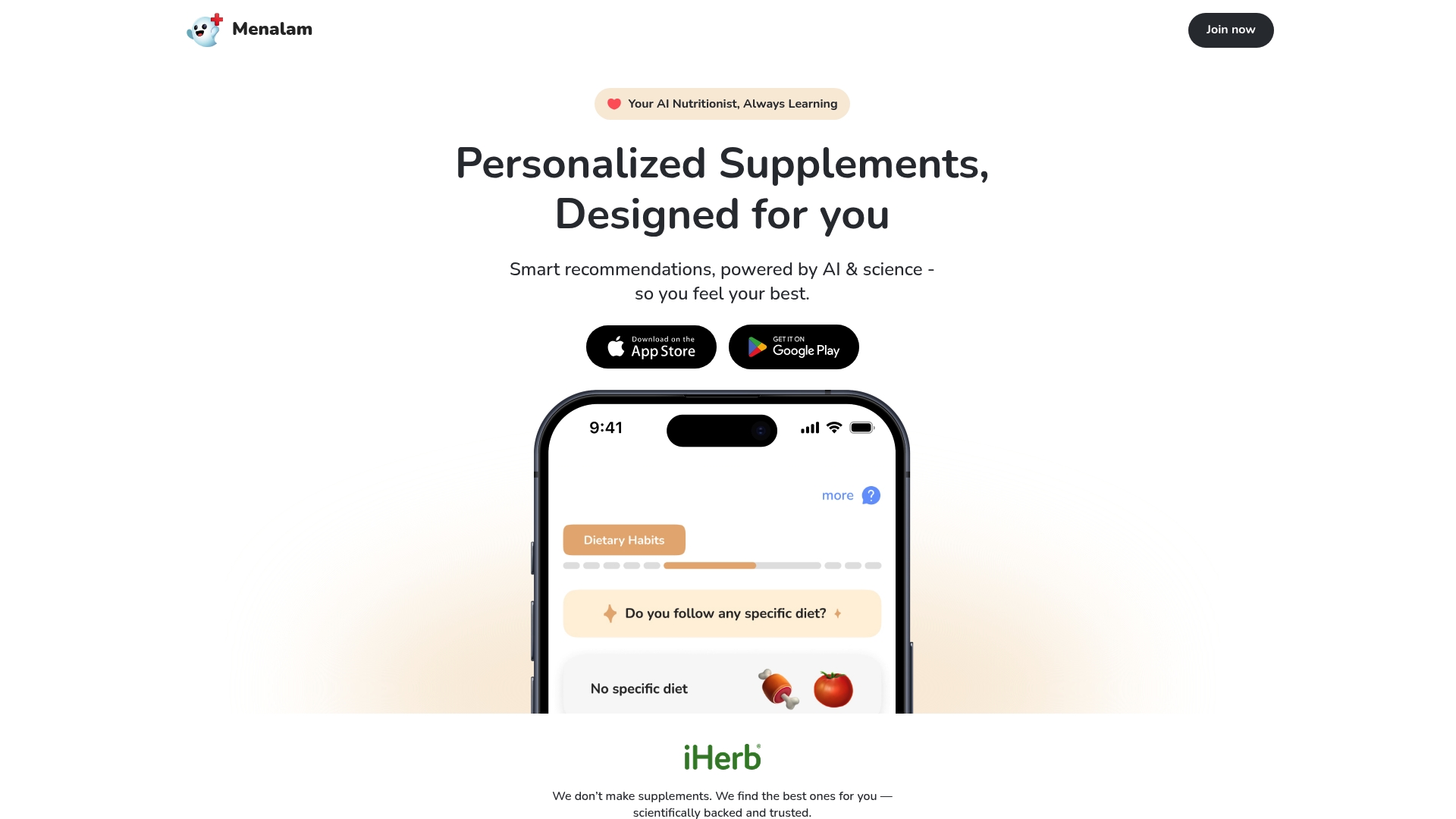
Menalam empowers you to go beyond one-size-fits-all advice. Use our AI-driven personalized supplement recommendations to take a smart, data-driven approach to your nutrition. Complete a quick health quiz to see which supplements fit your lifestyle, dietary habits, and current health status. Seamlessly integrate your blood test results for deeper accuracy, and trust our mobile app to track your supplement intake, remind you when it’s time, and help you monitor results—all in one place. Join Menalam today to experience the confidence of real, personalized progress. Start now at Menalam.com and take the first step toward a healthier tomorrow.
Frequently Asked Questions
What should I consider before starting a supplement regimen?
Understanding your nutritional needs is crucial. Factors like age, gender, lifestyle, health conditions, and dietary habits play significant roles in determining which supplements are appropriate for you.
Why is it important to consult with a healthcare professional about supplements?
A healthcare professional can provide a comprehensive assessment of your health status, identify potential nutrient interactions, and create a tailored supplement plan that addresses your specific needs, thereby minimizing health risks.
How do I determine the quality of a dietary supplement?
When assessing supplement quality, look for third-party testing certification, transparent ingredient sourcing, minimal processing, and scientifically validated forms of nutrients. Additionally, check for appropriate bioavailability and absorption rates.
How can I track the effectiveness of my supplements?
Regular blood work and comprehensive metabolic panels, along with symptom and wellness tracking, can help you monitor the effectiveness of your supplements. Maintaining a supplement journal documenting effects and any side reactions can also be beneficial.
Leave a Reply