

Vitamins sound like tiny ingredients on a nutrition label, but their impact on your health is massive. There are 13 essential vitamins and even a shortage of just one can cause serious issues like anemia or rickets. Most people think popping extra pills guarantees better results. The real surprise is that too many vitamins can actually harm your body and sometimes your everyday meals already check every nutritional box.
Table of Contents
- What Are Vitamins And Why Are They Important?
- The Different Types Of Vitamins And Their Functions
- How Vitamins Interact With Our Body
- The Role Of Vitamins In Nutrition And Health
- Common Myths And Misconceptions About Vitamins
Quick Summary
| Takeaway | Explanation |
|---|---|
| Vitamins are essential for health | They play critical roles in metabolic processes, immune function, and overall wellness. |
| Two types: water-soluble and fat-soluble | Water-soluble vitamins need regular intake; fat-soluble vitamins are stored in the body. |
| Deficiencies can lead to health issues | Low vitamin levels can cause complications like anemia, weakened immunity, and more severe conditions. |
| Balanced diet usually suffices for vitamins | Most individuals get necessary vitamins through a healthy diet without needing extra supplements. |
| Consult professionals for supplementation | Personal nutritional needs can vary; seek guidance before taking vitamin supplements. |
What Are Vitamins and Why Are They Important?
Vitamins are microscopic organic compounds that serve as essential nutrients critical for maintaining optimal human health. Unlike macronutrients like proteins, carbohydrates, and fats, vitamins are required in small quantities but play absolutely crucial roles in numerous physiological processes. These micronutrients enable chemical reactions, support metabolism, boost immune function, and help cells perform their specialized tasks.
The Fundamental Nature of Vitamins
At their core, vitamins are complex molecules that our bodies cannot typically produce in sufficient quantities, meaning we must obtain them through diet or supplementation. According to research from the National Institutes of Health, these compounds are categorized into two primary groups based on their solubility: water-soluble and fat-soluble vitamins.
- Water-soluble vitamins include B-complex vitamins and Vitamin C, which dissolve easily in bodily fluids
- Fat-soluble vitamins (A, D, E, K) are stored in fatty tissues and the liver
Vital Roles in Human Physiology
Each vitamin performs specialized functions that are irreplaceable in human metabolism. Vitamin D, for instance, is crucial for calcium absorption and bone health. Vitamin B12 supports neurological function and red blood cell formation. Vitamin C acts as a powerful antioxidant that strengthens immune responses and supports collagen production.
The human body requires a delicate balance of these micronutrients. Deficiencies can lead to significant health complications, ranging from weakened immune systems to more severe conditions like anemia, rickets, or neurological disorders. Conversely, understanding and maintaining proper vitamin intake can dramatically enhance overall health, energy levels, and long-term wellness.
The Different Types of Vitamins and Their Functions
The human body requires 13 essential vitamins, each playing a distinct and critical role in maintaining optimal health. These vitamins are divided into two primary categories water-soluble and fat-soluble vitamins which determine how they are absorbed, transported, and stored within the body.
Here is a table comparing the key differences between water-soluble and fat-soluble vitamins to clarify how each type behaves in the body and why their intake matters.
| Type of Vitamin | How They Are Absorbed | Storage in the Body | Main Examples | Elimination Path |
|---|---|---|---|---|
| Water-soluble | Absorbed directly into bloodstream | Not stored, excess excreted | B-complex, Vitamin C | Through urine |
| Fat-soluble | Require dietary fat for absorption | Stored in liver and fatty tissues | Vitamins A, D, E, K | Slowly, may build up |
Water-Soluble Vitamins
Water-soluble vitamins dissolve in water and are not stored long-term in the body, requiring consistent dietary intake. According to research from Harvard T.H. Chan School of Public Health, these vitamins include the B-complex group and Vitamin C, which are quickly absorbed and any excess is typically eliminated through urine.
- Vitamin B1 (Thiamine): Supports metabolism and nerve function
- Vitamin B12: Critical for red blood cell formation and neurological health
- Vitamin C: Powerful antioxidant that supports immune system and collagen production
Fat-Soluble Vitamins
Fat-soluble vitamins require dietary fat for proper absorption and can be stored in the body’s fatty tissues and liver for extended periods.
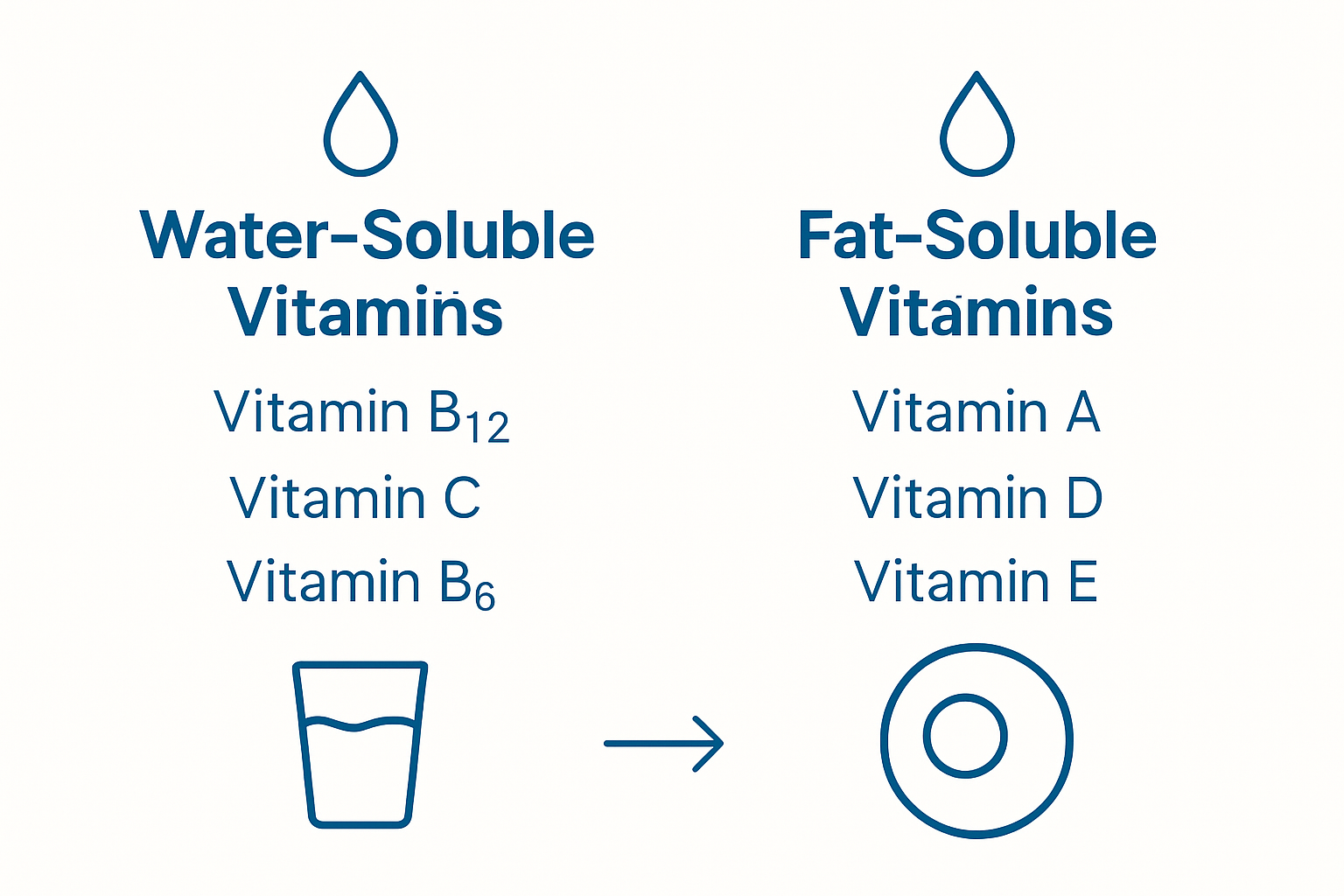 These vitamins play crucial roles in complex physiological processes and long-term health maintenance.
- Vitamin A: Essential for vision, immune function, and cell growth
- Vitamin D: Supports bone health, calcium absorption, and immune system regulation
- Vitamin E: Protects cells from oxidative damage and supports cardiovascular health
- Vitamin K: Critical for blood clotting and bone metabolism
Understanding the unique characteristics and functions of these vitamins helps individuals make informed dietary choices. While a balanced diet can provide most necessary vitamins, some people might require supplements to address specific nutritional needs or deficiencies. Consulting healthcare professionals can help determine individual vitamin requirements and optimize overall nutritional intake.
How Vitamins Interact with Our Body
Vitamins are far more than simple nutritional supplements. They are intricate molecular actors that engage in complex biochemical interactions, functioning as critical catalysts in numerous physiological processes. These micronutrients participate in metabolic reactions, signal cellular communication, and support fundamental biological mechanisms essential for human health.
Absorption and Transportation Mechanisms
The journey of vitamins through the human body is a sophisticated process of targeted delivery and utilization. According to research published in Nutrients, vitamin absorption varies significantly based on their molecular structure and solubility characteristics:
- Water-soluble vitamins are directly absorbed into the bloodstream through the small intestine
- Fat-soluble vitamins require dietary fat to be effectively absorbed and transported
- Different vitamins utilize unique cellular transport mechanisms
Metabolic Function and Enzymatic Interactions
Vitamins serve as essential cofactors and coenzymes in metabolic pathways, enabling critical biochemical reactions. They function like precision molecular keys, unlocking specific enzymatic processes that convert nutrients into energy, synthesize proteins, and regulate cellular functions.
- Vitamin B complex supports energy metabolism and neurological function
- Vitamin D activates calcium-binding proteins crucial for bone health
- Vitamin C acts as a cofactor in collagen synthesis and immune responses
Understanding these intricate interactions highlights why maintaining balanced vitamin intake is crucial. Each vitamin performs specialized roles that cannot be substituted, making them indispensable for maintaining optimal physiological function and overall health.
The Role of Vitamins in Nutrition and Health
Vitamins represent a critical cornerstone of human nutrition, functioning as microscopic powerhouses that orchestrate complex biological processes essential for maintaining optimal health. These micronutrients play multifaceted roles extending far beyond basic metabolic functions, acting as molecular regulators that support everything from cellular repair to immune system performance.
Nutritional Defense and Immune Function
Nutrition scientists recognize vitamins as fundamental components of our body’s defense mechanisms. According to research from Harvard T.H. Chan School of Public Health, certain vitamins directly contribute to immune system resilience and protection against potential health threats:
- Vitamin C stimulates white blood cell production
- Vitamin D helps regulate immune cell responses
- Vitamin E provides antioxidant protection against cellular damage
Metabolic Optimization and Energy Production
Vitamins serve as critical catalysts in converting food into usable energy and supporting comprehensive metabolic functions. They act as enzymatic cofactors that enable complex biochemical transformations, ensuring efficient nutrient processing and cellular metabolism.
- B-complex vitamins facilitate energy extraction from carbohydrates, proteins, and fats
- Support mitochondrial function and cellular energy production
- Help convert nutrients into forms the body can readily use
These intricate nutritional interactions demonstrate why balanced vitamin intake is crucial.
 By understanding vitamins not merely as supplements but as essential biological regulators, individuals can appreciate their profound impact on overall health and wellness. Maintaining proper vitamin levels through balanced nutrition represents a fundamental strategy for supporting long-term physiological performance and disease prevention.
Common Myths and Misconceptions About Vitamins
Vitamin misconceptions are widespread, often leading individuals to make uninformed nutritional choices that can potentially harm their health. While vitamins are essential for maintaining physiological functions, numerous myths surrounding their consumption and effectiveness persist in popular health discourse.
Debunking Supplement and Intake Myths
Many people hold incorrect beliefs about vitamin supplementation and consumption. According to research from Arizona State University, several prevalent misconceptions require critical examination:
- Myth: Vitamins provide direct energy
- Reality: Vitamins help convert food into energy but do not supply energy themselves
- Myth: More vitamins always equal better health
- Reality: Excessive vitamin intake can be harmful and potentially toxic
Understanding Vitamin Supplementation
Contrary to popular belief, vitamin supplements are not universally necessary or beneficial for everyone. Tufts Health & Nutrition Letter highlights that most individuals can obtain sufficient vitamins through a balanced diet.
- Most Americans receive adequate vitamins from their regular diet
- Multivitamin supplements are often unnecessary
- Dietary supplements are not always rigorously tested before market release
Critical thinking and professional medical guidance are essential when considering vitamin supplementation.
This table summarizes common myths and misconceptions about vitamins and provides the factual realities, helping readers distinguish between marketing hype and scientific evidence.
| Myth | Reality |
|---|---|
| Vitamins provide direct energy | Vitamins help convert food to energy but do not provide it |
| More vitamins always mean better health | Excessive intake can be harmful or toxic |
| Supplements are always necessary | Most people get enough vitamins from a balanced diet |
| Supplements are rigorously tested | Not all supplements undergo strict testing |
Discover Your True Vitamin Needs with Menalam’s Personalized Approach
Are you struggling to balance your vitamin intake or feeling uncertain about which nutrients your body really needs? The article highlighted how vital vitamins are for energy, immunity, and overall health, yet it also exposed how easy it is to fall for myths or suffer from hidden deficiencies. If you feel overwhelmed by conflicting advice or worried about missing out on key micronutrients, it is time for a solution that brings clarity and confidence to your nutrition.

Take the guesswork out of health. With Menalam’s online platform, you can get science-backed vitamin and supplement recommendations made just for your body and lifestyle. Complete a quick health quiz and receive a personalized plan that evolves with your progress, your diet, and even your blood test results. Track every step with our mobile app, get smart reminders, and enjoy peace of mind knowing your nutrition is built on real data and expert insight. Ready to unlock your healthiest self? Start your journey today at Menalam and experience a more informed, customized approach to daily wellness.
Frequently Asked Questions
What are the different types of vitamins?
Vitamins are primarily categorized into two types: water-soluble vitamins and fat-soluble vitamins. Water-soluble vitamins include the B-complex group and Vitamin C, while fat-soluble vitamins include Vitamins A, D, E, and K.
How do vitamins interact with our body?
Vitamins facilitate various biochemical reactions, acting as cofactors and coenzymes in metabolic pathways. They play crucial roles in energy production, immune function, and cellular repair, among other essential physiological processes.
Can I get all the vitamins I need from my diet?
Most people can obtain sufficient vitamins from a balanced diet rich in fruits, vegetables, whole grains, and lean proteins. However, some individuals may require supplements to address specific nutritional needs or deficiencies.
What are common myths about vitamin supplementation?
Common myths include the belief that vitamins directly provide energy and that higher doses of vitamins always lead to better health. In reality, excessive vitamin intake can be harmful, and vitamins help convert food into energy but do not supply energy themselves.
Leave a Reply