

Most people know vitamins are key players in staying healthy, with the average American taking at least one dietary supplement every day. Surprising as it sounds, mixing the wrong vitamins together can actually sabotage your health rather than support it. Some combinations do more harm than good and understanding these sneaky interactions might just change how you approach your daily routine.
Table of Contents
- What Are Vitamins And Their Role In Health?
- Why Some Vitamins Should Not Be Taken Together
- How Vitamin Interactions Affect Absorption And Effectiveness
- Key Vitamins To Avoid Combining
- Real-World Examples Of Vitamin Conflicts
Quick Summary
| Takeaway | Explanation |
|---|---|
| Vitamins are essential for health | Vitamins are critical micronutrients that support various physiological processes necessary for optimal human functioning. |
| Avoid combining certain vitamins | Some vitamin pairs can inhibit each other’s absorption, leading to reduced effectiveness and potential health issues. |
| Consult professionals for supplementation | Seeking guidance from healthcare providers ensures effective supplement strategies that minimize harmful interactions. |
| Monitor nutrient interactions carefully | Understanding how different nutrients affect each other’s absorption helps prevent nutritional deficiencies and enhances overall health. |
| Balanced diet is key | A diverse and balanced diet is vital for obtaining necessary vitamins and preventing deficiencies without dependence on supplements. |
What Are Vitamins and Their Role in Health?
Vitamins are essential micronutrients that play critical roles in maintaining optimal human health. Unlike macronutrients like proteins, carbohydrates, and fats, vitamins are required in small quantities but are fundamental for numerous physiological processes.
This table gives an overview of the two main vitamin categories, highlighting their characteristics and examples to support better understanding of how vitamins function in the body.
| Vitamin Category | Characteristics | Examples |
|---|---|---|
| Fat-soluble | Stored in body fat and liver, require dietary fat to absorb | Vitamins A, D, E, K |
| Water-soluble | Not stored extensively, must be replenished frequently | B-complex, Vitamin C |
The Biochemical Significance of Vitamins
Our bodies cannot produce most vitamins independently, which means we must obtain them through diet or supplementation. These microscopic compounds act as catalysts in complex biochemical reactions, enabling critical functions such as metabolism, cell growth, immune response, and energy production.
According to the National Center for Complementary and Integrative Health, vitamins are classified into two primary categories:
- Fat-soluble vitamins (A, D, E, K): Stored in body fat and liver, these vitamins can be retained longer and require dietary fat for absorption.
- Water-soluble vitamins (B-complex, Vitamin C): These are not stored extensively and must be replenished more frequently through diet.
How Vitamins Support Different Body Systems
Each vitamin serves unique functions that contribute to overall health. Vitamin D, for instance, is crucial for calcium absorption and bone health. B-complex vitamins support energy metabolism and neurological functions. Vitamin C plays a significant role in immune system support and acts as a powerful antioxidant.
The human body requires a balanced intake of these micronutrients to maintain optimal functioning. Deficiencies can lead to various health complications, ranging from mild symptoms like fatigue to more serious conditions such as compromised immune responses or metabolic disorders.
Understanding vitamins is not just about consuming supplements but recognizing their intricate roles in maintaining physiological balance and supporting overall wellness.
Why Some Vitamins Should Not Be Taken Together
Not all vitamins and minerals are compatible when consumed simultaneously. Complex biochemical interactions can significantly impact nutrient absorption, effectiveness, and potential health outcomes. Understanding these interactions helps optimize supplement intake and prevent potential nutritional interference.
Competitive Absorption Mechanisms
Nutrients can compete for absorption in the human digestive system, creating potential barriers to optimal nutrient uptake. According to research published in the American Journal of Clinical Nutrition, certain minerals and vitamins can directly interfere with each other’s absorption when taken concurrently.
Key competitive absorption scenarios include:
- Calcium and Iron: Calcium can inhibit non-heme iron absorption, potentially reducing iron’s bioavailability.
- Zinc and Magnesium: High zinc supplementation may reduce magnesium absorption through intestinal pathway competition.
- Copper and Zinc: Excessive zinc intake can impair copper absorption and metabolic processes.
Potential Health Implications of Nutrient Interactions
Improper vitamin combinations can lead to unexpected health consequences. Some interactions might reduce the effectiveness of supplements, potentially creating unintended nutritional deficiencies. For instance, taking high doses of certain minerals simultaneously can compromise individual nutrient absorption, potentially leading to metabolic imbalances.
Strategic supplementation requires understanding these intricate biochemical relationships. Staggering vitamin intake, consulting healthcare professionals, and maintaining balanced nutritional approaches can help mitigate potential negative interactions and optimize overall nutrient absorption.
How Vitamin Interactions Affect Absorption and Effectiveness
Vitamin and mineral interactions represent a complex biochemical landscape where different nutrients can enhance or inhibit each other’s absorption and metabolic processes. Understanding these intricate relationships is crucial for optimizing nutritional supplementation and preventing potential health complications.
Molecular Mechanisms of Nutrient Interaction
According to research from the National Institutes of Health, nutrient interactions occur through various biochemical pathways that can significantly impact overall nutrient bioavailability. These interactions can be categorized into several primary mechanisms:
- Competitive Absorption: Nutrients competing for similar absorption sites in the digestive tract
- Chemical Binding: Vitamins and minerals forming molecular complexes that reduce individual nutrient effectiveness
- Metabolic Interference: Nutrients disrupting each other’s enzymatic processing and cellular utilization
Practical Implications of Nutrient Interactions
Certain vitamin combinations can dramatically alter supplement effectiveness. For instance, high doses of vitamin C can potentially interfere with vitamin B12 absorption, while calcium might reduce iron uptake. These interactions underscore the importance of strategic supplementation timing and comprehensive nutritional planning.
Professional guidance becomes essential in navigating these complex interactions. Healthcare practitioners can provide personalized recommendations that account for individual metabolic variations, ensuring that supplement regimens maximize nutritional benefits while minimizing potential negative interactions.
Key Vitamins to Avoid Combining
Not all vitamin combinations are beneficial, and some can potentially compromise nutrient absorption or create metabolic complications. Understanding which vitamins should not be taken together is crucial for maintaining optimal health and ensuring effective supplementation.
Problematic Vitamin Combinations
According to research published in PubMed, certain vitamin combinations can lead to reduced effectiveness or potential health risks. These interactions often involve competing absorption mechanisms or biochemical interference.
Critical vitamin combinations to avoid include:
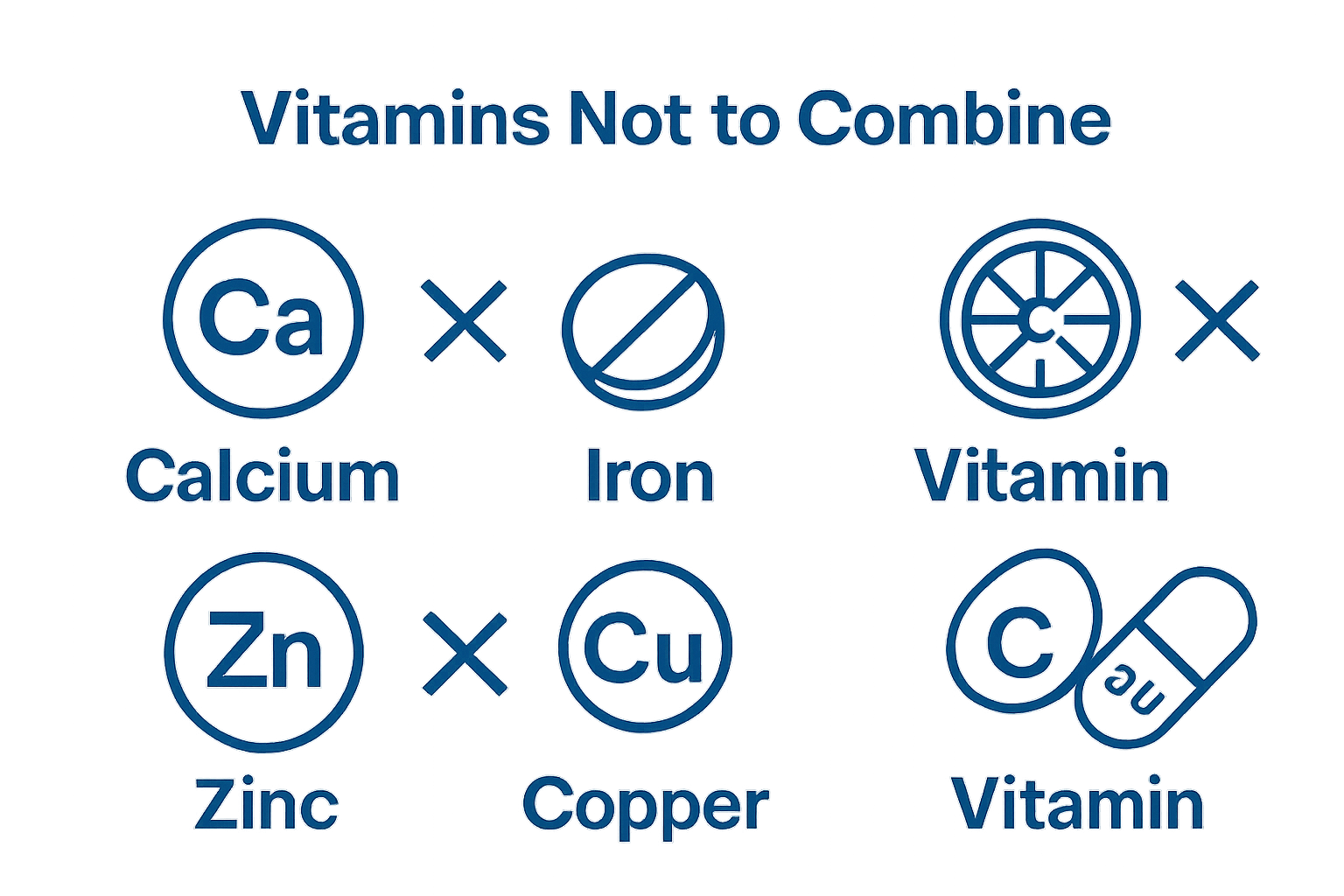
- Calcium and Iron: Calcium can significantly inhibit iron absorption
- Vitamin C and Vitamin B12: High doses of vitamin C may interfere with B12 metabolism
- Zinc and Copper: Excessive zinc intake can impair copper absorption
- Fat-soluble Vitamins (A, D, E, K): Simultaneous high-dose supplementation can lead to potential toxicity
Potential Health Risks of Improper Vitamin Combinations
Indiscriminate vitamin supplementation can create unexpected health challenges. Excessive or poorly timed vitamin intake may result in reduced nutrient effectiveness, potential metabolic disruptions, and in some cases, adverse physiological responses.
Professional medical guidance becomes essential in developing a personalized supplement strategy.
To help clarify which vitamin and mineral combinations are best avoided, the following table summarizes problematic pairings and their potential health consequences.
| Vitamin/Mineral Combination | Potential Interaction/Effect | Health Risk or Outcome |
|---|---|---|
| Calcium and Iron | Calcium inhibits non-heme iron absorption | Reduced iron bioavailability, possible anemia |
| Vitamin C and Vitamin B12 | High doses of vitamin C may interfere with B12 metabolism | Decreased B12 effectiveness |
| Zinc and Copper | Excessive zinc impairs copper absorption | Copper deficiency, metabolic issues |
| Fat-soluble Vitamins (A, D, E, K) | Simultaneous high-dose supplementation increases risk of toxicity | Potential vitamin toxicity |
| Zinc and Magnesium | High zinc can reduce magnesium absorption due to competition | Magnesium deficiency |
| Calcium and Thyroid Medication | Calcium reduces thyroid hormone absorption | Reduced medication effectiveness |
| Blood Thinners and Vitamin K | Vitamin K intake affects anticoagulant medication effectiveness | Unstable blood clotting levels |
Real-World Examples of Vitamin Conflicts
Vitamin and supplement interactions are not merely theoretical concepts but have tangible implications for individual health. Real-world scenarios demonstrate how seemingly harmless combinations can produce unexpected and potentially harmful outcomes.
Clinical Evidence of Nutrient Interactions
According to research analyzing the 2013-2014 National Health and Nutrition Examination Survey, nearly half of all participants were at risk of potentially dangerous dietary supplement interactions. These interactions can manifest through various complex biochemical mechanisms.
Compelling real-world interaction examples include:
- Blood Thinners and Vitamin K: Anticoagulant medications like warfarin can be dramatically affected by vitamin K intake, potentially compromising medication effectiveness
- Antidepressants and St. John’s Wort: This herbal supplement can interfere with several prescription medications, reducing their therapeutic impact
- Calcium Supplements and Thyroid Medication: Calcium can significantly reduce the absorption of thyroid hormone replacement drugs
Practical Implications for Personal Health
These interactions underscore the critical importance of comprehensive medical communication. Patients must disclose all supplement and vitamin intake to healthcare providers, enabling them to develop holistic treatment strategies that account for potential biochemical conflicts. Professional medical supervision becomes essential in navigating the intricate landscape of nutritional supplementation, ensuring individual safety and treatment efficacy.

Confused About Which Vitamins to Take Together? Get Clarity with Menalam
Are you struggling to keep track of which vitamins work best together and which combinations might actually disrupt your health progress? The article made it clear that nutrient interactions such as calcium and iron or vitamin C and vitamin B12 can quickly lead to confusion and unexpected side effects. Many people find it overwhelming trying to manage their supplement intake safely while balancing their unique lifestyle and dietary needs. But making the right decisions about vitamin timing and combinations is too important to leave to guesswork.
Take control of your nutrition and let technology take away the uncertainty. At Menalam, you receive personalized supplement recommendations based on your health profile. Our intelligent platform analyzes your habits, tracks your progress, and even integrates your blood test results for a plan that adapts to your goals. Stop risking ineffective or conflicting supplement routines. Visit Menalam today and get your science-backed supplement strategy started in minutes.
Frequently Asked Questions
What vitamins should not be taken together?
Certain vitamin combinations can hinder absorption and effectiveness. For example, calcium and iron should not be taken together as calcium inhibits iron absorption. Additionally, high doses of vitamin C may interfere with vitamin B12 metabolism, and excessive zinc can impair copper absorption.
How do vitamin interactions affect health?
Vitamin and mineral interactions can lead to reduced nutrient effectiveness, potential metabolic disruptions, and adverse physiological responses. Understanding these interactions is critical for maintaining optimal health and ensuring effective supplementation.
What are the risks of combining fat-soluble vitamins?
Taking high doses of fat-soluble vitamins (A, D, E, K) simultaneously can lead to potential toxicity. It’s important to manage the intake of these vitamins carefully to avoid adverse health outcomes.
How can I optimize my vitamin intake?
To optimize vitamin intake, stagger supplementation timings based on specific nutrient interactions and consult with healthcare professionals. They can provide personalized recommendations tailored to individual nutritional needs, helping to maximize benefits while minimizing risks.
Leave a Reply