

Everyone wants a sharp mind and strong memory, but most people have no idea just how much vitamins influence their brain health. Surprisingly, nearly 1 in 8 adults over 50 has a deficiency in vitamin B12, a key nutrient for mental clarity. Most think boosting your brain is about puzzles or apps, but the real foundation sits quietly on your plate.
Table of Contents
- What Are Good Vitamins for Your Brain?
- Why Brain Vitamins Matter for Cognitive Function
- How Vitamins Affect Brain Health and Performance
- Key Vitamins and Their Roles in Brain Nutrition
Quick Summary
| Takeaway | Explanation |
|---|---|
| Vitamin B12 is essential for cognitive health. | Deficiencies in vitamin B12 can lead to memory loss and serious cognitive decline. It is crucial for neurological function. |
| Daily multivitamins can improve cognition. | Research indicates that daily multivitamin supplementation can enhance cognitive function, especially in older adults. |
| Omega-3 fatty acids support brain communication. | Omega-3s are vital for neural communication, which helps maintain cognitive functions and emotional regulation. |
| Antioxidants protect against cognitive decline. | Vitamins E and C help defend brain tissues against oxidative stress, maintaining cognitive integrity and reducing aging effects. |
| Myelin sheath maintenance is crucial for nerve health. | Vitamins play a key role in supporting myelin sheaths, which protect nerves and enhance neural signal efficiency. |
What Are Good Vitamins for Your Brain?
When considering good vitamins for your brain, understanding how specific nutrients impact cognitive function becomes crucial. Brain health depends on complex interactions between vitamins, minerals, and neurological processes that support memory, focus, and overall mental performance.
The Neurological Nutrition Foundation
Your brain requires specific nutrients to maintain optimal functioning. Unlike other body systems, brain cells have unique metabolic demands that make certain vitamins essential. According to the National Institutes of Health Office of Dietary Supplements, vitamin B12 plays a critical role in neurological function, with deficiencies potentially leading to memory loss and cognitive decline.
Key vitamins that support brain health include:
- Vitamin B12 for neurological maintenance
- Vitamin D for cognitive protection
- Omega-3 fatty acids for neural communication
- Folate for emotional regulation and mental clarity
How Brain Vitamins Work
Brain vitamins function by supporting neural pathways, protecting brain cells from oxidative stress, and facilitating neurotransmitter production. They act as critical cofactors in metabolic processes that maintain neuronal health and optimize cognitive performance.
Vitamins like B12 and folate help synthesize neurotransmitters, which are chemical messengers responsible for communication between brain cells. These nutrients also support myelin sheaths that protect nerve fibers, ensuring efficient electrical signaling throughout the nervous system.
Neurological research suggests that consistent intake of brain-supporting vitamins can help prevent age-related cognitive decline and support overall mental resilience.
By providing essential nutrients, these vitamins create a protective environment for brain cells, promoting long-term neurological health and potentially reducing risks of cognitive disorders.
Why Brain Vitamins Matter for Cognitive Function
Cognitive function represents the complex mental processes that enable humans to process information, learn, remember, and make decisions. Understanding the critical role of brain vitamins in maintaining these cognitive capabilities provides insight into neurological health and performance.
The Neurological Impact of Nutritional Deficiencies
Nutrients play a fundamental role in brain health, with deficiencies potentially triggering significant cognitive challenges. Research from the National Institutes of Health demonstrates that daily multivitamin supplementation can improve cognitive function, particularly in older adults with specific health backgrounds.
Critical cognitive risks associated with vitamin deficiencies include:
- Reduced memory processing speed
- Decreased neural communication efficiency
- Impaired neuroplasticity and learning capabilities
- Increased vulnerability to age-related cognitive decline
Mechanisms of Cognitive Protection
Brain vitamins operate through intricate mechanisms that support neurological resilience. They function as essential cofactors in metabolic processes, helping protect neural networks from oxidative stress and supporting neurotransmitter production.
Specific vitamins contribute to cognitive protection by:
- Supporting myelin sheath maintenance
- Facilitating neurotransmitter synthesis
- Reducing inflammation in neural tissues
- Protecting against neurological oxidative damage
The brain requires continuous nutritional support to maintain optimal performance. By understanding and addressing vitamin needs, individuals can proactively support their cognitive health and potentially mitigate risks of neurological deterioration.
This table organizes the neurological effects of vitamin deficiencies described in the article, making it easy to see how lacking certain nutrients impacts cognitive function.
| Deficiency Effect | Description |
|---|---|
| Reduced memory processing speed | Slower recall and information retention |
| Decreased neural communication | Impaired efficiency of messages between brain cells |
| Impaired neuroplasticity | Lowered ability to learn or adapt |
| Increased cognitive decline risk | Heightened vulnerability to aging-related memory issues |
| Impaired learning capabilities | Difficulty in acquiring new skills or knowledge |
How Vitamins Affect Brain Health and Performance
Brain health and performance are intrinsically linked to nutritional status, with vitamins playing a pivotal role in maintaining cognitive function and neurological resilience. Understanding the complex interactions between vitamins and brain physiology reveals how micronutrients directly influence mental capabilities.
Neurochemical Regulation and Vitamin Interactions
Vitamins serve as critical cofactors in neurochemical processes that govern brain performance. Research from the Nutrients journal highlights how specific vitamins participate in neurotransmitter synthesis, neural structure maintenance, and oxidative stress reduction.
Key neurochemical processes influenced by vitamins include:
- Neurotransmitter production and regulation
- Myelin sheath maintenance and repair
- Neural communication efficiency
- Cellular energy metabolism
Biochemical Mechanisms of Brain Performance
Each vitamin contributes uniquely to brain function through specialized biochemical pathways. B-complex vitamins, for instance, are essential in converting nutrients into energy, supporting mitochondrial function in brain cells. Antioxidant vitamins like E and C protect neural tissues from free radical damage, preserving cognitive integrity.
Vitamins impact brain performance through multiple interconnected mechanisms:
- Reducing neuroinflammation
- Supporting neuroplasticity
- Protecting against oxidative stress
- Enhancing neural signal transmission
Cognitive performance depends on a delicate balance of nutritional support. By understanding how vitamins interact with neural systems, individuals can make informed decisions about dietary strategies that optimize brain health and cognitive potential.
Key Vitamins and Their Roles in Brain Nutrition
Brain nutrition relies on a complex network of vitamins that support neurological function, protect cognitive capabilities, and maintain overall mental performance. Each vitamin contributes unique mechanisms that help sustain brain health through different physiological pathways.
Essential Vitamins for Neurological Support
According to the National Institutes of Health, vitamin B12 plays a crucial role in neurological function, with significant implications for cognitive health. Deficiencies can lead to serious neurological complications, including memory loss and potential cognitive decline.
Critical vitamins for brain nutrition include:
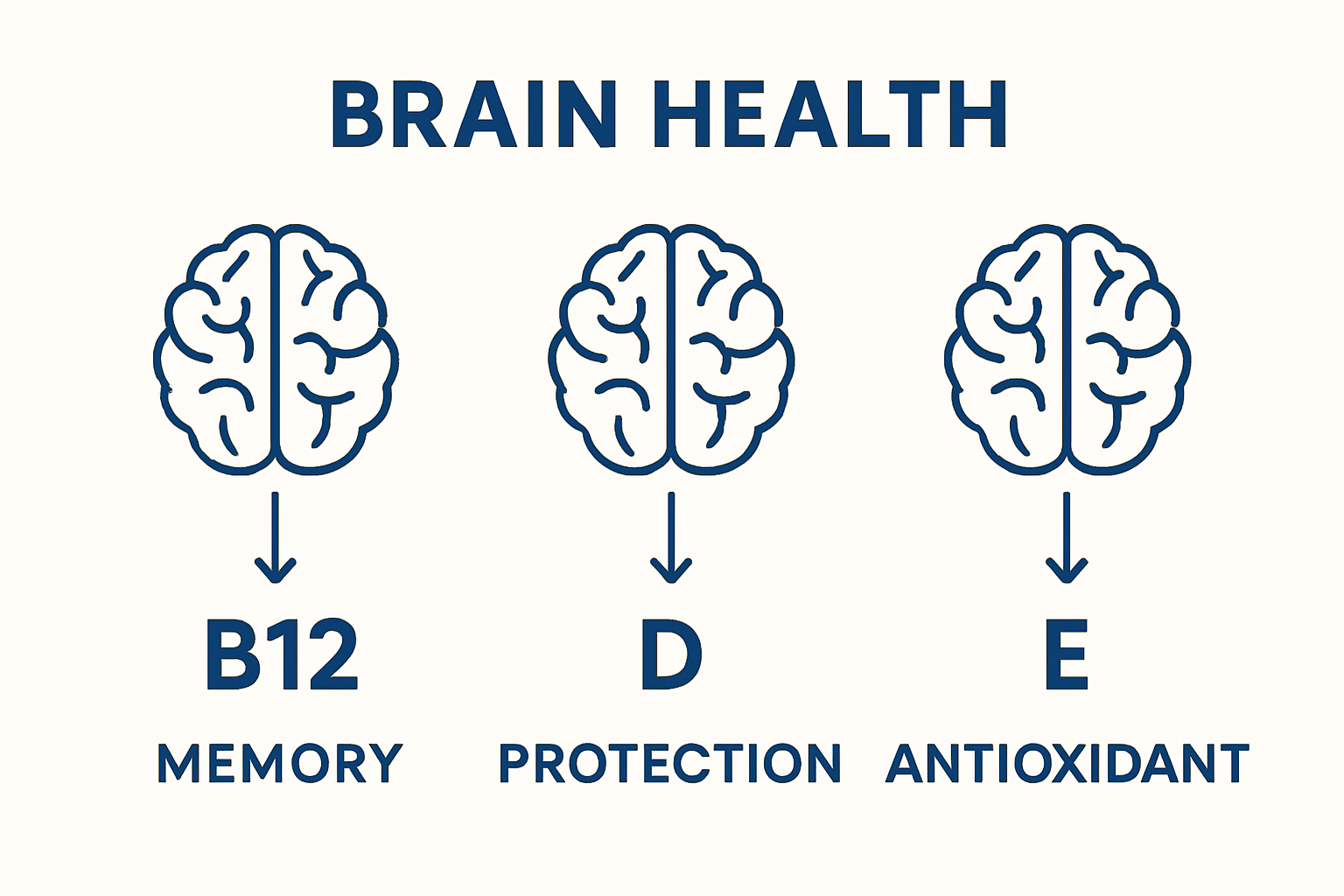
- Vitamin B12 for neurological maintenance
- Vitamin D for neural protection
- Vitamin E as an antioxidant defender
- B-Complex vitamins for energy metabolism
Targeted Nutritional Mechanisms
Different vitamins interact with brain systems through specialized mechanisms. B-complex vitamins facilitate neurotransmitter production and energy conversion, while antioxidant vitamins like E and C protect neural tissues from oxidative damage.
Specific neurological benefits of targeted vitamin intake include:
- Supporting myelin sheath integrity
- Reducing neuroinflammation
- Enhancing neural communication
- Protecting against age-related cognitive decline
Comprehensive brain nutrition requires understanding how these micronutrients work synergistically to maintain cognitive resilience. By recognizing the intricate roles vitamins play in neurological health, individuals can make informed dietary choices that support long-term mental performance.
The following table summarizes the key vitamins and nutrients discussed in the article, highlighting their primary functions and unique contributions to brain health.
| Vitamin/Nutrient | Main Role in Brain Health | Unique Benefit |
|---|---|---|
| Vitamin B12 | Neurological maintenance | Supports myelin sheath, prevents memory loss |
| Vitamin D | Cognitive protection | Helps protect against cognitive decline |
| Omega-3 fatty acids | Neural communication | Enhances signaling between brain cells |
| Folate | Emotional regulation, mental clarity | Assists neurotransmitter synthesis |
| Vitamin E | Antioxidant protection | Shields neural tissues from oxidative stress |
| Vitamin C | Antioxidant protection | Defends brain cells from free radical damage |
| B-Complex vitamins | Energy metabolism, neurotransmitter production | Increases energy for neuronal performance |

Discover Your Brain’s Best Nutrition Partner
Are you struggling to figure out which vitamins truly support your brain health? This article highlighted how confusing it can be to match your unique cognitive needs with the right vitamins such as B12, D, and omega-3s. If you want to avoid the guesswork and finally get a science-backed path toward better focus, memory, and mental performance, you need a smarter solution.

Let Menalam be your digital nutritionist. Get personalized supplement recommendations that target brain health and fit your lifestyle. Simply take a quick health quiz to unlock tailored vitamin plans and use our mobile app to track your progress and receive smart reminders. Do not wait any longer to give your brain what it truly needs. Visit Menalam’s homepage today to start building your tailored brain nutrition plan and move one step closer to your healthiest mind.
Frequently Asked Questions
What vitamins are essential for brain health?
Key vitamins essential for brain health include Vitamin B12, Vitamin D, Omega-3 fatty acids, and Folate. Each of these nutrients plays a critical role in supporting cognitive function and neurological health.
How do brain vitamins improve cognitive function?
Brain vitamins improve cognitive function by supporting neurotransmitter production, protecting brain cells from oxidative stress, and maintaining myelin sheaths that ensure efficient neural communication.
What are the consequences of vitamin deficiencies on cognitive health?
Vitamin deficiencies can lead to reduced memory processing speed, impaired neural communication, and increased vulnerability to age-related cognitive decline and learning challenges.
Can a daily multivitamin support cognitive performance?
Yes, studies suggest that daily multivitamin supplementation may improve cognitive performance, particularly in older adults, by addressing specific nutritional deficiencies that affect brain health.
Leave a Reply