

Choosing the right vitamins can quickly get confusing with so many options on the shelf and so much conflicting advice online. Most people don’t realize that personalized supplement strategies can dramatically improve health outcomes compared to generic recommendations. What’s surprising is that figuring out the best vitamins for your body starts with understanding your daily habits long before you ever open a supplement bottle.
Table of Contents
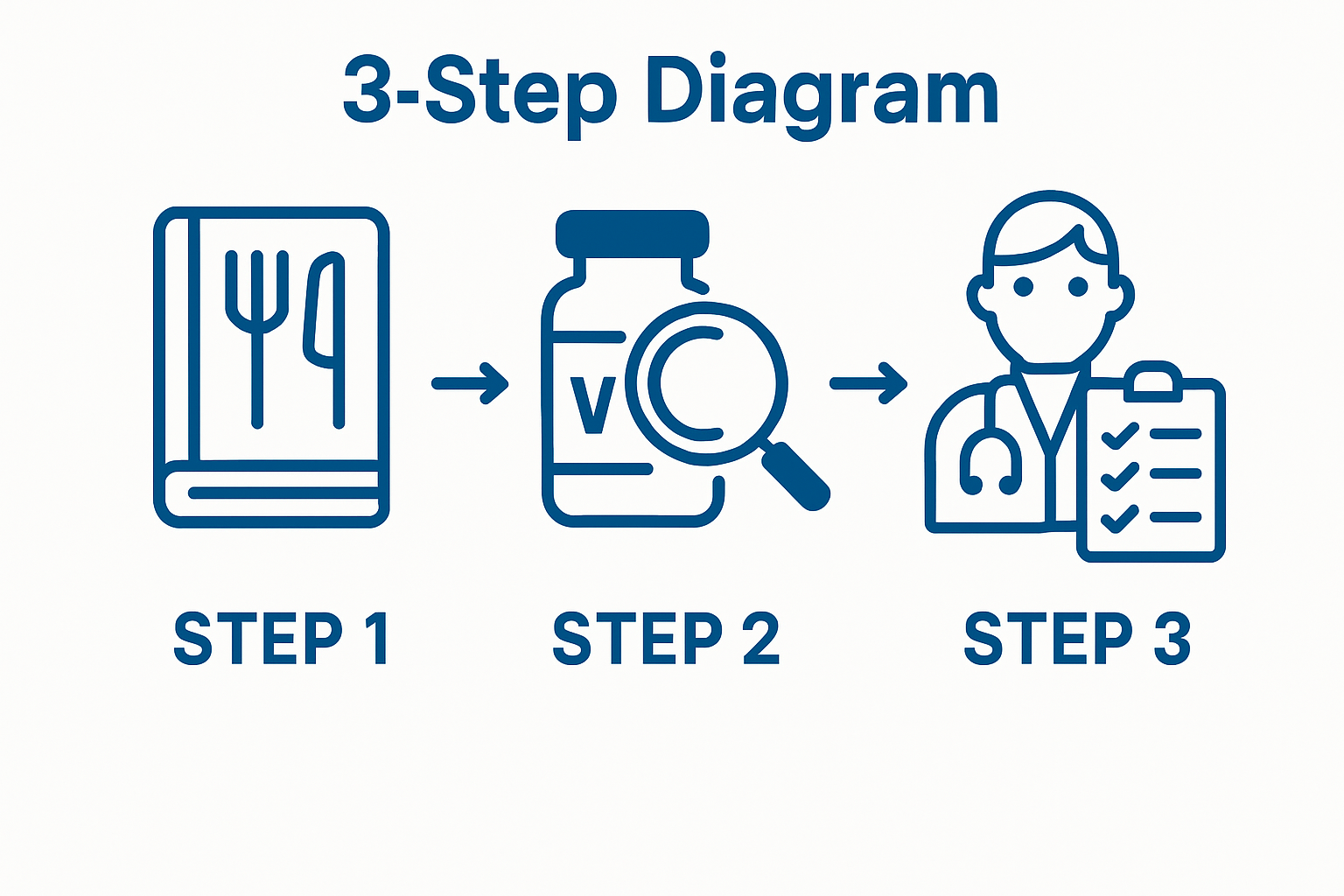
- Step 1: Evaluate Your Dietary Habits And Needs
- Step 2: Research Key Vitamins And Their Benefits
- Step 3: Consult With A Healthcare Professional
- Step 4: Select The Right Vitamins For Your Goals
- Step 5: Monitor Your Health And Adjust As Necessary
Quick Summary
| Key Point | Explanation |
|---|---|
| 1. Document Your Dietary Habits | Track your food intake for a week to identify nutrient gaps and dietary patterns. |
| 2. Research Vitamins and Their Roles | Understand specific vitamin benefits and daily requirements to tailor your supplementation. |
| 3. Consult a Healthcare Professional | Share your dietary assessment and health goals to receive personalized recommendations. |
| 4. Select Vitamins for Your Goals | Choose specific vitamins that align with your wellness objectives and unique health needs. |
| 5. Monitor Health and Adjust | Keep track of health changes and consult regularly to adapt your vitamin regimen as needed. |
Step 1: Evaluate Your Dietary Habits and Needs
Understanding your personal nutritional landscape is the critical first step in determining which vitamins your body genuinely needs. This foundational evaluation helps you move beyond generic supplement recommendations and create a personalized nutrition strategy tailored specifically to your unique physiological requirements.
Comprehensive Dietary Assessment
Begin by conducting an honest and thorough examination of your current eating patterns. Track everything you consume for a full week, noting not just what you eat, but the nutritional quality and diversity of your diet. Pay close attention to potential nutrient gaps that might develop from restricted diets, such as vegetarian, vegan, or low-calorie meal plans.
A comprehensive dietary review involves more than simply counting calories. You need to analyze the nutrient density of your meals, identifying potential deficiencies that could signal a need for targeted vitamin supplementation. For instance, individuals following plant-based diets might discover they require additional vitamin B12, while those with limited sun exposure could benefit from vitamin D supplementation.
Lifestyle and Health Factors
Your personal health profile plays a significant role in vitamin requirements. Consider factors like age, gender, activity level, stress conditions, and any existing medical conditions. Athletes and highly active individuals often have different nutritional needs compared to sedentary people. Hormonal changes, pregnancy, chronic stress, and specific health conditions can dramatically influence your vitamin and mineral requirements.
To effectively evaluate your needs, consider consulting with a registered dietitian or using advanced health tracking tools that can provide in-depth nutritional insights. Nutritional assessment research suggests that personalized nutrition strategies can significantly improve overall health outcomes.
Successful completion of this step means you have:
- Documented a week-long food diary with detailed nutritional observations
- Identified potential nutrient gaps in your current diet
- Recognized lifestyle factors that might influence your vitamin needs
- Prepared a preliminary understanding of your unique nutritional profile
Remember, this initial assessment is not about perfection but about gaining meaningful insights into your body’s specific nutritional requirements. By taking this methodical approach, you’re setting the stage for a targeted, science-backed vitamin supplementation strategy that supports your individual health goals.
Below is a checklist table that helps ensure you
‘thoroughly completed Step 1: Evaluate Your Dietary Habits and Needs.
| Checklist Item | Description | Status |
|---|---|---|
| Food Diary Completed | Documented all meals and snacks for a full week | [ ] |
| Nutritional Observations Recorded | Noted nutritional quality and diet diversity | [ ] |
| Identified Nutrient Gaps | Assessed for likely deficiencies from current eating patterns | [ ] |
| Assessed Lifestyle Factors | Considered activity, age, stress, and medical conditions | [ ] |
| Preliminary Health Profile Prepared | Summarized findings to understand unique nutrition needs | [ ] |
Step 2: Research Key Vitamins and Their Benefits
Diving deep into vitamin research transforms your understanding from passive consumer to informed health strategist. This critical step moves you beyond surface-level supplement knowledge, helping you comprehend how specific vitamins interact with your body’s unique biochemical processes.
Understanding Vitamin Fundamentals
Start by recognizing that vitamins are not one-size-fits-all miracle compounds, but precise nutritional tools with targeted functions. Water-soluble vitamins like B and C require daily replenishment, while fat-soluble vitamins A, D, E, and K can be stored in body tissues. This fundamental distinction means your supplementation strategy must account for how different vitamins are absorbed and utilized.
Your research should focus on understanding each vitamin’s specific role. Vitamin D supports bone health and immune function. B-complex vitamins are crucial for energy metabolism and neurological processes. Vitamin C plays a pivotal role in immune support and collagen production. By mapping these functions, you can start connecting potential deficiencies to your observed health patterns.
Strategic Information Gathering
Navigate your vitamin research using reputable scientific sources. Academic nutrition resources provide evidence-based information about vitamin interactions, recommended dosages, and potential health implications. Government health websites like the National Institutes of Health offer comprehensive vitamin fact sheets that break down complex nutritional science into digestible information.
Critical research areas include understanding:
- Recommended daily allowances for each vitamin
- Potential symptoms of deficiency
- Optimal food sources
- Interactions with medications
- Potential side effects of overconsumption
Successful completion of this research phase means you have transformed abstract vitamin information into a personalized knowledge framework. You should feel confident discussing vitamin functions, recognizing potential deficiency signs, and understanding how these micronutrients contribute to overall health.
Remember, vitamin research is not about memorizing endless facts, but developing a nuanced understanding of how these essential compounds support your body’s complex systems. Your goal is to become a discerning, informed consumer who makes supplement choices based on scientific evidence and personal health needs.
The following table offers a quick reference for key vitamins, their primary roles, and typical deficiency signs, supporting readers during Step 2: Research Key Vitamins and Their Benefits.
| Vitamin | Key Function | Common Deficiency Signs |
|---|---|---|
| Vitamin D | Bone health, immune support | Fatigue, bone pain, frequent illness |
| B-Complex (e.g., B12) | Energy metabolism, nervous system | Weakness, numbness, memory issues |
| Vitamin C | Immune support, collagen synthesis | Frequent infections, slow wound healing |
| Vitamin A | Vision, cell growth | Night blindness, dry skin |
| Vitamin E | Antioxidant, cell protection | Nerve and muscle damage |
| Vitamin K | Blood clotting, bone health | Easy bruising, excessive bleeding |
Step 3: Consult with a Healthcare Professional
Transitioning from independent research to professional medical guidance represents a crucial pivot in your vitamin optimization journey. A healthcare professional transforms your preliminary insights into a scientifically validated, personalized nutrition strategy that considers your entire health ecosystem.
Preparing for Your Healthcare Consultation
Before scheduling an appointment, compile a comprehensive health portfolio that will enable your healthcare provider to deliver the most accurate recommendations. This documentation should include your detailed food diary from the initial dietary assessment, a comprehensive list of current medications, any existing health conditions, and your specific wellness goals. Think of this preparation as creating a roadmap that guides your healthcare professional toward understanding your unique nutritional landscape.
When selecting a healthcare professional, consider practitioners with specialized nutrition expertise. Registered dietitians, functional medicine doctors, and integrative healthcare providers often have more nuanced understanding of vitamin supplementation compared to generalist practitioners. Your goal is to find a professional who views vitamins not as isolated supplements, but as integrated components of your overall health strategy.
Maximizing Your Professional Consultation
During your consultation, approach the conversation as a collaborative partnership. Healthcare guidance research emphasizes the importance of transparent communication. Be prepared to discuss:
- Your specific health concerns and wellness objectives
- Current diet and lifestyle patterns
- Any symptoms that might indicate potential nutrient deficiencies
- Family medical history
- Current stress levels and sleep patterns
A thorough healthcare professional might recommend comprehensive blood tests to definitively identify any vitamin deficiencies. These tests provide objective data about your current nutritional status, moving beyond speculation into precise, measurable insights.
Successful completion of this step means you have transformed your vitamin research into a targeted, professional-endorsed plan. You should leave the consultation with clear recommendations, potential supplement suggestions, and a deeper understanding of how vitamins specifically interact with your individual health profile.
Remember, consulting a healthcare professional is not about receiving a universal prescription, but about developing a dynamic, personalized approach to nutritional wellness that adapts to your changing health needs.
Step 4: Select the Right Vitamins for Your Goals
Selecting the right vitamins transforms nutritional supplementation from a generic approach to a precise, targeted strategy aligned with your specific health objectives. This step is about matching your unique physiological needs with the most appropriate nutritional support, moving beyond random supplement selection.
Aligning Vitamins with Personal Health Objectives
Your vitamin selection process should be a thoughtful, intentional journey that considers multiple dimensions of your health profile. Instead of pursuing a one-size-fits-all approach, focus on vitamins that directly support your individual wellness goals. For athletes, this might mean prioritizing vitamins that enhance muscle recovery and energy metabolism. For individuals managing stress, B-complex vitamins and adaptogenic nutrients might take center stage.
Consider your body’s current state and future aspirations. Are you looking to boost immune function, improve skin health, support mental clarity, or enhance athletic performance? Each goal requires a nuanced vitamin strategy. For instance, individuals seeking improved cognitive function might prioritize omega-3s and B-vitamins, while those focused on bone health would emphasize vitamin D and calcium-supporting nutrients.
Strategic Vitamin Selection Process
Navigate your vitamin selection by cross-referencing your healthcare professional’s recommendations with your personal health assessment. Purity, bioavailability, and third-party testing are critical factors in choosing high-quality supplements. Not all vitamins are created equal, and the source and manufacturing process significantly impact their effectiveness.
Key considerations for vitamin selection include:
- Compatibility with your current medications
- Potential interactions with existing health conditions
- Your body’s absorption capabilities
- Recommended dosage based on age and health status
- Potential side effects or contraindications
Nutritional research underscores the importance of personalized supplementation, emphasizing that vitamin effectiveness is not universal but deeply individual.
Successful completion of this step means you have a carefully curated selection of vitamins that serve as precise nutritional tools. You should feel confident that each supplement in your regimen has a clear, scientifically validated purpose aligned with your specific health goals.

Remember, vitamin selection is an ongoing process. Your nutritional needs will evolve with changes in age, lifestyle, and health status. Approach this step as the beginning of a dynamic, responsive approach to personal nutrition.
Step 5: Monitor Your Health and Adjust as Necessary
Vitamin supplementation is not a static process but a dynamic journey of continuous assessment and refinement. This final step transforms your approach from passive consumption to active health management, ensuring your nutritional strategy remains precisely aligned with your evolving physiological needs.
Establishing a Comprehensive Tracking System
Creating a robust health monitoring framework requires more than occasional check-ins. Develop a systematic approach to tracking your physical and mental well-being after initiating your vitamin regimen. This means maintaining a detailed health journal that documents not just supplement intake, but comprehensive observations about your energy levels, mood, sleep quality, physical performance, and any subtle changes in your overall health landscape.
Utilize digital health tracking tools and apps that can help you log symptoms, track supplement intake, and generate visual representations of your health trends. These technologies enable you to identify patterns and correlations that might not be immediately apparent through casual observation. Pay special attention to how your body responds in the weeks and months following the introduction of new vitamins.
Periodic Professional Reassessment
Schedule regular follow-up consultations with your healthcare provider to conduct comprehensive health evaluations. These check-ins are crucial for validating the effectiveness of your vitamin supplementation strategy and making data-driven adjustments. Nutritional research emphasizes that individual nutritional needs are not static but continuously evolve with changes in age, lifestyle, and overall health status.
Key indicators that might signal the need for vitamin regimen adjustments include:
- Persistent fatigue or unexpected energy fluctuations
- Changes in sleep patterns
- Mood or cognitive function variations
- Physical performance shifts
- Emerging health conditions or lifestyle transitions
Be prepared to modify your vitamin strategy based on objective medical insights. This might involve increasing or decreasing dosages, introducing new supplements, or eliminating those that no longer serve your health objectives. Your approach should remain flexible and responsive to your body’s changing requirements.
Successful completion of this step means developing a proactive, self-aware approach to nutritional supplementation. You should feel empowered to make informed decisions about your vitamin intake, backed by consistent monitoring and professional guidance.
Remember, your health is a complex, dynamic system. Vitamin supplementation is not about achieving a perfect, unchanging state, but about maintaining a responsive, adaptive approach to your nutritional wellness.
Take the Guesswork Out of Vitamin Selection with Menalam
If you have ever felt overwhelmed trying to match your unique health needs to the right vitamins, you are not alone. The article highlights how understanding your nutritional gaps, analyzing your lifestyle, and keeping up with ongoing adjustments can become complex and time consuming. Your health goals deserve more than a one-size-fits-all approach. Feeling confident that each supplement is chosen based on science and tailored for you is within reach.
Menalam takes the uncertainty out of your journey. With our personalized supplement recommendations, you can transform your food diary and health insights into an AI-driven supplement plan that adjusts as your needs change. Discover what your body truly needs and track your progress in our user-friendly mobile app. Experience the future of targeted nutrition today. Take your first step now at Menalam and let data-backed guidance unlock better health for you.
Frequently Asked Questions
How can I evaluate my current dietary habits to determine my vitamin needs?
To evaluate your dietary habits, track everything you consume for a week, noting the nutritional quality and diversity of your diet. Identify any potential nutrient gaps that could indicate the need for supplementation, particularly if you follow a restricted diet.
What factors should I consider when researching specific vitamins?
When researching vitamins, focus on their specific roles, recommended daily allowances, potential deficiency symptoms, optimal food sources, and any interactions with medications. This will help you understand how each vitamin contributes to your health.
Why is it important to consult with a healthcare professional about vitamin supplementation?
Consulting with a healthcare professional ensures you receive personalized recommendations tailored to your unique health profile, including considerations for existing health conditions, medications, and specific wellness goals. This professional guidance enhances the effectiveness of your vitamin strategy.
How can I monitor my health after starting a vitamin regimen?
Monitor your health by maintaining a detailed journal that tracks your supplement intake alongside observations about your energy levels, mood, sleep quality, and overall well-being. Regular follow-ups with your healthcare provider can help you assess the effectiveness of your vitamin supplementation and make necessary adjustments.
Leave a Reply