

Every bite you take adds to your daily caloric intake and that single number has more impact than you might think. Most people get caught up counting calories without realizing fats have over double the calories per gram compared to protein or carbs—9 versus 4. A surprising twist is not all calories actually work the same inside your body so where your energy comes from matters just as much as how much you eat.
Table of Contents
- What Is Caloric Intake And Why It Matters
- The Science Behind Calories: Energy Balance Explained
- How Calories Affect Metabolism And Weight Management
- Understanding Macronutrients And Their Caloric Value
- Practical Implications Of Caloric Intake In Daily Life
Quick Summary
| Takeaway | Explanation |
|---|---|
| Understand your caloric needs | Your caloric intake must align with factors like age, activity level, and health goals for optimal health. |
| Balance calorie intake and expenditure | Achieve weight stability by matching calories consumed with calories burned through metabolism and activity. |
| Focus on nutrient-dense foods | Choose whole foods to maximize nutrition, support energy levels, and promote long-term wellness. |
| Monitor portion sizes and hunger cues | Practice portion control and listen to your body’s hunger signals to manage caloric intake effectively. |
| Maintain muscle mass for metabolism | Higher muscle mass boosts metabolism, making calorie management easier and supporting overall health. |
What is Caloric Intake and Why It Matters
Caloric intake represents the total amount of energy consumed through food and beverages, measured in calories. Understanding caloric intake is fundamental to achieving optimal nutrition and maintaining overall health. Every time you eat or drink something, you are supplying your body with energy units that fuel essential bodily functions and physical activities.
The Science Behind Calories
Calories are scientific measurements of energy. When you consume food, your body breaks down nutrients and converts them into usable energy. Different macronutrients provide varying caloric values: proteins and carbohydrates offer 4 calories per gram, while fats provide 9 calories per gram. According to research from the National Institutes of Health, understanding these energy units is crucial for maintaining metabolic health and preventing nutritional imbalances.
Why Caloric Intake Matters
Proper caloric intake is essential for multiple reasons:
- Maintaining a healthy body weight
- Supporting metabolic functions
- Providing energy for daily activities
- Ensuring optimal nutrition and wellness
Your individual caloric needs depend on several factors, including age, gender, weight, height, activity level, and overall health goals. Some individuals might require more calories to support high-intensity physical activities, while others might need fewer calories to maintain their current weight.
Tracking and understanding your caloric intake helps you make informed nutritional choices, balance energy consumption, and support your body’s unique requirements. By developing awareness of the energy you consume, you can create personalized nutrition strategies that promote long-term health and wellness.
The Science Behind Calories: Energy Balance Explained
Energy balance represents the intricate relationship between calories consumed and calories expended by the human body. This complex physiological mechanism determines how our bodies maintain, gain, or lose weight. Understanding this scientific concept is crucial for developing effective nutrition and fitness strategies.
Caloric Input and Metabolic Processes
When you consume food, your body initiates a sophisticated metabolic process to transform nutrients into usable energy. Different macronutrients are processed uniquely: proteins and carbohydrates are broken down more quickly, while fats require more complex metabolic pathways. According to research from the National Institute of Diabetes and Digestive and Kidney Diseases, your basal metabolic rate plays a significant role in determining how efficiently your body uses these calories.
The Energy Balance Equation
The fundamental principle of energy balance can be simplified into a straightforward equation:
- Calories In: Total energy consumed through food and beverages
- Calories Out: Total energy expended through metabolic functions and physical activity
- Result: Weight maintenance, gain, or loss
When calorie intake exactly matches calorie expenditure, your weight remains stable. A surplus of calories leads to weight gain, while a calorie deficit results in weight loss. This principle applies universally, though individual metabolic variations can make the process more nuanced.
Understanding energy balance empowers individuals to make informed nutritional choices. By recognizing how different factors like metabolism, physical activity, and dietary composition influence caloric expenditure, you can develop personalized strategies for achieving your health and fitness goals.
How Calories Affect Metabolism and Weight Management
Metabolism represents the complex biochemical process through which your body converts food and drinks into energy. This intricate system determines how efficiently your body uses calories, directly influencing weight management and overall health. Understanding the relationship between calories and metabolism provides crucial insights into maintaining a healthy body composition.
Metabolic Rate and Calorie Processing
Your basal metabolic rate (BMR) determines the number of calories your body burns while at rest. This foundational metabolic process accounts for approximately 60-75% of daily energy expenditure. According to research from the Mayo Clinic, several factors influence metabolic rate:
- Body composition
- Age
- Genetic predisposition
- Muscle mass
- Hormonal balance
The Calorie-Metabolism Connection
Calories serve as the primary fuel for metabolic processes. When you consume food, your body breaks down nutrients and converts them into energy. Excess calories not immediately used are stored as fat, creating potential weight management challenges. The efficiency of this process varies among individuals, explaining why some people seem to burn calories more quickly than others.
Individuals with higher muscle mass typically experience a faster metabolism, as muscle tissue requires more energy to maintain compared to fat tissue. This understanding highlights the importance of maintaining muscle mass through proper nutrition and regular physical activity. By comprehending how calories interact with your metabolic system, you can develop more effective strategies for managing weight and supporting overall health.
Understanding Macronutrients and Their Caloric Value
Macronutrients are essential nutritional components that provide energy and support critical bodily functions. Consisting of carbohydrates, proteins, and fats, these nutrients play a fundamental role in determining your overall caloric intake and metabolic performance. Understanding their unique characteristics helps create balanced nutritional strategies.
Caloric Composition of Macronutrients
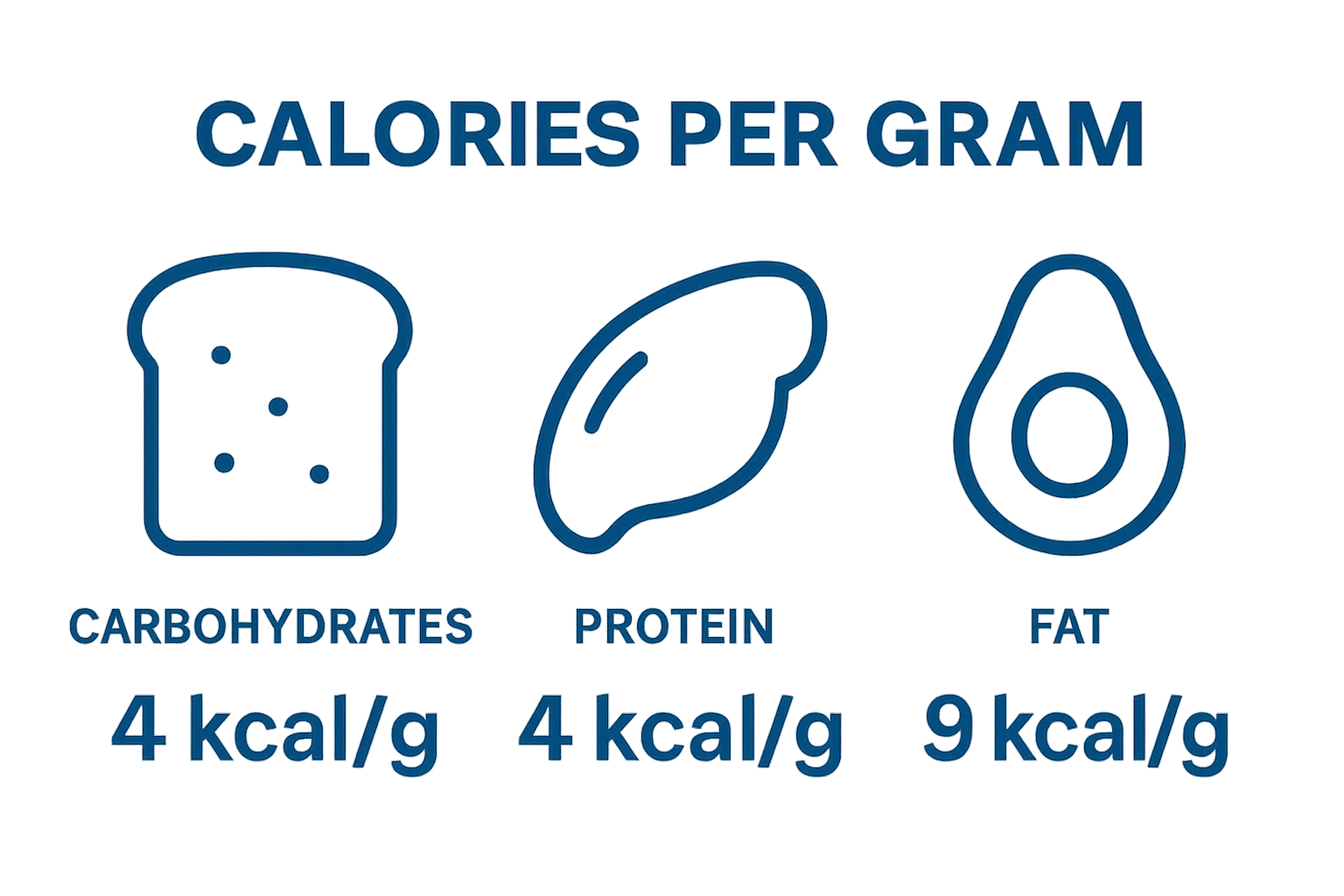
Each macronutrient provides a specific amount of energy per gram. According to clinical research published in Nutrition in Clinical Practice, the standard caloric values are:
- Carbohydrates: 4 calories per gram
- Proteins: 4 calories per gram
- Fats: 9 calories per gram
This variation in caloric density explains why fatty foods are more energy-concentrated compared to protein or carbohydrate-rich foods. The higher calorie content of fats does not necessarily make them less healthy, as they serve crucial functions in hormone production, nutrient absorption, and cellular maintenance.
Nutritional Roles and Energy Contribution
Each macronutrient contributes uniquely to your body’s energy systems and physiological processes. Carbohydrates provide quick energy and fuel brain function. Proteins support muscle repair, immune response, and enzyme production. Fats offer concentrated energy storage, insulation, and serve as carriers for fat-soluble vitamins.
By understanding the caloric values and functional roles of macronutrients, you can design more effective nutrition plans tailored to your specific health and fitness goals. Balancing these nutrients ensures optimal energy metabolism, supports bodily functions, and promotes overall wellness.
To help clarify the different caloric values and primary functions of each macronutrient, the table below summarizes their contributions to your diet.
| Macronutrient | Calories per Gram | Primary Functions |
|---|---|---|
| Carbohydrates | 4 | Quick energy, fuel brain function |
| Proteins | 4 | Muscle repair, immune support, enzyme production |
| Fats | 9 | Concentrated energy, hormone and vitamin transport |
Practical Implications of Caloric Intake in Daily Life
Caloric intake is not just an abstract nutritional concept but a practical consideration that impacts everyday health, energy levels, and overall wellness. Understanding how calories interact with your lifestyle can transform your approach to nutrition and personal health management.
Making Informed Dietary Choices
Everyday food choices directly influence your caloric balance. Not all calories are created equal, meaning the source of your calories matters as much as the quantity. According to research from Harvard T.H. Chan School of Public Health, focusing on nutrient-dense foods provides more sustainable energy and supports long-term health goals.
Consider these strategic approaches to managing daily caloric intake:
- Choose whole foods over processed options
- Prioritize balanced meals with diverse nutrients
- Practice portion control
- Monitor hunger and fullness cues
Energy Levels and Performance
Your daily caloric intake significantly impacts personal energy and cognitive performance. Insufficient calories can lead to fatigue, reduced concentration, and decreased metabolic efficiency. Conversely, excessive calorie consumption can cause sluggishness and potential weight management challenges.

By understanding your body’s unique caloric needs and maintaining a balanced approach to nutrition, you can optimize daily energy levels, support physical and mental performance, and create a foundation for sustained health and wellness. Listening to your body and making mindful dietary choices transforms caloric intake from a numerical concept into a powerful tool for personal well-being.
Personalize Your Caloric Balance with Menalam’s Smart Nutrition Tools
Feeling overwhelmed by tracking calories or unsure how much energy you really need? The article highlights just how crucial it is to balance your caloric intake with your unique lifestyle and metabolic needs. Yet, many people struggle to turn nutrition knowledge into concrete daily actions. Confusion about calorie quality, proper macronutrient balance, and evolving health goals can hold you back from achieving real results. Imagine having a science-backed, personalized plan that actually adapts to your progress.

Ready to experience truly personalized nutrition? Get started by taking Menalam’s quick health quiz and unlock tailored supplement recommendations built around your caloric and nutritional goals. You’ll benefit from AI-driven insights, smart reminders, and ongoing adjustments as your needs change. Visit Menalam’s homepage now to turn the key concepts from this article into actionable steps for your well-being. Take charge of your caloric intake with technology designed to keep you informed and empowered—your health journey starts today.
Frequently Asked Questions
What is caloric intake?
Caloric intake is the total amount of energy consumed through food and beverages, measured in calories. It is essential for fueling bodily functions and maintaining overall health.
Why is understanding caloric intake important for nutrition?
Understanding caloric intake is crucial for maintaining a healthy body weight, supporting metabolic functions, providing energy for daily activities, and ensuring optimal nutrition and wellness.
How can I track my caloric intake effectively?
Tracking caloric intake can be done using food diaries, mobile apps, or nutrition tracking websites. It’s important to monitor not just the quantity of calories, but also the quality of the food you consume.
What role do macronutrients play in caloric intake?
Macronutrients—carbohydrates, proteins, and fats—contribute different calorie amounts per gram. Carbohydrates and proteins provide 4 calories per gram, while fats provide 9 calories per gram, impacting overall nutrition and energy balance.
Leave a Reply