

Food labels are everywhere and almost every packaged product in the grocery store comes with that familiar Nutrition Facts box. Yet what most people do is glance at calories and call it a day. Here is the true shocker. A single bag of chips labeled as 150 calories may actually contain three servings, adding up to 450 calories if you eat the whole thing. This flips everything you think you know about healthy choices and shows why learning to read nutritional information properly could change your health more than any diet ever could.
Table of Contents
- Understanding Key Nutritional Label Basics
- Decoding Serving Sizes and Daily Values
- Spotting Hidden Ingredients and Additives
- Applying Nutritional Information to Your Health Goals
Quick Summary
| Takeaway | Explanation |
|---|---|
| Understand serving sizes accurately | Serving sizes dictate all nutritional calculations; ignore them and risk miscalculating calorie intake. |
| Focus on Percent Daily Value (%DV) | Use %DV percentages to gauge if a nutrient is low or high, helping with healthier choices. |
| Read ingredients lists carefully | Ingredients are listed by weight; first ingredients are most prominent and can reveal hidden sugars or additives. |
| Tailor nutrition to personal health goals | Align nutritional choices with specific health objectives for better dietary outcomes, such as managing diabetes. |
| Use technology for labeling | Apps can simplify reading and tracking nutritional information, making healthy choices easier. |
Understanding Key Nutritional Label Basics
Reading nutritional information is a critical skill for making informed dietary choices. The Nutrition Facts label serves as a comprehensive guide to understanding what you’re consuming, providing crucial details about the nutritional content of packaged foods. The FDA provides essential guidance on interpreting these labels effectively.
Decoding Serving Size and Calories
Serving size is the foundation of understanding nutritional labels. This critical piece of information determines all subsequent nutritional calculations. Many people mistakenly overlook the serving size, which can lead to significant misunderstandings about calorie and nutrient intake. For instance, a package might seem low in calories, but that could be because the serving size is much smaller than you might typically consume.
Calorie information provides insight into the energy content of food. However, not all calories are created equal. Some foods offer more nutritional value per calorie than others. Nutritional experts recommend looking beyond just the calorie number and considering the overall nutritional profile of the food.
Understanding Nutrient Breakdown
The nutrient breakdown is where the real nutritional detective work happens. Key elements to focus on include:
- Total Fat: Breaks down into saturated, unsaturated, and trans fats
- Sodium: Critical for understanding potential health impacts
- Total Carbohydrates: Includes dietary fiber and sugars
- Protein: Essential for muscle maintenance and overall health
The Percent Daily Value (%DV) is a game-changer in nutritional understanding. This percentage tells you how much a nutrient contributes to a total daily diet. A %DV of 5% is considered low, while 20% or more is considered high. This allows you to quickly assess whether a food is nutritionally dense or potentially problematic.
Reading nutritional labels is more than just number-crunching. It’s about understanding how different nutrients impact your body. Sodium levels, for example, can be particularly tricky. What seems like a moderate amount might actually be pushing you close to daily recommended limits. Similarly, added sugars can hide in seemingly healthy foods, making label reading a crucial skill for maintaining a balanced diet.
Pro tip: Always compare similar products. Two seemingly identical items can have dramatically different nutritional profiles. Take time to read labels carefully, looking beyond the front-of-package marketing claims. The Nutrition Facts label provides the most reliable information about what you’re actually consuming.
Understanding nutritional labels empowers you to make informed dietary choices. It’s not about perfection but about making more conscious decisions about the foods you eat. With practice, reading nutritional information becomes second nature, allowing you to take control of your nutritional intake and support your overall health goals.
Decoding Serving Sizes and Daily Values
Serving sizes and daily values are crucial components of nutritional labeling that often confuse consumers. The FDA explains that understanding these elements is key to making informed dietary choices and managing nutritional intake effectively.
Understanding Serving Sizes
Serving sizes are more than just a number on a label. They represent a standardized amount of food that serves as the basis for all nutritional information. The Academy of Nutrition and Dietetics highlights that many people misinterpret serving sizes, leading to significant miscalculations in their nutritional intake.
Consider a seemingly innocent snack package. The nutritional information might look reasonable until you realize the package contains multiple servings. For example, a small bag of chips might list 150 calories per serving, but contain two or three servings. This means consuming the entire package could result in 300-450 calories instead of the 150 you initially assumed.
Deciphering Percent Daily Values
Percent Daily Value (%DV) is a powerful tool for understanding nutritional content. MD Anderson Cancer Center explains that these percentages are based on a 2,000-calorie daily diet and provide a quick snapshot of a food’s nutritional contribution.
Here’s a simple guide to interpreting %DV:
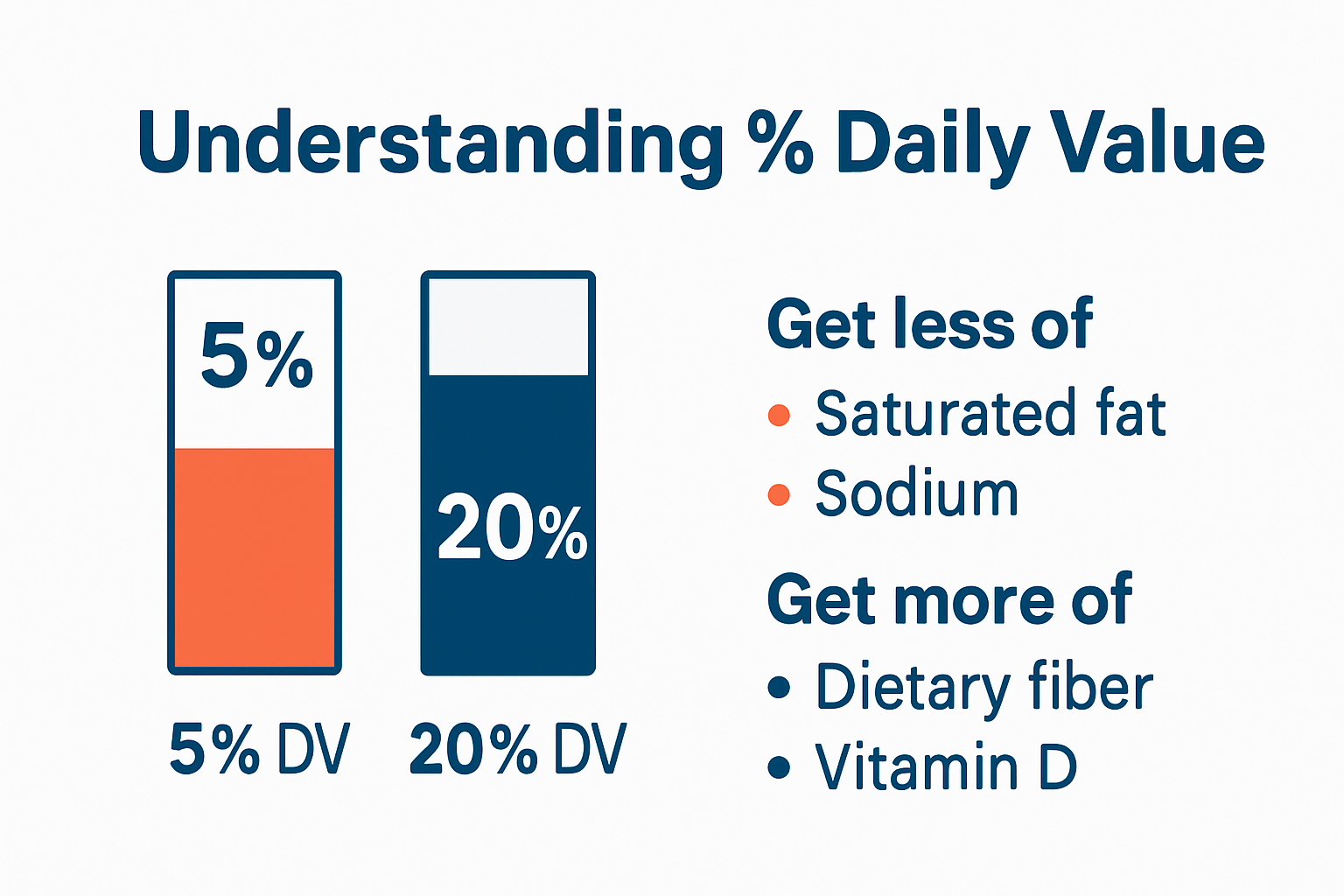
To help you quickly interpret the meaning of Percent Daily Value (%DV) on nutrition labels, here’s a simple guide you can refer to when evaluating whether a nutrient amount is low, moderate, or high:
| %DV | What It Means | Suggestion |
|---|---|---|
| 5% DV or less | Low | Good choice if you want less of this nutrient |
| 6–19% DV | Moderate | Be mindful depending on your health goals |
| 20% DV or more | High | Choose for nutrients you need more of (e.g., fiber); limit for nutrients to minimize (e.g., sodium, saturated fat) |
- 5% DV or Less: Considered low in that nutrient
- 20% DV or More: Considered high in that nutrient
This system allows quick nutritional assessment. For instance, if a food item shows 25% DV for sodium, it means that single serving provides a quarter of your recommended daily sodium intake. This is particularly crucial for individuals managing health conditions like high blood pressure or heart disease.
Not all nutrients are created equal. Some, like fiber and vitamin D, are often under-consumed and you might want to choose foods with higher %DV. Conversely, nutrients like added sugars and saturated fats are best kept to a minimum.
A practical approach is to balance your daily intake. If breakfast contains a food high in sodium, you might choose lower sodium options for lunch and dinner. The goal is not perfection but mindful eating and overall nutritional balance.
Pro tip: Always check serving sizes and compare them across similar products. Manufacturers can manipulate serving sizes to make nutritional content appear more appealing. A product might seem healthy until you realize the serving size is unrealistically small.
Mastering serving sizes and daily values transforms nutritional labels from confusing text to a powerful tool for health management. It empowers you to make informed choices, understand your nutritional intake, and ultimately support your personal health goals.
Spotting Hidden Ingredients and Additives
Ingredient lists are a complex landscape of nutritional information that can easily mislead consumers. Harvard T.H. Chan School of Public Health reveals that understanding these lists requires careful attention and strategic reading.
Decoding Ingredient Order and Quantities
Ingredients are listed in descending order by weight, meaning the first few items represent the majority of the product’s composition. This hierarchy provides critical insights into the actual nutritional makeup of foods. Manufacturers often strategically use this order to create an illusion of healthiness while hiding less desirable components.
For example, a seemingly healthy breakfast cereal might list whole grains first, but subsequent ingredients could include multiple types of sugar or artificial additives. By understanding this order, consumers can make more informed choices about the true nutritional value of their food.
Recognizing Sugar and Additive Aliases
The FDA guidelines highlight the complexity of ingredient naming conventions. Sugar, in particular, can appear under numerous disguises. Common aliases include:
- Corn syrup
- Evaporated cane juice
- Agave nectar
- High-fructose corn syrup
- Maltodextrin
- Dextrose
Similarly, preservatives and additives often have scientific names that can confuse consumers. Terms like “natural flavors” can be particularly misleading. These seemingly innocuous words can mask a complex mixture of chemical compounds that might not align with a consumer’s health goals.
It’s easy to overlook hidden sugars and additives in processed foods. The table below summarizes some common aliases for sugar and additives you might find in ingredient lists, as well as what to watch out for:
| Ingredient Alias | Ingredient Type | What to Know/Watch Out For |
|---|---|---|
| Corn syrup | Sugar | Hidden sugar, spikes blood glucose |
| Evaporated cane juice | Sugar | Alternate name for sugar |
| Agave nectar | Sugar | Perceived as healthy, still added sugar |
| High-fructose corn syrup | Sugar | Associated with processed foods |
| Maltodextrin | Additive | Increases shelf life, can raise blood sugar |
| Dextrose | Sugar/Additive | Simple sugar, found in various foods |
| Sodium benzoate | Preservative | Preserves freshness, may raise sensitivity |
| Potassium sorbate | Preservative | Common in long shelf-life foods |
| Artificial colorings | Additive | May affect sensitive individuals |
Preservatives serve an important function in extending food shelf life, but some have been linked to potential health concerns. Ingredients like sodium benzoate, potassium sorbate, and artificial colorings might raise red flags for health-conscious individuals.
Pro tip: Develop a personal database of ingredient names you want to avoid. Use smartphone apps or carry a small reference guide to help decode complex ingredient lists while shopping. This proactive approach transforms label reading from a chore into an empowering health strategy.
Understanding hidden ingredients is not about achieving absolute perfection but about making progressively better nutritional choices. Each informed decision contributes to a healthier overall diet. By becoming a skilled label detective, you can navigate the complex world of food packaging and make choices that genuinely support your health and wellness goals.
Remember, knowledge is power. The more you understand about what goes into your food, the better equipped you are to make choices that align with your nutritional needs and personal health objectives.
Applying Nutritional Information to Your Health Goals
Transforming nutritional information from abstract numbers to actionable health strategies requires thoughtful understanding and personalized application. The Dietary Guidelines for Americans provide a foundational framework for translating nutritional knowledge into meaningful health improvements.
Personalized Nutritional Mapping
Every individual’s health journey is unique, making a one-size-fits-all approach ineffective. Nutrition.gov highlights the importance of aligning nutritional choices with specific personal health objectives. Whether you’re managing weight, addressing chronic conditions, or enhancing athletic performance, nutritional labels become powerful tools for targeted health optimization.
For instance, someone managing diabetes might prioritize tracking carbohydrate content and glycemic index. An athlete could focus on protein intake and complex carbohydrates, while someone with heart health concerns would pay closer attention to sodium and saturated fat levels.
Strategic Nutritional Planning
The NIH’s ‘Plan Your Plate’ guidance emphasizes creating balanced meal strategies that go beyond simple calorie counting. This approach involves:
- Macronutrient Balance: Ensuring appropriate proportions of proteins, carbohydrates, and healthy fats
- Micronutrient Diversity: Incorporating foods rich in essential vitamins and minerals
- Portion Control: Using nutritional information to manage serving sizes
Consider tracking your nutritional intake as a dynamic process. Your body’s needs change with age, activity level, and health status. What works today might require adjustment in six months. Regular reassessment helps maintain nutritional strategies that evolve with your health goals.
Practical application means translating label information into real-world choices. If a label shows high sodium content, consider alternative preparation methods or ingredient substitutions. When protein intake seems low, explore adding lean protein sources that complement your existing diet.
Technology can be an ally in this process. Many smartphone apps now allow users to scan nutritional labels, providing instant analysis and tracking. These tools can help translate complex nutritional information into easy-to-understand insights about your dietary patterns.
Remember that perfection isn’t the goal. Consistent, incremental improvements create lasting health benefits. Each mindful food choice represents a small investment in your long-term well-being. By understanding nutritional labels as personalized roadmaps rather than restrictive guidelines, you transform nutrition from a challenge into an empowering health strategy.

Ultimately, nutritional information is a powerful tool for self-understanding. It provides insights into how food directly impacts your energy, performance, and overall health. Approach label reading not as a chore, but as an opportunity to become more attuned to your body’s unique nutritional needs.
Frequently Asked Questions
What should I look for in serving sizes on nutritional labels?
Serving sizes dictate all nutritional information. Always check the serving size to ensure you understand how many servings are in a package and how that affects your total calorie and nutrient intake.
How can I effectively use Percent Daily Value (%DV) when reading labels?
Percent Daily Value (%DV) helps determine if a nutrient is low or high, allowing you to make healthier choices. A %DV of 5% or less indicates low, while 20% or more indicates high.
What are some common hidden sugars to watch for in ingredient lists?
Hidden sugars can appear under various names, such as corn syrup, high-fructose corn syrup, and evaporated cane juice. Familiarizing yourself with these aliases can help you avoid excessive sugar intake.
How can I use nutritional information to meet my personal health goals?
Tailor your nutritional choices to align with your specific health objectives. For instance, if managing diabetes, focus on tracking carbohydrate content. Regularly reassess and adapt your dietary strategies as your needs change.
Transform Food Label Insights Into Personalized Nutrition with Menalam
Struggling to make sense of serving sizes and hidden sugars on nutrition labels? You are not alone. Many people want to go beyond basic calorie counting but find it tough to translate food labels into real health gains. If you have ever felt uncertain about which nutrients matter most for your unique goals or worried about missing hidden additives, you deserve a solution that understands your individual needs.
Let Menalam turn your knowledge into real results. Jump from simply reading nutrition facts to actually living better every day. Take our quick health quiz at Menalam to discover science-backed supplement recommendations tailored to your health profile. Use your label-reading skills alongside Menalam’s personalized supplement plans and track progress easily with our mobile app. Take control of your nutrition journey today—make your next healthy move with Menalam’s expert support.
Leave a Reply