


Nutritional deficiencies are affecting more than you might think. Roughly 68 percent of the global population does not get enough essential nutrients, putting billions at risk for preventable health issues. Most people believe a balanced diet is enough, but that idea falls short in 2025, when even the most careful eaters can unknowingly face major nutrient gaps. Knowing how to spot these hidden dangers is the real secret to staying healthy this year.
Table of Contents
- Understanding Common Nutritional Deficiencies
- Personalized Nutrition Solutions For Your Needs
- Tracking Your Nutrition And Wellness Progress
- Choosing Science-Backed Supplements Wisely
Quick Summary
| Takeaway | Explanation |
|---|---|
| Understanding Nutritional Deficiencies | Approximately 68% of the global population has insufficient intake of essential nutrients, emphasizing the need for comprehensive nutritional assessments and personalized health strategies. |
| Personalized Nutrition Solutions | Integrating genetic profiling and metabolic analysis allows for tailored nutritional interventions that can effectively meet individual health needs and prevent deficiencies. |
| Importance of Tracking Progress | Utilizing advanced tracking technologies and social support can enhance accountability and motivation in maintaining dietary goals, enabling individuals to monitor their nutritional intake and health status effectively. |
| Choosing Quality Supplements | Selecting supplements should involve scrutiny of ingredient transparency and third-party testing to ensure safety, purity, and effectiveness, complementing a healthy diet rather than replacing it. |
Understanding Common Nutritional Deficiencies
Nutritional deficiencies remain a significant global health challenge affecting billions of individuals worldwide. Understanding the landscape of these deficiencies provides critical insights into preventing potential health complications and optimizing overall wellness.
Global Prevalence of Micronutrient Gaps
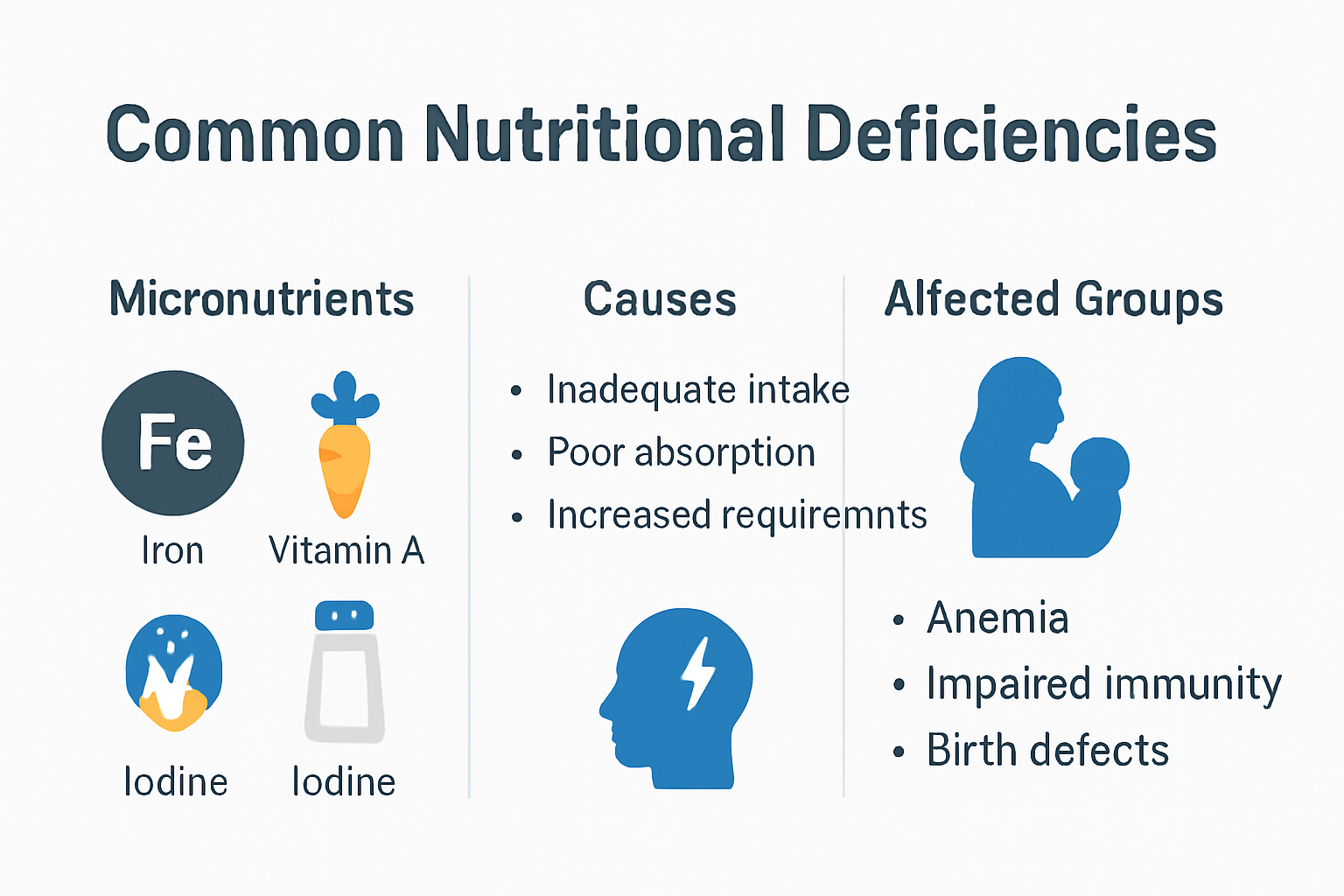
The scope of nutritional deficiencies is staggering. According to The Lancet Global Health, approximately 68% of the global population experiences insufficient intake of essential nutrients like iodine, vitamin E, and calcium. Research from PubMed reveals iron deficiency as the most prevalent micronutrient deficiency, impacting an estimated 2 billion people worldwide.
Understanding the root causes of these deficiencies involves examining complex interactions between dietary patterns, socioeconomic conditions, and individual metabolic differences. Some populations are more vulnerable due to limited access to diverse nutrition sources, specific dietary restrictions, or underlying health conditions that impair nutrient absorption.
Key Nutritional Deficiency Risk Factors
Multiple factors contribute to nutritional deficiencies. Our World in Data highlights that regions with cereal-based diets low in protein are particularly susceptible to micronutrient gaps. These dietary limitations can lead to compromised immune function and increased infection risks.
Critical risk factors include:
- Dietary Restrictions: Vegetarian, vegan, or restrictive eating patterns
- Metabolic Conditions: Digestive disorders affecting nutrient absorption
- Lifestyle Factors: High stress, limited physical activity
- Geographical Location: Limited access to nutritionally diverse food sources
Comprehensive Nutritional Assessment Strategies
Addressing nutritional deficiencies requires a proactive and personalized approach. Advanced diagnostic tools now enable individuals to conduct comprehensive nutritional assessments that identify specific micronutrient gaps. Blood tests, detailed dietary analysis, and advanced tracking technologies can provide unprecedented insights into an individual’s nutritional status.
Individuals seeking to prevent nutritional deficiencies should consider:
- Regular health screenings
- Consultation with nutrition professionals
- Targeted supplementation based on individual needs
- Continuous monitoring of nutritional intake and absorption
By understanding the complex landscape of nutritional deficiencies, individuals can make informed decisions about their diet, supplementation, and overall health strategy. Proactive management and personalized approaches are key to maintaining optimal nutritional balance in an increasingly complex health environment.
Personalized Nutrition Solutions for Your Needs
In an era of advanced health technology, personalized nutrition represents a groundbreaking approach to addressing individual nutritional needs with unprecedented precision. Moving beyond traditional one-size-fits-all dietary recommendations, modern nutrition strategies leverage cutting-edge scientific insights to create tailored solutions that optimize individual health outcomes.
The Science of Personalized Nutrition
The National Institutes of Health’s Nutrition for Precision Health program is pioneering algorithms designed to predict individual responses to dietary patterns. Research published in Frontiers in Nutrition reveals that genetic variations significantly influence nutrient metabolism, demonstrating the critical importance of personalized nutritional approaches.
Genetic profiling now allows for unprecedented insights into an individual’s unique nutritional requirements. These advanced diagnostic techniques can identify specific genetic markers that impact nutrient absorption, metabolism, and potential deficiency risks. By understanding an individual’s genetic blueprint, nutrition experts can develop highly targeted intervention strategies that address specific metabolic needs.
Customized Nutritional Intervention Strategies
Nutrients journal research highlights the transformative potential of integrating genetic insights into dietary recommendations. This approach enables the development of nutrition plans that go beyond generic guidelines, focusing instead on an individual’s specific physiological characteristics.
Key components of personalized nutrition solutions include:
- Comprehensive Genetic Analysis: Detailed genetic screening to identify potential nutritional vulnerabilities
- Metabolic Profiling: Advanced testing to understand individual nutrient processing capabilities
- Dynamic Health Tracking: Continuous monitoring of nutritional intake and metabolic responses
- Adaptive Recommendation Systems: Personalized nutrition plans that evolve with an individual’s changing health status
Technological Innovations in Nutritional Personalization

Cutting-edge technologies are revolutionizing how individuals approach nutritional health. Artificial intelligence and machine learning algorithms now analyze complex datasets, providing unprecedented insights into individual nutritional needs. These technologies can integrate multiple data points, including genetic information, blood tests, lifestyle factors, and personal health history to create highly precise nutritional recommendations.
Individuals can now access sophisticated nutrition tracking tools that provide real-time insights into their dietary patterns, nutrient absorption, and potential deficiency risks. These technologies enable proactive health management, allowing people to make informed decisions about their nutritional intake and overall wellness strategy.
The future of nutrition lies in this personalized, data-driven approach. By leveraging advanced scientific techniques and technological innovations, individuals can now develop nutrition strategies that are as unique as their genetic makeup, ultimately promoting optimal health and preventing potential nutritional deficiencies.
Tracking Your Nutrition and Wellness Progress
Effective nutrition and wellness management requires more than just understanding dietary needs. Tracking progress provides critical insights into personal health trajectories, enabling individuals to make informed decisions and adjust strategies for optimal wellness.
Advanced Tracking Technologies and Methodologies
The World Health Organization highlights the importance of systematic health monitoring. Modern tracking technologies have transformed how individuals approach nutritional assessment, offering unprecedented granularity in health data collection and analysis.
Digital platforms now integrate multiple data points, including nutrient intake, physical activity, metabolic markers, and genetic predispositions. These comprehensive tracking systems provide real-time feedback, allowing users to understand their health dynamics with remarkable precision. Sophisticated algorithms can detect subtle changes in nutritional patterns, metabolic responses, and overall wellness indicators.
Social Support and Accountability in Nutrition Tracking
Research published in the Journal of Medical Internet Research demonstrates that participation in online self-tracking groups significantly enhances dietary behavior change. Social accountability creates a supportive environment where individuals can share progress, challenges, and strategies for maintaining nutritional goals.
Key benefits of social tracking include:
- Motivation Enhancement: Shared experiences and peer support
- Accountability Mechanisms: Regular check-ins and progress sharing
- Knowledge Exchange: Learning from diverse personal health journeys
- Psychological Support: Reducing isolation in health management efforts
Strategic Goal Setting and Progress Monitoring
The National Institutes of Health recommends systematic approaches to tracking physical activity and nutrition. Strategic goal setting involves creating measurable, realistic objectives that can be consistently monitored and adjusted.
Effective tracking strategies include:
- Establishing baseline health metrics
- Setting specific, measurable nutritional goals
- Using digital tracking tools for consistent monitoring
- Regularly reviewing and adjusting health strategies
Advanced tracking platforms now offer personalized dashboards that visualize nutritional intake, metabolic responses, and progress toward specific health objectives. These tools transform raw health data into actionable insights, empowering individuals to take proactive control of their wellness journey.
The integration of artificial intelligence and machine learning technologies continues to revolutionize nutrition tracking. Future systems will likely provide even more sophisticated predictive analytics, allowing individuals to anticipate potential nutritional challenges and develop preemptive intervention strategies.
By embracing comprehensive tracking methodologies, individuals can move beyond reactive health management toward a more proactive, data-driven approach to nutrition and wellness. The key lies in consistent monitoring, adaptive strategies, and a holistic understanding of personal health dynamics.
Choosing Science-Backed Supplements Wisely
Navigating the complex world of dietary supplements requires a strategic and informed approach. With thousands of products flooding the market, selecting scientifically validated supplements becomes crucial for maintaining optimal health and avoiding potential risks.
Understanding Supplement Quality and Verification
Harvard Health emphasizes the critical importance of third-party testing when selecting dietary supplements. Organizations like the U.S. Pharmacopeia (USP) and NSF International provide independent verification of supplement ingredients, ensuring product safety and accuracy.
To help you evaluate supplement quality, here’s a table summarizing key verification criteria and their purposes:
| Quality Criteria | Purpose |
|---|---|
| Ingredient Transparency | Ensure all components are clearly listed |
| Purity Testing | Detect contaminants/adulterants |
| Potency Verification | Confirm stated concentrations |
| Manufacturing Standards | Verify compliance with GMP regulations |
Key quality verification criteria include:
- Ingredient Transparency: Clear labeling of all active and inactive components
- Purity Testing: Screening for contaminants and adulterants
- Potency Verification: Confirming the stated concentration of active ingredients
- Manufacturing Standards: Compliance with Good Manufacturing Practices (GMP)
Nutrient Intake and Recommended Dietary Allowances
Stanford Lifestyle Medicine highlights the delicate balance of nutrient intake. Both insufficient and excessive supplementation can lead to adverse health outcomes, making it essential to understand recommended dietary allowances (RDAs) and individual nutritional needs.
Factors to consider when selecting supplements include:
- Personal health history
- Current dietary patterns
- Specific nutritional deficiencies
- Age and metabolic requirements
- Potential interactions with medications
Complementing Diet with Strategic Supplementation
Oregon State University’s Linus Pauling Institute emphasizes that dietary supplements should complement, not replace, a healthy diet. They are most effective when used to fill specific nutritional gaps within an already balanced eating pattern rich in whole foods.
Below is a checklist table summarizing key steps and considerations for strategic supplementation:
| Strategic Supplementation Step | Consideration/Action |
|---|---|
| Conduct nutritional assessments | Yes |
| Consult healthcare professionals | Yes |
| Select supplements for health goals | Yes |
| Monitor nutritional status | Ongoing |
| Adjust regimen as needs change | As recommended |
Strategic supplementation approaches include:
- Conducting comprehensive nutritional assessments
- Consulting healthcare professionals
- Selecting supplements based on individual health goals
- Regularly monitoring nutritional status
- Adjusting supplement regimens as health needs change
Advanced genetic testing and personalized nutrition technologies now enable more precise supplement recommendations. These technologies analyze individual genetic markers, metabolic profiles, and specific nutritional requirements to develop targeted supplementation strategies.
Consumers should approach supplement selection with critical thinking and scientific scrutiny. Look for products with robust research backing, transparent manufacturing processes, and third-party certifications. Always prioritize whole food nutrition and view supplements as supportive tools rather than magic solutions.
The future of supplementation lies in personalized, data-driven approaches that integrate cutting-edge scientific research with individual health insights. By adopting a thoughtful, evidence-based strategy, individuals can effectively leverage dietary supplements to support their overall wellness and nutritional goals.
Frequently Asked Questions
What are common nutritional deficiencies in 2025?
Common nutritional deficiencies in 2025 include insufficient intake of essential nutrients such as iodine, vitamin E, calcium, and iron. Approximately 68% of the global population is affected by these deficiencies, largely due to dietary restrictions and access issues.
How can I prevent nutritional deficiencies?
To prevent nutritional deficiencies, consider conducting regular health screenings, consulting with nutrition professionals, and incorporating comprehensive nutritional assessments. Tailoring your diet and monitoring your nutrient intake can help identify and fill nutrient gaps.
What role does personalized nutrition play in avoiding deficiencies?
Personalized nutrition customizes dietary recommendations based on individual genetic profiling and metabolic analysis. This approach optimizes nutrient intake by addressing specific needs, ensuring better prevention of nutritional deficiencies.
How should I choose dietary supplements?
When choosing dietary supplements, prioritize products that have third-party testing for quality and safety. Look for transparent ingredient lists and consult healthcare professionals to ensure the supplements complement a healthy diet rather than replace it.
Take Control of Nutritional Deficiencies with Personalized Support
Worried you may be missing crucial nutrients no matter how carefully you eat? As discussed in our article, the challenge of hidden micronutrient gaps affects millions each year, even those who follow balanced diets. Standard supplement advice cannot match your unique genetic profile, lifestyle, or evolving health goals. You deserve a solution that addresses your personal risk factors and adapts as your needs change.
Now is the perfect time to discover Menalam, a next-generation platform that transforms everything you learned about nutritional deficiencies into smart, actionable steps. Complete a quick health quiz to receive science-backed supplement recommendations made for your body, not the average person. Our digital nutritionist uses the latest technology to track your supplement intake, integrate blood test results, and send you helpful reminders so you never miss another dose. Experience the difference of ongoing adjustment and see real results.
Ready to fill your nutritional gaps for good? Start your personalized nutrition journey at Menalam and make 2025 your healthiest year yet.
Leave a Reply